


When John Mayer announced a Las Vegas residency at Sphere, the news carried a number that made even casual observers pause: eighteen shows, running from April 8 through June 5, 2027. That is not a residency in the conventional sense. That is a sustained programming commitment across two months from an artist who has never headlined a Las Vegas residency before, in a venue that has only been open since late 2023 and is still building the vocabulary of what a Sphere event actually means.
The expansion from an initial announcement of six shows to eighteen is the first signal worth examining. Demand for the first announcement presumably exhausted fast enough that adding twelve more shows was the economically obvious decision. At Sphere’s capacity of approximately 18,000 per show, eighteen dates represent something in the neighborhood of 324,000 tickets at a price point that starts well above standard arena pricing. The gross potential is substantial, and it tells you something about where John Mayer stands commercially in 2027, twenty-five years into a recording career that has had a complicated public trajectory and emerged from it with an audience that is apparently both loyal and large.
The Three-Format Architecture
The more interesting story is not the scale but the structure. John Mayer Live at Sphere is not one show running eighteen times. It is three distinct formats alternating across the run.
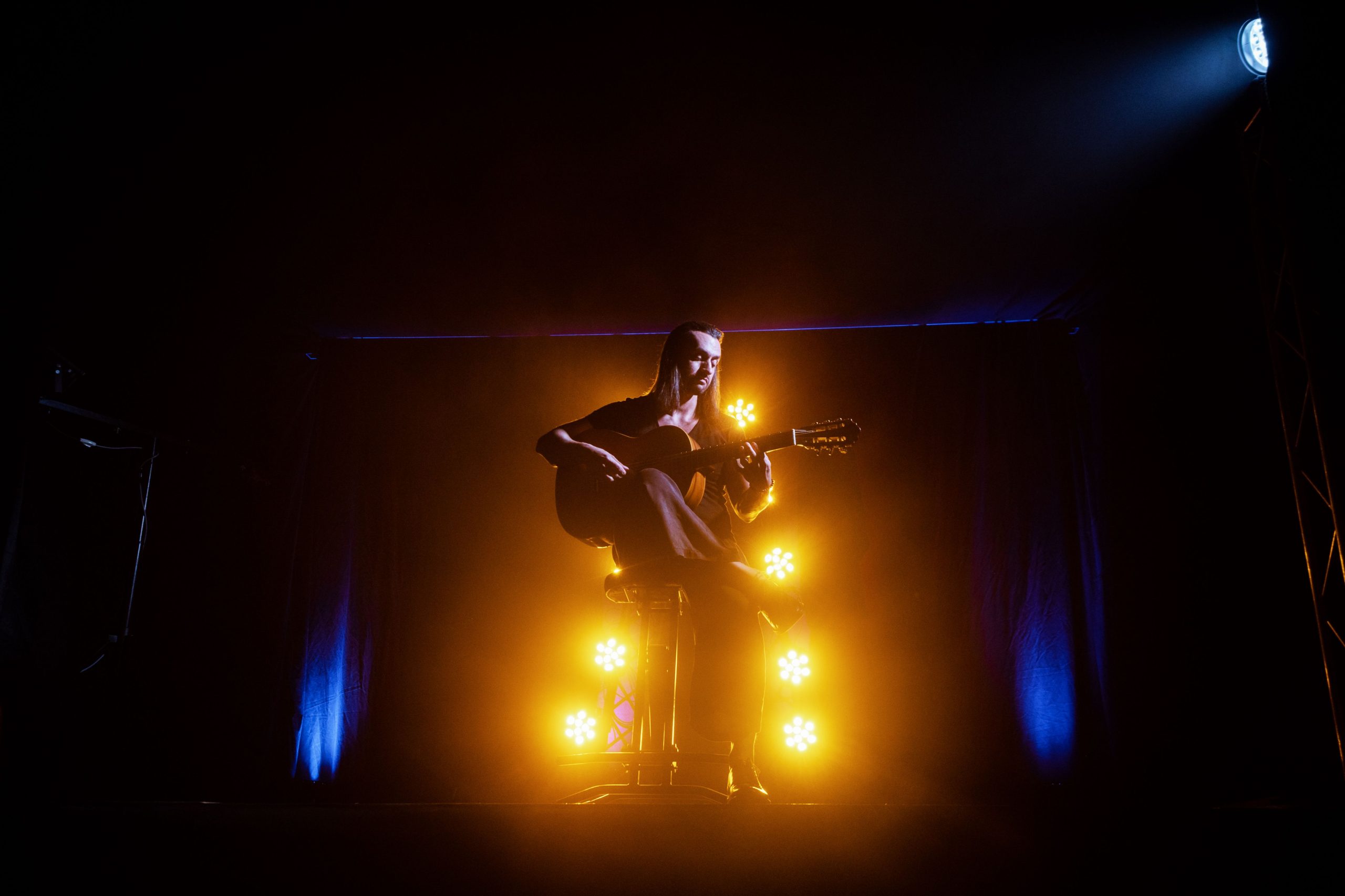
One version is a solo acoustic set, Mayer alone with his guitars in a 18,000-seat venue that has been engineered to make every spatial element of a performance precise and legible. Another is a full band production. The third brings in Pino Palladino on bass and Steve Jordan on drums as the John Mayer Trio, a configuration that shifts the music away from the pop-crossover lane and into a blues-and-jazz-rooted conversation between three specific musicians.
This is architecturally different from how residencies have typically worked. Most Las Vegas residencies run one show format for the duration of the engagement. Slight variations in setlist happen naturally, and an artist might add a special guest or swap a few songs, but the production, the staging, the fundamental shape of the evening stays consistent. The residency model’s commercial logic has always rested on repeatability: you build the production once, you amortize the fixed costs across as many shows as possible, you sell premium pricing to fans who want the best seats for a fixed experience.
Mayer’s three-format approach disrupts that logic deliberately. By running different production configurations on different dates, he creates a situation where seeing the show once does not mean you have seen it. A fan who catches the full band show and wants to hear what the John Mayer Trio sounds like in that room has a reason to buy another ticket. A fan who saw the solo acoustic run and wants to compare it to the full production has a reason to come back. This is not theoretical: Dead & Company’s 48 shows at Sphere across 2024 and 2025 demonstrated that an artist can sustain months of Sphere programming at high capacity. Mayer’s format diversification takes the multi-show logic further by giving the audience a structural reason, not just a setlist-curiosity reason, to attend multiple dates.
The Sphere Fit for a Guitarist
Dead & Company’s Sphere run established the template for how the venue transforms a musical experience. The LED exosphere, the Sphere Immersive Sound system with 164,000 speakers, and the ability to control every surface of the interior create a production environment that rewards artists whose music has texture, detail, and dynamic range worth amplifying spatially.
Mayer’s reputation as a technically accomplished guitarist, the aspect of his career that the blues and jazz community has respected even when his pop visibility has been complicated, makes him a particularly interesting Sphere resident. Guitar playing has a tactile, physical relationship with the listener that is different from vocal-driven pop or electronic production. The nuance of a guitar tone, the attack and decay of a note, the conversation between rhythm and lead playing are elements that Sphere’s spatial audio system can present with unusual precision at scale.
The John Mayer Trio configuration is the most interesting test of this. Palladino is widely considered one of the greatest bass players working, with a career that spans Paul Young’s pop hits in the 1980s through decades of session work for artists from D’Angelo to Pete Townshend. Steve Jordan has played with everyone from Keith Richards’ X-Pensive Winos to Sheryl Crow, and his relationship with Mayer goes back to the original Trio recordings in 2005. These are not hired hands assembled for a production. They are musicians with decades of relationship to the material. What that configuration sounds like in a room designed with 164,000 speakers is a genuinely interesting question.
The First Solo Sphere Residency
Sphere’s history to date has been built primarily around shared artist configurations. U2’s 40-show run launched the venue. Dead & Company’s 48 shows over two seasons followed. Phish ran a New Year’s Eve engagement. Eagles have been announced. These are either band configurations or reconstituted band configurations. Mayer’s show, even the full band dates, is a solo artist residency in a way that U2 and Dead & Company are not.
This is commercially significant for Sphere’s programming thesis. If a solo artist can sustain 18 shows at capacity across two months, it expands the pool of artists who can anchor a Sphere engagement beyond jam bands and legacy rock acts with large touring fandoms. Mayer’s audience demographics skew somewhat younger than Dead & Company’s, and the crossover between his pop-rock catalog and the blues-oriented work he has pursued more seriously in recent years represents a broad entry point for different listener profiles.
Whether Sphere’s production infrastructure, designed to present vast visual and audio environments, translates as effectively for the specificity of a guitarist’s voice as it does for the expansive psychedelic productions Dead & Company developed is an open question. The answer will start arriving in April 2027.
Key Insights
John Mayer’s expansion from 6 to 18 Sphere shows confirms sustained demand at premium pricing from an audience that has remained commercially potent through years of public narrative complexity, with gross potential exceeding most Las Vegas residency comparisons at equivalent show counts. The three-format structure, solo acoustic, full band, and John Mayer Trio, creates structural multi-visit incentive rather than relying on setlist variation alone, testing whether format diversification can drive higher average tickets-per-fan than a single production format.
The John Mayer Trio configuration with Pino Palladino and Steve Jordan is the highest-fidelity test of Sphere’s spatial audio for guitar-centric music: three world-class musicians in a conversational format in a 164,000-speaker room represents a genuinely novel listening proposition. As the first solo artist residency at Sphere in this sustained format, Mayer’s run will provide data on whether the venue’s programming thesis extends beyond the jam band and legacy rock configurations that have defined its first seasons.
Notes
John Mayer Live at Sphere runs April 8 through June 5, 2027, at Sphere Las Vegas. The engagement expanded from 6 to 18 shows. Three formats alternate across the run: solo acoustic, full band, and John Mayer Trio with Pino Palladino (bass) and Steve Jordan (drums). Sphere holds approximately 18,000 per show. The original John Mayer Trio released Try! in 2005. Dead & Company ran 48 Sphere shows across 2024-2025 before Mayer’s announcement. Tickets available through Sphere’s official channels and standard ticketing platforms.
Sources: Las Vegas Review-Journal, Billboard, Variety, Rolling Stone