

On the third anniversary of Sphere’s opening, the venue got considerably heavier. On October 1, 2026, Metallica launched Life Burns Faster, a 24-show residency that runs through March 13, 2027. The Rolling Stone review’s headline landed the most precise possible assessment of what happened opening weekend: “Metallica’s Life Burns Faster Sphere Residency May Be Bigger Than Metallica.”
That sentence is not a criticism. It is a diagnosis of what Sphere does to artists when the match between band and venue is close to perfect.
The opening weekend drew nearly 40,000 fans across two nights. Metallica powered through roughly 30 songs over October 1 and 3, with surprise highlights including the first live performance of “…And Justice for All” since 2014, the first airing of “Devil’s Dance” since 2008, and the return of “The Outlaw Torn,” absent from the live set since 2019. Two completely different set lists. Two entirely different visual arrays. The No Repeat Weekend format the band pioneered on the M72 World Tour now deployed inside the most sophisticated production environment on earth.
More than half a century has passed since Pink Floyd invented the larger-than-life concert spectacle. Rolling Stone suggested Metallica may have perfected it at Sphere. That is a significant claim, and the evidence for it is worth examining.
The No Repeat Weekend Format Inside Sphere
Metallica introduced the No Repeat Weekend format on the M72 World Tour, which grossed $668.4 million from 86 shows with 5.32 million people in attendance, making it the sixth highest-grossing tour of the 2020s. The format required the band to prepare two distinct set lists covering different portions of their catalog across the two nights in each market. For fans in cities on the tour, the format created genuine differentiation between Night 1 and Night 2, incentivizing attendance at both shows rather than treating the second night as a repeat of the first.
At Sphere, this format scales differently. Metallica is not performing two nights in a city before moving to the next market. They are performing 24 shows across five months in the same venue. The No Repeat Weekend framework, now extended across 12 separate weekend pairs, means audiences attending multiple shows encounter different set lists, different deep cuts, and different visual production arrays built around each night’s specific songs.
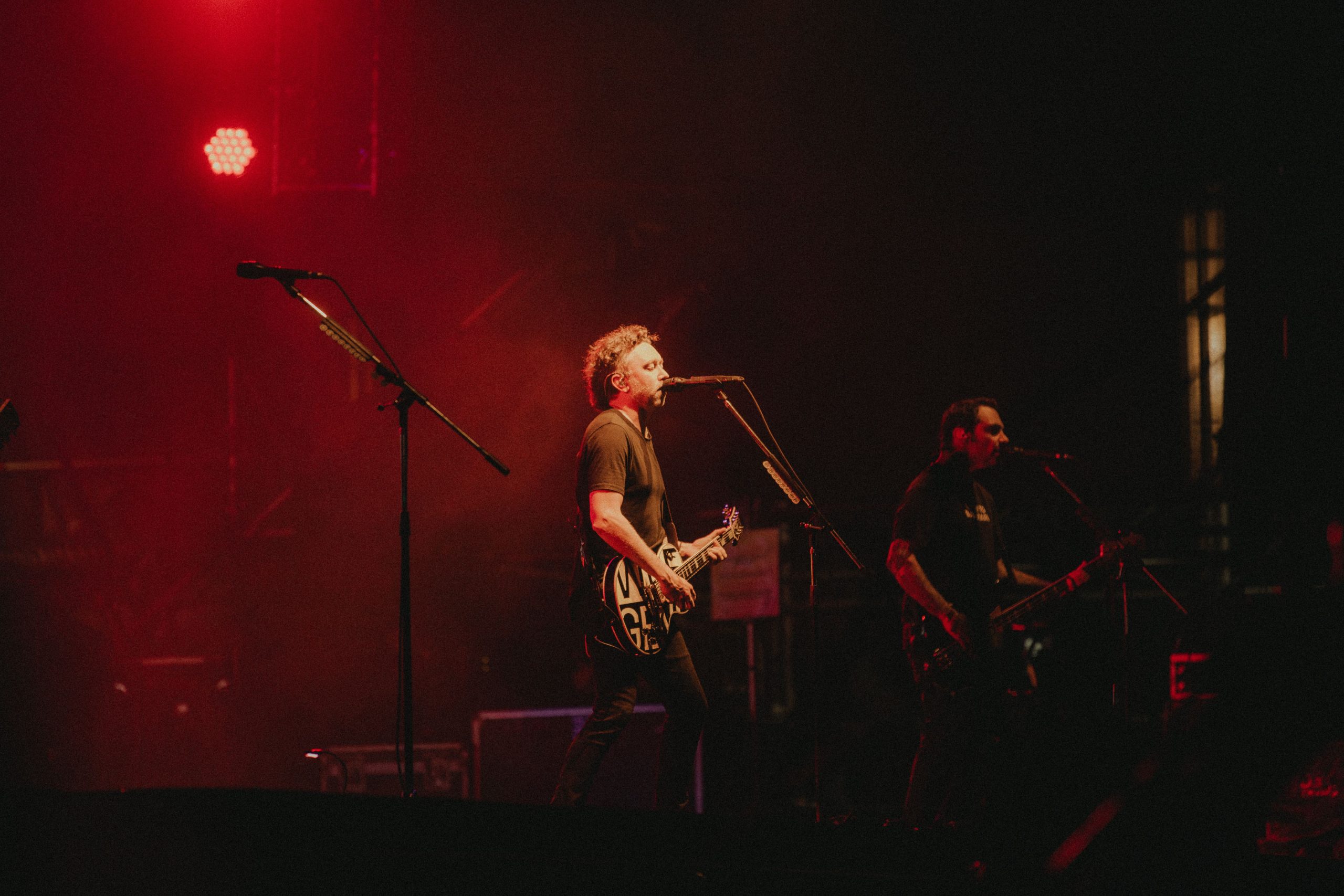
The Las Vegas Review-Journal described the show as “starting organically and rooted in pure musicianship.” Rolling Stone called it “a joyous experience with jaw-dropping visuals.” USA Today noted the band’s “taut musicianship and this visually arresting Sphere show.” The critical consensus across multiple publications is that the Sphere production amplified Metallica’s existing strengths rather than compensating for weaknesses.
When Sphere works best, it does not make good music seem great through technological distraction. It makes great music feel geological in scale, like something that has been building pressure for 40 years and is now releasing it into 17,000 people simultaneously.
The Sphere Production as Metallica-Specific Challenge
For the opening stretch of “Battery” and “Creeping Death,” the crowd itself became the visual. With far less happening around the band during certain songs, the immersive quality of Sphere’s sound became especially apparent: the quiet passages stayed intimate before the final thunderous riffs brought the room back to its feet.
This captures something specific about how Metallica’s dynamic range translates differently in Sphere than in standard arena environments. The sudden shifts between quiet tension and explosive release that define songs like “One,” “The Unforgiven,” and “Fade to Black” hit differently inside Sphere’s spatial audio environment.
In a conventional arena, the quiet passages are quiet relative to the loud passages, but the room itself, the residual reverb, the ambient crowd noise, fills the silence. In Sphere’s spatial audio environment, the silence can be genuinely silent in ways that 65,000-seat stadiums physically cannot produce. The haptic seating delivers the weight of the loud passages through the body rather than just through the ears. The combination creates physical differentiation between quiet and loud that changes the emotional impact of Metallica’s dynamics without requiring the band to change anything about how they play.
James Hetfield told the sold-out crowd: “I had a dream last night. We were playing the Sphere.” Then he looked out at 17,000-plus metalheads and acknowledged it was very real. The sold-out status deserves specific attention. Metallica selling out Sphere on weeknight dates across October through March represents a different demand profile than weekend-primary sales. The metal audience for Life Burns Faster is demonstrating willingness to arrange Las Vegas trips around midweek shows, which indicates a higher-commitment fan base traveling specifically for the experience rather than adding it to an existing Las Vegas trip.
The Black T-Shirt Economy
Everywhere on the Strip the first weekend of October, you could see folks wearing black Metallica T-shirts, in casinos, on pool decks, even in the Venetian hotel’s gondolas. The band’s fans live, breathe, and, for those who participated in the Metallica-organized blood drive timed to the residency, literally bleed for this band.
A fan who gives blood for a concert is not a casual attendee. They are someone whose identity is substantially organized around this artist. This level of fan commitment creates secondary economic activity that differs from the general population of Las Vegas visitors.
The group of friends outside the pop-up merchandise shop who flew in from Chicago, Philadelphia, Indiana, and Minneapolis represents a specific traveling demographic: people who have already spent significantly on flights and hotels before they purchased a Sphere ticket. Their subsequent spending across Las Vegas properties is higher than the average tourist and predictably concentrated in the venues adjacent to Sphere.
After each concert, rivers of black Metallica T-shirts flooded the casino pit at the adjacent Venetian Resort. This afterburn phenomenon plays out at a density and fan commitment level that most residencies do not generate. A post-Eagles crowd disperses into general Strip tourists. A post-Metallica crowd moves as a cohort that is still, after two hours of music, in the specific social and emotional state the show created.
What No Repeat Weekend Means for Sphere Economics
The No Repeat Weekend format has implications for Sphere’s business model that extend beyond this single residency. By creating 12 distinct weekend pairs with different set lists and different visual production arrays, Metallica is effectively creating 24 genuinely different shows rather than a single show that repeats 24 times.
This differentiation addresses the most significant commercial risk for any extended residency: that the audience pool exhausts itself when committed fans have attended once and the remaining tickets must be sold to less enthusiastic buyers at lower effective prices. No Repeat Weekend incentivizes multiple attendance from the core fan base, which is economically superior to relying on the less-committed secondary market for all additional dates.
Across a 24-show residency, this multiple-attendance effect compounds into meaningful incremental revenue. A fan who attends four different Metallica Sphere shows, motivated by genuine set list differentiation, is generating four times the ticket revenue, four times the hotel occupancy, and four times the on-site food and beverage spending of a single-attendance fan.
Sphere’s Programming Logic Through Five Residencies
Life Burns Faster is Sphere’s fifth major music residency after U2, the Eagles, Anyma, and the Backstreet Boys. Each has taught the venue’s operators something about what Sphere can do for different genres and artist profiles.
U2 established that Sphere could support legacy rock at the highest level, with narrative-heavy production built specifically for the venue. The Eagles demonstrated that catalog-focused performance without heavy narrative production can sustain demand across an extraordinarily extended run. Anyma established Sphere’s capability as a premium electronic music destination. The Backstreet Boys demonstrated nostalgia-premium demand for pop acts. And Metallica establishes something new: that Sphere can sustain a live band experience that prioritizes musical intensity, catalog depth, and fan community over visual spectacle.
Each is a genuine category addition to Sphere’s demonstrated programming range. The venue is not simply repeating a single format with different artists. It is discovering that its technology serves substantially different artist relationships and audience expectations in ways that multiply rather than duplicate its commercial potential.
Key Insights
No Repeat Weekend across 24 shows creates 12 distinct weekend pairs with different set lists and visual arrays, incentivizing multiple attendance from the core fan base and expanding total revenue beyond what a single-show repeat format generates. Metallica’s 40-plus-year catalog depth enables genuine set list variety across an extended residency that bands with smaller catalogs structurally cannot replicate.
Sphere’s dynamic range capabilities, the genuinely quiet passages and haptic-reinforced loud passages, serve Metallica’s musical architecture specifically, amplifying the emotional impact of the dynamics that define the band’s best-known material. The black-T-shirt economy creates a visually cohesive, high-commitment touring demographic whose post-show casino and hospitality spending flows predictably into Venetian Resort venues adjacent to Sphere.
Five major music residencies have now established Sphere’s programming range across legacy rock, extended catalog, electronic music, pop nostalgia, and live band intensity, demonstrating multiplying rather than duplicating commercial potential across genres.
Notes
Life Burns Faster runs through March 13, 2027, with remaining 2026 dates on October 22, 24, 29, and 31, followed by November 5 and 7 before a break and resumption in January 2027. Tickets for all remaining shows are sold out at face value; secondary market prices on remaining October dates have ranged from $300 to $800 depending on section. The Sphere is located adjacent to The Venetian Las Vegas on Sands Avenue. Rolling Stone published its opening weekend review on October 4-5, 2026. The Hollywood Reporter published its opening night review on October 2, 2026.
Sources: Rolling Stone, The Hollywood Reporter, Mercury News, Metallica official press release via Nasty Little Man, antiMusic, Ticketmaster