

A Half-Century Built Away From the Cameras
On July 1, 2026, Station Casinos turns 50. There will be no Strip marquee announcing the milestone, no tourist-facing campaign, no celebrity ribbon cutting covered by national entertainment press. That absence is exactly the point. Station Casinos built its half-century of dominance by deliberately ignoring the tourist economy that defines outsiders’ understanding of Las Vegas, choosing instead to win the loyalty of the 2.3 million people who actually live in the Las Vegas Valley.
The company’s anniversary arrives at a moment when the strategic wisdom of that approach has never been more apparent. While the Strip’s two largest operators, Caesars Entertainment and MGM Resorts, are simultaneously fielding acquisition bids worth a combined $36 billion amid questions about tourism softness and shifting visitor patterns, Red Rock Resorts, Station’s parent company, just posted a record $900 million in adjusted EBITDA and its ninth consecutive quarter of net revenue and cash flow growth. Analysts tracking the broader Las Vegas gaming market have started describing something notable: the locals market has decoupled from the Strip, and it’s increasingly winning the comparison.
The story of how a company built around blackjack dealers and pit bosses from the Tropicana grew into Las Vegas’s most influential local institution offers a genuine case study in market segmentation, customer loyalty economics, and the structural advantages of building a business model around repeat behavior rather than one-time spectacle.
The Founder’s Insight
Frank Fertitta Jr. moved to Las Vegas from Texas in 1960 at age 21 and took a job as a bellman at the Tropicana Hotel and Casino. Over the following sixteen years, he worked his way through the industry as a blackjack dealer, pit boss, and eventually casino manager, accumulating an intimate, ground-level understanding of how Las Vegas casinos actually operated. It was during the 1970s, as Las Vegas was transitioning away from its mob-era ownership structures toward corporate management, that Fertitta identified an opportunity nobody else was pursuing with comparable focus: a casino built primarily to serve the people who lived in Las Vegas, not the tourists who visited it.
This wasn’t an obvious bet in 1976. The entire Las Vegas casino industry was organized around attracting visitors from elsewhere. The Strip’s identity, then as now, depended on convincing people from Ohio, Texas, and California to fly or drive in, spend a weekend, and leave. Building a casino explicitly oriented toward local residents who would visit repeatedly, week after week, year after year, required betting that recurring modest spending from a captive local population could outperform the boom-and-bust unpredictability of tourist traffic.
Fertitta’s insight proved durable precisely because it solved a problem the tourist-facing Strip never had to address: how do you build a sustainable business model around customers who already know exactly what your casino offers, who aren’t dazzled by novelty, and who will compare every visit against their last one? The answer, as Station built it over five decades, involved service consistency, generous loyalty programs, and physical environments designed for comfort and familiarity rather than spectacle and surprise.
The Architecture of a Locals Empire
Station Casinos expanded methodically rather than explosively. Boulder Station opened in 1994 along Boulder Highway in the eastern valley, the company’s second Las Vegas property. Sunset Station followed in Henderson in 1997. Green Valley Ranch opened in 2001 in partnership with American Nevada Corporation. The company purchased the Santa Fe in 2000 and acquired the Fiesta and Reserve properties in 2001, building geographic coverage across the Las Vegas Valley’s growing residential corridors rather than concentrating investment in a single iconic flagship.
Red Rock Resort, which opened in 2006 in Summerlin at a cost of $925 million, represented the company’s most ambitious single investment and remains its standout property today. The decision to build at this scale in Summerlin, then a rapidly developing master-planned community on the valley’s western edge, demonstrated Station’s broader strategic pattern: identify where Las Vegas residents were actually moving and building homes, then position major properties to capture that demographic growth before competitors recognized the same opportunity.
This pattern continued with Durango Casino and Resort, which opened in December 2023 in the southwest valley after a planning process that traced back to an original 2004 proposal. The project’s evolution from an initially proposed 215,000-square-foot gaming floor down to a final 83,000-square-foot space reflects how Station’s planning has matured to match actual market demand rather than maximalist ambition, building exactly the scale a neighborhood casino requires rather than overbuilding to match Strip-scale spectacle.
The company hasn’t been immune to setbacks. The 2016 acquisition of the Palms Casino Resort for $313 million, followed by more than $600 million in renovation spending, failed to restore the property to its former prominence, and Station sold it to the San Manuel Band of Mission Indians in 2021 for $650 million. Several properties, Texas Station, Fiesta Rancho, and Fiesta Henderson, closed during the COVID-19 pandemic in 2020 and never reopened, with Station ultimately demolishing them and selling the land, a decision analysts viewed as a defensive move to prevent the sites from enabling future competition.
The Bankruptcy That Didn’t Define the Company
Station’s history includes a significant financial crisis that’s easy to overlook given the company’s current dominance. A highly leveraged 2007 buyout led by Frank Fertitta III, his brother Lorenzo, their sister Delise Sartini, and her husband Blake Sartini, combined with Colony Capital’s $2.6 billion investment, took the company private at $82 per share. Two years later, on July 28, 2009, Station Casinos filed for Chapter 11 bankruptcy, listing $5.7 billion in assets against $6.5 billion in debt, with 510 holders of unsecured and subordinate debt totaling $4.4 billion.
The bankruptcy reflected broader economic conditions during the 2008-2009 financial crisis rather than a failure specific to Station’s locals-focused business model. What’s notable in retrospect is how the company emerged from that period to rebuild toward today’s record performance. The locals market’s relative resilience compared to the Strip during economic downturns, a pattern analysts have specifically highlighted during the current period of Strip uncertainty, suggests Station’s underlying customer base proved more durable than the leveraged corporate structure built on top of it during the 2007 buyout.
What “Locals Market Decoupling” Actually Means
CBRE gaming analyst John DeCree has described a specific and consequential trend: the Las Vegas locals market has increasingly diverged from Strip performance, supported by a more diversified economy and a more favorable supply-demand balance, with gaming positions per 100,000 residents down over 47% since 2007. This statistic captures something important about why Station’s current performance looks so different from the volatility affecting Caesars and MGM.
DeCree has also pointed to historical recession data suggesting locals casinos perform better during economic downturns than Strip properties. In the dot-com bubble period, locals gross gaming revenue increased 8% even as the Strip declined 3%. This counter-cyclical resilience stems from a straightforward mechanism: locals customers treat their neighborhood casino as part of regular life, comparable to a familiar restaurant or grocery store, rather than as a discretionary vacation expense that gets cut first when household budgets tighten.
Station Casinos COO Kord Nichols, addressing the Nevada Gaming Control Board, articulated this customer relationship directly: “Unlike our other counterparts on the Strip, we rely on guests to come four to six times a month. That happens by providing great service and making sure our team members get the tools they need to be successful. We also take care of our buildings and reinvest in our properties.” This four-to-six-visits-monthly cadence represents a fundamentally different customer relationship than anything the Strip cultivates. A tourist visits a Strip casino once during a trip that might happen once a year, if ever. A Station regular visits dozens of times annually, building a relationship with specific employees, specific machines, and specific routines that compounds loyalty in ways episodic tourist visits cannot replicate.
The Boarding Pass Loyalty Engine
Central to sustaining this visitation frequency is Station’s Boarding Pass loyalty program, widely regarded within the industry as among the strongest in Las Vegas for regular players. Points accumulate at rates that reward frequent, modest play more generously than typical Strip loyalty programs, which tend to calibrate rewards around larger, less frequent spending patterns typical of vacationing gamblers. Tier benefits activate earlier, and the free play offers that land in members’ mailboxes after just a few visits represent genuine value rather than the more marginal gestures some Strip programs offer infrequent visitors.
This loyalty architecture reflects a coherent business logic: if your revenue model depends on customers returning multiple times monthly for years or decades, the economics support more generous reward structures than a model dependent on capturing maximum spending during a single, infrequent visit. Station can afford to be generous with regulars because the lifetime value of a loyal local customer, visiting consistently for years, justifies investment that would seem excessive applied to a tourist who might never return.
Beyond Gambling: The Mall Model
Non-gaming revenue at locals casinos has grown to represent a substantial share of total income, mirroring but distinctly shaped by the broader Strip trend toward non-gaming revenue dominance. Food and beverage alone accounted for 16.8% of revenue at properties in the surrounding Las Vegas areas in 2024, a figure that reflects how thoroughly locals casinos have positioned themselves as everyday gathering and dining destinations rather than purely gambling venues.
This positioning explains Station’s continued investment in amenities that have little to do with gaming directly: movie theaters, bowling alleys, expanded dining concepts, and family-oriented attractions. Red Rock Resorts’ design director Albie Colotto, who has shaped the company’s portfolio for over a decade, described the underlying philosophy: “We really consider ourselves an entertainment company. It’s an escape. We want everyone to feel like they’re on vacation every time they come to our properties.” For a locals casino, creating a sense of escape and occasion for residents who could simply stay home represents the core value proposition, transforming a Tuesday night dinner decision into a small, recurring vacation rather than a mundane errand.
The $87 million renovation underway at Sunset Station, a 28-year-old property in Henderson, illustrates this non-gaming investment pattern concretely. The project, expected to run from the second quarter of 2026 through early 2027, includes expanding movie theaters and converting an old buffet space into a high-end steakhouse and high-limit table games room. This combination, upgrading both entertainment amenities and premium gaming spaces simultaneously, reflects Station’s strategy of serving both everyday family visitors and higher-spending regulars within the same property.
The Competitive Landscape
Station doesn’t operate without serious competition in the locals market. Boyd Gaming represents the most significant rival, with Wall Street analysts describing Boyd and Red Rock as the two dominant players in the locals gaming portfolio space. Boyd’s recent strategy has included accelerating the opening of its Cadence Crossing Casino to capitalize on rapid growth in the Cadence master-planned community, directly mirroring Station’s own historical playbook of building ahead of residential development.
Analyst commentary suggests Red Rock has generally outperformed Boyd in recent periods, with one analyst noting that while Boyd’s profit margins may be slightly superior in some respects, its overall locals market performance has lagged due to the success of Station’s Durango property, which has effectively grown the broader market while simultaneously taking share from competitors. This dynamic, where a new entrant expands total market demand rather than simply redistributing existing demand among operators, reflects well on the underlying health of Las Vegas’s residential growth trajectory, even as it creates competitive pressure on individual operators.
Smaller players including privately owned properties like the Rampart and Palms, along with tavern-style gaming operated by Golden Entertainment’s PT’s brand, round out a locals market that remains genuinely competitive despite Station’s scale advantages. This competition has pushed Station toward continued reinvestment, including its Seventy Six tavern brand expansion, with seven locations in the pipeline for 2025 and 2026, extending the company’s footprint into smaller-format venues that compete directly with Golden Entertainment’s tavern model.
What 50 Years of Employee Loyalty Looks Like
Station’s anniversary feature in Las Vegas Weekly highlighted something that distinguishes the company’s internal culture from typical corporate gaming operations: extraordinarily long employee tenure. One team member, identified as the company’s longest-tenured employee, has cooked for fellow staff in the team dining room for nearly 50 years, describing her experience with the company in deeply personal terms: “It’s almost like seeing your kids growing up. I’ve been able to do things with my kids, my grandkids and my great grandkids that I would never get to do had it not been for Station and my coworkers.”
This kind of employee retention, decades-long tenure across multiple generations of a single family’s working life, reflects a workplace culture that mirrors the customer loyalty Station has built externally. Company executives describe similar patterns in their own careers. One current executive recalled interviewing for a Station internship when corporate offices were still under construction trailers in a dirt lot, before Downtown Summerlin existed, eventually leaving for opportunities elsewhere before returning to the company that gave him his start. This pattern, employees departing for other opportunities and returning, suggests Station has built organizational culture that retains genuine affection even among those who’ve worked elsewhere and made comparisons.
This internal loyalty isn’t disconnected from the company’s external customer relationships. A workforce with multi-decade tenure, including across multiple generations of the same families, creates exactly the kind of consistency and familiarity that locals customers value when they choose to visit a neighborhood casino four to six times monthly rather than treating it as an anonymous transaction. The same employees serving the same regular customers over years builds relationship density that high-turnover Strip properties, dependent on transient tourist traffic, structurally cannot replicate.
The Strip’s Current Turbulence as Backdrop
Station’s 50th anniversary arrives during a period of unusual instability for Las Vegas’s tourist-facing casino industry. Tilman Fertitta’s $17.6 billion acquisition of Caesars Entertainment and Barry Diller’s $18 billion bid for MGM Resorts represent the two largest operators on the Strip simultaneously changing hands, while CBRE analyst Carlo Santarelli has described persistent “weakness” affecting Las Vegas more broadly, with leisure travel showing no improvement through the first quarter of 2026.
This contrast, locals-market record performance alongside Strip-market uncertainty and ownership upheaval, illustrates precisely the structural divergence analysts have identified. Station’s business model, built deliberately apart from the tourist economy that’s currently generating headlines and acquisition activity, has proven less exposed to the specific pressures affecting destination travel demand. The company’s continued capital investment plans, between $375 million and $425 million in 2026 including the Sunset Station renovation, reflect confidence that residential population growth and demographic trends in the Las Vegas Valley will continue supporting locals market expansion regardless of how Strip ownership questions resolve.
Notes for Stakeholders
Station Casinos’ 50-year history offers insights for anyone working in customer loyalty strategy, market segmentation, or destination business development:
Recurring local demand provides structural resilience that tourist-dependent revenue cannot match. Customers who visit four to six times monthly generate more predictable, recession-resistant revenue than customers who visit once during an occasional vacation.
Building ahead of residential growth requires patient, geographically distributed investment. Station’s pattern of identifying developing residential corridors before competitors, then positioning major properties to capture that growth, required decades of methodical expansion rather than singular, spectacular bets.
Employee tenure and customer loyalty reinforce each other in service-dependent businesses. Multi-decade staff retention creates relationship continuity that strengthens the same customer loyalty programs designed to encourage repeat visitation.
Loyalty program generosity should be calibrated to actual customer lifetime value, not visit-by-visit profitability. Station’s relatively generous Boarding Pass rewards make economic sense specifically because the underlying business model depends on customers returning for years or decades.
Counter-cyclical business model diversification protects against sector-wide downturns. Station’s locals focus has historically outperformed Strip properties during recessions, providing portfolio-level protection for the broader Las Vegas gaming economy even when tourist-dependent segments struggle.
Fifty Years Forward
Station Casinos enters its next half-century from a position considerably stronger than what its founder could have envisioned in 1976. Frank Fertitta Jr.’s original insight, that Las Vegas residents deserved and would support casinos built specifically for them, has evolved into a company posting record financial performance precisely when the tourist-facing Strip faces unprecedented ownership uncertainty and demand questions.
The company’s continued investment, the Sunset Station renovation, the Seventy Six tavern expansion, ongoing capital expenditure in the hundreds of millions, signals confidence that the underlying demographic story driving Station’s success, Las Vegas Valley population growth and the durability of local customer loyalty, will continue regardless of how the Strip’s current acquisition drama resolves.
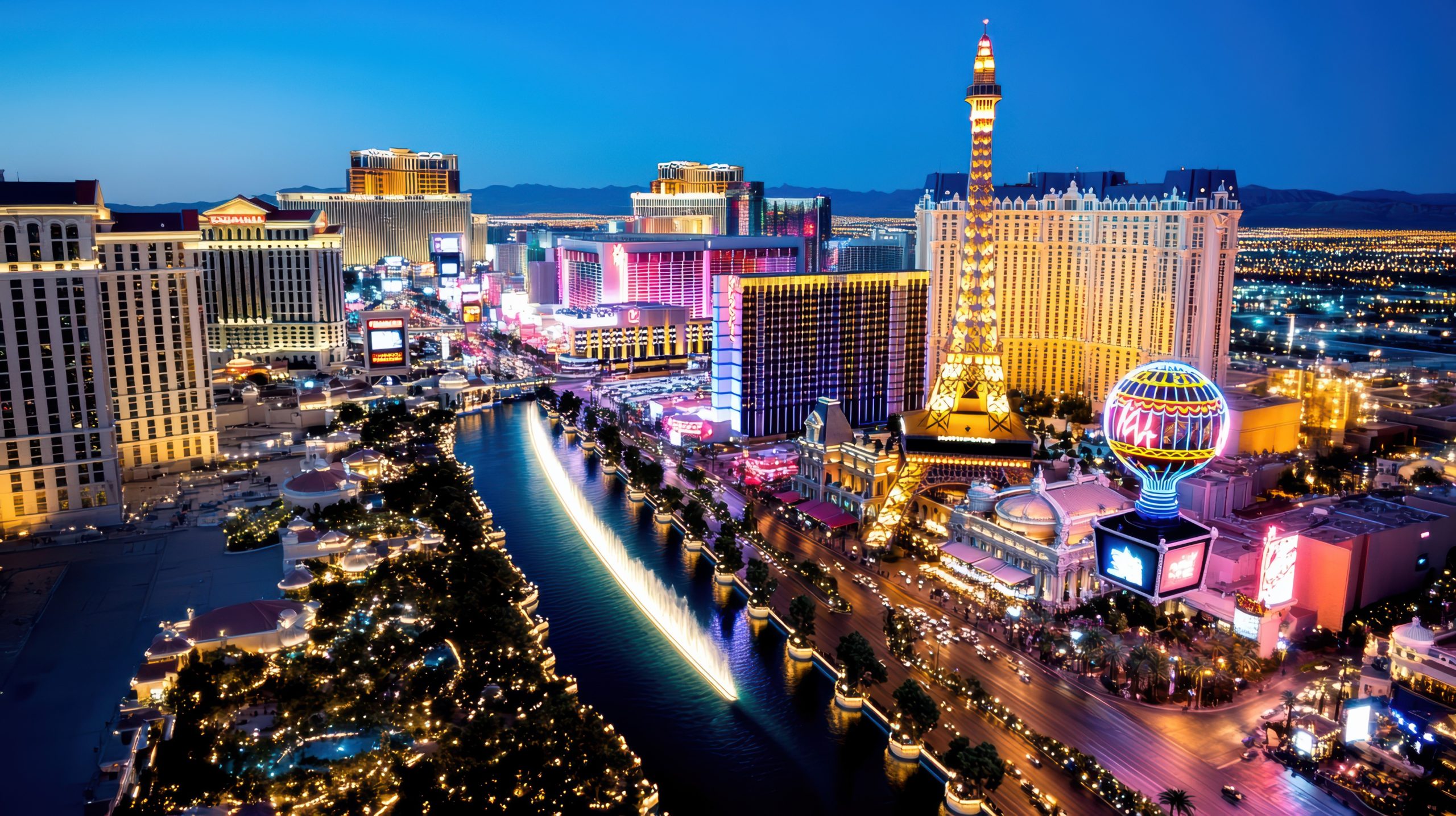
For a city whose global reputation depends almost entirely on what happens along four miles of boulevard, Station’s 50-year story is a reminder that Las Vegas is also, simply, a place where 2.3 million people live ordinary lives, and that an entire empire can be built quietly serving exactly that audience while the rest of the world watches the lights on the Strip.
Key Takeaways:
- Station Casinos celebrates its 50th anniversary on July 1, 2026, having been founded by Frank Fertitta Jr. in the 1970s specifically to serve Las Vegas residents rather than tourists
- Parent company Red Rock Resorts posted a record $900 million in adjusted EBITDA and its ninth consecutive quarter of net revenue and cash flow growth, contrasting sharply with current Strip ownership turbulence
- The company expanded methodically from Boulder Station (1994) through Durango Casino and Resort (2023), building properties ahead of residential growth in developing Las Vegas Valley corridors
- A highly leveraged 2007 buyout led to Chapter 11 bankruptcy in 2009, but the company rebuilt to become the dominant force in a locals market that has since “decoupled” from Strip performance, according to CBRE analysis
- Locals casinos benefit from customers visiting four to six times monthly, creating recurring revenue resilience that outperformed the Strip during past economic downturns including the dot-com bubble
- The Boarding Pass loyalty program offers more generous rewards calibrated to frequent, modest local spending rather than infrequent, larger tourist spending
- Non-gaming revenue, including food and beverage at 16.8% of total income, reflects Station’s positioning as an everyday entertainment and dining destination rather than a purely gambling venue
- An $87 million Sunset Station renovation beginning Q2 2026 will add a high-end steakhouse and high-limit gaming room, illustrating continued investment in both family amenities and premium customer segments
- Boyd Gaming represents Station’s primary locals-market competitor, with Station’s Durango property credited with growing total market demand rather than simply redistributing existing competition
- Decades-long employee tenure, including multi-generational family employment, mirrors and reinforces the customer loyalty that defines Station’s business model