

The Boxy Blue Cars Nobody Expected to Trust
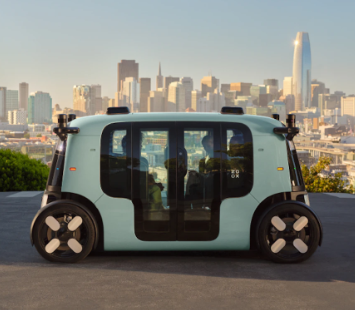
If you’ve been on the Las Vegas Strip recently you’ve seen them. Boxy, grayish-blue vehicles with no steering wheel, no pedals, no driver’s seat, and carriage-style seating facing inward. They move deliberately through side streets parallel to Las Vegas Boulevard, stopping at designated zones outside Fontainebleau, Wynn, Bellagio, the Sphere, and a dozen other locations. Passengers get in using a mobile app, buckle their seatbelts, and go. No tip required. No small talk necessary. No human in the vehicle making decisions.
Zoox, Amazon’s autonomous vehicle subsidiary, launched public robotaxi service in Las Vegas in September 2025 after six years of testing and development in the city. By mid-2026, the service covers 15 pickup and drop-off points running from Fontainebleau at the north end of the Strip down to Mandalay Bay at the south. The fleet has carried over 350,000 riders and logged nearly two million autonomous miles. Rides remain free. And the service is about to get significantly bigger.
This isn’t a pilot program or a demonstration project anymore. Las Vegas has become Zoox’s primary launch market, the city where Amazon is proving that fully autonomous passenger transportation works at real-world scale in an environment more complex than almost anywhere else a robotaxi company could choose to operate.
Why Las Vegas and Why Now
Zoox chose Las Vegas in 2019 as its testing ground and stuck with the city as its launch market for reasons that go beyond regulatory convenience, though Nevada’s autonomous vehicle framework does help. The city offers specific operational challenges that make it ideal for proving a robotaxi concept that needs to handle complexity before expanding elsewhere.
The Strip environment is genuinely difficult. Pedestrian traffic is dense and unpredictable. Tourists walk into streets without looking. Rideshare pickup zones generate constant vehicle clustering. Convention traffic spikes create sudden demand surges. Special events like WrestleMania or Golden Knights playoff games produce crowd patterns that don’t exist in residential neighborhoods. A robotaxi service that works on the Strip can work almost anywhere.
The tourism market also provides ideal customer composition for early adoption. Visitors are already accustomed to novel transportation experiences. They downloaded Uber for the first time during a vacation. They rode the monorail not because it was the fastest option but because it was interesting. Tourists are more willing to try a free autonomous vehicle than commuters in a hurry who can’t afford to be a minute late.
The Amazon ownership matters too. Zoox has backing that most autonomous vehicle startups don’t survive long enough to secure. The company can absorb the cost of free rides, extensive testing, and regulatory compliance without the existential funding pressure that has ended many competitors. Las Vegas gets a well-resourced partner genuinely committed to making the technology work here.
The Vehicle Itself
Zoox’s purpose-built vehicle is not a converted Toyota or retrofitted Chevy. The company designed the vehicle from scratch specifically for autonomous operation, which means every design decision serves that singular purpose. No steering wheel because there’s no human driver who needs one. No pedals. No driver’s seat consuming space that passengers could use. The vehicle is bidirectional, meaning it can travel in either direction without turning around, which matters operationally in tight urban environments.
The interior seats four passengers in inward-facing carriage style. This configuration encourages conversation among riders rather than the standard automotive arrangement where passengers face forward and talk to the back of each other’s heads. It’s a subtle design choice that reflects Zoox’s stated goal of giving riders “their space” rather than just moving them efficiently from place to place.
Passengers control everything through a touchscreen interface. They can request live support at any point during the ride. They can allow eating and drinking, including alcohol, which makes the service particularly relevant in Las Vegas where nobody is driving themselves back from the casino. The seatbelt requirement is the one conventional constraint in an otherwise unconventional vehicle.
The vehicles run on electric battery systems and operate on side streets parallel to the Strip rather than on Las Vegas Boulevard itself. This routing decision is deliberate. Las Vegas Boulevard is tourist chaos, particularly near major intersections. The parallel street network moves more predictably, keeps ride times reasonable, and lets the technology demonstrate competence without the most extreme possible test conditions.
The 15 Stops
The current service map covers the Strip from north to south with reasonable geographic logic. Fontainebleau and Resorts World anchor the north end. The Las Vegas Convention Center West Hall serves convention traffic. Area 15 and Fashion Show Mall provide off-Strip access. Wynn, The Sphere, TopGolf, Bellagio, ARIA, New York-New York, MGM Grand, Excalibur, Luxor, and Mandalay Bay complete the corridor heading south.
This coverage means most visitors staying on the Strip can use Zoox for at least some of their transportation needs. Someone staying at Wynn who wants to see a show at the Sphere can make that trip without Uber or walking. A convention attendee staying at Bellagio who needs to reach the Convention Center West Hall can do it autonomously. The service genuinely solves real transportation problems for the Strip’s visitor population.
Hours run from 11 a.m. to 1 a.m. daily. This schedule covers most visitor activity patterns while avoiding the 2 a.m. to 11 a.m. window when late-night crowds thin and early-morning logistics make operations more complex. The daytime and evening focus also means Zoox operates during peak Strip traffic, which gives the technology more practice with the most challenging conditions.
The decision to avoid Las Vegas Boulevard itself is interesting from both a safety and business perspective. Riders don’t get the iconic Strip view during their journey, which slightly reduces the novelty factor. But the parallel street routing produces consistent journey times rather than the unpredictable delays that Strip traffic creates. For transportation utility, predictability beats scenery.
The Uber Integration
One of the more consequential announcements in Zoox’s Las Vegas story happened in spring 2026: Zoox rides are now bookable through the Uber app via a “Find My Zoox” feature. This integration changes the service’s accessibility profile dramatically.
The standalone Zoox app requires deliberate adoption. Travelers must discover the service, download the app, create an account, and learn the pickup zone system. These friction points limit uptake to curious early adopters and tech-savvy visitors who read about the service before arriving.
Uber integration removes most of this friction. Anyone who already uses Uber in Las Vegas, which means most tourists who use rideshare at all, can now access Zoox without additional steps. The “Find My Zoox” feature adds a visual element helping passengers identify which vehicle is theirs through distinct sound and messaging. This usability improvement matters because one of autonomous vehicle adoption’s biggest challenges is the moment where a tourist standing outside Bellagio needs to figure out which boxy blue car is responding to their request.
The Uber partnership also provides Zoox with distribution it couldn’t build independently at anything like comparable speed. Uber’s Las Vegas user base dwarfs what Zoox could reach through organic app downloads. This access accelerates the ridership numbers that matter for demonstrating the service’s scalability and safety record.
The Airport Horizon
Perhaps the most significant development in Zoox’s Las Vegas story is barely public yet: the company is testing at Harry Reid International Airport. Testing with its retrofitted fleet has been underway, with the robotaxi version expected to begin airport service in the near future.
Airport service would transform the service’s utility proposition. Right now, Zoox helps visitors move between Strip properties. Useful, free, interesting, but not essential for most travelers who can walk, take Uber, or use the Deuce bus. Airport transportation is different. It’s the most consistent, high-stakes, repeating transportation need for every visitor to Las Vegas.
A visitor landing at Harry Reid and booking a Zoox directly to their hotel on the Strip would experience something that doesn’t exist anywhere else in the world at scale. An autonomous vehicle handling commercial airport pickup and delivery in a major tourist market. The operational complexity is substantial, including terminal pickup zones, baggage handling, flight delay accommodation, and surge demand patterns that differ completely from Strip service. If Zoox makes it work, the Las Vegas airport becomes the world’s most visible proof point for autonomous passenger transportation.
What This Means for Las Vegas Transportation
The autonomous vehicle conversation in Las Vegas isn’t just about Zoox. The city is also home to The Boring Company’s underground Loop system connecting the Convention Center, which provides human-driven electric vehicle transportation in tunnels. Different technology, different operator, different use case. The two systems don’t directly compete but together represent Las Vegas’s willingness to experiment with transportation infrastructure that other cities study from a safe distance.
For the transportation workforce, the autonomous vehicle expansion raises questions that Las Vegas’s labor movement is watching carefully. The Culinary Union represents hospitality workers but not transportation workers directly. Rideshare drivers who depend on Strip tourism for income are observing what a free autonomous competitor means for their livelihoods. If Zoox scales to the point where tourists default to the autonomous option rather than Uber or traditional cabs, the economic impact on human drivers would be significant.
Tourism officials view the technology more enthusiastically. A transportation experience that impresses tourists makes Las Vegas seem like the future rather than an aging entertainment destination. Visitors who ride a Zoox share the experience on social media in ways that translate into organic marketing. Anything that makes Las Vegas feel novel and surprising serves the city’s core tourism mission.
The Safety Record
Nearly two million autonomous miles and 350,000 riders without a major reported safety incident is the number Zoox emphasizes most. A January 2026 video showed a Zoox vehicle in an unspecified incident. Company officials investigated and resolved the situation without law enforcement involvement. That transparency about incidents and resolution without escalation reflects the careful public communications approach that autonomous vehicle companies must maintain to preserve public trust.
Building safety credibility requires accumulating miles and riders without significant negative events. Waymo, which operates in Phoenix, San Francisco, and other markets, has built its safety record over years and hundreds of millions of miles. Zoox is earlier in this process but the Las Vegas track record through mid-2026 is encouraging.
The low maximum speed of 40 miles per hour is conservative but appropriate for the Strip environment. Urban robotaxi service doesn’t need highway speeds. It needs reliability and safety at the speeds where most incidents in dense urban environments occur. Zoox’s speed limit reflects engineering priorities that favor safety record building over convenience optimization.
Notes for Stakeholders
The Zoox Las Vegas deployment offers insights for anyone working in transportation, urban planning, or technology adoption:
Tourist markets provide ideal early adoption conditions. Visitors are novelty-seeking, less time-constrained than commuters, and more willing to try unfamiliar experiences. Las Vegas gives Zoox access to this demographic constantly.
Purpose-built vehicles outperform conversions for autonomous deployment. The Zoox vehicle’s bidirectional capability, inward-facing seating, and touchscreen controls all reflect design choices only possible when you’re building from scratch for autonomy.
Distribution partnerships accelerate adoption faster than organic app growth. The Uber integration gave Zoox immediate access to the entire existing rideshare user base in Las Vegas. No standalone autonomous vehicle company builds that independently.
Airport service represents the ultimate proof point. Successfully handling commercial airport pickup and delivery would demonstrate autonomous vehicle capability in conditions that matter to travelers globally, not just Las Vegas tourists.
Free service builds ridership data more efficiently than paid service. Zoox’s free rides generate safety miles, rider feedback, and public familiarity without the pricing friction that would slow adoption at this stage.
The Road Ahead
Zoox’s Las Vegas operation is expanding on multiple dimensions simultaneously. More pickup and drop-off locations are coming. The Uber integration is scaling. Airport service is approaching. New cities including Miami and Austin are being added to the service map. The company’s CEO described 2026 explicitly as “our year of growth.”
For Las Vegas, that growth makes the city an increasingly important node in the autonomous vehicle story. Not just as a test market where engineers collect data, but as a genuine commercial deployment that demonstrates what autonomous transportation looks like when it works for real people in a real tourist economy.
The 350,000 riders who’ve used the service through mid-2026 didn’t ride as experiment subjects. They rode because they wanted to get from Wynn to the Sphere without walking in 100-degree heat or waiting for an Uber pool. They rode because it was free and interesting. They rode and then told people about it.
That word of mouth, that organic curiosity, is how transportation revolutions actually start. Not with policy mandates or infrastructure overhauls. With free rides in boxy blue cars that navigate a famous strip of Las Vegas hotels without anyone behind the wheel.
Key Takeaways:
- Zoox, Amazon’s autonomous vehicle subsidiary, launched public robotaxi service in Las Vegas in September 2025 and now serves 15 Strip stops from Fontainebleau to Mandalay Bay
- The purpose-built vehicle has no steering wheel, pedals, or driver’s seat; seats four passengers in inward-facing carriage style; and allows eating and drinking including alcohol
- As of mid-2026, the service has carried over 350,000 riders and logged nearly two million autonomous miles since launch, with rides remaining free
- Zoox deliberately routes on parallel side streets rather than Las Vegas Boulevard, prioritizing journey time predictability over scenic Strip views
- Uber integration via “Find My Zoox” dramatically expanded accessibility beyond the standalone Zoox app user base
- Airport testing at Harry Reid International is underway, with the robotaxi version expected to begin service soon in what would be a transformative expansion
- Operating hours run 11 a.m. to 1 a.m. daily with a 40 mph maximum speed appropriate for the dense urban Strip environment
- Las Vegas was chosen as the launch market in 2019 because the Strip’s complexity, tourist demographics, and Nevada’s regulatory framework created ideal testing conditions
- Zoox operates alongside The Boring Company’s underground Loop system at the Convention Center, making Las Vegas arguably the most advanced transportation experimentation market in the country
- Expansion to Miami and Austin in 2026 makes Las Vegas’s six-year track record the template for how Zoox enters new markets