


There are not many places in Las Vegas where you can eat a wagyu sandwich while watching golfers finish their rounds on a course that costs several hundred dollars a round to play, with the Strip skyline behind you and a rooftop tee box above your head. As of early October 2026, there is one: Cliff House Grill, the new dining room and bar inside the recently rebuilt Wynn Golf Club clubhouse, which opened on the heels of a major renovation to the facility.
The concept is American clubhouse fare served across breakfast and lunch, with afternoon bites and sunset cocktails extending the day for guests who want to linger after their round or arrive specifically for the view. It is not a destination fine-dining concept. It is not trying to earn a Michelin star. It is trying to do something that Las Vegas, for all its culinary density, has consistently underperformed: create a genuinely pleasant place to eat and drink that happens to be situated in a beautiful outdoor setting, that doesn’t require dressing for dinner, and that serves food good enough to justify its location independently of the view.
The Setting
Wynn Golf Club occupies 130 acres on the Las Vegas Strip, which makes it one of the most valuable undeveloped plots of land in American real estate when measured against what surrounds it, and one of the few places in the city where the word “greenery” applies literally. Steve Wynn had the course built in 1997 on the former site of the Desert Inn Golf Course, which had hosted the Tournament of Champions and the Danny Thomas Memphis Classic in an earlier era. The course has run as a private amenity for Wynn resort guests and invited locals since then.
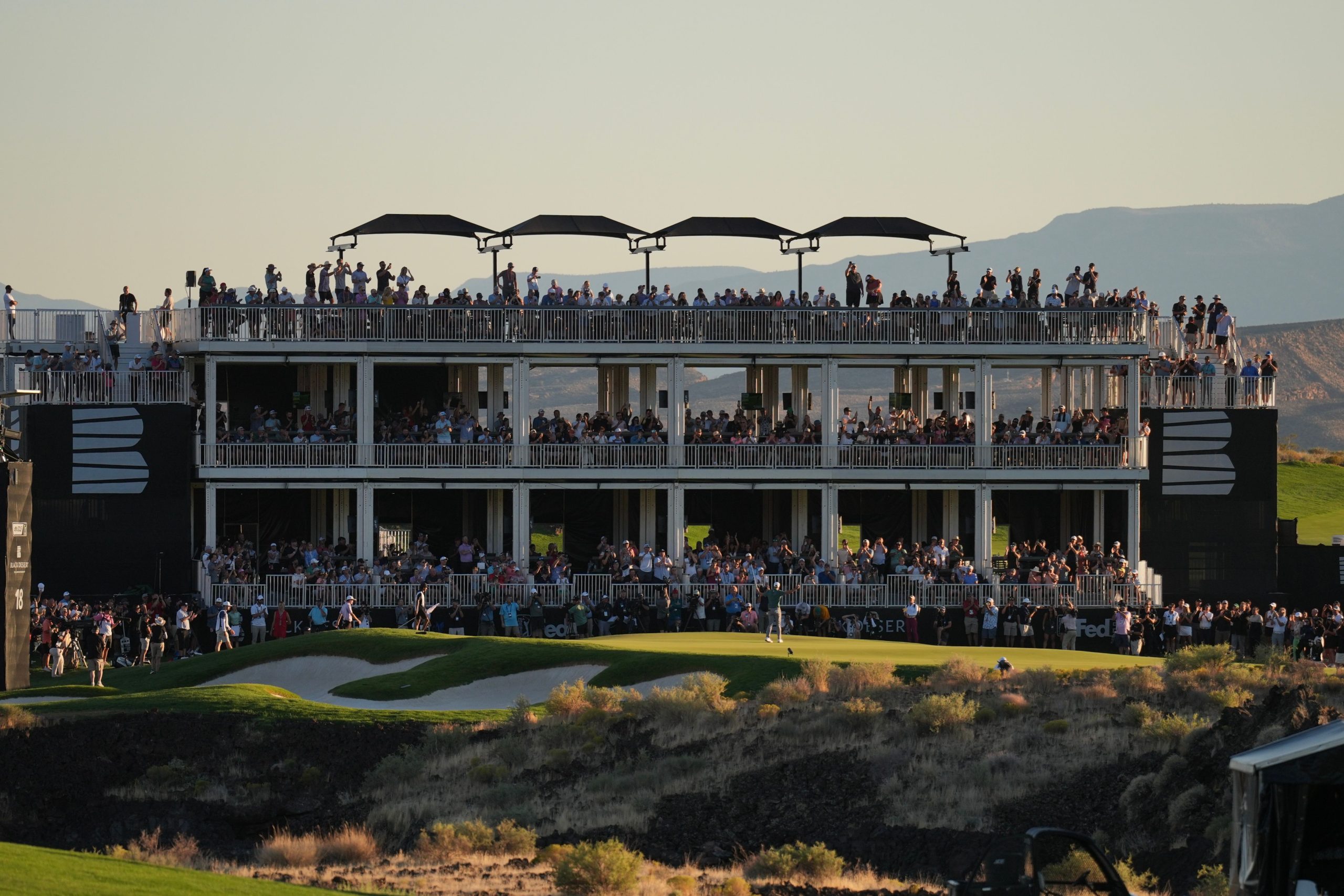
The rebuilt clubhouse was designed by Skidmore, Owings and Merrill, the global architecture firm whose portfolio includes some of the world’s most recognizable buildings, using earth, wood, and stone in a horizontal form that reads as resort architecture rather than conventional golf club design. The renovation moved the pro tee to the roof, creating a rooftop tee-off experience that adds a functional reason to visit the upper level beyond the view. The building’s orientation above the 18th green positions diners with a direct sightline to the course’s finishing hole.
This setting does considerable work that the restaurant itself doesn’t have to do. A customer eating a chopped salad overlooking a golf course on the Las Vegas Strip is having an experience that exists nowhere else in the market, and that experience begins before the food arrives.
The Food
Executive Chef Patricia Gamez leads the kitchen at Cliff House Grill, working within a menu framework that covers the hours a golf facility needs to serve. Breakfast runs from the opening at 9:30 a.m. and includes sticky toffee pudding pancakes and a beef birria breakfast burrito, two items that stake out a position distinctly to the left of what traditional golf club dining has historically offered. Both are dishes that require real kitchen attention to execute correctly and that justify the price premium over a standard resort café.
The lunch menu centers on what the restaurant calls the “Pitching Wedge” chopped salad, which deploys the golf terminology the format almost requires without becoming a novelty concept built around puns. More substantively, the lunch anchor is a sandwich built around marinated grilled American wagyu, which positions Cliff House Grill in the same sourcing tier as the main Wynn restaurant portfolio rather than treating the golf clubhouse as a secondary operation that gets lesser product.
Shareables bridge the gap between the meal categories and extend into the afternoon bites territory that runs through the kitchen’s service period. Bigeye tuna aguachile, queso blanco nachos, prime rib sliders, and chicken tenders read as a deliberate range: something for the golfer who wants a serious snack after finishing a round, something for the traveler who wandered in from the resort path curious about the view, something for the group that wants to share without committing to a full meal.
The beverage program comes from Wynn beverage director Mariena Mercer Boarini, who also leads the cocktail program at the Four Sixes Ranch Steakhouse pop-up operating at the resort. Golf-themed cocktail naming is a genre that usually produces groan-inducing results, and Boarini avoids the worst of it. The 19th Hole is a WhistlePig rye old-fashioned with chai-cardamom spices. On the Green is a tequila ranch water. Both are drinks that work on their own merits rather than existing solely as branding exercises. Spirit-free options appear on the menu, and wines cover several regions with some pours available through the Coravin system, which allows expensive bottles to be served by the glass without oxidation.
Hours run from 9:30 a.m. to 5 p.m. Sunday through Thursday and 9:30 a.m. to 7 p.m. Friday and Saturday, with the all-day menu operating until 3 p.m. and small bites taking over through closing.
The Strategic Logic for Wynn
Wynn Las Vegas operates at the highest tier of the Las Vegas resort market. The company’s dining portfolio, which includes Guy Savoy, Lakeside, SW Steakhouse, and the Four Sixes Ranch pop-up alongside a deep bench of supporting concepts, has consistently targeted the premium dining traveler rather than the volume visitor. The Golf Club, as an amenity, serves a specific guest profile: golfers with the disposable income to pay Wynn’s round rates and resort guests who want a recreation option distinct from the pool and spa program.
Cliff House Grill extends the value of that amenity in two directions simultaneously. For golfers, it provides a reason to arrive before their tee time or linger after their round that a locker room snack bar cannot create. For non-golfing resort guests, it creates access to the golf course’s atmosphere and setting as a dining destination without requiring a round or even golf clothing. The evening cocktail programming on Friday and Saturday, which pushes closing to 7 p.m., specifically targets the sunset-over-the-Strip moment that the clubhouse elevation makes available.
This dual-audience strategy, serving the golf community and the broader resort community simultaneously, is the correct approach for a facility built on property this expensive. A clubhouse restaurant that serves only golfers captures a fraction of the traffic that a course embedded in a major resort property can generate. A restaurant that welcomes resort guests for cocktails and views while keeping the atmosphere appropriate for a golf club creates a larger revenue base without undermining the exclusivity that makes Wynn Golf Club worth maintaining at this price point.
What Cliff House Grill Adds to the Market
Las Vegas has an outdoor dining deficit relative to its year-round climate. The city’s culinary infrastructure has historically concentrated indoors because casino operators built their dining rooms to capture foot traffic from gaming floors, and because outdoor settings in the desert require significant design and infrastructure investment to be comfortable across the full range of seasons. The result is a market with extraordinary indoor dining density and relatively few compelling outdoor eating environments.
Cliff House Grill doesn’t solve this problem at city scale. It is a 130-acre private enclave accessible to Wynn guests, not a public park or an accessible neighborhood restaurant. But it demonstrates that outdoor dining experiences of genuine quality can be built in Las Vegas, and it offers a specific type of afternoon eating and drinking that the market lacks: leisurely, view-driven, neither rushed nor aggressively formal.
The SOM-designed clubhouse architecture earns its place in this conversation. Golf clubhouse design in the United States has a history of defaulting to either institutional minimalism or aspirational country-club pastiche that manages to feel expensive without feeling specific. The earth, wood, and stone palette that SOM brought to the Wynn Golf Club rebuilding reads as contemporary resort architecture that belongs to its desert location rather than imitating a green-grass club culture imported from the East Coast.
Notes and Key Takeaways
Cliff House Grill at Wynn Golf Club opened in early October 2026 above the 18th green of the Wynn Golf Club course, inside a newly renovated two-level clubhouse designed by Skidmore, Owings and Merrill. Executive Chef Patricia Gamez leads a menu spanning breakfast and lunch with afternoon bites and sunset cocktails, running until 5 p.m. on weekdays and 7 p.m. on weekends. The cocktail program comes from Wynn beverage director Mariena Mercer Boarini.
Important Insights:
The birria breakfast burrito and sticky toffee pudding pancakes are not standard golf clubhouse breakfast items, and their presence on the menu signals that Cliff House Grill is being run with the same kitchen ambition as Wynn’s primary dining portfolio rather than as an afterthought. This is the correct calibration for a resort that operates at Wynn’s price point, where every guest touchpoint either reinforces the value of the property or undermines it.
The wagyu sandwich at lunch is a specific sourcing decision that costs more than a conventional lunch sandwich and justifies its price in a context where the guest has already paid significantly for the round, the resort, or both. The alignment between menu sourcing and overall property positioning is tighter here than at most hotel golf course restaurants.
Mariena Mercer Boarini’s cocktail program presence at both Cliff House Grill and the Four Sixes Ranch Steakhouse pop-up creates a throughline of beverage quality across two very different Wynn concepts that share the golf property as a connective element. This kind of internal consistency is a Wynn brand asset that doesn’t require guests to notice it consciously to benefit from it.
The rooftop tee-off created by moving the pro tee during the renovation adds a functional amenity to the upper level that the restaurant space occupies. Golfers preparing to start their round from the roof see the restaurant below them. Diners eating in the restaurant look up at the tee box. The physical integration of the two activities creates a symbiosis that a conventional clubhouse with a separated restaurant and tee box cannot replicate.
A golf clubhouse restaurant that serves spirit-free cocktails is responding to a cultural shift in how a meaningful percentage of premium hospitality guests drink, and its presence on the menu alongside WhistlePig rye cocktails signals an audience awareness that extends beyond the assumption that golfers drink exclusively.