


In January 2025, Gina Paul opened Liam’s Den and Bubble Bar in the Grand Canal Shoppes at The Venetian. The concept, a cocktail bar and lounge tucked into one of the Strip’s most trafficked retail corridors, found its audience quickly enough to land on the Las Vegas Review-Journal’s Top 100 Restaurants list that year. It is the kind of outcome that operators usually take as a signal to open another Strip location, to build on the visibility and foot traffic that hotel-casino real estate provides.
Paul went the other direction. On October 24, 2026, she is opening JP’s Brasserie and Sports Den at 5781 West Sahara Avenue, in the west Las Vegas Valley, in a 2,000-square-foot space seating 75 guests that is by any conventional metric the opposite of what she already has: neighborhood rather than resort, local rather than tourist, watch-party programming rather than bubble service.
The decision reflects something that gets discussed less often than it deserves in Las Vegas dining conversations: the city has an enormous year-round residential population with dining needs that the Strip’s restaurant infrastructure is largely not designed to serve. Las Vegas has roughly 670,000 residents in the city proper and over two million in the metro area. Most of them are not eating at Wynn restaurants or booking Michelin tables on their regular Tuesday evenings. They are eating at the restaurants that understand neighborhood economics, that can sustain a business on local regulars rather than visitor volume, and that offer something worth returning to without requiring a special occasion or a hotel reservation to access it.
The Concept
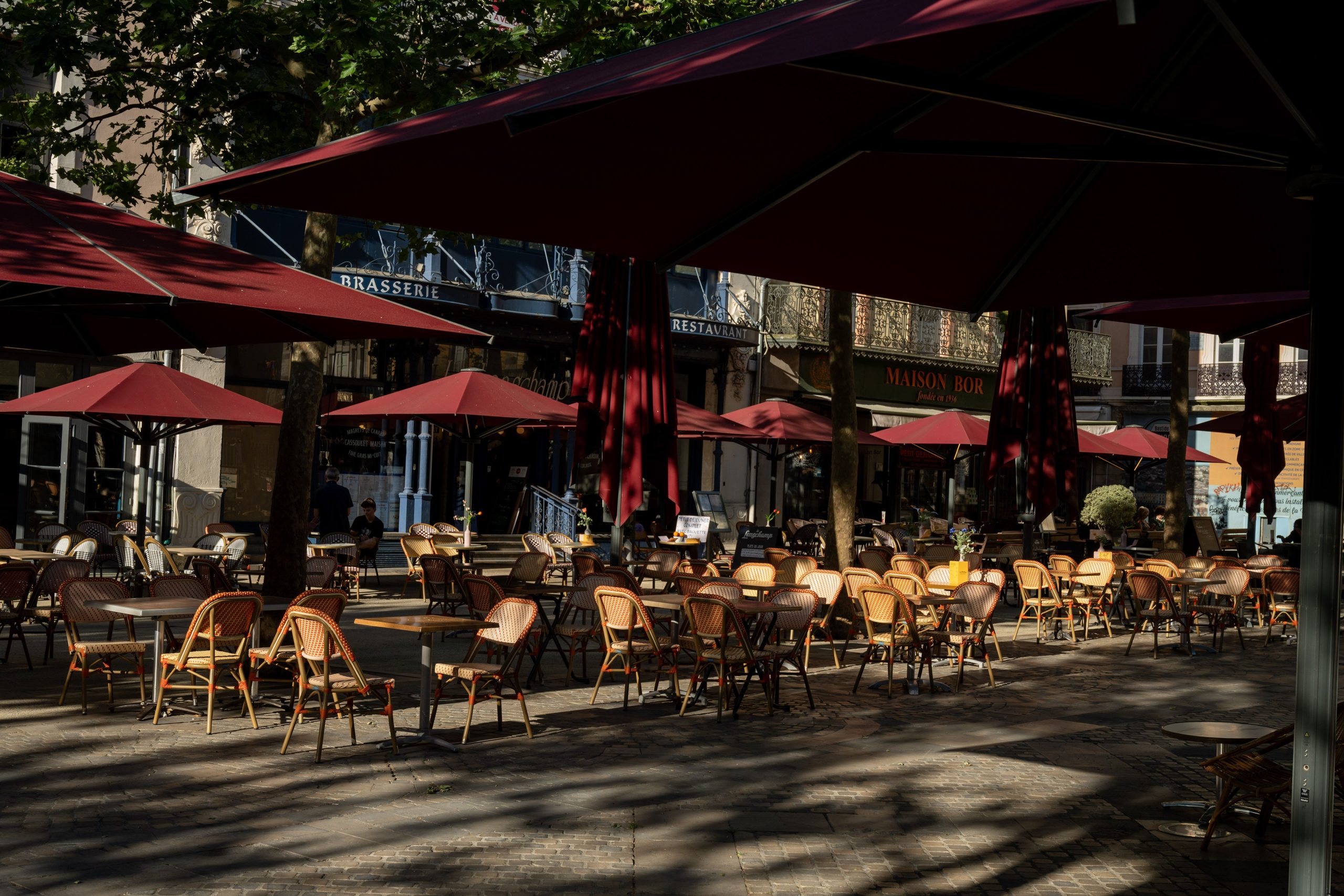
JP’s Brasserie and Sports Den occupies a specific intersection that doesn’t have many practitioners in Las Vegas. European brasserie style, specifically the French and Eastern European register that the menu draws from, meets a neighborhood sports bar programming in a room with serious culinary talent behind it. The name is a tribute to Paul’s husband, and the origin story she describes involves his preference for a “man cave” environment that combines real cooking with the ability to watch games.
The menu signals from the first item that the kitchen is not operating at sports bar standards. Sourdough pull-apart bread opens the list. Pelmeni dumplings follow. A house sausage board represents the charcuterie tradition. Stuffed peppers, ratatouille, lamb chops, steak frites, and daily fish and steak specials fill out a lineup that reads as the work of a kitchen with genuine European training rather than a bar kitchen that added appetizers to justify calling itself a restaurant.
The team behind that kitchen is notable. Corporate executive chef Josh Green provides the culinary direction. Chef de cuisine Christy Xayphrarath handles day-to-day execution. A pastry program under Keris Kuwana runs desserts. Beverage director Cesilia Beremun manages a drinks list that combines European beers, including Chimay and Duvel from Belgium, with local Nevada craft brewing from Neon Desert and Beer Zombies, and craft cocktails including the Root Refresher and the Red Zone.
The European beer selection is a specific choice that aligns the brasserie identity with the beverage program in a way that most sports bars don’t bother with. Chimay, brewed by Trappist monks in Belgium since 1862, and Duvel, the golden strong ale that has been produced since 1918, both require a customer who knows something about beer or is willing to be introduced to it. Their presence alongside local Nevada breweries creates a range that can serve the craft beer enthusiast, the curious sports fan, and the guest who simply wants something better than the macro lagers that fill sports bar draft lists by default.
Hours and Programming
JP’s Brasserie and Sports Den opens daily at 11 a.m. and runs until 11 p.m., with a golden hour menu from 2 to 6 p.m. that fills the afternoon gap between lunch and dinner. The seven televisions in the bar and lounge area support watch parties for major playoffs and championship events, which is the entertainment programming anchor for a 2,000-square-foot neighborhood room that cannot compete with larger venues on scale.
The watch-party programming strategy is well-matched to the footprint. A 75-seat room with seven screens is an intimate sports-viewing environment where a group of Bills fans or a crowd for a championship fight can dominate the atmosphere in a way that creates a genuine community feeling rather than the anonymous experience of watching a game at a 300-seat resort sports bar where the game is background. The stated plan to program major playoff and championship events suggests the venue is thinking about the kinds of games that generate destination viewing rather than ordinary regular-season programming.
The golden hour menu, running from 2 to 6 p.m., is a practical response to the gap that exists for west valley neighborhood residents between lunch and dinner service. A professional in the surrounding area who wants to stop for something between meetings, a resident who wants to watch the early NFL games with food and drinks without paying dinner prices, a local who wants to extend a Saturday afternoon without committing to a full dinner reservation: these are the customers a 2-to-6 p.m. menu captures that a standard lunch-and-dinner schedule misses.
The Operator’s Trajectory
Gina Paul’s path from Liam’s Den at The Venetian to JP’s Brasserie on West Sahara represents a deliberate diversification rather than a scaling of the same concept. Liam’s Den operates in the Strip’s highest-traffic retail environment, serving a customer who is visiting Las Vegas and exploring the Grand Canal Shoppes as part of their resort experience. JP’s Brasserie serves a customer who lives in the west valley and wants a reliable neighborhood restaurant with better food than the surrounding commercial corridor typically provides.
The two concepts don’t compete with each other demographically, which is the structural reason the combination makes sense. A Strip cocktail bar and a west valley brasserie serve different people at different times for different reasons. Building both from a single operational platform, with shared culinary leadership in Josh Green, creates efficiencies that a two-location operator with two unrelated concepts cannot achieve.
Paul’s Review-Journal Top 100 recognition for Liam’s Den in its first year also provides a credential that travels from the Strip to the neighborhood in ways that help JP’s Brasserie establish itself. A new restaurant in a west valley strip mall needs a reason for locals to try it before word-of-mouth builds. An operator with a documented Strip success story shortens that trust-building period.
The West Sahara Corridor
The 5781 West Sahara Avenue address puts JP’s Brasserie in the west Las Vegas Valley, east of Jones Boulevard, in a commercial area that serves the surrounding residential neighborhoods rather than the resort corridor. This location does not benefit from tourist foot traffic and does not require it. The business model depends on the residential and professional population in the surrounding area finding the restaurant, building a habit of returning, and extending its reputation through local word of mouth.
The west valley has seen meaningful culinary investment in recent years from operators who recognized that the residential population’s income demographics and food sophistication had outpaced the dining infrastructure available to them without driving to Summerlin or the Strip. JP’s Brasserie adds a European brasserie and sports bar hybrid that doesn’t exist in the immediate vicinity, which creates the first-in-category positioning that helps a neighborhood restaurant establish a regular following.
Reservations are available through Toast at jpsbrasserie.com.
Notes and Key Takeaways
JP’s Brasserie and Sports Den opens October 24, 2026, at 5781 West Sahara Avenue in the west Las Vegas Valley. Hours run daily from 11 a.m. to 11 p.m. with a golden hour menu from 2 to 6 p.m. The 2,000-square-foot space seats 75, with 25 in the bar and lounge area, and seven televisions for sports programming. Owner Gina Paul also operates Liam’s Den and Bubble Bar at The Venetian’s Grand Canal Shoppes.
Important Insights:
The pelmeni dumplings on the menu at a West Sahara sports brasserie are the single most telling item on the list. Pelmeni are Russian dumplings, traditionally filled with ground meat and served with sour cream or butter, that require real kitchen skill to execute and that do not appear on most American sports bar menus at any price point. Their presence alongside steak frites and ratatouille maps a culinary register that treats European comfort food as a coherent tradition rather than a collection of imported dishes bolted onto an American sports bar chassis.
Josh Green as corporate executive chef across both Gina Paul’s concepts creates culinary continuity between a Strip cocktail bar and a west valley brasserie. The shared leadership structure provides operational leverage that a two-location operator building each concept separately cannot achieve, and it ensures that the culinary standard that earned Liam’s Den its Top 100 recognition is not left behind when the operator moves into neighborhood territory.
The golden hour menu, 2 to 6 p.m. daily, identifies and serves a gap in west valley dining options that most neighborhood restaurants either ignore or address with a perfunctory happy hour. A real food menu available in the afternoon is a retention tool for the local professional and residential customer who becomes a regular partly because the restaurant is available when they want it rather than only during conventional meal windows.
Seven televisions in a 75-seat room produces a higher TV-to-seat ratio than most sports bars operating at significantly larger scale. In a room this size, that ratio creates an environment where no seat has a bad view of a game, which is the practical standard for sports-viewing hospitality that larger venues with more screens spread across a larger footprint often fail to meet.
The Chimay and Duvel selection signals an intention to introduce European beer culture to customers who may not have sought it out independently, which is a subtle form of customer education that builds loyalty in ways that a standard draft list cannot. A customer who discovers Belgian Trappist ales at JP’s Brasserie and becomes a regular partly around that discovery has a reason to return that a macro lager selection cannot create.