

The Underground at The Mob Museum has released 1,047 bottles of its first bourbon. The product is small, but the strategy behind it is a useful case in patience, constraint and storytelling.
On Sept. 10, 2026, The Underground, the speakeasy and distillery inside The Mob Museum, announced 300 Stewart Reserve. It is a 90-proof (45% ABV) straight bourbon made from 100% corn, aged 37 months in new charred oak. Production was limited to 1,047 bottles of 375 mL, priced at $45.95.
The release is a case in how a small operator can extend a brand into a higher-priced category without scaling production. The distillery used what it already did well, waited, tested the result with outside tasters and wrapped the launch in a story the Museum already owns. A month later, the Museum’s October release still listed the bourbon as available.
Strategic Background
The Underground has distilled unaged 100% corn whiskey, sold as moonshine, since 2018. The program has earned medals, including Best Moonshine at the 2020 International Whiskey Competition, Best in Class and medals at the 2024 American Distilling Institute competition, and medals at the California Craft Spirits Competition in 2022, 2023 and 2024.
In September 2022, the distillery set out to make the Museum’s most refined spirit yet, its first bourbon. It filled two 53-gallon barrels and one five-gallon barrel, all new charred oak and numbered 22-001 through 22-003, with cuts of its moonshine. After two years, the whiskey qualified as straight bourbon. The release says it was complete in February 2026.
The choice of a 100% corn mash is unusual. Federal rules require bourbon to use at least 51 percent corn, so an all-corn mash is legal but rare. According to the Museum, the decision followed from its existing practice and from what its 300-square-foot distillery is set up to do.
The Product
- Style: Straight bourbon whiskey, 100% non-GMO, food-grade corn mash
- Proof: 90 (45% ABV)
- Aging: 37 months in new charred oak, “untouched”
- Tasting notes (per the Museum): Apple and creamy caramel on the nose, with cinnamon, apple pie, brown sugar, oak, honey and leather on the palate
- Run: 1,047 bottles, 375 mL each
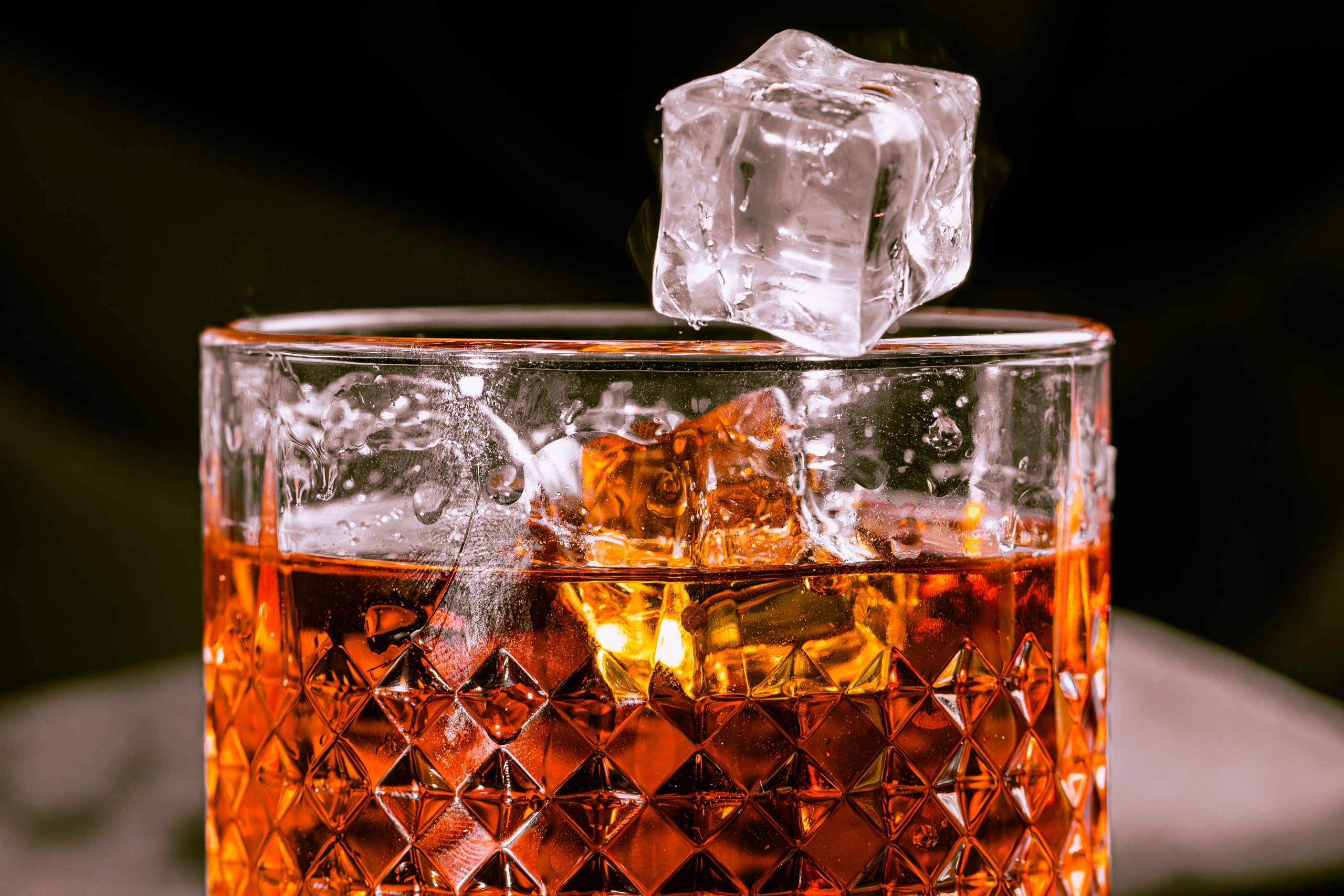
- Price: $45.95 per bottle, also served neat or on the rocks at The Underground
- Name: Taken from the Museum’s address, 300 Stewart Ave., the historic federal building
Market Analysis
The numbers behind a small release
A few calculations help frame the run. Two 375 mL bottles equal one standard 750 mL bottle, so the shelf price works out to about $91.90 per 750 mL equivalent. That puts the bourbon in a premium price band for a small-batch release, and it sits well above the Museum’s moonshine positioning.
If every bottle sold at full price, the run would bring in roughly $48,100 (1,047 bottles at $45.95). That figure ignores pours sold at the bar and any costs. The point is the scale. This is a brand-building product, not a major profit center.
The blind tasting
The Museum used an outside check. It brought in Matt McColl, a sommelier at the Garagiste Wine Room, which has a James Beard Award nomination, and a WSET Level 4 diploma candidate. An avid bourbon collector joined him so the tasting could be truly blind. They evaluated three prospective expressions, first neat, then with three to four drops of water. Both tasters independently picked the Museum’s charred oak barrel as the winner.
The release also says the panel favored the bourbon over comparable small-batch bourbons, naming Larceny Barrel Proof, Maker’s Mark Barrel Select and Chestnut Farms Single Barrel.
This is useful marketing and the story is well told. It is also worth reading carefully. The panel was two people, the test was commissioned by the Museum, and the release does not describe the scoring method. Treat it as a credible internal quality check, not an independent competition result.
The launch mechanics
The launch stacked several tactics. A release party on Sept. 19 featured live music by Coco and The Sidecars and a Gold Rush cocktail at $16, made with the bourbon, honey, lemon and an optional egg white. Distillery Manager David Vondrasek was on site for a meet-and-greet. The bourbon is also poured at the bar, which gives guests a chance to taste before they buy a bottle.
Key Insights
1. Constraint can define the product. The distillery did not set out to make an unusual bourbon. It made the bourbon its equipment and its existing recipe could support. The 100% corn mash then became the differentiator.
2. Patience is a competitive asset. The first barrels went in during 2022 and the bourbon finished in 2026. Most competitors in the hospitality space cannot afford to leave inventory untouched for years. Doing it gave the Museum something that cannot be copied quickly.
3. Outside validation carries weight, even at small scale. A sommelier and a collector gave the brand a third-party voice without the cost of a national competition.
4. The story is already written. Prohibition-era “medicine,” the repeal of the 18th Amendment and a federal building address all feed the name and the narrative. The bourbon extends a story, so it does not need to invent one.
5. Scarcity helps, but only if it holds. Marketing the run as “limited to just 1,047” creates urgency. The October release still listing bottles as available shows that the scarcity claim and actual sell-through can move at different speeds.
6. Tasting rooms convert. Serving the bourbon neat or on the rocks at the speakeasy lets guests try it before they commit $45.95.
Notes for Operators
- Small producers can enter a premium category by building on an existing, proven product.
- Third-party tastings help, but describe them honestly. Readers can tell the difference between a small panel and a major medal.
- Numbered barrels and exact bottle counts make a limited run feel specific and credible.
- Pair a release with an event and a signature cocktail so the product gets used the same week it launches.
Discussion Questions
- The Museum chose a 100% corn recipe because of its equipment and existing practice. When is a limitation a better starting point than an ideal specification?
- The release uses a two-person blind tasting as its main proof of quality. How much credibility should that carry, and what would make it stronger?
- At $45.95 for 375 mL, who is the buyer: the tourist, the collector or the local regular? How would the answer change the marketing?
- Limited editions work when they sell out. What should the Museum do if the run moves slowly?
- The bourbon took roughly four years from first barrel to bottle. What kinds of businesses can afford that timeline, and what does it do to cash flow?
- How does a nonprofit museum balance a spirits program against its educational mission?
Conclusion
300 Stewart Reserve is a small product with a clear logic. The Museum took a recipe it already knew, gave it time, checked the result with outsiders and attached it to an address and a history it already owns. The bottle count is modest and the revenue ceiling is low. The brand lesson is bigger: a venue that can tell a convincing story can turn almost any product into part of it.
Key Takeaways
- 1,047 bottles of 375 mL were produced, priced at $45.95, or about $91.90 per 750 mL equivalent.
- The bourbon is 100% corn, 90 proof, aged 37 months in new charred oak.
- Distilling at The Underground began in 2018, and the bourbon project began in September 2022.
- A two-person blind tasting favored the Museum’s barrel over three named small-batch competitors.
- The Sept. 19 release party paired the launch with live music and a $16 Gold Rush cocktail.
- The Museum’s October release still listed the bourbon as available.
Source and Editorial Notes
- Source: The Mob Museum’s Underground distillery release dated Sept. 10, 2026, distributed by The Vox Agency, plus the Museum’s October 2026 program release.
- Vondrasek’s statement in the release says producing straight bourbon at 300 Stewart gives the Museum a way to bring Prohibition history to life, and that the move from moonshine to bourbon was an easy yes. Pull exact wording from the original if you want it as a quote.
- Verify before publishing: the timeline does not fully reconcile. Barreling began in September 2022 and the release says the product was complete in February 2026, which is closer to 41 months than the 37 months stated. Ask the Museum whether the barrels were filled earlier or whether finishing time is counted separately.
- The per-750 mL price, the $48,100 ceiling and the federal 51 percent corn rule come from our own calculation and general industry knowledge. They are not claims from the release.