

The word ayni comes from Quechua, the language of the Andean highlands that was the administrative tongue of the Inca Empire and remains spoken by millions of people across Peru, Bolivia, Ecuador, and Colombia today. In the Andean worldview, ayni describes a principle of reciprocity and mutual aid that operates both between people and between humanity and the natural world. The most direct translation is something like “today for you, tomorrow for me,” though the concept carries more weight than that phrase suggests: it implies a community bound together by ongoing exchange rather than transactional relationships.
It is an unusual name for a restaurant. It is also the right name for a restaurant whose concept description commits to the sourcing and preparation philosophy the word represents, rather than using it as an aesthetic gesture disconnected from what actually happens in the kitchen.
Ayni Peruvian Restaurant is opening in fall 2026 at Suite N in The Collective, 3900 Paradise Road, in the former space occupied by Satay. It joins a restaurant cluster that has become one of the more interesting off-Strip dining corridors in Las Vegas, and it adds Peruvian cuisine at a moment when the category is receiving serious national culinary attention.
What The Collective Has Become
The Collective, the 58,000-plus-square-foot center built in 1986 and renovated in 2022, has established a character distinct from the surrounding Paradise Road commercial landscape through the accumulation of independent and chef-driven concepts that have chosen it over Strip real estate. Cleaver Steakhouse is there. Marrakech Mediterranean has operated in the complex for years. Earlier in 2026, Braseria by EDO, the Spanish-French brasserie from EDO Hospitality, opened in The Collective’s second-floor space, adding a concept with genuine culinary ambition and regional identity to a building that has increasingly earned its reputation as a destination for residents who want serious food without the resort premium attached to Strip dining.
The corridor’s logic compounds. Each chef-driven concept that establishes itself at The Collective provides a reason for a food-engaged customer to make the drive to 3900 Paradise Road rather than defaulting to a resort property. When multiple concepts worth visiting cluster in one location, the visit becomes a destination rather than an errand, and each new opening benefits from the audience that the existing operators have already trained to show up.
Ayni arrives into this environment with a specific proposition: Peruvian cuisine grounded in Andean tradition and interpreted through a contemporary lens, in a room designed to reflect the visual culture of its geographic reference point.
Peruvian Cuisine and the Current Moment
Peru’s culinary ascendancy in international dining is not a recent development, but its penetration into the American regional dining market at serious quality levels is still uneven. Lima has operated for years as one of the world’s most significant culinary cities, generating techniques and ingredient combinations that have influenced chefs far outside the Peruvian tradition. Nobu Matsuhisa’s incorporation of Peruvian ingredients into Japanese technique, an approach he developed during his years cooking in Lima, produced a fusion style that became one of the most influential culinary directions of the past three decades. More recently, the Basque-Peruvian kitchen at Central in Lima and the broader nikkei cuisine tradition, representing Japanese immigration to Peru over more than a century, have generated international attention that has positioned Peruvian cooking as one of the world’s most complex and historically layered culinary traditions.
Las Vegas has seen sporadic Peruvian restaurant openings over the years without the category establishing a definitive flagship presence at the level that other international traditions have achieved. The market for Peruvian food in Las Vegas has been served primarily by smaller neighborhood restaurants that serve the city’s Peruvian-American community and by the peripheral Peruvian influences that appear in the broader Latin American restaurant landscape.
Ayni’s stated commitment to Andean roots interpreted through a contemporary lens positions it specifically in the segment of the Peruvian dining market that is generating the most culinary conversation: not strictly traditional Peruvian home cooking, and not fusion that uses Peruvian identity as a wrapper for something else, but a thoughtful engagement with the Andean ingredient tradition that produces food recognizably within the Peruvian register while being made by a kitchen that understands what contemporary restaurant technique can contribute.
The Name as Operating Philosophy
The Ayni concept description includes the statement that “every ingredient that reaches our table comes from a seed that trusted the sun,” which could be dismissed as marketing language if it were not paired with a name whose literal meaning is about reciprocal relationship between humans and their environment. The Andean concept of ayni applies specifically to agriculture in its original context: the community labor that planted, tended, and harvested together according to principles of mutual obligation.
A restaurant named Ayni that sources ingredients with the care that name implies is making a coherent statement about its relationship to Peruvian culinary tradition. A restaurant named Ayni that treats the name as a design aesthetic without corresponding kitchen practice would be making a different kind of statement. The distinction between these two versions of the concept will be visible in the food that the kitchen produces, and in whether the sourcing commitment that the name implies shows up in the flavors on the plate.
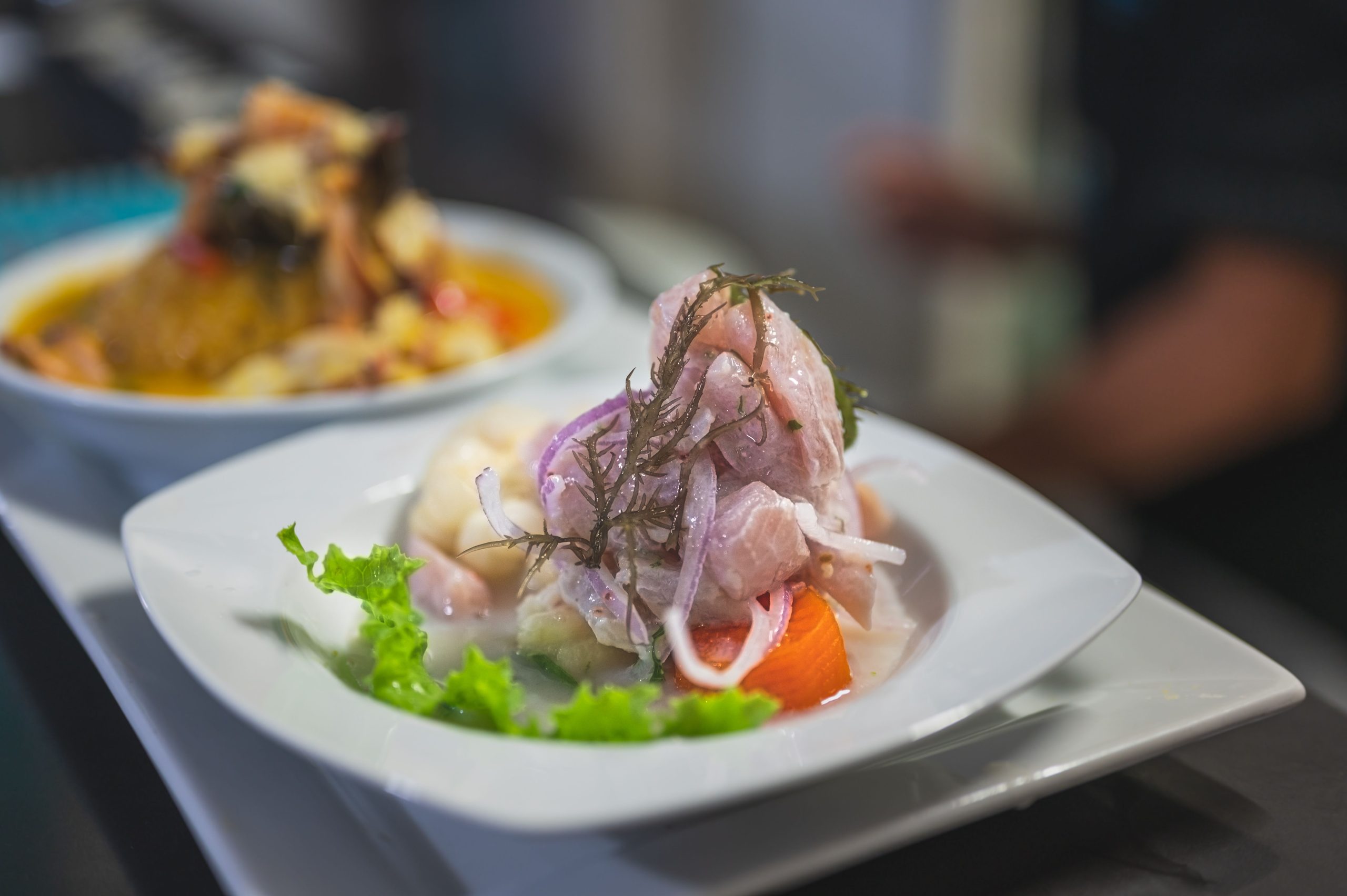
Peruvian cuisine’s ingredient tradition is one of its primary claims on international culinary attention. Peru’s geography, spanning coastal desert, Amazon basin, and Andean highland within a single country, produces an ingredient diversity that most culinary traditions cannot match. The purple potato, the causa, the aji amarillo pepper, the huacatay herb, the anticucho marinade, the leche de tigre ceviche cure: these are not interchangeable components of a generic “Latin American” culinary identity. They are specific to a place and a tradition, and a restaurant that handles them with appropriate seriousness produces food that tastes like Peru rather than like a category.
Paradise Road as a Culinary Address
The Collective’s Paradise Road location puts Ayni in an address that Las Vegas food-engaged residents have become increasingly willing to seek out. The corridor between Flamingo Road and Tropicana Avenue on Paradise holds a cluster of independent restaurants that has no single anchor concept but functions as a dining neighborhood in ways that other off-Strip commercial streets have not achieved at the same density.
The 2022 renovation of The Collective building updated a structure that had aged into obsolescence and created conditions under which chef-driven independent concepts were willing to sign leases. Before the renovation, the address required tenants to look past dated infrastructure to see the location’s underlying advantages: proximity to the Las Vegas Convention Center’s dining-demand spikes, access to the Paradise Road residential population, and the absence of the competitive disadvantages that Strip real estate imposes on non-resort concepts. After the renovation, those advantages became easier to act on, and the tenant mix shifted accordingly.
Ayni joins Braseria by EDO, Cleaver Steakhouse, and Marrakech Mediterranean in a building that now presents a genuinely eclectic culinary range. Spanish-French brasserie. American steakhouse. Moroccan and Mediterranean. Peruvian. Each concept occupies a specific culinary identity without overlapping in ways that force internal competition. The effect, for a guest who wants to make The Collective a destination, is a building that offers genuine choice across culinary traditions within a single parking lot.
Notes and Key Takeaways
Ayni Peruvian Restaurant is opening fall 2026 at Suite N in The Collective, 3900 Paradise Road, Las Vegas, in the former Satay space. Owner Gonzalo Quispe describes the concept as Andean-rooted Peruvian cuisine with contemporary interpretation, in a room designed to reflect Andean visual culture.
The opening joins a growing cluster of chef-driven concepts at The Collective including Braseria by EDO, Cleaver Steakhouse, and Marrakech Mediterranean, reinforcing The Collective’s identity as a serious off-Strip dining destination distinct from the resort corridor.
Important Insights:
Peruvian cuisine’s absence from Las Vegas at serious flagship-quality levels, despite the city’s comprehensive international culinary coverage across most other traditions, represents a genuine market gap. A well-executed Peruvian concept at The Collective is not entering a saturated market. It is establishing a category position that the Las Vegas dining landscape has not filled at comparable quality levels.
The word ayni as a restaurant name carries enough semantic specificity that it sets a standard the kitchen has to meet. A guest who knows what the word means arrives with an expectation about the restaurant’s relationship to its sourcing and its tradition. This is a higher bar than a name chosen for phonetic appeal or market positioning, and it creates an accountability to the culinary identity being claimed.
The Collective’s renovation-driven clustering of serious independent concepts demonstrates that off-Strip Las Vegas can build restaurant neighborhoods through the accumulation of compatible tenants in renovated multi-tenant buildings. This is a different development model than the purpose-built food halls that have opened elsewhere in the market, and its success suggests that landlords willing to invest in infrastructure and tenant selection can generate culinary density that competes with the destination-dining pull of resort properties.
Peruvian cuisine’s technical range, from the raw precision of ceviche and tiradito to the long-cooked complexity of adobo and seco to the street-food register of anticuchos and picarones, offers a kitchen more expressive range than most single-country culinary traditions provide. A Peruvian restaurant with a serious kitchen has license to present an unusually varied menu without exceeding the coherence of its culinary identity, which is a structural advantage for building a dining room that can serve the same guest on multiple occasions without repetition.
The aji amarillo pepper, the most characteristic flavor in Peruvian cooking, is a specific sensory identifier that either appears in the food at an authentic Peruvian restaurant or does not. A guest familiar with Peruvian cuisine will know within the first dish whether Ayni’s kitchen is working from genuine engagement with the tradition or producing an approximation of it for an audience assumed to be unfamiliar with the reference. This is the kitchen’s primary credentialing moment.
Sources:
– Ayni Peruvian Restaurant Opens Fall 2026 in Las Vegas
– Gleaming new restaurant opens overlooking Las Vegas Strip golf course
– JP’s Brasserie & Sports Den to open in west Las Vegas Valley