



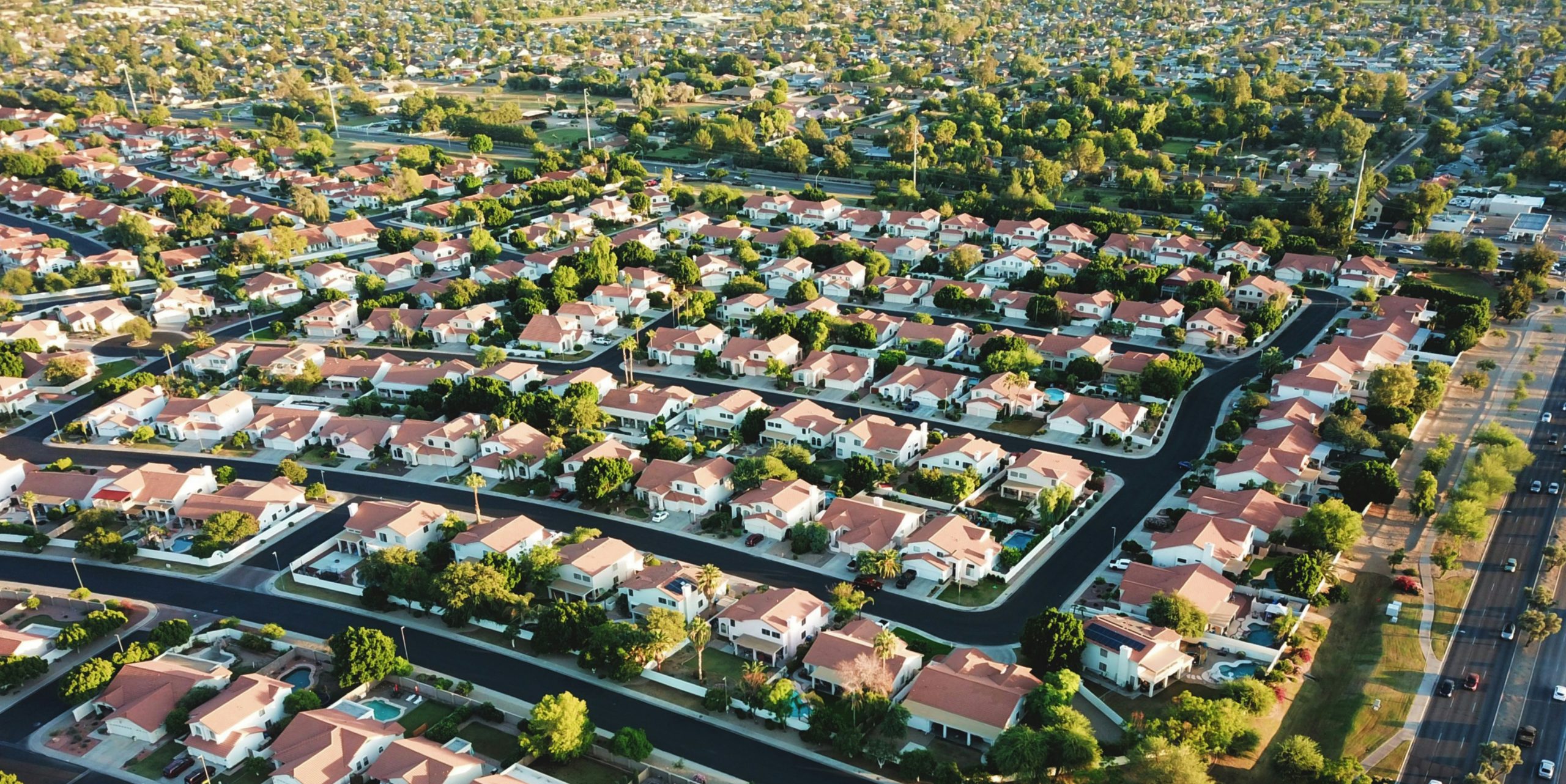
The Las Vegas housing market has a tendency to make headlines when it moves in either direction. In 2022, it was the speed of the price surge. In 2023 and early 2024, it was the correction fears that never quite materialized into the crash some predicted. In late 2025, it was the gradual softening that coincided with broader tourism headwinds. Now, in the summer of 2026, it is making headlines for something more unusual: staying exactly where it is at the highest level it has ever been.
Las Vegas Realtors released its June 2026 market report on July 7, and the headline figure was the same number that appeared in the May report six weeks earlier. The median price of existing single-family homes sold in Southern Nevada through the Multiple Listing Service in June was $490,000, unchanged from the all-time high set in May and up 1 percent from June 2025. Two consecutive months at the same record level is not a statistical accident. It is price stability at an unprecedented high, which is a fundamentally different market condition than either rapid appreciation or price decline.
“Local home prices don’t always follow national trends, but they have been lately,” said George Kypreos, president of Las Vegas Realtors. “Much like what we’re seeing here in Southern Nevada, the median home price in the U.S. recently hit an all-time high. Prices are staying at this level in part because of our relatively tight housing supply and the strong demand for homes here.”
The Numbers in Full
June produced 2,823 existing homes, condos, and townhomes sold in Southern Nevada, with single-family home sales up 18.3 percent compared to June 2025 and condo and townhome sales up 1.2 percent. The sales volume increase alongside flat prices is a critical detail. This is not a market where prices are holding because nobody is buying. Transactions are accelerating meaningfully while the median price remains anchored at its record level.
Available inventory provides context for why prices are holding rather than rising further despite that sales acceleration. At the end of June, 7,147 single-family homes were listed without pending offers, a 2.2 percent increase from the same period a year earlier. Condos and townhomes available totaled 2,690 units, up 4.9 percent year over year. Based on the current sales pace, Southern Nevada’s housing supply stood at approximately three and a half months, slightly below the level recorded a year ago.
Three and a half months of supply sits firmly in the range that housing economists typically characterize as a seller’s market, where demand is sufficient to absorb available inventory faster than new listings can replenish it. That supply constraint is doing the work of holding prices at record levels even as mortgage rates remain elevated and national affordability conditions remain challenging for buyers.
The condo and townhome market tells a different story within the same zip codes. The median price for attached properties in June was $292,000, down 4.3 percent from June 2025 and meaningfully below the sector’s own record of $315,000 set in October 2024. The divergence between single-family home strength and attached property softness reflects a familiar dynamic in the Las Vegas market: buyers with sufficient financial means are bidding for single-family homes and accepting stretched prices, while the more affordability-sensitive attached property segment faces more resistance from buyers squeezed by elevated mortgage rates.
Luxury market activity reinforced the premium end’s strength. There were 204 luxury home sales, defined as transactions at $1 million or above, in June, up from 170 in May. That 34-transaction increase in a single month is a meaningful jump for a segment that typically sees modest month-over-month variation, and it suggests the high-net-worth buyer segment Redfin identified as driving luxury appreciation in earlier 2026 data continues to be active even as summer heat dampens mid-market activity.
Why Supply Stays Tight
Understanding why Las Vegas home prices have reached and now held at record levels requires understanding why supply has not expanded to meet demand in ways that would normally moderate prices.
New construction activity is constrained by several overlapping factors. Construction costs remain elevated compared to pre-pandemic levels, compressing builder margins on projects outside the luxury segment and making entry-level and mid-range new home development economically challenging. UNLV construction experts have noted that building above three stories has become prohibitively expensive given current construction economics, explaining why Las Vegas is not seeing the high-rise apartment development that might otherwise add meaningful inventory.
Federal land constraints represent a structural ceiling on the valley’s developable area that is unique to Las Vegas among major metropolitan areas. The Bureau of Land Management controls enormous swaths of land surrounding the Las Vegas Valley, and releasing that land for private development is a slow process governed by federal policy and political dynamics that move independent of local housing market conditions. The relative scarcity of entitled, developable parcels within convenient distance of employment and amenities keeps a genuine ceiling on how quickly builders can respond to demand signals even when economics would otherwise support increased production.
Existing homeowner behavior adds another dimension. Many Las Vegas homeowners who purchased or refinanced in 2020 and 2021 carry mortgage rates between 2.5 and 3.5 percent. Selling their current home and buying a replacement at today’s mortgage rates, which remain well above 6 percent for most borrowers, means replacing cheap debt with expensive debt on a larger loan balance. This rate lock-in effect reduces voluntary listings from move-up buyers who would otherwise represent natural inventory, suppressing supply below what would exist in a normal rate environment.
The combination of constrained new construction, federal land limitations, and rate lock-in keeping existing homeowners in place creates persistent supply tightness that elevated mortgage rates alone cannot easily counteract by reducing demand.
The Mortgage Rate Paradox
Las Vegas home prices holding at record highs despite elevated mortgage rates appears paradoxical if you assume that higher rates uniformly suppress demand. The paradox resolves when you recognize that the Las Vegas buyer pool is not uniformly rate-sensitive.
Cash buyers represent a substantial share of Las Vegas transactions. The city’s continued attraction of high-net-worth residents from California, Washington, and New York, documented in recent months through moves like Zillow co-founder Rich Barton’s June announcement of Las Vegas residency, tends to produce cash-heavy transactions where mortgage rates are largely irrelevant. Luxury home sales, the 204 transactions above $1 million in June, also skew toward cash or minimal-leverage financing that insulates those buyers from rate sensitivity.
The buyers most affected by elevated mortgage rates are first-time buyers and move-up buyers in the $300,000 to $500,000 range who depend on financing to make purchases work. These are precisely the buyers most active in the condo and townhome market, which is why that segment shows 4.3 percent year-over-year price declines while single-family homes hold at records. The market is bifurcating along the same lines visible in luxury versus non-luxury data, with cash-heavy buyers sustaining the top end while rate-sensitive buyers find themselves squeezed out of or toward the lower-priced attached property segment.
National real estate brokerage Redfin puts the Southern Nevada median sale price at $453,639, below LVR’s MLS-based $490,000 figure, partly because the two data sources measure slightly different transaction sets, with Redfin’s methodology capturing some transactions that the MLS does not and vice versa. The discrepancy is a useful reminder that the specific number matters less than the directional signal: prices are at or near record levels by any reasonable measurement approach, and that is consistent across data sources even when the precise figures differ.
Las Vegas in the National Context
Kypreos’s observation that Las Vegas home prices are following national trends is accurate and worth unpacking. The national median home price recently hit an all-time high, according to Redfin, which puts the U.S. median at $408,838, a 2.5 percent increase year over year. Las Vegas at $490,000, while above the national median, is not dramatically more expensive than the country as a whole given what the city offers in terms of employment, entertainment, and climate.
By the standards of the coastal markets Las Vegas competes with for high-net-worth residents, $490,000 for a median single-family home remains a significant bargain. The comparable figure in San Francisco exceeds $1.3 million. In Manhattan it exceeds $1 million. Even in markets like Seattle, which has been exporting wealthy residents to Las Vegas in 2026, the median single-family home price has recently been reported at over $1 million in King County. A Las Vegas home at $490,000 costs less than half of what a comparable transaction would cost in most coastal metros that Las Vegas increasingly competes with for residents.
This relative affordability, even at Las Vegas’s record price, is part of what sustains demand. Buyers relocating from expensive coastal markets are often trading down in absolute terms even while buying a larger or newer home, generating positive cash flow through the combination of lower purchase price and Nevada’s zero state income tax. That structural advantage exists as long as the price differential between Las Vegas and coastal markets remains substantial, which at current levels it clearly does.
Redfin’s May 2026 data showing Las Vegas ranking second nationally in luxury home price appreciation at 16.1 percent year over year operates in parallel with this broader market picture. The luxury segment is appreciating rapidly. The overall market is holding at record levels with 1 percent annual gains. And the condo market is softening modestly. Each reflects a different buyer segment responding to the same macro environment in ways conditioned by its specific financial position and motivations.
What the Sales Volume Jump Signals
The 18.3 percent increase in single-family home sales volume compared to June 2025 is arguably more important than the stable median price for understanding where the market is heading. Rising transaction volume alongside stable prices is the classic signature of a market finding equilibrium: enough buyers willing to transact at current prices to absorb available inventory without requiring sellers to cut, but not so much demand that prices are being bid aggressively higher.
This equilibrium condition is actually more sustainable than rapid appreciation, which tends to attract speculative buyers and eventually price out the primary buyer segments that provide stable long-term demand. A Las Vegas market where prices hold at record levels while transaction volumes normalize and even accelerate represents a healthier foundation for long-term price stability than the frenzied appreciation of 2021 and early 2022.
The three and a half months of supply, a figure that declined slightly from a year earlier despite more homes being listed, indicates that the sales acceleration is absorbing new inventory about as fast as it comes to market. Supply would need to expand substantially to shift market dynamics meaningfully, which given the structural constraints on new development discussed above is unlikely to happen quickly enough to change the medium-term price trajectory.
What Buyers and Sellers Should Take From This
For sellers, two consecutive months at the all-time high median price represent near-ideal conditions for listing. Motivated buyers exist in sufficient numbers to complete transactions at record prices, as the 18.3 percent volume increase confirms. But the market is also showing some signs of demand sensitivity, including continued softness in the condo segment and increased inventory versus a year ago. Sellers who price appropriately for current conditions are transacting. Sellers who price at aspirational levels above market are experiencing the same days-on-market increases that have become common in premium segments nationally.
For buyers, the picture is more nuanced. Three and a half months of supply is a seller’s market by most definitions, but it is far from the extreme 30-day supply conditions of 2021 and 2022. Buyers have more time to make decisions and negotiate terms than they did at the peak of frenzy, even if the median price itself remains at an all-time high. The condo and townhome segment, down 4.3 percent year over year, may offer relative value for buyers who can accept attached living. And the 7,147 single-family homes listed without offers represents genuine choice, even if absorbing those listings quickly when priced correctly.
For investors, Las Vegas’s combination of record prices, strong rental demand, population growth driven by continued in-migration, and structural supply constraints creates a reasonably favorable backdrop for long-term holding strategies, though the declining condo median price is a signal worth monitoring for those investing in attached properties specifically.
Key Takeaways
- The median price of existing single-family homes in Southern Nevada held at $490,000 in June 2026, matching the all-time high set in May and up 1 percent from June 2025
- Single-family home sales volume rose 18.3 percent compared to June 2025, reaching 2,823 total transactions across all property types
- Available single-family home inventory stood at 7,147 listings without offers, a 2.2 percent increase year over year, representing approximately 3.5 months of supply
- The condo and townhome median price fell to $292,000, down 4.3 percent from June 2025, a divergence from the single-family market’s record performance
- Luxury sales above $1 million rose to 204 transactions in June, up from 170 in May
- The national median home price recently hit an all-time high as well, at approximately $408,838 according to Redfin, supporting LVR President Kypreos’s observation that local prices are tracking national trends
- Las Vegas’s record median remains substantially below comparable metrics in coastal markets like San Francisco, Seattle, and Manhattan
- Structural supply constraints including federal land control, elevated construction costs, and mortgage rate lock-in among existing homeowners underpin continued price support
Important Insights
Two consecutive months at the same record price level is a more meaningful market signal than a single spike to a new high. Price spikes can be driven by a handful of outlier transactions or temporary demand conditions. A plateau at record levels across two full months of transaction volume means the market has tested this price level with real buyers in real transactions and found it to be where supply and demand currently balance. That is a more durable price discovery signal.
The divergence between single-family home records and condo and townhome softness reflects the increasingly bifurcated economic reality of Las Vegas residents. High-income buyers and cash-heavy migrants sustain the single-family market at record prices. Working- and middle-class buyers in the attached property segment are experiencing genuine affordability pressure that the record single-family headline obscures. Policymakers and economic development officials who use the median single-family price as a proxy for overall housing market health will systematically underestimate the affordability challenges facing ordinary Las Vegas households.
The rate lock-in effect is suppressing listing activity in ways that benefit current homeowners but create headwinds for buyers. This dynamic will eventually resolve, either through rates declining to levels where selling and reborrowing becomes less punitive, or through homeowners eventually deciding to transact despite the rate penalty for life-cycle reasons such as job relocations, family changes, or estate settlements. How quickly that unlocking happens will significantly determine whether the supply picture tightens further or begins to normalize.
The 18.3 percent sales volume increase is the most encouraging signal in the June data for the long-term health of the Las Vegas housing market. Markets that combine record prices with rising transaction volumes are showing genuine demand depth rather than artificial price support. That combination is more sustainable and more indicative of underlying economic strength than scenarios where prices hold only because nobody is selling, or where volume collapses as prices remain nominally elevated.
Las Vegas at $490,000 remains meaningfully cheaper than the coastal markets it increasingly competes with for residents. As long as that differential exists alongside Nevada’s zero state income tax, the migration-driven demand that has been a primary engine of Las Vegas price appreciation since 2020 is unlikely to abate materially. Each new high-profile relocation announcement, from billionaires to tech executives to ordinary households fleeing high-cost markets, adds incremental demand to a supply-constrained market where each additional buyer puts upward pressure on the record median price.
For monthly Southern Nevada housing market data, visit Las Vegas Realtors. For national housing market comparisons, visit Redfin Data Center.