



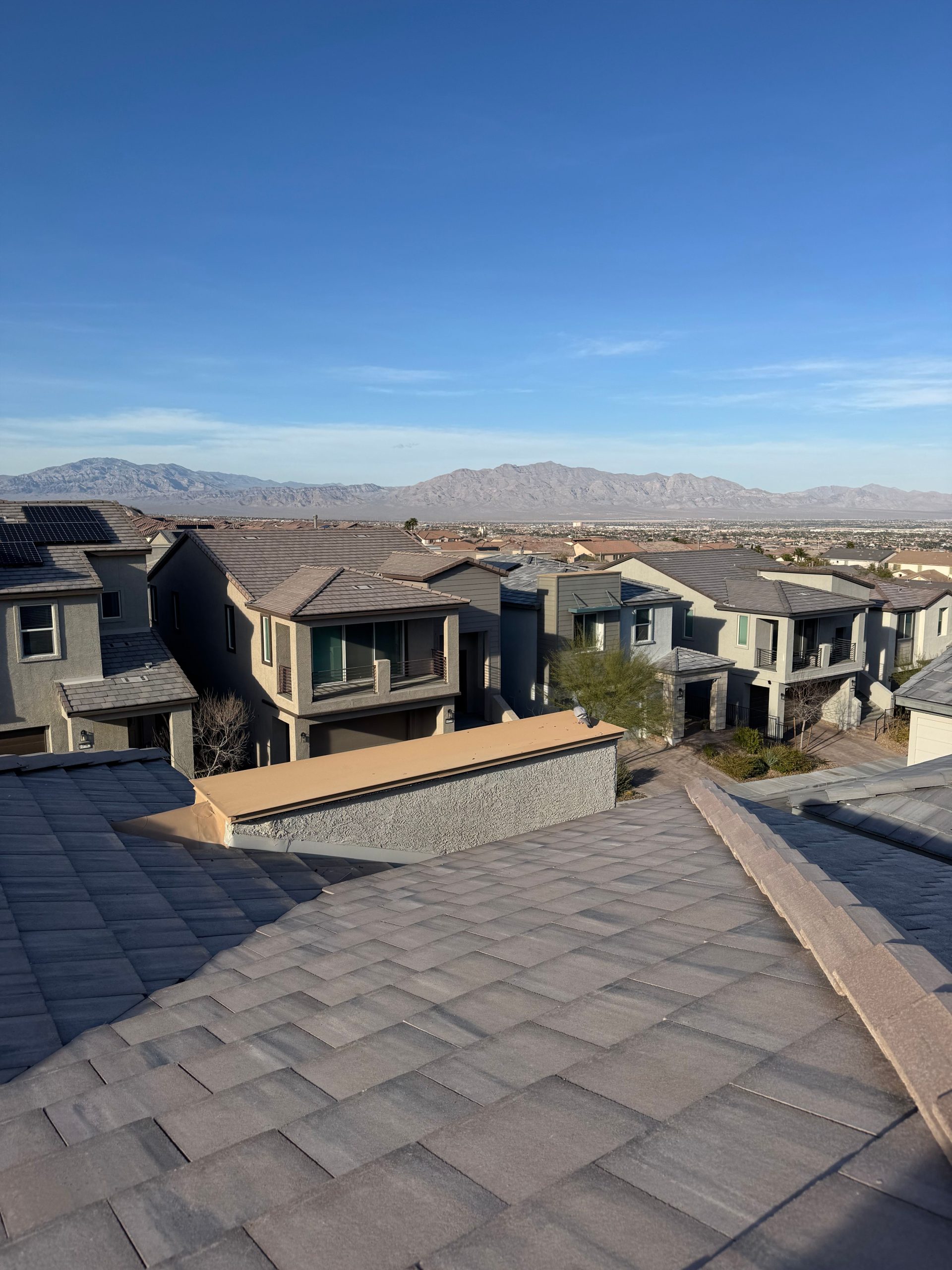
The Las Vegas Realtors released their August 2026 housing report on Tuesday, and the headline number deserves a careful reading before anyone draws conclusions from it.
Home sales in Southern Nevada dropped 11.9 percent in August compared to July, a month-over-month figure that sounds alarming until you understand the context around it. The report also showed a 1.7 percent decline compared to August 2025, a year-over-year comparison that provides more meaningful signal about the market’s direction. LVR president George Kypreos offered the interpretation his organization believes the data supports: “Local home prices have been pretty stable this year, and really for the past two years or so. It’s not surprising to see sales slowing down a bit, especially considering how mortgage rates have been rising recently, and that can be a drag on the housing market.”
The median sale price for Southern Nevada homes reached $475,000 in August, a figure that reflects both the market’s resilience and the affordability challenge that has been accumulating across the Las Vegas metropolitan area for the better part of four years.
Those two facts, slowing transaction volume and stable prices, exist in real tension with each other, and understanding how they coexist tells you more about the Las Vegas housing market than either number does alone.
What $475,000 Actually Means
Las Vegas’s median home price has risen dramatically over the past decade. In 2016, the median was roughly $230,000, a post-financial-crisis recovery market still working its way back from the catastrophic price collapses of 2008 and 2009 that hit Nevada harder than almost any other state.
The decade since has been essentially continuous appreciation, interrupted briefly by the interest rate shock of 2022 and 2023 that temporarily cooled demand across American housing markets. Las Vegas didn’t crash in 2022 the way some overheated markets did. Prices softened, transaction volume fell, and the market entered the slow-motion equilibrium that has characterized it through 2024, 2025, and now into 2026.
At $475,000 median, Las Vegas sits in an interesting position in the national context. It’s substantially more affordable than coastal California markets: Los Angeles, San Diego, San Francisco, San Jose. It’s more affordable than Phoenix has become. It remains accessible to the upper range of middle-income buyers in a way that many western metros no longer are. But it’s not the affordable alternative it once was for the working-class families, service industry employees, and young professionals that the Las Vegas economy depends on and that once found homeownership achievable here.
The Las Vegas median household income hovers around $65,000 to $70,000 annually. A household at that income level, qualifying for a conventional mortgage at current rates in the upper-6-to-7-percent range, can afford roughly $300,000 to $350,000 in home purchase price using standard debt-to-income ratios. The gap between what median-income households can finance and what median home prices require has grown substantially and shows no signs of closing.
That gap doesn’t show up in price statistics. It shows up in who buys homes. Cash buyers, investors, higher-income dual-income households, and buyers using equity from previous home sales now represent a larger share of Las Vegas transactions than they did when affordability was less constrained. Median income buyers have been pushed toward the rental market, toward outer suburbs and exurbs where prices are lower, or toward the decision not to purchase at all.
Why Sales Volume Falls While Prices Stay Flat
The 11.9 percent month-over-month sales decline and the stable median price aren’t contradictory. They reflect a market operating under the specific conditions that produce this combination: motivated sellers who would rather hold than accept price cuts, buyers who want to transact but find financing costs prohibitive at current rates, and a resulting low-volume equilibrium where transaction counts fall but prices don’t move much in either direction.
Mortgage rates in the upper 6 to 7 percent range significantly raise monthly payments compared to the sub-3-percent environment of 2020 and 2021. A buyer financing $400,000 at 3 percent pays roughly $1,686 per month in principal and interest. The same buyer financing the same amount at 6.75 percent pays roughly $2,594 per month, a 54 percent increase in monthly carrying cost with no change in the price they paid. That change in financing cost has been the primary demand suppressant in Las Vegas and virtually every other American housing market since rates began rising in 2022.
Sellers face the corresponding constraint: the homeowner who refinanced at 3 percent in 2020 or 2021 and now contemplates selling faces a new purchase at 6.75 percent. Selling means giving up the locked-in low rate. That “golden handcuff” effect reduces the supply of homes available for sale, since owners who would otherwise trade up or downsize or relocate find the financial cost of moving prohibitive at current rates.
Low supply and suppressed demand, meeting in a market where both sides have reasons to sit still, produces exactly the outcome the August data reflects: fewer transactions at roughly stable prices. Neither buyers nor sellers are capitulating. Both are waiting for conditions they find more favorable.
New Construction as the Safety Valve
One dimension of the Las Vegas housing picture that the existing home sales data obscures is new construction, which has been running at elevated levels compared to the years following the 2008 crash and has provided some supply-side relief in the segments of the market where builders operate.
KB Home opened its largest North Las Vegas community in a decade this month, a project planned for more than 1,500 houses that represents one of the more significant new development announcements in recent years. Clark County commissioners approved additional apartments and retail space for the Downtown Summerlin area in early September. Developers have bought more than 900 acres for what’s being described as Las Vegas’s biggest new community in years.
New construction addresses affordability constraints differently than existing home sales. Builders can adjust the size, finish level, and features of homes to hit specific price points, and can offer rate buydowns and incentives that make financing more accessible than the purchase of existing homes at market rates. Entry-level new construction in outer Las Vegas Valley communities has maintained more accessibility for first-time buyers than the existing home median would suggest.
The tension is location. Affordable new construction in Las Vegas tends to appear in North Las Vegas, Henderson’s outer areas, and the communities east and west of the traditional Strip corridor, not in the established neighborhoods closer to major employment centers where existing home prices are highest. Workers who need to be near the Strip for hospitality and gaming jobs, who can’t afford the $475,000 median anywhere near their workplace, face commutes from outer suburbs that have their own costs in time, money, and quality of life.
The California Migration Variable
Las Vegas’s housing market has been shaped significantly over the past decade by migration from California, particularly from the Los Angeles and Southern California markets where home prices are two to three times the Las Vegas median. A California homeowner who sold a modest house in the San Fernando Valley for $850,000 arrives in Las Vegas with equity that makes the $475,000 median relatively accessible, often without needing financing at all.
That migration dynamic, which accelerated during and after the pandemic when remote work reduced the geographic constraints on where people could live, has been a persistent source of demand in Las Vegas that operates independently of local income levels. It explains part of why prices have remained stable even as affordability for locally employed workers has deteriorated: the buyer pool includes people whose purchasing power was established in a much more expensive market.
The California wildfires of early 2026, which drove significant numbers of Southern California residents to consider relocating, added another wave of California-sourced demand to Las Vegas’s already California-influenced buyer pool. Whether that wave sustained through the summer or dissipated as displaced residents found other solutions is a question the fall transaction data will begin to answer.
What August Tells September
The August data reflects conditions that haven’t materially changed heading into September and the fall selling season. Mortgage rates remain elevated. Inventory remains relatively tight by historical standards. Price expectations from sellers haven’t collapsed despite the volume decline.
The fall selling season in Las Vegas is historically less pronounced than in markets with stronger seasonal cycles, since the city’s population of retirees, remote workers, and people with flexible schedules reduces the school-year timing pressure that drives spring-and-fall patterns in traditional family-oriented suburbs. But the fall months do typically see more transaction activity than August, as the summer heat that makes moving physically miserable in Las Vegas eases toward the more tolerable conditions of October and November.
If mortgage rates decline meaningfully, perhaps toward 6 percent or below, the demand suppression that has reduced transaction volume should ease and sales activity should recover. If rates stay elevated or rise further, the low-volume equilibrium should persist. The Federal Reserve’s path and its implications for mortgage rates remain the variable that will determine whether Las Vegas’s housing market enters 2027 with momentum or continued stasis.
The $475,000 median sits where it sits because sellers won’t move much below it and buyers who can afford it are still transacting. Whether the buyers who can’t afford it ever find a path into the Las Vegas market is a question with implications well beyond real estate statistics.
Key Insights
The combination of 11.9 percent lower transaction volume and stable median prices at $475,000 reflects the low-volume equilibrium characteristic of markets where both sellers holding locked-in low mortgage rates and buyers deterred by current high rates have reasons to remain inactive, creating a standoff that maintains prices without generating normal transaction velocity.
The gap between Las Vegas’s median home price of $475,000 and what the area’s median household income of approximately $65,000 to $70,000 can finance at current rates represents a structural affordability constraint that has fundamentally changed who can access homeownership in the market, shifting the buyer composition toward equity-rich movers, cash buyers, and higher-income households.
California migration demand, including an additional wave driven by early 2026 wildfire displacement, continues to provide price support in Las Vegas’s existing home market that operates independently of local income levels, explaining some of the disconnect between local affordability conditions and market pricing resilience.
New construction activity, including KB Home’s 1,500-home North Las Vegas community and approvals for additional multifamily development, provides supply-side relief primarily in outer-ring locations rather than near major employment centers, creating a spatial mismatch between where affordable new inventory is appearing and where the hospitality and gaming workforce that drives Las Vegas’s economy needs to live.
Sources
Las Vegas Review-Journal August Housing Report
Las Vegas Review-Journal KB Home NLV Project
Las Vegas Review-Journal Summerlin Development
Las Vegas Realtors
Las Vegas Review-Journal Developers Buy 900 Acres