

The Cromwell had a good run. Opened in 2014 as Las Vegas’s only standalone boutique casino hotel on the Strip, it occupied a genuinely interesting strategic position: premium enough to attract guests who wanted something smaller and more curated than a 3,000-room megaresort, central enough at the corner of Las Vegas Boulevard and Flamingo Road to capture serious foot traffic, and compact enough at 188 rooms to maintain an identity that larger properties cannot.
Then Lisa Vanderpump arrived.
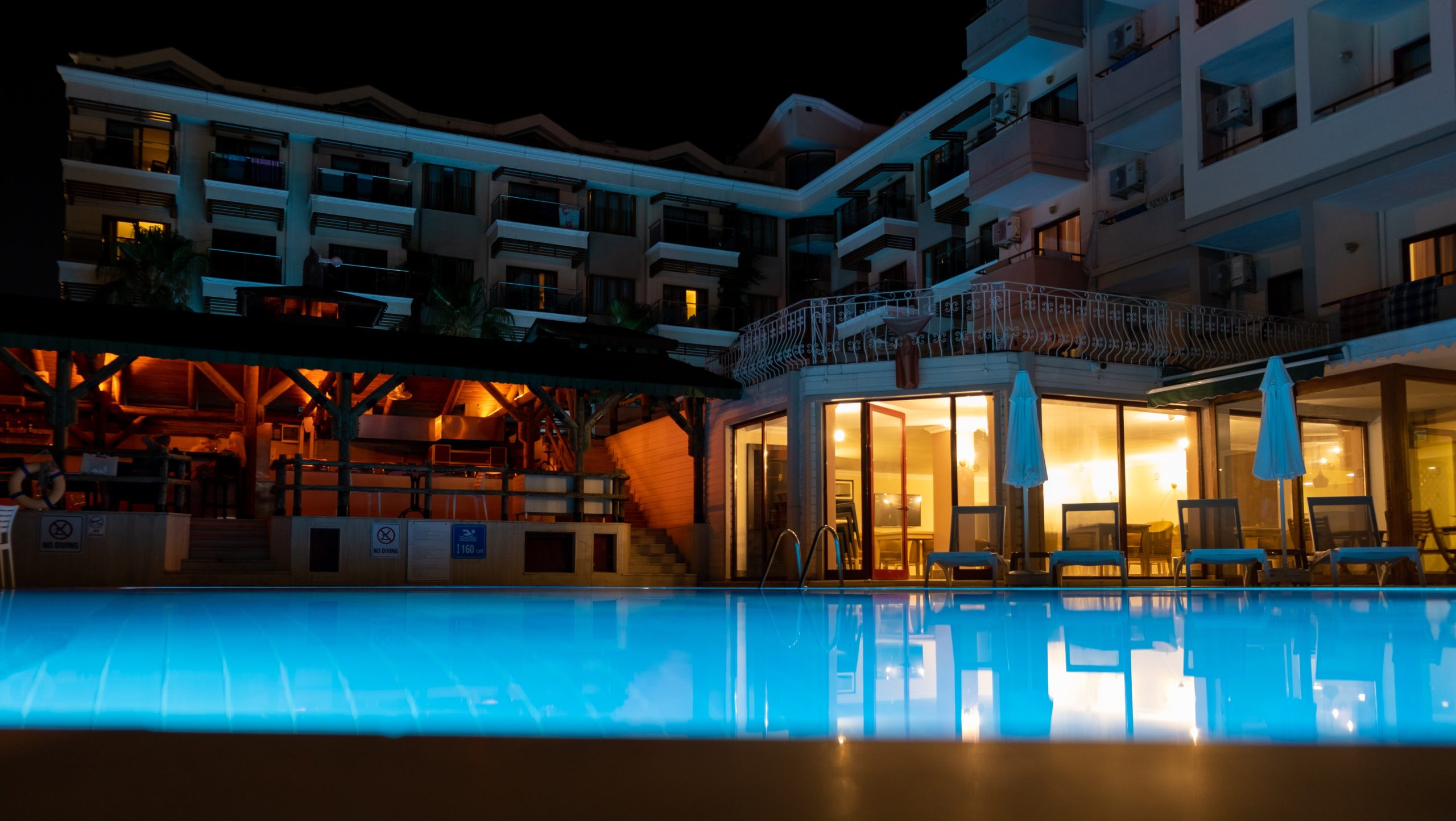
As of May 29, 2026, the Cromwell no longer exists. In its place stands The Vanderpump Hotel, a complete reimagining of the property executed in Vanderpump’s signature “industrial romantic” aesthetic, featuring moss-green and dusty lilac guest rooms, custom furnishings from the Vanderpump Alain design line, a new cocktail lounge, a renovated rooftop pool, and six Vanderpump-branded venues within walking distance on the same stretch of Strip.
The opening marks the most expansive celebrity brand integration in Las Vegas hospitality history, and it raises questions that go well beyond whether the rooms look good. Does the Vanderpump brand have sufficient reach and loyalty to sustain hotel-level revenue? Can celebrity-driven hospitality survive the transition from novelty to routine? And what does this deal tell us about where Vegas hotel development is heading?
The Partnership Architecture
The Vanderpump Hotel represents the sixth venture between Lisa Vanderpump and Caesars Entertainment, a relationship that began in 2019 with the Vanderpump Cocktail Garden at Caesars Palace and has expanded to include Vanderpump à Paris at Paris Las Vegas and Pinky’s by Vanderpump at Flamingo.
Sean McBurney, Caesars’s chief commercial officer and regional president, called Vanderpump the most hands-on partner he has ever worked with. She designed everything, manufactured everything, and personally inspected the work throughout construction. This level of involvement is unusual in celebrity partnership deals, where the celebrity’s primary contribution is often just the name and some light creative direction.
The distinction matters because it affects quality control and authenticity. Vanderpump’s hotels, restaurants, and lounges have a specific look and feel that is clearly her vision rather than a designer’s interpretation of what a celebrity client might want. Guests who are fans of her sensibility get something genuine rather than a licensed approximation.
This hands-on model also creates operational risks. Celebrity involvement that goes deep into operational details means the celebrity’s taste, attention, and energy are baked into the product in ways that are hard to maintain as the relationship potentially evolves over time. What happens if Vanderpump moves on to other projects? Does the hotel have sufficient operational identity of its own to sustain quality independent of her ongoing involvement?
Caesars’s side of the deal is straightforward from a financial perspective. The Cromwell was a fine property but not a destination driver at the level of Caesars Palace, Horseshoe, or Paris Las Vegas. Converting it to the Vanderpump Hotel costs money upfront but potentially generates significantly higher average daily rate and occupancy if the brand drives bookings that the Cromwell could not.
The Attainable Luxury Positioning
Vanderpump described The Vanderpump Hotel using a specific phrase: attainable luxury. Opening weekend rates started at $419 per night for a standard king room, with signature suites scaling to $850 and above.
Attainable luxury is a carefully calibrated positioning. At $419 per night, The Vanderpump Hotel is not cheap by any objective measure. But it is substantially less than rates at Wynn, Encore, or Four Seasons, which routinely exceed $500 on weeknights and can reach $1,500 or more during major events.
The positioning targets guests who want to feel like they are staying somewhere special without spending at the absolute top of the market. These are people who follow Vanderpump’s career, appreciate her design aesthetic, and see staying at her hotel as a different kind of experience than staying at a generic luxury property.
The Bravo fan base is a specific and valuable demographic. Reality television viewers who follow shows like Real Housewives and Vanderpump Rules tend to be female-skewing, in the 25-to-54 age range, and have sufficient disposable income to travel for entertainment experiences. This audience is not just looking for a place to sleep in Vegas. They want an experience that connects to something they already care about.
The genius of Vanderpump’s Vegas expansion is that she has created a geographic cluster of her branded venues that turn a trip to Vegas into a Vanderpump experience rather than just a Vegas experience. Guests staying at The Vanderpump Hotel are an eight-minute walk from Vanderpump Cocktail Garden, seven minutes from Vanderpump à Paris, and four minutes from Pinky’s by Vanderpump at Flamingo. A dedicated fan could spend an entire weekend without setting foot in any non-Vanderpump venue.
This ecosystem dynamic creates customer retention that individual venues cannot achieve. Guests who love one Vanderpump property are primed to try the others. The hotel anchors the ecosystem because it is the only Vanderpump venue where guests sleep, meaning it captures the most valuable customer relationship of all.
Drai’s After Hours Stays. What That Tells You.
One detail in the Vanderpump Hotel’s opening story deserves specific attention: Drai’s After Hours remains on the property despite the complete rebrand.
This is not a small decision. Drai’s After Hours is a late-night nightclub that operates from roughly 1 a.m. to sunrise, drawing a crowd that skews younger and hipper than the typical Vanderpump fan demographic. The aesthetic is nothing like industrial romantic. The music is nothing like the sophisticated lounge programming Vanderpump’s venues typically feature.
Caesars chose to keep Drai’s rather than replace it with something more thematically consistent with the Vanderpump brand. This reveals something important about how casino operators think about nightlife on their properties.
Drai’s After Hours generates revenue that a Vanderpump-branded late night venue could not easily replicate. The afterhours crowd is reliable, consistent, and willing to spend. It represents a customer segment that The Vanderpump Hotel will not attract but that Caesars cannot afford to lose from the property.
The coexistence also reveals the limits of celebrity brand integration. Vanderpump’s aesthetic works for hotel rooms, cocktail lounges, and daytime restaurant experiences. It does not naturally extend to late-night electronic music clubs serving people who have already been out for six hours. Rather than force an awkward fit, Caesars preserved Drai’s as a separate business unit operating under the same roof.
This hybrid approach is worth watching. If The Vanderpump Hotel succeeds and Drai’s continues to perform, it validates the idea that boutique celebrity-branded properties can coexist with legacy nightlife brands in ways that serve different customer segments rather than competing. If there are conflicts about brand perception or customer experience, the arrangement may need to evolve.
The Industrial Romantic Aesthetic as Market Signal
Moss-green and dusty lilac are not typical casino resort colors. Most Vegas hotels operate within a fairly narrow palette of neutrals, golds, and rich blues that signal luxury without taking aesthetic risks. The Vanderpump Hotel’s color choices are a deliberate departure that signals something about the intended guest.
People who are comfortable with, and excited by, moss-green and dusty lilac in a hotel room are not the same people who book based on loyalty points and room size. They are responding to aesthetic alignment. The colors signal a specific sensibility, and guests who share that sensibility self-select into booking.
This is a sophisticated customer acquisition strategy. By making the design specific enough to attract a particular type of guest while potentially turning off others, Vanderpump and Caesars are essentially filtering for their ideal customer before those customers even arrive. This pre-filtering reduces the mismatch between guest expectations and delivered experience, which is one of the primary drivers of negative reviews and repeat booking failures.
The industrial romantic aesthetic itself is interesting because it is not a defined design movement with established conventions. It is a description that Vanderpump uses for her work, which means the hotel is effectively creating its own category rather than fitting into existing ones. This novelty is a marketing advantage in a market where every property is trying to differentiate.
The Celebrity Brand Hotel Risk Profile
Celebrity-branded hotels carry risks that conventional hotel branding does not. The most obvious is reputational dependency. If Lisa Vanderpump becomes embroiled in controversy, her hotel bears the brand damage whether or not Caesars is in any way responsible.
The Vanderpump brand has been built over more than a decade of Bravo television programming, and it has survived controversies that would have ended less resilient brands. But the stakes are different when a 188-room hotel is attached to the name. A restaurant can survive bad press more easily than a hotel, because dining is a shorter, more frequent commitment than lodging.
Caesars’s protection against this risk is structural. The property operates within the Caesars Entertainment ecosystem, and guests can book through Caesars Rewards. If the Vanderpump brand ever needed to be retired, the bones of the hotel remain and could be rebranded with relatively modest investment. The infrastructure risk is manageable even if the brand risk is not zero.
The more interesting risk is longevity. Celebrity brands are subject to cultural cycles in ways that institutional brands are not. Vanderpump has maintained relevance across multiple reality television iterations and a substantial business empire for over a decade. But the guests who are enthusiastically booking The Vanderpump Hotel today are fans of her current cultural moment. What does the property look like in 2035 if her television career has wound down and the fan base has aged into different spending patterns?
The answer depends on whether The Vanderpump Hotel builds operational identity beyond the celebrity association. If the hotel becomes genuinely excellent at hospitality on its own terms, its reputation can survive and outlast the brand’s cultural peak. If it depends entirely on Vanderpump’s fame to generate bookings, it faces the same inevitable challenge that all celebrity-adjacent businesses eventually confront.
What the Caesars Relationship Reveals About Vegas Hotel Strategy
Caesars Entertainment now has six active relationships with Lisa Vanderpump across multiple properties on the same stretch of Strip. This level of commitment to a single partner’s brand is unusual and worth examining from a corporate strategy perspective.
The conventional hospitality wisdom is that branded hotels should maintain brand coherence across their portfolio. Caesars Palace should feel like Caesars Palace. Paris Las Vegas should feel like Paris Las Vegas. Introducing celebrity brands creates inconsistency that can confuse guests and dilute the parent brand.
Caesars is clearly making a calculated departure from this conventional wisdom. The bet is that celebrity partnerships can drive incremental bookings from audiences who would not otherwise choose a Caesars property. Vanderpump fans who book The Vanderpump Hotel are not necessarily pulling bookings away from Caesars Palace. They may be incremental customers who would have stayed at Wynn, Venetian, or a non-gaming hotel without the Vanderpump hook.
If this is correct, the celebrity partnership model adds net new revenue rather than cannibalizing existing Caesars bookings. McBurney’s description of “phenomenal partnership” and his characterization of Vanderpump as the most hands-on partner he has worked with suggests the relationship has delivered on this premise.
The model is replicable in principle but not necessarily in practice. Not every celebrity has the same combination of loyal fan base, legitimate design sensibility, operational involvement, and cultural durability that Vanderpump brings to these partnerships. Choosing the wrong celebrity partner, or one whose brand subsequently collapses, could leave Caesars holding a property with an awkward legacy and an expensive rebrand bill.
Key Insights
Celebrity brand integration at hotel scale requires genuine creative involvement, not just name licensing, to deliver authenticity that justifies premium pricing. Attainable luxury positioning between mass market and ultra-premium targets a large demographic of affluent aspirational consumers who want to feel special without paying top-of-market prices.
Geographic clustering of branded venues creates an ecosystem effect that increases customer lifetime value and turns a single hotel stay into an entire branded experience. Preserving legacy nightlife brands like Drai’s rather than forcing thematic consistency acknowledges practical revenue realities and the limits of celebrity brand extension into incompatible customer segments. Reputational dependency on a single celebrity creates structural risk that conventional hotel branding avoids, but physical asset and infrastructure risk remain manageable within a large operator’s portfolio.
Notes for Industry Watchers
The Vanderpump Hotel opens at a moment when boutique hotel development in Las Vegas faces an interesting dynamic. The megaresort model that dominated Strip development for two decades is showing marginal signs of saturation. Guests who want 3,000 rooms and fifteen restaurants in one building have plenty of options. Guests who want something smaller, more personal, and more distinctly conceived have fewer.
The 188-room constraint is not just a legacy of the Cromwell’s footprint. It is a feature. A hotel this size can be managed with the level of attention to detail that Vanderpump’s brand requires. You cannot execute industrial romantic authenticity at 3,000 rooms. You can at 188.
Watch occupancy rates and average daily rates through the first full year of operation. If The Vanderpump Hotel sustains premium pricing and high occupancy without the novelty boost of opening week, it validates the model and will likely prompt Caesars to explore similar celebrity brand integrations at other underperforming boutique properties in their portfolio.
If performance disappoints, the lessons will be equally instructive. Understanding which elements of the Vanderpump formula are replicable versus which are unique to her specific brand and fan base will help the industry make better decisions about which celebrity partnerships are worth pursuing and at what scale.
The Strip has seen this corner of Las Vegas Boulevard and Flamingo Road branded three different times in the past forty-seven years. Barbary Coast became Bill’s Gamblin’ Hall became The Cromwell became The Vanderpump Hotel. Each transformation reflected something about what Las Vegas decided it needed at a given moment. In June 2026, what it apparently needs is moss-green walls, a bartender’s idea of industrial romance, and a reality television star’s unmistakable signature on every room.