

While the Las Vegas Strip’s casino operators were navigating tourism slumps and billion-dollar buyouts in the spring of 2026, something quietly remarkable was happening a few miles away in Henderson, Summerlin, and MacDonald Highlands. Las Vegas luxury home prices were climbing faster than almost anywhere else in the country.
A Redfin study released in early June 2026 found that luxury home prices had risen 16.1% year-over-year in Las Vegas during the three months ending April 30, 2026, ranking the city second in the nation. Only Tampa, Florida, where luxury values surged 17.1%, edged Las Vegas out of the top spot. Kansas City finished third at 15.2%, and not a single traditionally dominant luxury market like Manhattan, Los Angeles, or Miami came close.
The data lands as a counterintuitive headline. A city reporting an 11% drop in Strip gaming revenue, a 5.8% unemployment rate, and declining overall home prices is simultaneously producing some of the most aggressive luxury appreciation in the country. To understand why, you have to look at who is actually buying these homes and what is drawing them here.
The Numbers Tell a Split Story
The Las Vegas housing market in 2026 is not one market. It is at least two running in opposite directions simultaneously, defined almost entirely by price point.
Redfin’s broader Las Vegas market data through April 2026 shows median home prices down 2.8% year-over-year, with the average Las Vegas house sitting at approximately $440,000. Homes are taking 62 days to sell on average, up from 50 days the prior year. Inventory is elevated. Competition has softened considerably from the pandemic-era frenzy.
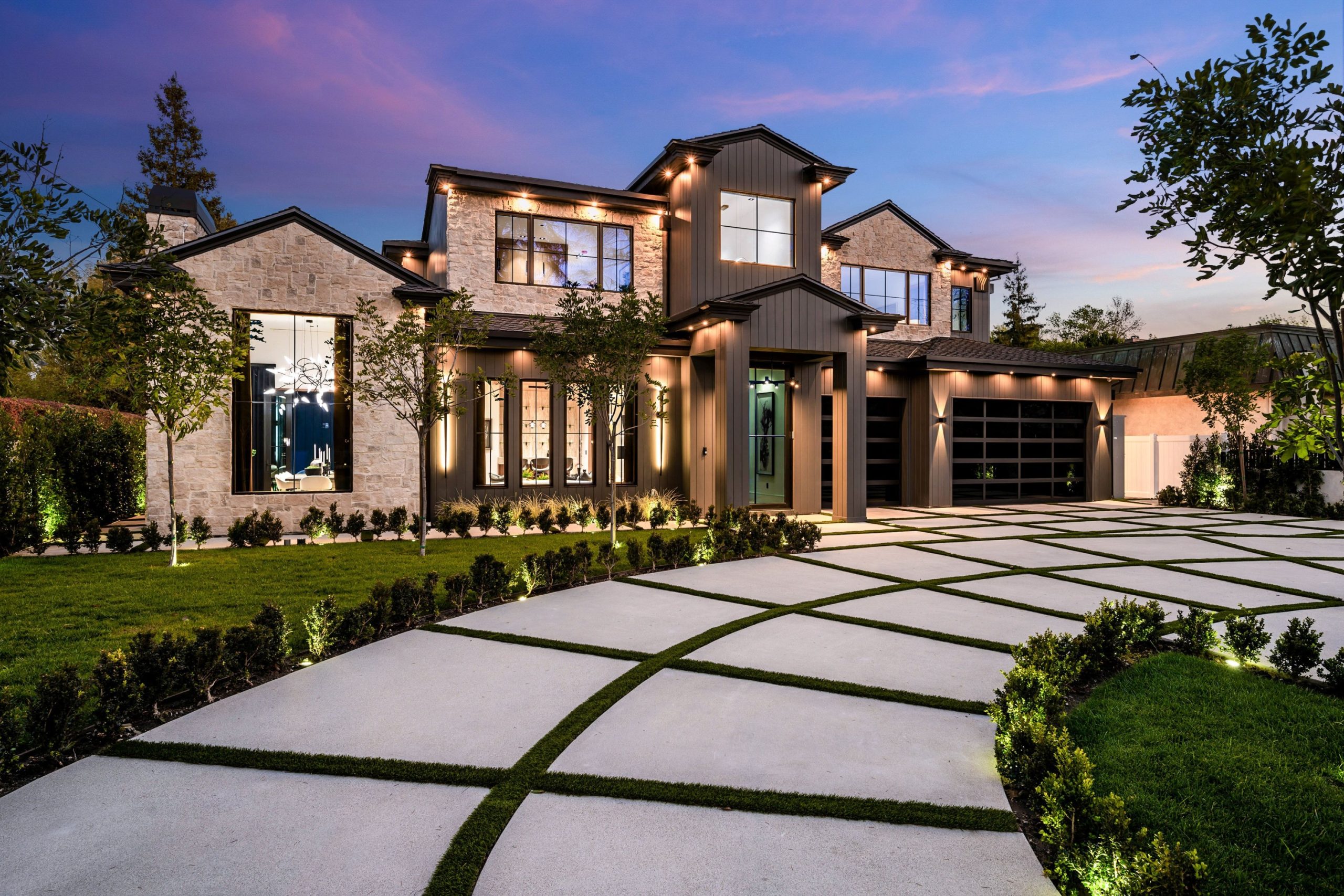
At the same time, luxury properties in the same metro area appreciated 16.1% over the same period. A not-yet-built Henderson home at The Peak at MacDonald Highlands sold for $10.5 million. Upscale communities like Ascaya continue attracting buyers willing to pay multimillion-dollar premiums for homes perched against the Red Rock escarpment with infinity pools and views of the valley below.
This bifurcation is not unique to Las Vegas. Redfin’s national luxury report found that the median price for a luxury home in the United States climbed 3.6% from a year earlier to $1.39 million, significantly outpacing the broader housing market where non-luxury home prices rose just 1.4%. Luxury buyers operate in a fundamentally different economic reality than typical homeowners.
“Luxury buyers are operating in a different economic universe than many traditional homeowners,” said Stacey Bryant, a Redfin Premier agent. “Their decisions are driven more by lifestyle, long-term positioning, and opportunity than short-term rate movements.”
This distinction matters enormously for Las Vegas. Mortgage rate volatility, which has suppressed activity in the broader market, barely registers for cash-rich luxury buyers. Approximately 26% of all homes bought in the Las Vegas Valley in March 2026 were all-cash transactions, according to a separate Redfin report. In the luxury segment, that cash percentage is likely far higher.
The Tax Arbitrage Driving Migration
Nevada’s tax structure remains the most powerful attractor for wealthy buyers choosing between Las Vegas and competing markets. There is no state income tax, no inheritance tax, and no wealth tax. For high earners from California, New York, or Illinois, the annual savings from relocating to Nevada can reach six or seven figures, making a multimillion-dollar home in Las Vegas financially rational even at elevated prices.
The math compounds over time. A California executive earning $5 million annually saves roughly $600,000 or more each year by relocating to Nevada. Over a decade, that savings alone can fund the purchase of a significant Las Vegas luxury property with money left over. The home effectively pays for itself through state tax savings against the California alternative.
This dynamic has been in place for years, but 2026 brought fresh urgency in the form of California’s compounding fiscal pressures and a series of destructive wildfires that prompted renewed outmigration. The Realty One Group runs a Facebook page called “Leaving California” with nearly 300,000 members, testament to the sustained appetite for leaving despite California’s cultural pull.
What changed in 2026 is the buyer profile. Early years of California-to-Nevada migration were dominated by middle-class households seeking affordability. The 2026 luxury surge suggests the high-net-worth tier is now making the move in significant numbers. These buyers are not selling California homes to stretch into a Las Vegas starter property. They are selling Silicon Valley estates and Malibu compounds and purchasing in Ascaya or The Summit Club with cash.
The Communities Driving the Numbers
Las Vegas luxury real estate is not distributed evenly across the valley. It concentrates in a handful of master-planned communities and custom home enclaves that offer something ordinary suburban Las Vegas cannot: physical differentiation.
MacDonald Highlands and The Peak: Perched on elevated terrain in Henderson with dramatic views of the Las Vegas Valley, MacDonald Highlands has positioned itself as the valley’s premier luxury address. The Peak is the community’s most exclusive enclave, featuring custom homesites and guard-gated security. The $10.5 million sale of a not-yet-built home there signals confidence in long-term appreciation and land scarcity.
Ascaya: Carved into the McCullough Range above Henderson, Ascaya offers custom lots on hillsides where homes literally hang over the valley. The community’s terrain makes it impossible to replicate elsewhere in the Las Vegas Basin, creating genuine scarcity that supports pricing power. Infinity-edge pools, spa facilities, and unobstructed views command substantial premiums over flat-land alternatives.
The Summit Club: Las Vegas’s most exclusive membership community sits in Summerlin near the Red Rock Canyon National Conservation Area. Custom homes and unparalleled golf and amenities attract buyers for whom cost is essentially no object.
Summerlin’s New Luxury Neighborhoods: Even within the broader Summerlin master plan, new luxury product continues being absorbed. Richmond American’s Primrose Park offers 76 luxury two-story homes ranging from 3,410 to 3,690 square feet, priced from approximately $1.1 million to more than $1.2 million. These entry-level luxury price points serve buyers one tier below the ultra-high-net-worth segment.
The common thread across these communities is controlled scarcity. Las Vegas is a sprawling desert metro capable of building enormous volumes of standard housing. But hillside topography, conservation area adjacency, and carefully managed entitlements limit luxury supply in ways that protect pricing power even when the broader market softens.
Cash Buyers and the Rate Immunity Thesis
The Federal Reserve’s interest rate trajectory has minimal direct impact on the buyers driving Las Vegas luxury appreciation. Cash purchases dominate. When cash buyers set the marginal price in a market with limited inventory, mortgage rates become largely irrelevant to price discovery.
The 26% overall cash purchase rate documented by Redfin for March 2026 likely understates cash concentration in luxury segments specifically. Buyers purchasing homes priced at $2 million, $5 million, or $10 million increasingly pay cash to simplify transactions, signal commitment, and avoid the scrutiny of mortgage underwriting for complex financial profiles.
This cash dominance creates a two-speed market that appears paradoxical in aggregate data. When economists or journalists look at Las Vegas housing broadly, they see falling median prices, rising days on market, and deteriorating affordability metrics. These are real trends driven by real conditions in the $400,000 to $700,000 price range where the majority of transactions occur.
The luxury segment, insulated by cash buyers with multi-generational wealth perspectives, operates by different rules. Price appreciation in that tier reflects supply constraints, migration demand, and tax-driven relocation math rather than mortgage rate calculations or employment conditions.
The Broader Sun Belt Luxury Pattern
Las Vegas’s second-place ranking reflects a broader reorientation of American luxury housing toward Sun Belt and secondary markets that gained momentum during the pandemic and has proven durable.
Tampa’s 17.1% luxury appreciation, while leading the nation, reflects dynamics similar to Las Vegas: warm climate, no state income tax, dramatic migration from high-cost northeastern and Midwestern markets, and a local economy that grew significantly during the 2020s. Kansas City’s 15.2% gain is more surprising but reflects the general truth that luxury buyers are increasingly willing to prioritize quality of life and space over proximity to traditional financial centers.
Meanwhile, the markets that traditionally dominated luxury conversations underperformed significantly. New York luxury prices fell 0.6%. Denver declined 0.6%. These reversals reflect the conclusion of a one-way narrative that assumed coastal and mountain luxury markets were uniquely irreplaceable.
The Redfin data shows that luxury pending sales increased 4.3% year-over-year nationally, representing the strongest pace of growth since early 2025. This demand acceleration, combined with constrained supply in desirable communities, drives appreciation in markets that can attract high-net-worth buyers.
Las Vegas’s luxury days on market increased 31 days year-over-year in the Redfin analysis, the second-largest increase nationally after New York. This appears contradictory alongside strong price appreciation but likely reflects a shift in the buyer pool toward more deliberate, sophisticated purchasers who take time to conduct thorough due diligence. Institutional investors and ultra-high-net-worth buyers often move slowly by design.
The Sports and Entertainment Dimension
One factor distinguishing Las Vegas luxury demand from comparable Sun Belt markets is the entertainment and sports infrastructure that has developed rapidly over the past five years. Allegiant Stadium, T-Mobile Arena, Sphere, the Formula 1 circuit, and the emerging Athletics ballpark create a permanent calendar of world-class events that only a handful of cities can match.
For wealthy buyers who purchase luxury homes partly for lifestyle and entertainment access, Las Vegas offers something genuinely scarce: a relatively affordable (compared to New York, Los Angeles, or San Francisco) luxury home market in a city with exceptional dining, entertainment, and sporting options year-round.
A luxury home in MacDonald Highlands puts its owner within 20 minutes of Sphere concerts, NFL games, NHL playoffs, Formula 1 racing, and a culinary scene that now legitimately competes with any American city. That combination of access at a reasonable relative price compared to coastal alternatives explains why sophisticated buyers are paying 16% more than they would have a year ago.
The sports ownership dynamic adds another layer. Professional athletes, team executives, league officials, and their networks increasingly intersect with Las Vegas. As the city cements its position as a sports capital, the social infrastructure of wealth that follows sports money builds out and reinforces luxury demand.
Risks Worth Watching
The luxury appreciation story carries risks that deserve honest acknowledgment alongside the positive data.
The days-on-market increase of 31 days year-over-year is substantial and worth monitoring closely. If luxury homes are taking longer to sell even as prices rise, it could indicate that appreciation is outpacing buyer willingness to transact at current prices. Eventually, the gap between what sellers expect and what buyers will pay gets resolved, and not always in sellers’ favor.
The ongoing broader market weakness could eventually bleed into luxury segments if economic conditions deteriorate materially. The 5.8% unemployment rate in Clark County, the continued gaming revenue declines, and global economic uncertainty from geopolitical tensions including the war in Iran represent real downside risks. Luxury markets historically prove more resilient than mass markets during downturns, but they are not immune.
The federal land policy question also hangs over long-term Las Vegas real estate in ways that could affect even luxury communities. Significant BLM land releases could expand buildable area and reduce the scarcity premium that underpins luxury pricing in communities like Ascaya and MacDonald Highlands. However, given the slow pace of federal policy changes and the continued constraints on hillside and conservation-adjacent development, this risk remains distant.
Key Takeaways
- Las Vegas luxury home prices rose 16.1% year-over-year in the three months ending April 2026, ranking second nationally behind Tampa (17.1%)
- The national luxury median home price climbed to $1.39 million, rising 3.6%, while non-luxury prices gained just 1.4%
- Approximately 26% of all Las Vegas Valley home purchases in March 2026 were all-cash transactions
- A not-yet-built Henderson home at The Peak at MacDonald Highlands sold for $10.5 million
- Broader Las Vegas median home prices fell 2.8% over the same period, illustrating a stark market bifurcation
- Nevada’s zero state income tax continues driving high-net-worth migration from California and other high-tax states
- Las Vegas luxury days on market increased 31 days year-over-year, the second-largest increase nationally
- Sun Belt and secondary markets broadly displaced coastal markets in luxury price appreciation rankings
Important Insights
The simultaneous decline of overall Las Vegas home prices and the surge of luxury prices is not a paradox. It is a story about two markets with almost no overlap in buyers, financing structures, or motivating factors. Policy discussions and economic analyses that treat “the Las Vegas housing market” as a single entity will systematically misread what is actually happening.
The tax arbitrage argument for Las Vegas luxury real estate has been made for years but appears to be entering a new phase of urgency among high-net-worth buyers. The compounding of California’s fiscal trajectory, the psychological shock of wildfire exposure, and the demonstrated quality of life Las Vegas now offers have pushed a tier of buyers off the fence who previously tolerated high-tax environments for cultural and professional reasons.
The scarcity of developable luxury land in truly differentiated locations, specifically hillsides, conservation area adjacencies, and golf course settings, provides structural pricing protection that flat-land suburban development cannot replicate. Communities like Ascaya, MacDonald Highlands, and The Summit Club benefit from genuine physical scarcity in a metro that is otherwise capable of producing essentially unlimited suburban sprawl.
Las Vegas’s sports and entertainment infrastructure buildout over the past five years has quietly transformed the city’s luxury value proposition. The argument for buying a $5 million home in a secondary market is substantially stronger when that market offers world-class entertainment, dining, and sporting access that rival major coastal cities. Each addition to the sports and entertainment calendar strengthens this argument incrementally.
The national luxury trend toward Sun Belt and secondary markets appears to have staying power beyond the pandemic’s remote work catalyst. Tax policy differences between states remain permanent. Climate preferences of aging wealth continue favoring warm markets. And the development of genuine cultural and entertainment infrastructure in cities like Las Vegas, Nashville, and Miami is making the lifestyle trade-off compared to New York or San Francisco progressively less severe.
Investors and observers who dismiss Las Vegas luxury appreciation as temporary or anomalous underestimate how durable the structural forces driving it actually are. Tax math does not change when real estate sentiment cycles. Migration patterns driven by tax arbitrage and lifestyle access tend to accelerate, not reverse, as communities attract more of the high-net-worth population and the infrastructure supporting them deepens.
For current Las Vegas luxury market data, visit Redfin Las Vegas Market Insights and Las Vegas Realtors.