

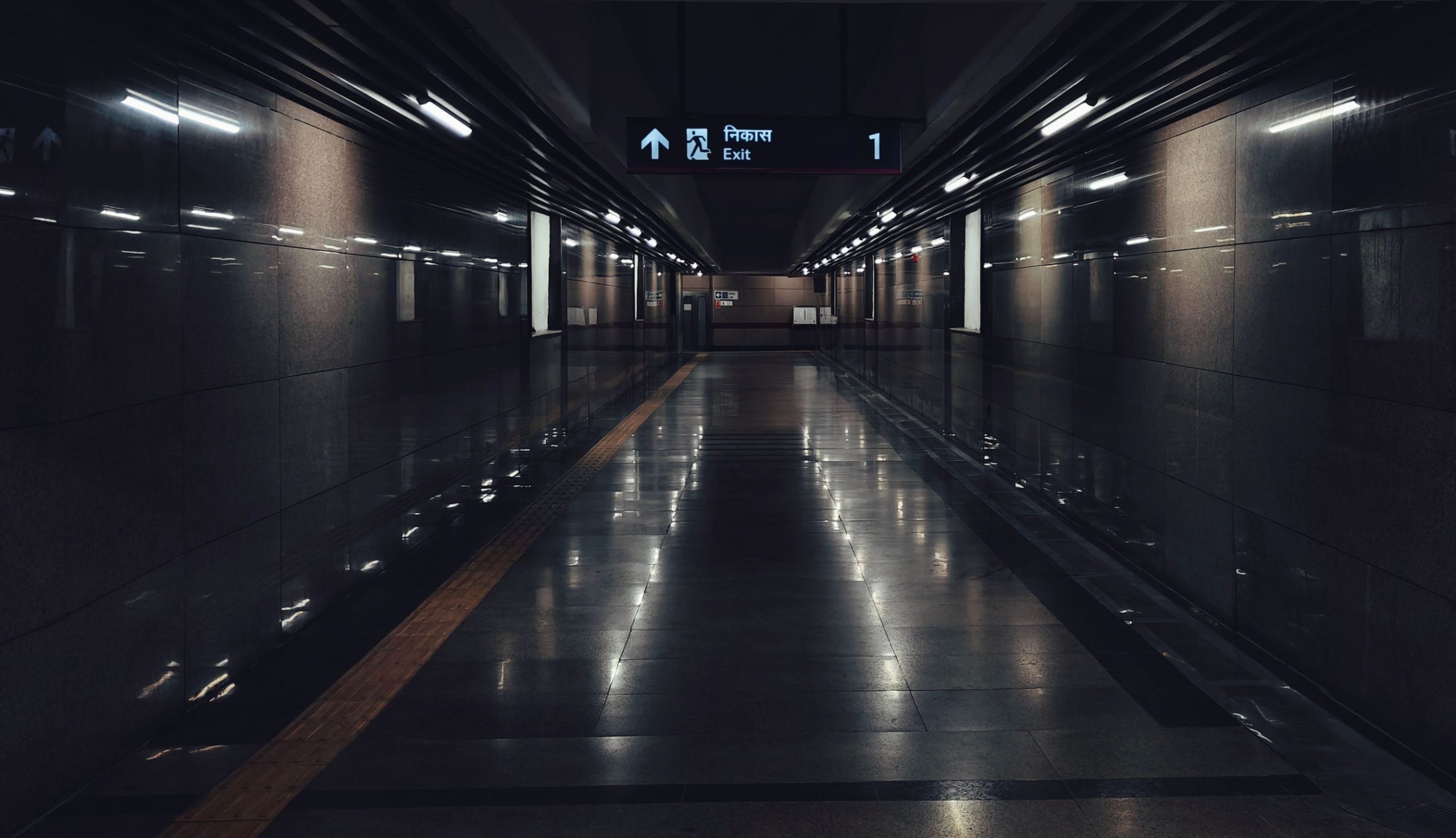
On Thursday, August 6, 2026, a Tesla pulled out of a newly opened station at Sahara Las Vegas and slipped underground. The ride took roughly two minutes. The implications will take years to fully measure.
The Boring Company’s Vegas Loop reached the northernmost point of the active Strip network that day, opening a station at Sahara Las Vegas on the southeast corner of Las Vegas Boulevard and Sahara Avenue. The station, located at the resort’s Paradise Road entrance on the east side of the property, provides direct zero-emission subterranean transit connecting the North Strip to the Las Vegas Convention Center and, through the broader loop network, to every other connected resort along the corridor.
Sahara has confirmed that hours will expand as needed and will flex during major convention sequences and arena events around town. The opening makes Sahara the second Vegas property to offer both Vegas Loop and Monorail access to its guests, joining Westgate. That dual-transit distinction matters more than it might initially appear. A resort that can funnel arriving visitors through two separate transportation systems simultaneously has a structural throughput advantage during peak convention periods that single-mode properties cannot match.
The Sahara opening is not merely a new station. It marks the completion of a continuous underground corridor connecting the northern anchor of the Strip to the convention infrastructure that drives a significant portion of Las Vegas’s high-value business travel. For anyone who has sweated through the walk between the convention center and the northern Strip in August heat, the Loop’s arrival at Sahara represents something genuinely useful.
What the Network Looks Like Now
The Vegas Loop has been building its network methodically since the original Las Vegas Convention Center tunnel opened in 2021. Each station addition expands the system’s utility in ways that compound rather than accumulate linearly. A network with three stations serves roughly the same population as three unconnected point-to-point rides. A network with ten stations, each connecting to every other, creates something closer to exponential connectivity as the number of useful origin-destination pairs multiplies.
The Resorts World-LVCC Connector opened in 2022 and provides a direct connection between Resorts World on the Las Vegas Strip and all other Vegas Loop stations. The Westgate-LVCC Connector opened in 2024, and the Encore-LVCC Connector opened in 2025, connecting the Las Vegas Convention Center’s Center Hall to the Encore Resort at Wynn with a transit time of approximately 55 seconds.
The Fontainebleau station, opened earlier in 2026, connected that resort’s substantial meeting and convention space to the broader Loop network. Airport service began in late 2025, when the Nevada Transportation Authority approved surface street travel tied to Loop operations for rides to and from Harry Reid International Airport. Each of these additions feeds the network’s utility and positions the Loop as an increasingly serious transportation alternative rather than a novelty.
When complete, the Boring Company’s Vegas Loop will feature 68 miles of tunnels serving 104 stations in a point-to-point system. The company estimates the system will have the ability to serve 90,000 passengers per hour, transporting passengers via Tesla vehicles. At 90,000 passengers per hour, the Loop would handle more people than most metro subway lines during peak periods, doing it through a network of individual Tesla rides rather than mass transit cars.
The Point-to-Point Advantage
The Loop’s operational model differs fundamentally from the Las Vegas Monorail it partially parallels. The Monorail makes sequential stops at each station along its route. A passenger riding from the MGM Grand to the Sahara on the Monorail stops at every intermediate station whether or not they want to. During peak convention periods, this creates cascading delays that undermine the system’s core value proposition.
The point-to-point aspect of the Vegas Loop is aimed at maximizing ridership. Unlike the Las Vegas Monorail, which stops at each station along its route, the Vegas Loop takes passengers directly from their originating point to their destination, without stopping. The Vegas Loop uses Las Vegas Strip as its example, where there are about 50 stops from the airport all the way to the north portion of Vegas. If you had to stop at every one of those stops, that would be a two-hour trip.
A two-hour sequential-stop trip compressed to a two-to-five minute point-to-point ride is not an incremental improvement. It is a transportation category transformation. For convention attendees managing tight schedules between sessions, meetings, and meals across a corridor spanning four miles of desert heat, this difference is commercially meaningful in ways that affect which resorts they book and which they avoid.
The convention business in Las Vegas is worth roughly $12 billion annually to the local economy. Attendees make lodging choices based partly on proximity and access to convention facilities. Properties that offer easy, fast, reliable Loop access to the convention center improve their competitive position for convention group bookings relative to properties that require attendees to navigate Strip traffic or wait for shuttle buses.
Tesla’s Arrival and the Robotaxi Dimension
The Sahara station opening coincided with another significant development buried slightly deeper in the week’s news. Tesla filed for a permit alongside plans for a maintenance hub in southwest Las Vegas. The Nevada Transportation Authority limited operations to a maximum fleet of 10 fully autonomous vehicles and required that operations be conducted only within the Authority-approved Operational Design domain.
Tesla’s autonomous vehicle permit application, quietly filed as the Sahara Loop station opened, signals the potential next phase of the Vegas Loop’s evolution. The current Loop operates Tesla vehicles with human safety operators. A fully autonomous Loop, where Teslas navigate tunnels without human drivers, would dramatically reduce operating costs and increase vehicle utilization rates by eliminating driver shift constraints and rest requirements.
Zoox, the Amazon-owned robotaxi company, has run its own autonomous vehicle permit in Nevada since last year, building up to roughly 100 vehicles and 350,000 rides along the Strip. That history likely explains why the Nevada Transportation Authority started Tesla at ten cars rather than the fleet size the company requested. Nevada’s phased approach to autonomous vehicle deployment, proven out through the Zoox experience, provides a regulatory template that balances innovation adoption with safety validation. Tesla’s ten-vehicle initial permit mirrors the cautious scaling approach that has characterized Nevada’s autonomous vehicle regulation.
If Tesla’s autonomous Teslas eventually operate in the Loop tunnels alongside human-driven Loop vehicles, the operational model becomes considerably more flexible and potentially more economical. A fully autonomous fleet can theoretically operate 24 hours without shift changes, redeploying vehicles dynamically based on demand patterns rather than driver availability.
The Heat Economy and Why This Matters for Las Vegas
Las Vegas’s summer heat is not merely uncomfortable. It is a measurable constraint on economic activity, visitor behavior, and urban livability that shapes the entire metropolitan economy in ways that are rarely fully quantified.
Average high temperatures in Las Vegas during July and August regularly exceed 105 degrees Fahrenheit. The distance between major Strip resort properties ranges from a few hundred yards to more than a mile. Walking that distance in summer heat is not a casual activity for most visitors. It shapes dining choices, entertainment decisions, and shopping behavior in ways that concentrate economic activity inside air-conditioned resort properties at the expense of the corridor as a whole.
Underground transit that eliminates the heat barrier between connected properties is not simply a transportation amenity. It is a demand redistribution mechanism that allows economic activity to flow more freely between properties regardless of surface temperature conditions. A visitor staying at Sahara who previously might have stayed on property rather than navigate August heat to reach restaurants or entertainment at properties a mile south can now consider a broader range of options through the Loop.
This demand redistribution creates positive-sum outcomes for the Loop-connected resort ecosystem. Properties at any point in the network can capture demand from visitors staying at other network properties, increasing overall spending and visitor satisfaction across the corridor rather than simply competing for the same pool of on-property spending.
The 104-Station Vision and Its Economic Architecture
When the full 68-mile, 104-station network is complete, the capacity will reach approximately 90,000 passengers per hour. That vision encompasses far more than the Strip. The full Loop plan includes downtown Las Vegas, Allegiant Stadium, the Las Vegas Raiders’ practice facility, and eventually connections to neighborhood commercial centers, medical facilities, and residential areas.
A Loop that connects Allegiant Stadium to Strip resorts, the convention center to downtown dining, and airport arrivals to their hotels across the valley’s geography without surface street dependency transforms the transportation equation for the entire Las Vegas metropolitan area. The economic geography of visitor spending changes when physical distance stops being a barrier.
The financing model for this expansion relies on agreements with individual resorts and properties that fund station construction in exchange for network connectivity. This approach aligns the incentives of the Loop’s operator with the operators of the properties served, since each new station increases the value of every existing station in the network. Properties that invest in Loop connectivity benefit both from their own station’s convenience and from the growing network of origin points their guests can access.
How the Loop is funded, governed, and regulated as it expands from a Strip novelty to a metropolitan transportation backbone will be among the more consequential infrastructure policy questions Las Vegas faces over the next decade. The decisions made now about right-of-way, station design standards, safety requirements, and pricing structures will shape the system’s ultimate buildout and utility.
Key Takeaways
- The Boring Company opened a Vegas Loop station at Sahara Las Vegas on August 6, 2026, making Sahara the northernmost active Strip station on the network
- The Sahara station is at surface level at the resort’s Paradise Road entrance and operates daily from 7 a.m. to 9 p.m., with expanded hours during major conventions and events
- Sahara is now one of only two Las Vegas resorts offering both Vegas Loop and Las Vegas Monorail access, joining Westgate
- When complete, the Vegas Loop will feature 68 miles of tunnels and 104 stations capable of serving 90,000 passengers per hour via point-to-point Tesla vehicle rides
- Tesla filed a permit application for autonomous vehicle operations in Nevada concurrent with the Sahara station opening, limited initially to a maximum fleet of 10 vehicles
- The Loop’s point-to-point model eliminates the sequential-stop inefficiency of the existing Monorail, creating direct two-to-five minute rides between any two connected stations
- Airport rides, including a limited above-ground segment, began in late 2025 after Nevada Transportation Authority approval
Important Insights
The Sahara station opening matters strategically because Sahara Avenue is not simply a resort intersection but the northern boundary of the Las Vegas Convention Center campus’s primary approach. Convention attendees arriving at Sahara can now reach the convention center in minutes regardless of traffic or temperature, materially improving Sahara’s competitive position for convention group bookings that represent the highest-value, highest-duration visitor segment in the Las Vegas market.
The dual Monorail and Loop access that Sahara now shares with Westgate creates a transportation redundancy that premium meeting planners will value. When a convention bringing thousands of attendees to the North Strip needs to move people efficiently between hotel room blocks and session halls, having two independent transit options reduces single-point-of-failure risk in ways that experienced event logistics professionals recognize and appreciate.
Tesla’s autonomous vehicle permit application, filed quietly during the same week as the Sahara opening, represents a potential inflection point in the Loop’s operating economics that deserves more attention than it received. The shift from human-operated to autonomous Loop vehicles would change the system’s unit economics dramatically by eliminating the largest variable cost in ride-based transit operations. If Nevada’s phased regulatory approach allows Tesla to scale from 10 to 100 to 1,000 autonomous Loop vehicles over the next several years, the Loop’s financial model improves substantially at each scaling step.
The broader urban planning implications of a 104-station, 68-mile underground network connecting the Strip, downtown, the airport, and eventually residential and commercial areas throughout the Las Vegas Valley remain underexplored in most coverage focused on the entertainment and transit angles. A city that builds functional underground point-to-point transit across its full metropolitan geography has solved one of the fundamental constraints on urban economic development: the friction cost of physical distance in an extreme climate.
For Vegas Loop route maps, station locations, and ride information, visit The Boring Company Vegas Loop. For Las Vegas transportation planning information, visit Regional Transportation Commission of Southern Nevada.