


Not a Residency. Something New.
The Sphere’s first two years of operation established a template that the entertainment industry quickly understood: take a legendary catalog-era act, build a purpose-designed immersive production around their music, sell tickets at premium prices to fans who will travel to Las Vegas specifically for the experience. U2 opened the venue with this model. Dead & Company followed. The Eagles are still running it. The Backstreet Boys just wrapped their run on August 22.
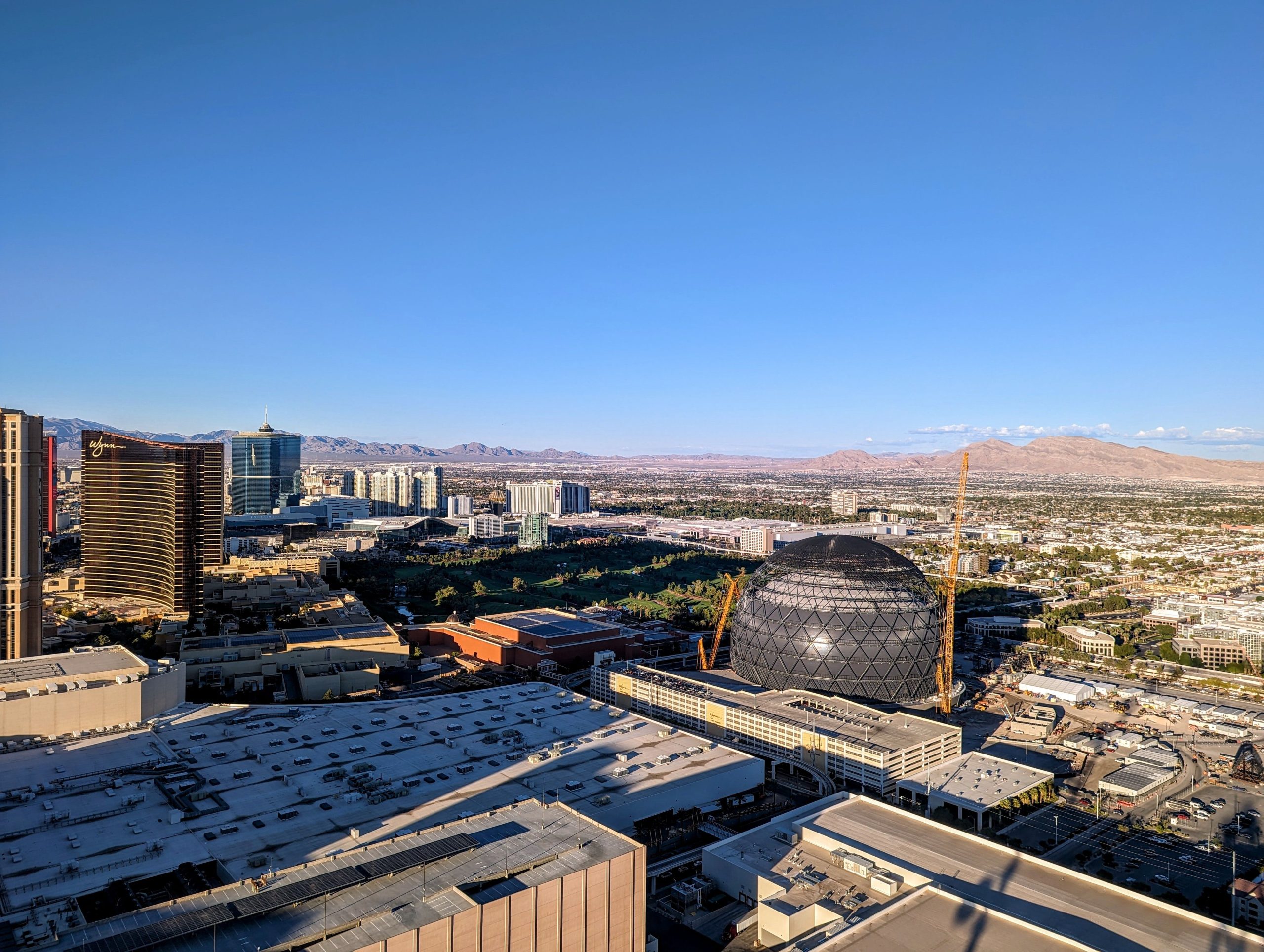
Today, August 23, 2026, something different is playing inside the Sphere. The Wizard of Oz is showing at the Sphere, with performances running multiple times daily including a 5 p.m. showing today. It is not a concert. There is no artist in residence performing live. What’s on the Sphere’s 160,000-square-foot interior LED screen is a reimagined cinematic experience built around one of the most beloved films in American history, deployed on technology that didn’t exist when the original film was made and that the original filmmakers couldn’t have conceived.
The Wizard of Oz at the Sphere is the venue’s first major step beyond the music residency format that defined its launch period. It is a test of whether the building’s immersive technology justifies premium ticket prices for experiences that aren’t anchored to a live performing artist. And it is a preview of what immersive entertainment at this scale could eventually become if the venue’s content strategy continues to evolve.
What the Screen Can Actually Do
Understanding why The Wizard of Oz at the Sphere is worth examining as a business strategy question requires understanding what the venue’s technology actually enables that traditional cinema and concert venues cannot.
The Sphere’s interior LED surface covers 160,000 square feet and wraps the entire interior environment. The resolution is high enough that viewers sitting anywhere in the venue’s seating can experience the display as a complete environmental surround rather than a screen at a distance. The content doesn’t appear in front of the audience. It appears around the audience, creating sensory immersion that traditional cinema, where viewers are positioned in front of a framed screen, fundamentally cannot replicate.
For a film like The Wizard of Oz, which moves between the sepia-toned world of Kansas and the Technicolor world of Oz, this format creates possibilities that the original 1939 production couldn’t achieve. The transition from Kansas to Oz, one of cinema’s most famous moments, can be experienced as a total environmental transformation rather than a screen-framed color shift. The flying monkeys can approach from every direction simultaneously. The Emerald City can occupy the viewer’s entire visual field rather than existing as a rectangular image at the front of a theater.
Whether this constitutes a meaningfully better experience of The Wizard of Oz or simply a different one is a critical question that ticket buyers are answering empirically right now. The answer matters for Sphere’s content strategy because it determines whether the venue can sustain premium pricing for cinematic experiences without live artist performance to anchor the ticket price.
The Pricing Question
Sphere’s music residencies have commanded ticket prices that reflect both the immersive technology premium and the scarcity value of seeing a specific artist perform in a venue with a limited number of dates. Eagles tickets started at $175 for general admission. The Backstreet Boys commanded similar pricing. These numbers reflect what fans are willing to pay specifically to see those artists in that environment.
The Wizard of Oz doesn’t come with an artist scarcity premium. The film can run multiple times daily. There’s no touring schedule that makes Las Vegas the only opportunity to see it. The experience is differentiated entirely by the technology rather than by access to a performing artist who could be anywhere else. This means Sphere’s pricing for The Wizard of Oz must be justified purely on the experiential quality of what the venue’s technology delivers relative to alternatives, including seeing the film in a standard cinema or on a home screen.
If the venue prices The Wizard of Oz at premium levels and fills the house, it demonstrates that the technology alone commands a price premium independent of artist performance value. If it prices below music residency levels to attract audiences who might not otherwise consider the Sphere, it establishes a two-tier pricing model where live music commands the top of the range and cinematic experiences occupy a different position.
Either approach has strategic implications for what content Sphere books next and how it packages that content to audiences who are evaluating whether to make a Las Vegas trip specifically for the Sphere experience.
The Rocky Horror Precedent
Sphere’s announced 2027 programming for The Rocky Horror Picture Show, which we noted in our earlier Eagles residency article, establishes that The Wizard of Oz is not a one-off experiment but rather the opening of a deliberate content category. Sphere Entertainment Company is building a library of cinematic intellectual property experiences alongside its music residency calendar.
This content diversification serves multiple strategic purposes. It fills dates that might otherwise go dark between music residencies, which are by nature time-limited engagements. It reaches audience demographics that might not overlap with any specific music act’s fan base but who would travel to Las Vegas for an immersive cinema experience anchored by beloved IP. And it establishes the Sphere as a content platform rather than exclusively a concert venue, which expands both its booking options and its competitive positioning relative to other Las Vegas entertainment.
The Rocky Horror Picture Show brings its own specific audience dynamics. Rocky Horror has sustained a live participatory performance culture since its 1975 release, with midnight screenings featuring audience members in costume, calling out lines, and physically interacting with the film. Whether Sphere’s version embraces this participatory tradition or presents the film as a straight immersive cinema experience will reveal something important about how the venue thinks about its audience relationship.
If Sphere encourages participation, it’s building community around its content in ways that music residencies don’t require. If it enforces the reverent attention mode that the Eagles concert demands, it’s applying the same experiential framework to very different content. The approach it takes with Rocky Horror will be informed by whatever it learns from The Wizard of Oz.
What Las Vegas’s Broader Entertainment Ecosystem Gains
The Sphere’s expansion into cinematic experiences benefits Las Vegas’s entertainment economy in ways that extend beyond the venue itself. A Sphere that programs year-round across multiple content categories attracts different visitor segments throughout the calendar, smoothing the demand peaks and valleys that music residency scheduling creates.
A tourist who comes to Las Vegas in September specifically to see The Wizard of Oz at the Sphere will spend money on hotel rooms, restaurants, gaming, and other entertainment during their stay. That economic activity occurs regardless of whether the Sphere’s programming that week is a music residency or a cinematic experience. The visitor attraction function doesn’t distinguish between the two content formats from the perspective of the broader Strip economy.
The Sphere’s willingness to experiment with content categories also provides cover for other Las Vegas entertainment venues to innovate. When the highest-profile entertainment venue in the city signals that immersive cinema is a legitimate format for premium ticketing, it opens commercial space for other venues to explore similar formats at different scales and price points.
The Intellectual Property Landscape
The Wizard of Oz’s status as one of cinema’s most universally recognized properties makes it an interesting choice for the Sphere’s first non-music cinematic experience. The film is old enough that multiple intellectual property claims and licensing relationships have evolved over decades, making the rights situation more complex than a simple studio license would suggest.
More significantly, The Wizard of Oz occupies a specific place in the American cultural imagination that differs from more recent IP. It’s not a franchise with sequels, spin-offs, and brand extensions competing for audience attention. It exists primarily as the single 1939 film and its adaptations, making the Sphere’s version the most technically advanced version rather than one interpretation among many current ones. This singularity gives the Sphere’s presentation a primacy that Marvel or Star Wars IP, with their concurrent films, streaming series, and theme park presences, wouldn’t have.
Rocky Horror is similarly singular in this sense, existing primarily as the 1975 film and the participatory performance tradition built around it rather than as an active franchise. Both choices suggest Sphere’s cinematic IP strategy may favor classic properties with strong cultural resonance and limited active competition over contemporary franchise properties where the Sphere version would be one of many simultaneous brand touchpoints.
Notes for Stakeholders
The Wizard of Oz at the Sphere offers insights for anyone working in entertainment technology, IP licensing, or immersive experience development:
Technology-only pricing justification for premium entertainment requires demonstrating that the experience differs qualitatively from alternatives, not merely quantitatively. The Sphere’s Wizard of Oz must earn its ticket price through the distinctiveness of the immersive experience rather than artist scarcity, which is a higher evidentiary bar.
Classic IP with limited active franchise competition occupies a different licensing and competitive landscape than contemporary franchise properties. Sphere’s apparent preference for iconic singular properties like Wizard of Oz and Rocky Horror may reflect strategic thinking about IP competition as much as audience affinity.
Content diversification across music and cinematic categories fills calendar capacity that single-format programming leaves dark. The Sphere’s 160,000-square-foot screen and supporting infrastructure require revenue-generating programming throughout the year, making format diversity economically necessary.
Participatory audience culture around specific IP creates both programming opportunities and experiential design decisions that passive viewing formats don’t require. Rocky Horror’s participation tradition will force explicit choices about what kind of audience relationship Sphere wants to build.
Venue category expansion from concert hall to content platform changes how institutional investors, content partners, and audiences perceive and value the asset. A Sphere that hosts both Eagles residencies and Wizard of Oz screenings is valued differently than one that only does music.
Down the Yellow Brick Road, Into 160,000 Square Feet
Somewhere in the Sphere right now, Dorothy is telling Toto they’re not in Kansas anymore, and the entire interior of a 20,000-capacity venue is shifting from sepia to Technicolor around the audience. The flying monkeys are approaching from every direction. The Emerald City fills the visual field in ways that no cinema in the world has been able to achieve before this building existed.
Whether that experience justifies a Las Vegas trip, a premium ticket price, and the claim that the Sphere has expanded beyond concert venue into something genuinely new, those questions are being answered by the audiences showing up today and over the coming weeks of the engagement.
The music residency model that defined the Sphere’s first two years was successful enough to establish the venue as a permanent Las Vegas landmark. The question now is whether the content strategy expands in ways that make it something more: a platform for immersive entertainment that hasn’t existed before, built around technology that won’t be replicated at scale anywhere else for years.
The Wizard of Oz is the first test of that ambition. Somewhere over the 160,000-square-foot rainbow, the answer is being calculated in real time.
Key Takeaways:
- The Wizard of Oz is currently showing at the Sphere with multiple daily performances including today August 23, marking the venue’s first major foray into cinematic IP experiences beyond music residencies
- The format represents a significant strategic departure: no live artist performing, no touring scarcity premium, and ticket prices justified entirely by the immersive technology rather than access to a specific performer
- The Sphere’s 160,000-square-foot interior LED surface enables total environmental surround that transforms The Wizard of Oz’s iconic Kansas-to-Oz transition from a framed screen moment into a complete sensory environment change
- The Backstreet Boys wrapped their Sphere residency on August 22, making today’s Wizard of Oz the immediate programming successor to the music residency format that has defined the venue since 2023
- Sphere’s announced 2027 Rocky Horror Picture Show programming confirms The Wizard of Oz is the opening of a deliberate cinematic IP category rather than a one-off experiment
- Both Wizard of Oz and Rocky Horror are singular classic properties with limited active franchise competition, suggesting Sphere’s IP strategy may favor iconic properties where their version is the most technically advanced rather than one of many concurrent brand touchpoints
- Rocky Horror’s participatory audience tradition will force explicit experiential design decisions about what kind of audience relationship Sphere wants to build in its cinematic format
- Content diversification across music and cinema fills calendar capacity that music-residency-only programming leaves dark between major acts, improving the venue’s year-round economics
- The pricing strategy Sphere adopts for cinematic experiences will establish whether the technology commands premium pricing independent of live performance value
- Las Vegas’s broader entertainment economy benefits from Sphere year-round programming regardless of format, as every visitor attracted to The Wizard of Oz generates hotel, restaurant, and gaming spending across the Strip