



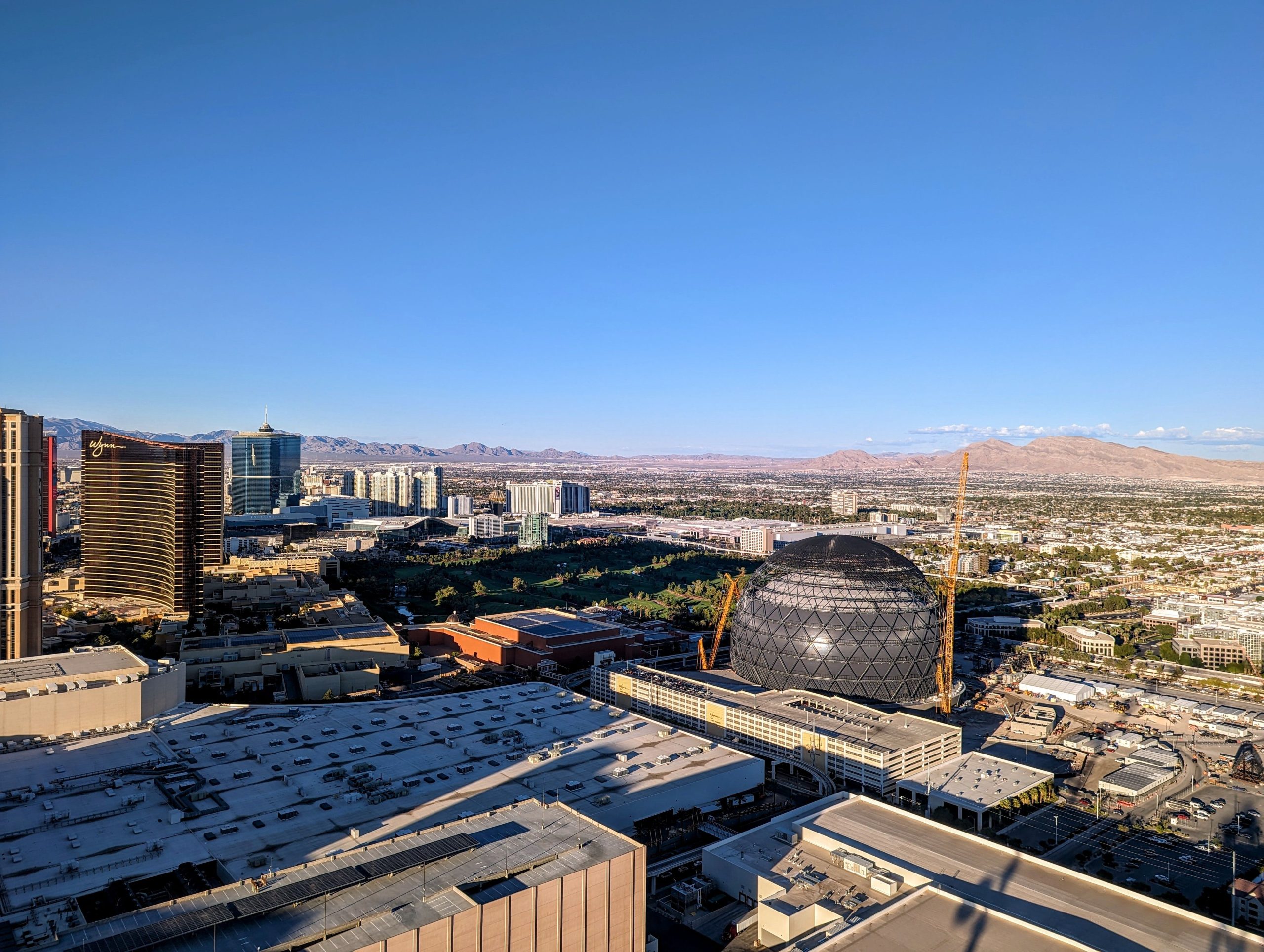
The Las Vegas Realtors reported their October 2026 numbers on November 6. The median price of a single-family home was $475,000. Sales of existing homes, condos, and townhomes combined totaled 1,895. Single-family sales fell 11.9 percent compared to October 2025. Condo and townhome sales fell 23.6 percent. Supply hit nearly six months. The total value of all home sales fell 10.1 percent year over year for single-family and 22.5 percent for condos and townhomes.
That is a lot of negative direction in a single month’s data. What it is not, at least not yet, is the beginning of a collapse. The Las Vegas housing market is experiencing a meaningful slowdown driven by a rate environment that has pushed out a significant portion of the buyer pool, while simultaneously holding prices within a few percent of their all-time highs because the supply increase, while real, is not a flood.
That combination, falling volume and sticky prices, is not sustainable indefinitely. But it has been going on for most of 2026 without breaking in either direction, and understanding why requires looking past the monthly statistics.
The Rate Math That Is Keeping Buyers Out
The 30-year fixed mortgage rate was at 7.32 percent as of late October, per Freddie Mac’s national benchmark. Las Vegas Realtors President George Kypreos said directly in the November report that higher rates are showing in the numbers. His assessment was notable for combining candor with optimism: he acknowledged the rate impact while arguing that underlying demand for homes in Southern Nevada remains healthy.
Both things can be true. Demand for homeownership in Las Vegas has genuine structural support: net population growth, continued in-migration from California and other high-cost states, a relatively favorable tax environment for residents, and a metro area that has been adding jobs in sectors beyond hospitality, including logistics, manufacturing, and data center operations.
What rates do is not destroy demand. They defer it. The buyers who would have transacted at a 5-percent rate and are not transacting at 7.32 percent have not moved to a different city. They are renting, waiting, or buying down the price range. When rates eventually normalize, that deferred demand does not disappear. It arrives faster than the market expects and produces the kind of rapid absorption that pushes prices back up.
The Las Vegas rental market has absorbed a portion of these deferred buyers, contributing to a vacancy rate that has been running below the national average even as construction added units in 2025 and 2026. A renter who is a qualified buyer waiting on rates is a future homebuyer, and there are a lot of them in the Las Vegas Valley right now.
The Inventory Picture and What It Actually Means
6 months of supply, calculated from the 8,112 single-family homes listed without offers at October’s end, marks a genuine transition from the severe seller’s market conditions of the 2021 to 2023 period. At the peak, Las Vegas was running one to two months of supply, and properties went under contract within days of listing at above-asking prices.
Five to six months is the conventional boundary between buyer and seller markets. The Las Vegas market is sitting on that line, which produces the statistical outcomes visible in the October data: homes that are priced correctly sell within 60 days at a reasonable rate (72.4 percent did), while homes that are overpriced relative to current comparable sales sit longer and become part of the visible inventory count without generating the transactions that would reduce it.
What the inventory data does not show is a wholesale departure from the market by sellers. The 7.6 percent year-over-year increase in single-family homes listed without offers is a moderate increase, not a capitulation. Sellers are not panicking. They are waiting, which is the rational response when a fixed-rate mortgage is on your current home at 3 or 4 percent and the alternative is selling into a buyer’s market and buying back at 7-plus.
The lock-in effect, which refers to homeowners who are financially incapable of voluntarily giving up a below-market mortgage, is a structural suppressor of for-sale inventory that is operating across every housing market in the country. Las Vegas is not exempt from it. The inventory that is for sale in Las Vegas right now is disproportionately either new construction, estate sales and divorces, investor disposals, or the small number of owners whose life circumstances require them to move regardless of the rate environment.
Condos Are Telling a Different Story
The condo and townhome data is more concerning than the single-family market. The median price fell to $279,000 in October, down 2.1 percent year over year, and well below the $315,000 all-time high from October 2024. Sales fell 23.6 percent year over year. Total sales value fell 22.5 percent.
Condos tend to represent the entry-level ownership product and the investor-owned rental conversion market. Both of those buyer types are more sensitive to rate changes than the move-up single-family buyer who is deploying equity from a prior sale. An entry-level buyer stretching to afford a $279,000 condo at 7.32 percent is operating with almost no margin; a 50-basis-point rate increase represents a material change to their monthly payment, which explains the sharper volume decline in this segment compared to single-family.
The investor side is equally affected. A landlord evaluating whether to buy a condo as a rental property is performing a capitalization rate calculation, and at 7-percent borrowing costs, the math on many Las Vegas condo acquisitions produces returns that are below what a Treasury bill delivers with no vacancy risk. The rational investor is waiting for either lower rates or lower prices to restore the spread, and until one of those adjustments occurs, the condo investor buyer pool has contracted substantially.
The Foreclosure Signal
Short sales and foreclosures made up 1.1 percent of October sales, up from 0.9 percent in the prior year period. The year before that, the number was 0.5 percent. That is a steady, gradual climb from a historically low base, covering roughly two years of continuous movement.
The absolute level, 1.1 percent, remains far below anything that would qualify as systemic stress. For context, Las Vegas was running distressed sale percentages in the 50-to-60 percent range during the worst of the post-2008 crisis.
What the direction signals is that the cohort of homeowners who stretched at peak prices in 2024 and early 2025 is beginning to show stress at the margin. These are buyers who purchased near $490,000 with low down payments, whose equity position has already thinned as the median pulled back toward $475,000, and who may be carrying adjustable-rate products that have reset at higher levels than they underwrote. As long as employment holds in Las Vegas, most of these owners can sustain their payments and the distressed sale rate stays manageable. If the tourism-dependent employment base weakens, the exposure becomes more visible.
The Las Vegas unemployment rate, running at 4.8 percent as of August, remains above the national average. That spread has been persistent throughout 2026 and reflects the structural vulnerability of a heavily hospitality-weighted labor market to consumer confidence softness, international travel declines, and the specific pattern of premium event concentration that creates spiky revenue without proportional stable employment.
What Comes Next
The Las Vegas Realtors’ own framing has been consistent throughout 2026: demand is healthy, rates are the problem, and when rates normalize the market will respond. That is a defensible view. It is also the view that the industry has financial incentives to hold.
What is empirically true is that 2026 annual sales are tracking 2025 for the fewest transactions since 2007. That 2025 comparison is not a healthy baseline to match. The post-2008 recovery produced its own distorted low-water marks for years, and 2007 was the last full year before the crash.
The housing market in October 2026 Las Vegas is not in crisis. Prices are within a few percent of their all-time high. Foreclosures are near historic lows. The lock-in effect is suppressing the inventory flood that would normally accompany a sales volume drop of this magnitude. But the direction of travel on volume, inventory, condo prices, and distressed sales is uniform, and six months of supply on a market that ran at one month three years ago is a meaningful shift in the balance of power between buyers and sellers.
Whether that shift produces lower prices, a prolonged stalemate, or a rate-driven recovery depends entirely on a variable nobody in the Las Vegas real estate market controls.
Key Insights
The 7.6 percent year-over-year increase in single-family listed inventory combined with an 11.9 percent drop in sales represents a demand withdrawal rather than a supply surge, meaning the market’s path back to equilibrium requires rate normalization rather than a supply-side correction, and any Fed pivot that moves the 30-year benchmark below 6.5 percent will produce a faster absorption of the current inventory overhang than most sellers currently expect.
The condo and townhome segment’s 23.6 percent sales decline and 2.1 percent price drop tells a structurally different story from the single-family market: entry-level buyers are more rate-sensitive, investor capitalization math has gone negative at 7-percent borrowing costs, and the absence of the lock-in effect that protects single-family pricing means condo prices will find their market-clearing level on a faster timeline if rates stay elevated.
The distressed sale rate’s steady climb from 0.5 to 1.1 percent over 24 months reflects a cohort of peak-year buyers who purchased with thin equity at prices now near or below their purchase point, and the trajectory of that number over the next two to four quarters is the most reliable early indicator of whether Las Vegas’s housing softness remains a rate-induced stalemate or escalates into a cycle of forced selling that breaks price stability.
Las Vegas’s 4.8 percent unemployment rate, running persistently above the national average in a city where hospitality employment is both the dominant sector and the most cyclically sensitive, represents the housing market’s structural vulnerability that the monthly real estate statistics cannot capture: the gap between current payment capacity and payment fragility in the tourism-dependent workforce is narrower than the headline unemployment number suggests.
Sources
FOX5 Vegas: Las Vegas Home Sales Decline Again in October
News3LV: Las Vegas Home Sales Dip Again in October
Nevada Real Estate Group: Las Vegas Housing Market Report Card 2026
Nevada Real Estate Group: Las Vegas Job Market 2026
CDC Gaming: Las Vegas Jobless Rate Still Higher Than Most Metro Areas