

Las Vegas has always had country music. What it did not have, until now, is caviar with its line dancing.
Miss Loretta’s opens November 15 inside Resorts World Las Vegas, and from the first press materials it is clear the creators are not interested in competing on the same terms as the honky-tonk bars that have proliferated on and near the Strip over the past several years. Where Ole Red leans into the Oklahoma dirt of its namesake Blake Shelton and Jason Aldean’s Kitchen + Bar doubles down on the rowdy-Southern-bar-food model, Miss Loretta’s is positioning itself as something distinctly different: a country-inflected nightlife destination where rhinestone cowgirl style, house music, and deviled eggs topped in Kaluga caviar coexist without apparent tension.
The concept was developed in partnership with Two Dice Hospitality and Bishop Design, and the character at its center is a fictional jackalope named Miss Loretta, described as cheeky, prone to making trouble, and possessed of a taste for fabulous nights. The jackalope mythology, that mythical jackrabbit with antelope horns that haunts Western American folklore, gives the concept a backstory that is simultaneously rooted in Americana and entirely invented. This is useful. It creates a world the venue can expand and reference without being constrained by any actual history it has to honor.
The Differentiation Problem on the Strip
The Las Vegas country music bar market has grown considerably crowded. Ole Red opened in 2021 and established that a brand-driven country bar with strong name recognition could generate sustained traffic on the Strip. Jason Aldean’s Kitchen + Bar followed, bringing a celebrity-chef-meets-honky-tonk model. The category now encompasses multiple properties with overlapping identities competing for largely the same dollar.
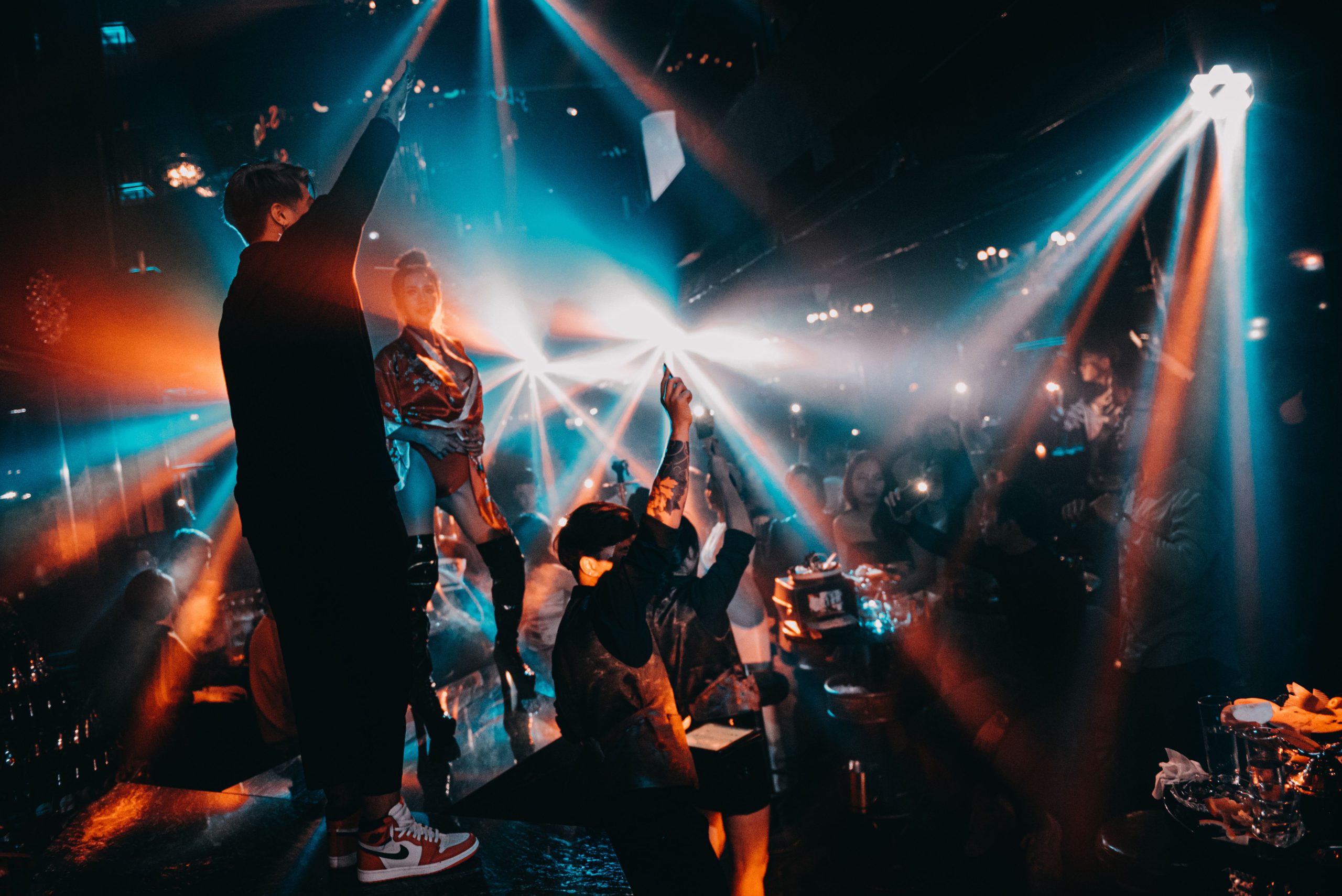
Miss Loretta’s is attempting a different move. Rather than competing on country authenticity, which is a difficult position to maintain in Las Vegas regardless of effort, the concept is layering country aesthetics on top of a nightclub infrastructure. The venue will play a mix of country and house music. It will feature line dancing. It will also feature theatrical cocktails, with 11 signature drinks including a cocktail called Pretty When I Cry and another called Sinners Saddle, glittering disco cowboy hats, and the Kaluga caviar deviled eggs that appear prominently in the press materials.
Caviar at a country bar is not a contradiction if you accept the premise that the target customer is not a country music fan who wandered in from Nashville, but rather a Las Vegas visitor or resident looking for a specific kind of night out that combines the accessibility of country music’s familiar social rituals, line dancing, cowboy hats, boots, a certain permission to be ridiculous, with the elevated hospitality economics of a premium nightlife venue.
This is a cocktail more than it is a bar concept. The ingredients are country, nightclub, feminine-coded luxury, Western mythology, and enough ironic self-awareness (a fictional jackalope as mascot, a drink called Pretty When I Cry) that the whole thing reads as knowing rather than earnest. The tagline “pairs well with unresolved feelings” says everything you need to know about who this venue thinks its customer is.
Resorts World’s Strategic Timing
The November 15 opening is not accidental. Resorts World is running Rodeo World 2026, a 10-day property-wide celebration running December 3 through December 12 alongside Wrangler National Finals Rodeo week. Miss Loretta’s opening three weeks before that event positions the venue to be fully operational, staffed, and with any opening-week kinks resolved before the single highest-demand country audience moment in Las Vegas’s annual calendar.
NFR week is the week Las Vegas becomes a different city. Hotel rates across the valley spike. Westgate, which has hosted the NFR for decades, runs multiple country acts through its venue. The honky-tonk bars on the Fremont Street perimeter do their best business of the year. Bellagio puts on the International Western Art Show. The entire Las Vegas hospitality infrastructure shifts its attention toward the 170,000-plus visitors who come for the rodeo.
For a new country-adjacent nightlife concept, opening into NFR week with three weeks of operational experience is the correct call. Miss Loretta’s will have a defined identity, a trained staff, and a reputation to build on before the most concentrated country audience of the year arrives in December.
The venue also has a built-in sibling concept under the same Resorts World roof. The Dawghouse Saloon is Resorts World’s existing country-themed bar. The relationship between the two will be one to watch: they serve overlapping audiences but with different identities. The Dawghouse Saloon is described in terms that suggest a more traditional honky-tonk experience. Miss Loretta’s is explicitly positioned as something else, something more nocturnal, more feminine-coded, more concerned with what your outfit looks like under the disco ball.
Race World and the Dual-Calendar Strategy
Miss Loretta’s does not only have Rodeo World in its strategic rearview. Resorts World is also running Race World 2026 from November 19 through November 22, a four-day celebration of globally recognized culinary talent, exclusive cocktail experiences, star-studded nightlife, and ultra-premium race hospitality. The overlap between this event and the Miss Loretta’s opening gives the venue two consecutive weekend-level activations in its first two weeks of operation, then a three-week run-up to the NFR.
This calendar construction suggests deliberate planning about how to build momentum for a new nightlife venue. A new bar that opens on a random Tuesday in October and builds gradually toward profitability through word-of-mouth is a different business than one that opens into a string of property-wide events that guarantee foot traffic and guaranteed press coverage regardless of the venue’s independent merit.
The Resorts World approach is to embed Miss Loretta’s in a sequence of activations that give it an audience before it has built its own. This reduces the cold-start problem that kills many new nightlife concepts in their first 90 days, when they need to build awareness, establish a regular crowd, and create the perception of being a place worth going while simultaneously training staff and working out operational details.
The Country-House Hybrid as a Business Model
The music programming choice, country and house rather than country alone, is worth unpacking as a business decision. Country music attracts a broad, multigenerational audience with high concert attendance rates and demonstrable spending power, as any look at the NFR hotel rates will confirm. House music attracts a nightclub-specific audience for whom the music is an explicit part of the going-out experience rather than a background element.
By combining the two, Miss Loretta’s is attempting to serve both audiences simultaneously, which creates a venue that is neither a pure country bar nor a pure nightclub but something that borrows the social permission structure of country, the line dancing, the cowboy hats, the boots, and combines it with the sonic environment and late-night duration of a nightclub.
Whether this works depends entirely on execution. A DJ playing house music while people are trying to line dance to it is a recipe for confusion. A DJ who can blend country into a house set, or a programming structure that shifts between the two genres by time of night, creates something that might work for both audiences without satisfying either completely.
The Bishop Design aesthetic, dusty pink and lipstick red, crystal lighting, black velvet banquettes, disco cowboy hats, theatrical cocktails, suggests the venue is betting that the visual environment will carry enough of the experience that the music can be secondary to the atmosphere. This is a plausible bet in Las Vegas, where the aesthetic of a night out often matters as much as the specific entertainment being consumed.
Key Insights
Miss Loretta’s differentiation strategy in a crowded Las Vegas country bar market relies on layering premium nightlife economics, Kaluga caviar, theatrical cocktails, Bishop Design aesthetics, onto country social rituals rather than competing on country authenticity. The November 15 opening is strategically timed to be fully operational before NFR week, the highest-demand country audience moment in Las Vegas’s annual calendar, with Race World 2026 providing additional foot traffic in the intervening weeks.
The fictional jackalope backstory creates brand extensibility without historical obligation, allowing the venue to build its own lore rather than honor someone else’s. The country-house music hybrid attempts to serve both broad country audiences and dedicated nightclub customers, with success dependent on programming execution that makes the genres complement rather than compete with each other inside the same room.
The venue sits at the intersection of two durable Las Vegas trends: the expansion of premium nightlife concepts beyond the core EDM/bottle-service model, and the sustained consumer appetite for country music experiences that the NFR demographic demonstrates year after year.
Notes
Miss Loretta’s opens November 15, 2026, inside Resorts World Las Vegas. Reservations are open now at the Resorts World website. The venue is described as open to all genders, though the press materials skew toward feminine-coded language and aesthetics consistent with the “as Martina McBride once sang, this one’s for the girls” framing in the Las Vegas Review-Journal coverage. Rodeo World 2026 runs December 3 through December 12. Race World 2026 runs November 19 through November 22.
Sources: Hoodline, Las Vegas Review-Journal (Neon), Resorts World Las Vegas official press release, VegasChanges