


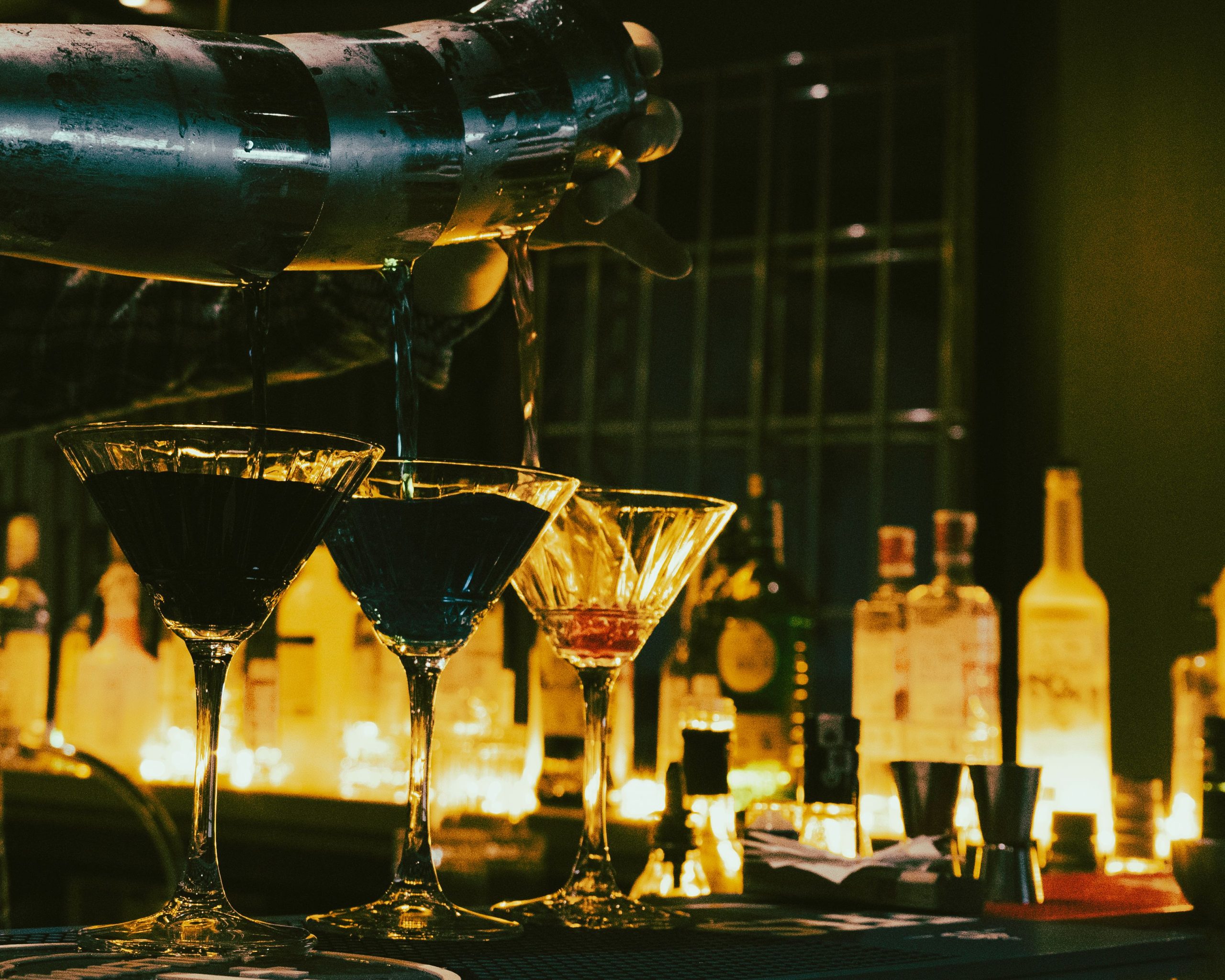
The address is 1201 South Main Street in Las Vegas’s Arts District. The capacity is twenty-four seats. There is a seven-seat bar, nine chairs at bar-height tables, and four seats against the north wall. The music plays only on analog, vinyl records, cassettes, and reel-to-reel tapes. The cocktail glass is shaped like a cobra. Galaga and Street Fighter II cabinets sit in the corner. Keanu Reeves sells Suntory whisky on the television.
Cobra Clutch opened in August 2026 on South Main Street in the Arts District, a Japanese-inspired cocktail bar from DJ Flores and Lu Lopez. Flores already owns Milpa, one of the city’s finest Mexican restaurants in southwest Las Vegas, and Nocturno, the cocktail bar on South First Street where both Flores and the bar earned James Beard Award semifinalist recognition in 2026. Lopez directs the bar program at Nocturno and brings that same cocktail seriousness to Cobra Clutch.
Early visitors described the atmosphere as Blade Runner, absent the grunge and rain. The walls are plastered with artwork from Japanese graphic illustrator Hiroshi Nagai alongside posters from Dragon Ball Z, Chrono Trigger, and Japanese movie posters for American films like Batman Returns and Alien. The two televisions play only anime series, Kurosawa films, and old Japanese commercials featuring American actors. The sound system is exceptional. The music is strictly analog.
Cobra Clutch is, by almost any conventional Las Vegas metric, the opposite of what succeeds here. It is tiny. It is deliberately obscure. It does not serve alcohol in a glass that makes you feel like you’re spending money. It has no table service for VIPs, no bottle service structure, no celebrity DJs. It is the kind of bar that thrives in Tokyo’s Shinjuku district or New York’s Lower East Side or Portland’s Pearl District, not the kind that conventional Las Vegas hospitality wisdom says belongs in a city built around maximizing alcohol revenue per square foot.
That conventional wisdom is increasingly wrong, and Cobra Clutch is the most specific evidence yet.
DJ Flores and the Art of Building an Empire Without the Strip
Flores has built something genuinely unusual in Las Vegas. He owns Milpa, a Mexican-American restaurant in the southwest valley that earned James Beard Award semifinalist recognition. He opened Nocturno on South First Street in the Arts District, a cocktail bar that received its own Beard semifinalist nod in 2026 alongside his personal recognition. He’s planning a second Milpa in Henderson. He has Beautiful Stranger, a full-service concept, working through permitting downtown.
Not one of these concepts is on the Strip. Not one involves a casino property partnership or a celebrity licensing arrangement. Every project has been built from community trust earned in Las Vegas’s independent dining ecosystem rather than from the institutional infrastructure that most ambitious Las Vegas hospitality development relies on.
This approach takes longer and generates less media attention during the building phase. You don’t get the opening-week coverage that a Strip casino gives you, or the marketing budget, or the built-in hotel guest volume. What you get instead is a customer base that chose you specifically, that returns because of what you deliver rather than because you’re convenient, and that becomes genuinely loyal in ways that tourist-dependent restaurants rarely cultivate.
The announcement of Cobra Clutch in July 2026, less than two weeks before it opened, reflected Flores’s growing hospitality portfolio and the broader shift visible across Las Vegas dining where single kitchen talents increasingly build entire small hospitality groups rather than staying tied to one dining room.
The Japanese Cocktail Bar as Cultural Statement
Cobra Clutch’s Japanese identity isn’t decorative. Lopez, whose cocktail philosophy was developed alongside Flores at Nocturno, has a genuine obsession with Japanese spirits culture, its history, its technique, and its specific relationship between the bar and the person sitting at it.
(cite index=”116-1″>Lopez is a disciple of the cocktail. He has studied its history extensively, and Japanese whisky specifically, including the founding figures of the tradition. Cobra Clutch strictly plays analog music, vinyl, cassettes, and reel-to-reel. The soundtrack focuses on Japanese city pop from the 1980s. The walls showcase Hiroshi Nagai’s graphic art alongside vintage gaming and film posters that blur the line between American and Japanese pop culture from the 1980s and 1990s.
Japanese city pop, the genre that soundtracks Cobra Clutch’s evenings, is itself a revealing cultural choice. The music emerged from Japan’s bubble economy era, smooth and aspirational, drawing on American funk and soul while creating something distinctly Japanese in its aesthetic. It has experienced a global revival over the past decade, particularly among younger listeners who discovered it through YouTube and streaming platforms, making it simultaneously retro and current.
The decision to play it only on analog, no Spotify, no digital streaming, is both philosophical and practical. Philosophically it aligns with the bar’s commitment to deliberate, curated experience over convenience and volume. Practically it forces a specific relationship between the music and the room that algorithmic playlists don’t create. Someone chose every song that plays at Cobra Clutch. That specificity is audible.
Twenty-Four Seats as Competitive Advantage
The conventional Las Vegas hospitality instinct is to maximize seating, maximize covers, maximize revenue per square foot. A twenty-four-seat bar sounds like it can’t generate enough revenue to justify a South Main Street address. This calculation misses how small, deliberately intimate bars actually work economically.
Twenty-four seats means that every person who comes to Cobra Clutch chose to be there. The bar doesn’t absorb walk-in overflow from neighboring restaurants or capture groups that couldn’t get a reservation elsewhere. It attracts people who specifically wanted this experience and planned accordingly.
These guests tend to spend differently than volume-driven customers. They order more carefully. They linger longer. They drink higher-quality spirits because the bar’s identity signals that quality matters here. And they return with more regularity, because a place that delivers a specific and irreplaceable experience becomes part of the routine rather than one option among many interchangeable venues.
The James Beard semifinalist recognition for Nocturno demonstrates that this model earns institutional validation as well as customer loyalty. Michelin and Beard evaluators are specifically calibrated to find exactly the kind of deliberate, craft-driven experience that Cobra Clutch offers and that large-volume Vegas bars by definition cannot deliver.
The Arts District as Incubator
South Main Street’s development into a cocktail bar corridor alongside its culinary identity is a specific and recent phenomenon. Nocturno on South First Street was an early signal. SoulBelly BBQ’s Michelin-recommended bar program on South Main reinforced it. Esther’s Kitchen’s James Trees developed Bar Boheme nearby. And now Cobra Clutch adds a bar so specific in its identity and so deliberately curated in its experience that it functions as a destination rather than a neighborhood option.
The cluster effect matters. When multiple serious cocktail bars and culinary destinations share a walkable area, the neighborhood becomes a destination rather than a collection of individual stops. Visitors and locals who plan an evening in the Arts District now have options that create genuine bar-hopping culture rather than requiring a single venue to serve all purposes.
This is exactly how the world’s great cocktail bar neighborhoods developed. Tokyo’s Golden Gai. London’s Soho. New York’s East Village. Each started with one or two serious operations that signaled to other serious operators that the neighborhood would support them. The Arts District in Las Vegas appears to be at the moment where that critical mass is forming.
Notes and Key Takeaways
For Restaurant and Bar Operators:
Cobra Clutch demonstrates that deliberately small, culturally specific cocktail bars can succeed in Las Vegas when they deliver genuinely irreplaceable experiences. The twenty-four-seat capacity isn’t a limitation on revenue. It’s the mechanism that creates the intimacy and intentionality that distinguishes this kind of bar from the volume-driven alternatives that dominate Las Vegas nightlife.
For Diners and Cocktail Enthusiasts:
Cobra Clutch at 1201 South Main Street in the Arts District offers Japanese spirits-focused cocktails in a twenty-four-seat space with strict analog music programming, vintage Japanese pop culture imagery, free Galaga and Street Fighter II cabinets, and a cocktail philosophy developed by one of Las Vegas’s most Beard-recognized bar directors. Reservations are available on OpenTable. Go early.
For Las Vegas:
Cobra Clutch is the most recent and most specific evidence that the Arts District’s cocktail bar culture has reached a level of sophistication that competes with any serious drinking neighborhood in America. The combination of Nocturno, Cobra Clutch, SoulBelly’s bar program, and the broader South Main Street dining corridor has created exactly the conditions for Las Vegas to develop a cocktail culture that operates entirely independently from the Strip’s bottle service economy.
Important Insights:
The Keanu Reeves selling Suntory whisky detail on the television is a specific piece of Japanese cultural trivia that rewards the audience Cobra Clutch is targeting. Anyone who knows what that references already understands the bar. Anyone who learns it there goes home with a story. Both outcomes serve the same marketing function without costing the bar anything.
Flores’s decision to open Cobra Clutch just weeks after announcing it reflects confidence that the Arts District audience would find the bar without sustained pre-opening marketing. Nocturno’s existing following, the Beard recognition, and the South Main Street corridor’s own momentum were enough. This is a form of community capital that only comes from years of consistent quality.
The free arcade cabinets are a specific and generous detail that signals something about the bar’s relationship with its customers. You can spend twenty minutes playing Galaga and not buy a drink. The bar trusts that the people who come to Cobra Clutch are there for the experience, which makes the games a hospitality gesture rather than a revenue concern.
Lu Lopez’s Nocturno-developed cocktail philosophy, translated into a Japanese spirits context at Cobra Clutch, creates intellectual continuity between the two Arts District addresses without making one simply a satellite of the other. Two bars that share a bar director but operate in completely different cultural registers demonstrate range rather than repetition.
The strict analog music policy is the single detail most likely to be imitated by subsequent Arts District bars without fully understanding what it represents. The music at Cobra Clutch isn’t just 1980s Japanese city pop played on vinyl because vinyl sounds warm. It’s a commitment to curation, intentionality, and the specific kind of listening experience that distinguishes a bar with a genuine point of view from one attempting aesthetic signaling.