

A Debate That Never Happened
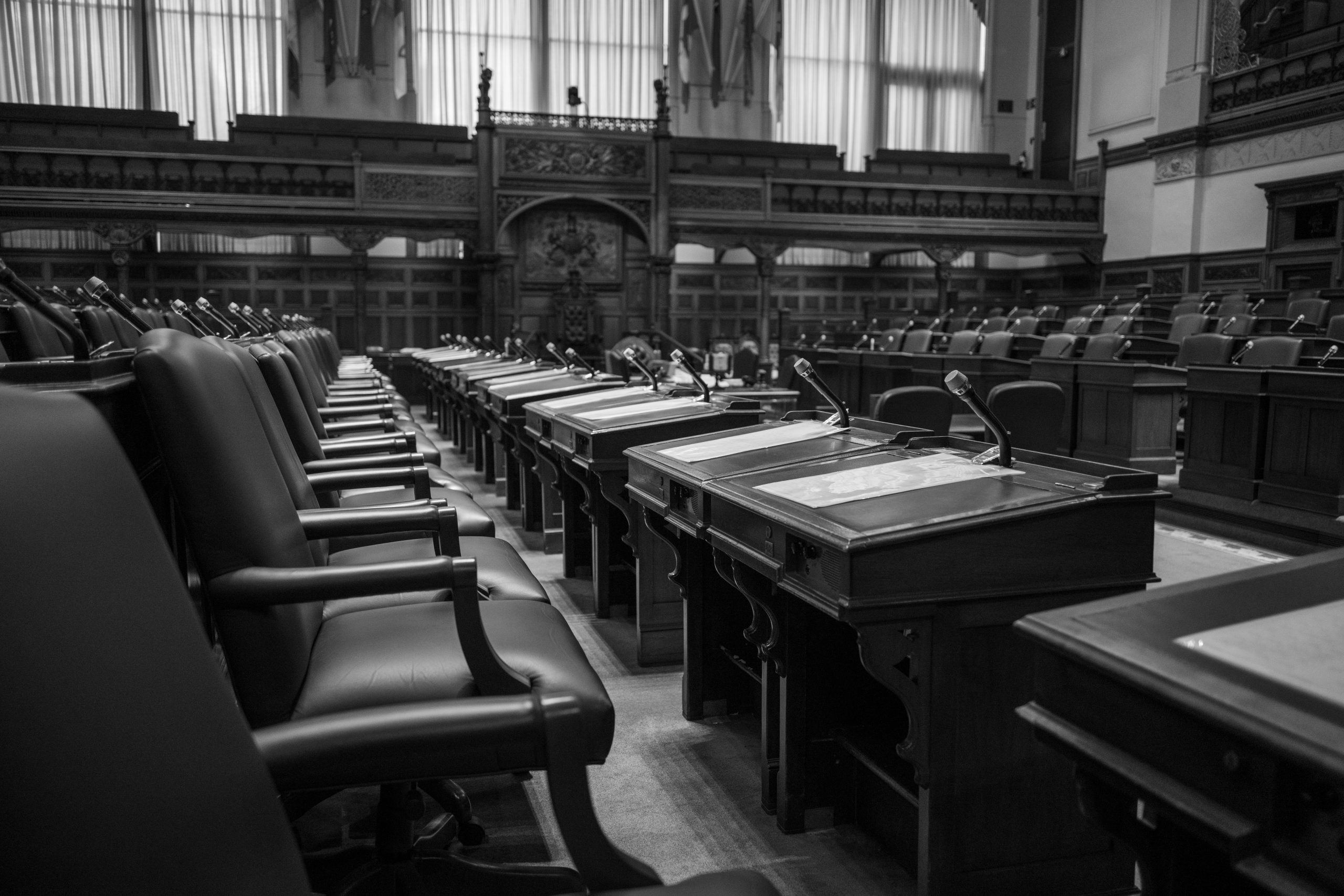
Mail ballots begin shipping to Nevada voters this week. Early voting opens October 17. Election Day is November 3. And as of October 8, 2026, Governor Joe Lombardo and Attorney General Aaron Ford have not shared a debate stage once during the general election campaign.
That is not a minor scheduling gap. It is a deliberate strategic posture that both campaigns have maintained for months, each for their own reasons, even as the race has tightened into one of the most competitive governor’s contests in the country. Nevada voters heading toward the polls in the next four weeks will be casting ballots having never watched the two men who want to lead the state debate each other directly.
The absence says something specific about each candidate’s calculation of where they stand, what they have to gain, and what they have to lose.
The Numbers That Make This a Real Race
Three polls tell three slightly different stories about the Lombardo-Ford race, which is itself the story of how genuinely competitive this contest is.
An Emerson College Polling survey conducted in cooperation with KLAS-TV in early September showed Ford leading 44% to Lombardo’s 42%, with 11% undecided. The 2-point gap fell within the poll’s credibility interval of plus or minus 3.7 percentage points, making it a statistical tie. A Democratic Governors Association poll from mid-July showed the candidates at 44% each. A Republican Governors Association internal poll from late July showed Lombardo ahead by seven points.
The range of those results, from a two-point Ford edge to a seven-point Lombardo lead, reflects the genuine uncertainty in a state where neither party has had a firm grip on statewide elections. The average margin of victory across the last four cycles of Nevada statewide contests has been 2.91 percentage points. Lombardo won his 2022 race against incumbent Governor Steve Sisolak by roughly 1.5 percentage points, or 15,386 votes. This race is shaping up to produce a similar margin, in a direction nobody can confidently predict.
What Ford Proposed and What Lombardo Did Not Answer
Ford’s campaign put forward a debate structure in June that was specific and public. Three televised debates, one in Las Vegas and one in Reno, with at least one hosted and broadcast by a Spanish-language media outlet, and all debates held after Labor Day. Ford’s rationale was equally specific: Nevada has the highest concentration of tipped workers in the country, and the governor’s race has direct consequences for the hospitality and tourism workers who make up the economic backbone of the Las Vegas market.
Lombardo’s campaign did not respond publicly to the debate proposal. It has maintained that posture ever since.
The irony is not subtle. Ford himself declined to debate his Democratic primary opponent, Washoe County Commissioner Alexis Hill, and his campaign’s explanation for why he was now pushing for debates against Lombardo was notably indirect. “The election has always been about Joe Lombardo and Donald Trump’s failed economic record,” a Ford campaign spokesperson said when asked what had changed since the primary. The answer to the question that wasn’t asked was that challenging an incumbent to debate is good politics when you’re the challenger, and accepting a debate is bad politics when you’re the incumbent with a lead.
Lombardo debated then-Governor Steve Sisolak once in 2022. He won that race. The lesson his campaign appears to have taken from that experience is that one debate is survivable and perhaps necessary; three debates on your opponent’s schedule, including one in Spanish-language media tailored to a demographic where Ford leads by 31 points, is not.
The Demographic Map That Explains Everything
Emerson’s September poll contained the voter breakdown that makes the debate calculation clearest. Ford leads among Hispanic voters by 31 points, 51% to 20%. He leads among women by 11 points, 48% to 37%. Lombardo leads among white voters by 13 points, 51% to 38%, and leads men by six points, 47% to 41%.
In a state where Nevada’s economy is driven by the hospitality and tourism industries, and where Ford’s campaign has specifically called for a Spanish-language debate broadcast, the debate format Ford proposed would have been fought on terrain that favors Ford’s coalition. Lombardo is not going to debate his way to a 31-point improvement among Hispanic voters. The downside of a Spanish-language debate broadcast, for the incumbent, is that it elevates the salience of a demographic where he is losing by historic margins in a close race. The upside is minimal.
Ford’s path to victory runs through the communities he is already winning and through turnout. His decision to push aggressively for debates that Lombardo keeps declining is itself a message to those communities: the governor is afraid to face me. Whether that message moves votes in the absence of an actual debate is something the campaign is betting on.
What Each Man’s Record Actually Shows
Lombardo’s 40% job approval rating and 39% disapproval, with 21% neutral, describes an incumbent who has not converted his office into dominant political standing but has also not made enough enemies to be easily toppled. The economy remains the top issue for 43% of Nevada voters, followed by housing affordability at 15%, healthcare at 11%, and education at 10%.
The Governor’s record on those issues is genuinely mixed in ways that produce different interpretations. Lombardo backed natural gas pipeline expansion for data centers, positioning Nevada as a destination for technology infrastructure investment. He endorsed emergency school funding for districts with declining enrollment in late September, a move that addresses one of the educational stress points in his record. He has vetoed housing legislation that Democrats argue would have improved affordability.
Ford’s record as Attorney General includes consumer protection enforcement and pushback against federal rollbacks of Nevada-specific protections. He has framed the race primarily as a referendum on Lombardo’s alignment with the Trump administration on economic policy, arguing that Nevada families have faced rising costs without adequate state-level response.
Neither candidate’s record produces an easy verdict. The race is about which framing of those records lands harder with the roughly 11% of voters who remain genuinely undecided heading into early voting.
The Stakes for Las Vegas
Las Vegas’s specific economic circumstances give this governor’s race particular weight for the region’s businesses, workers, and real estate interests.
The Strip is navigating simultaneous acquisition uncertainty, with Caesars Entertainment and MGM Resorts both fielding multi-billion-dollar buyout bids. Any major ownership transition at that scale will require state regulatory engagement. Gaming revenue in June fell 1.4% year-over-year. Tourism is recovering but unevenly. The Convention Center’s $600 million renovation is positioning Las Vegas for a new decade of convention business, but the economic model depends on policy stability.
Data center expansion is emerging as one of the defining economic debates in Nevada. Lombardo has backed natural gas infrastructure for data centers. Sixty-seven percent of Nevada voters, according to the September Emerson poll, oppose data centers being built near their communities. That gap between what the governor is pursuing and what voters say they want is a vulnerability Ford’s campaign is trying to exploit in Southern Nevada.
For the hospitality industry specifically, the “no tax on tips” policy that federal Republicans have championed and that Lombardo’s party controls nationally is a genuine consideration for the 30-plus percent of Las Vegas workers in tipped positions. How that policy translates from federal promise to state reality depends partly on who holds the governor’s office come January.
Notes for Stakeholders
The Lombardo-Ford race provides insights for anyone working in Nevada’s political economy, business development, or community advocacy:
Debate avoidance is itself a strategic communication. Lombardo’s refusal to agree to debate terms is a signal about where his campaign believes its vulnerabilities are, specifically among Hispanic voters and on economic affordability in Spanish-language media markets.
Polling divergence between partisan-commissioned polls (seven-point Lombardo lead in a GOP poll) and independent surveys (two-point Ford lead in Emerson) is itself diagnostic information. The truth likely lies somewhere in that range, which means turnout operations will decide the outcome.
Early voting begins October 17 and mail ballots are shipping now. The campaign’s final month is a mobilization contest, not a persuasion one. Both campaigns know their voters and are spending accordingly.
The 11% undecided figure in September polling represents roughly 150,000 to 200,000 Nevada voters who have not committed. Both campaigns are targeting the same slice of the electorate with competing economic frames. The first candidate to land a credible affordability message with that group controls the race’s outcome.
Data center policy is the emerging fault line in Nevada’s economic development debate that will outlast this election regardless of who wins. The community opposition documented in polling, combined with the investment appetite from technology companies, sets up a governance challenge that neither candidate has resolved with a clear policy framework.
The Final Stretch
Early voting starts nine days from now. The window for a debate has effectively closed. What remains is the ground game, the advertising spend, and the accumulated effect of months of campaigning without the kind of direct comparison a debate provides.
Ford will argue that Lombardo’s refusal to debate is itself evidence of the accountability deficit he’s been running against. Lombardo will argue that his record speaks for itself and that a debate on terms designed by his opponent is not a debate but a setup.
Nevada voters will decide which argument is more persuasive. And they will do it without ever having seen the two men make their case in the same room at the same time.
Key Takeaways:
- With mail ballots shipping and early voting beginning October 17, the Nevada governor’s race between incumbent Republican Joe Lombardo and Democratic Attorney General Aaron Ford has produced zero general election debates as of October 8, 2026
- The most recent independent poll, by Emerson College in early September, showed Ford leading 44% to 42%, within the margin of error; a Republican Governors Association internal poll from July showed Lombardo ahead by seven points
- Ford proposed three televised debates in June, including one broadcast by a Spanish-language media outlet; Lombardo’s campaign did not publicly respond and has maintained that posture for months
- Ford leads among Hispanic voters by 31 points (51% to 20%) and among women by 11 points; Lombardo leads among white voters by 13 points and men by six points, explaining why each campaign’s debate calculation is strategically rational
- The economy is the top issue for 43% of Nevada voters, followed by housing affordability (15%), healthcare (11%), and education (10%)
- Lombardo holds a 40% job approval rating with 39% disapproval and 21% neutral, describing an incumbent who has not converted his office into dominant political standing
- Ford himself declined to debate his Democratic primary opponent, Washoe County Commissioner Alexis Hill, before calling on Lombardo to debate; his campaign’s explanation for the shift was indirect
- Lombardo’s 2022 victory over incumbent Governor Steve Sisolak came by 1.5 percentage points, or roughly 15,000 votes, establishing the razor-thin margin that defines recent Nevada statewide elections
- Data center expansion is an emerging fault line: 59% of Nevada voters oppose data centers near their communities, while Lombardo has backed natural gas infrastructure to support that industry’s growth
- Las Vegas’s specific stakes include ongoing acquisition uncertainty at Caesars and MGM, gaming revenue softness, and the tip tax policy that directly affects 30-plus percent of the city’s workforce