

In December 2023, Irv’s Burgers opened its first Las Vegas Valley location inside the Eat Your Heart Out food hall at Durango on the southwest side of the valley. Nobody planned a public spectacle around it. There were no lines around the building, no viral social media moments, no celebrity appearances at a ribbon cutting. The brand simply arrived, served its burgers, and began building a local following the same way it had been doing in Southern California since 1946, one customer at a time.
By August 2025, a second location was running inside the Miracle Eats Food Court at Planet Hollywood’s Miracle Mile Shops on the Strip, putting Irv’s directly inside the tourist corridor where millions of visitors pass through annually. On July 9, 2026, a third Southern Nevada location opened at Green Valley Ranch Resort Casino and Spa in Henderson, completing a methodical three-location expansion that now spans the valley from the southwest suburbs to the Strip to the residential Henderson market.
The Green Valley Ranch opening, part of the resort’s ongoing $200 million property-wide renovation that includes upgraded rooms, fresh gaming spaces, and an evolving food court lineup, puts Irv’s inside one of Henderson’s most established resort properties serving a primarily local audience. Understanding how an 80-year-old Southern California burger brand has managed this Las Vegas expansion, what the Green Valley Ranch location specifically represents, and what Irv’s approach to growth reveals about brand management in the fast-casual segment requires examining each stage of this evolution.
The 1946 Foundation
Irving “Irv” Gendis opened the original stand on Route 66 in West Hollywood in 1946. The concept was straightforward: quality ingredients, hand-formed patties, and genuine hospitality without the industrial efficiency that fast food chains were beginning to perfect at that same moment in American history. While McDonald’s and its imitators were engineering the burger for speed and replicable consistency, Irv’s was building something else entirely, a burger experience rooted in relationship and neighborhood identity rather than operational optimization.
This founding philosophy survived ownership transitions and the passing decades because each generation of operators treated it as genuinely non-negotiable rather than as marketing copy. Lawrence Longo, current CEO of Irv’s Burgers, put it directly: “Every Irv’s location carries the responsibility of honoring a story that began nearly eight decades ago. As we grow, our goal is to introduce more people to Irv’s while staying true to what has always made Irv’s special. People connect with places that feel authentic, have history and create lasting memories.”
This statement would be easy to dismiss as boilerplate brand messaging if Irv’s expansion behavior didn’t actually reflect it. Three locations over two and a half years in a new market, each chosen with apparent deliberateness rather than opportunistically maximizing real estate, suggests a company that means what it says about measured growth. The contrast with brands that announce dozens of franchises simultaneously and sacrifice quality control for expansion velocity is stark.
The hand-drawn doodles that appear throughout Irv’s branding and interior design aren’t the work of a corporate design team attempting to manufacture personality. They reflect the visual identity that accumulated organically across decades of operation by people who genuinely cared about the brand’s character. This distinction, between manufactured authenticity and accumulated authenticity, is something experienced diners recognize even when they can’t articulate exactly why one burger joint feels like a place with a story while another feels like a stage set.
The Food Court Strategy
All three of Irv’s Las Vegas Valley locations share a significant characteristic: they operate within existing food court or food hall infrastructure rather than as standalone restaurant buildings. The Durango location is inside the Eat Your Heart Out food hall. The Planet Hollywood location is inside Miracle Mile Shops’ Miracle Eats food court. And the Green Valley Ranch location is inside the resort’s food court.
This consistent positioning reveals a deliberate entry strategy for the Las Vegas market that differs from how the brand might approach a market where it already had established recognition. Operating within food courts and food halls reduces the capital requirement for each new location compared to standalone buildouts. It places Irv’s alongside other concepts that collectively drive traffic to the shared space, rather than requiring each Irv’s location to generate its own standalone destination traffic from scratch. And it provides operational infrastructure, including shared facilities and established customer flow patterns, that helps new locations find their footing before the brand has fully established itself in the local consciousness.
The food court strategy also allows Irv’s to test different neighborhood dynamics within a single market before committing to more capital-intensive standalone locations. Southwest Las Vegas at Durango serves a primarily local residential audience in a newer suburban corridor. The Strip at Miracle Mile Shops serves the tourist corridor. Henderson at Green Valley Ranch serves an established residential and locals-oriented resort market. Each location reveals different information about which customer segments respond most strongly to what Irv’s offers and at what price point the brand performs best in the Las Vegas context.
What Green Valley Ranch Adds
Ryan Simmons, VP and General Manager of Green Valley Ranch Resort Casino and Spa, framed the Irv’s addition in terms of the property’s ongoing evolution: “As we continue to upgrade Green Valley Ranch, Irv’s Burgers is the perfect addition to the evolving offerings at the food court. Irv’s is all about creating experiences that bring people together and giving guests a quality and memorable offering.”
Green Valley Ranch has operated as one of Henderson’s premier resort destinations for over two decades. Unlike Strip casinos that depend on tourist volume, GVR has always served a predominantly local Southern Nevada audience, which shapes its dining strategy differently from properties measuring success primarily through visitor counts from out of state. Local audiences that return weekly or monthly have different expectations and higher standards than tourist audiences visiting once, making quality more critical and novelty less sufficient for sustaining traffic.
Irv’s fits this dynamics well precisely because the brand’s value proposition rests on consistent quality across repeated visits rather than novelty that attracts one-time curiosity. A Henderson resident who visits Green Valley Ranch regularly for dinner or entertainment might stop at Irv’s for a burger on a casual weeknight without the occasion requiring any particular justification. This casual repeat-visit scenario is exactly where brands with 80 years of neighborhood-restaurant DNA excel and where newer, trendier concepts sometimes struggle to sustain interest past initial curiosity.
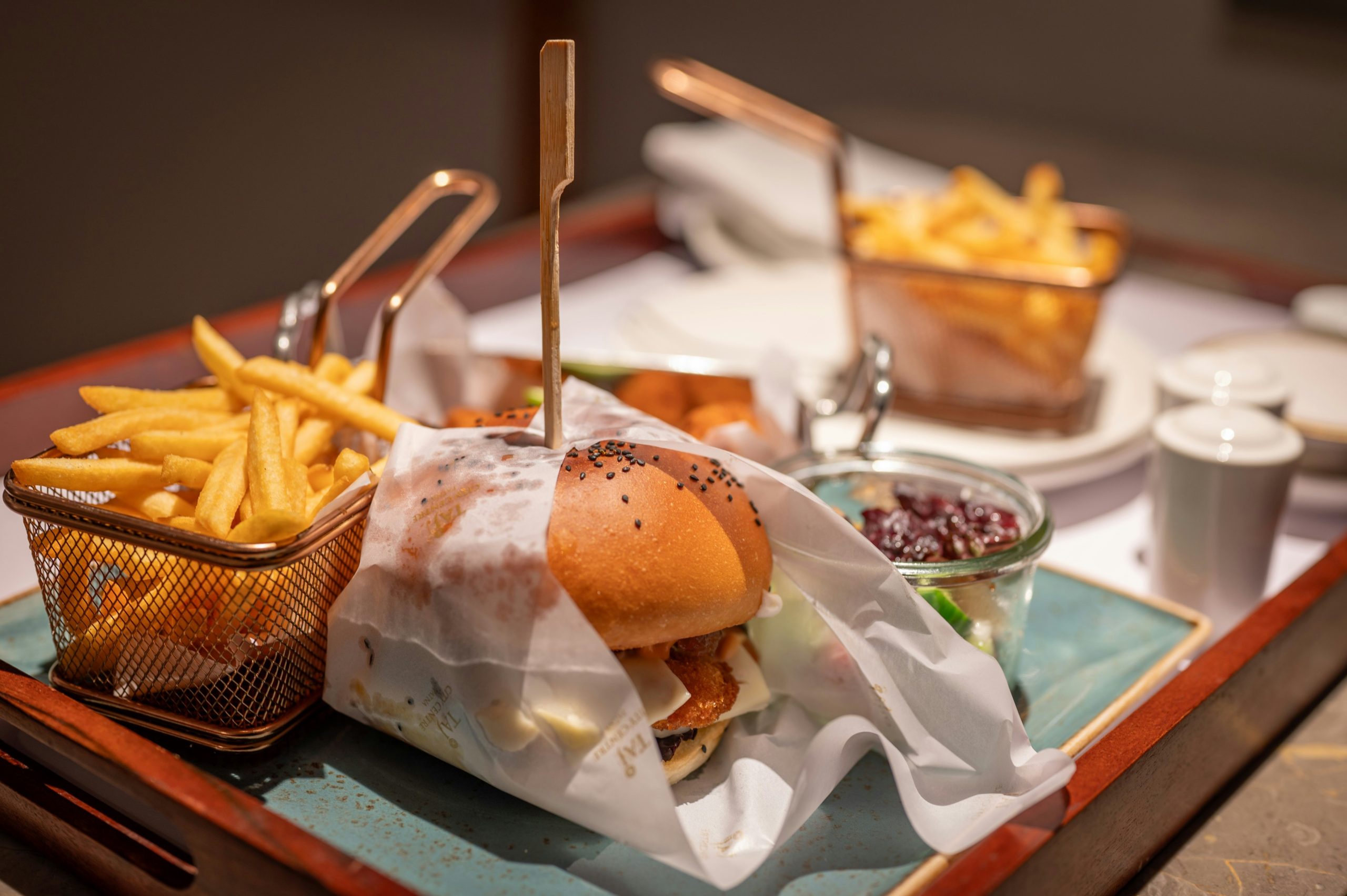
The menu features Irv’s signature burgers with add-ons, sandwiches including a pastrami and a patty melt, dogs and chili dogs, sides including fries, tots, and onion rings, milkshakes, floats, and cookies, plus a breakfast menu running to burritos, sandwiches, loaded tots, and the signature Breakfast Burgerrito. The range, while not revolutionary, covers the full spectrum of what a food court concept needs to serve multiple meal occasions across the day without overextending into categories that dilute focus.
The California Import Playbook
Irv’s joins a meaningful cohort of Southern California burger institutions that have made Las Vegas their expansion market. The comparison is inevitable: In-N-Out Burger opened its second-largest US location on the Strip in June 2026, generating social media pandemonium that Irv’s quieter approach deliberately avoids.
The contrast in expansion philosophy between these two California burger institutions is instructive. In-N-Out’s BLVD opening was a media event engineered for maximum awareness, featuring a two-story location with a rooftop terrace and securing coverage from national food publications before the first Double-Double was served. Irv’s Green Valley Ranch opening offered the first 100 guests a free burger and entered 25 loyalty program sign-ups in a giveaway for free burgers for a year. Same category, entirely different energy.
Neither approach is inherently superior. In-N-Out’s scale, operating hundreds of locations across multiple states, supports the infrastructure required to orchestrate high-visibility openings. Irv’s more modest footprint, still a young brand outside its Southern California home territory, benefits from the more intimate, community-oriented approach that builds loyal local followings without requiring celebrity appearances or national media coordination.
What both brands share is the fundamental quality that makes California burger institutions translate to Las Vegas specifically: a clear, defined identity built over decades of consistent execution. Las Vegas diners, both locals and tourists, have been trained by the city’s dining environment to quickly assess whether a concept knows what it is. Brands with long histories and unchanging core offerings communicate identity more efficiently than newer concepts still finding their voice, which explains why 80-year-old institutions from another market can establish local credibility faster than many newer concepts despite lacking any local history.
Notes and Key Takeaways
For Restaurant Operators:
Irv’s three-location Las Vegas expansion strategy, using food court and food hall positioning to reduce capital requirements while testing different neighborhood dynamics, provides a replicable model for regional brands entering new markets without the resources to support multiple standalone buildouts simultaneously.
For Diners:
The Green Valley Ranch location gives Henderson residents and resort visitors access to 80 years of California burger heritage in a familiar local resort setting. The breakfast menu, including the signature Breakfast Burgerrito, and late-night hours running to 2 a.m. on weekends position Irv’s as a multi-occasion destination rather than a purely dinner-focused concept.
For Las Vegas:
Irv’s measured, food court-based expansion across three distinct Las Vegas Valley markets in two and a half years demonstrates how regional brands with genuine heritage can build meaningful local presence without the capital-intensive standalone buildouts that limit many would-be entrants to the competitive Southern Nevada restaurant market.
Important Insights:
The Green Valley Ranch opening’s position within a $200 million property-wide renovation reflects how established resort properties increasingly view food court upgrades as integral to the broader guest experience rather than as afterthoughts beneath the notice of serious hospitality investment. Irv’s presence signals the renovation’s quality intentions as much as any room upgrade.
The three-location geographic spread, covering southwest Las Vegas, the Strip, and Henderson, positions Irv’s across the three most distinct dining markets within the Southern Nevada ecosystem. The data being generated across these different contexts will inform whether and how Irv’s continues expansion within the market.
Irv’s loyalty program, which featured prominently in the Green Valley Ranch grand opening giveaway, suggests the brand is investing in customer relationship infrastructure that distinguishes it from pure transactional fast food operations. Loyalty programs in the burger category work best for brands with genuine repeat-visit quality rather than novelty-driven concepts that lose relevance once the initial curiosity fades.
The “Just For You” hospitality philosophy that Irv’s describes as central to its brand identity translates differently in food court environments than it would in standalone restaurant settings, where staff interactions are more extended and personal. The challenge for Irv’s Las Vegas expansion is maintaining the hospitality character that defines the brand in contexts where operational pace and physical setup don’t naturally support it.
The 80-year founding story, while genuinely meaningful to the brand’s identity, requires active communication in new markets where it carries no existing resonance. Las Vegas customers encountering Irv’s for the first time have no inherited relationship with the Route 66 heritage that California regulars absorbed over decades. Building that story recognition in a market accustomed to processing new restaurant concepts at high velocity represents a specific and ongoing communication challenge.
Late-night hours, running to 2 a.m. on weekends at Green Valley Ranch, acknowledge the hospitality economy’s timeline realities in ways that earlier-closing concepts miss. Diners emerging from casino floors, entertainment venues, or simply late evenings at resort restaurants represent a consistent and underserved late-night demand that quality burger concepts are well positioned to capture.