

On June 9, 2026, something happened on the Las Vegas Strip that no Michelin-starred chef, celebrity hospitality group, or casino dining team had managed to generate in years: genuine, uncontrollable public excitement about a restaurant opening.
People lined up. They posted videos. They sent friends texts with the news. Food writers who normally cover $300 tasting menus wrote enthusiastically about a place where the most expensive item on the menu costs less than a cocktail at almost any other restaurant on the same block.
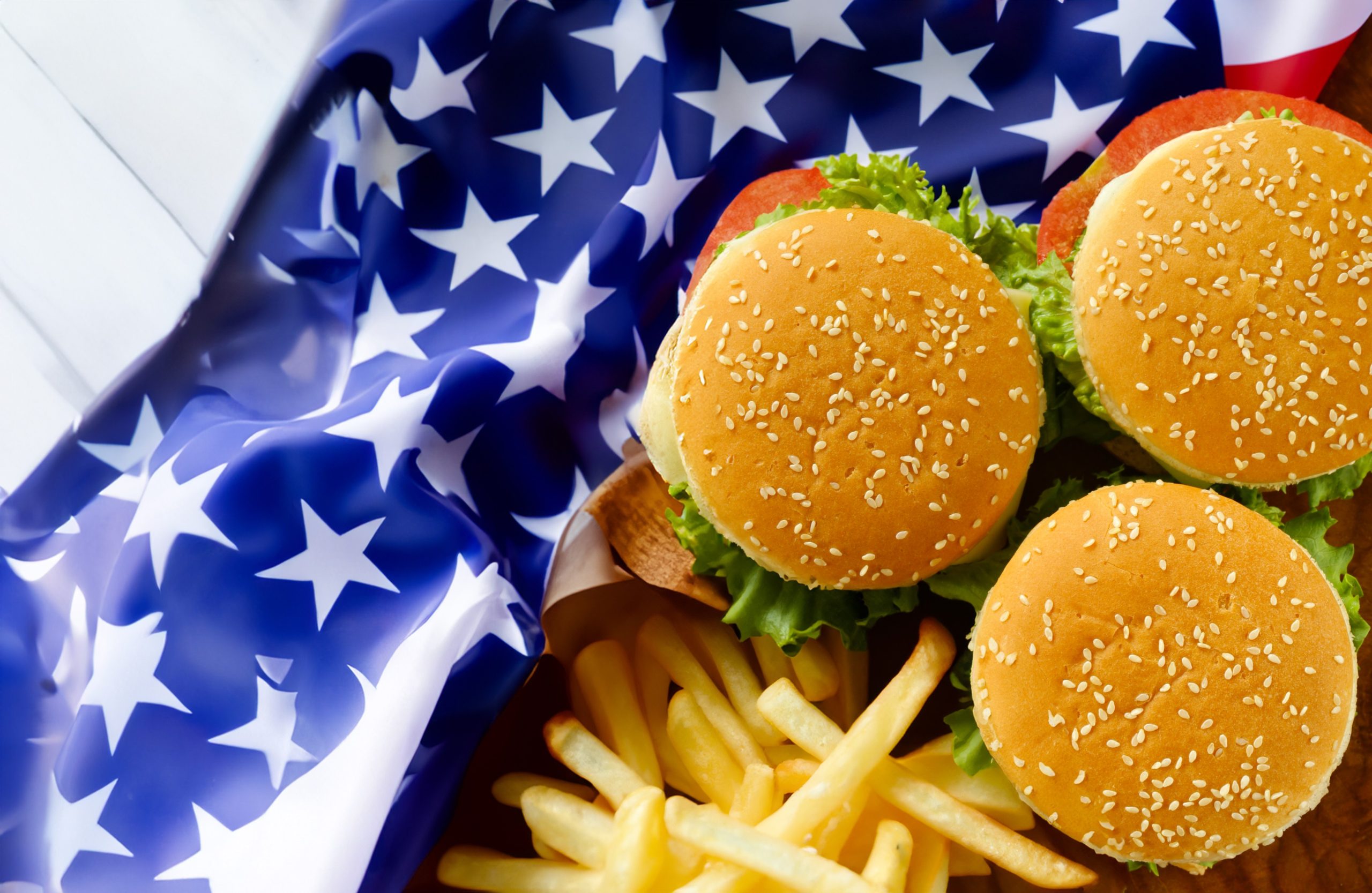
In-N-Out Burger opened its newest location at BLVD Las Vegas, a 400,000-square-foot mixed-use retail and entertainment complex at 3747 South Las Vegas Boulevard, and the response confirmed something that Las Vegas dining observers have always known but rarely examine directly. The city’s most powerful dining force isn’t Michelin stars or celebrity chefs. It’s the deep emotional connection millions of Americans have with a privately held burger chain founded in 1948 by Harry and Esther Snyder out of a tiny stand in Baldwin Park, California.
The BLVD location is the second-largest In-N-Out in the United States by seating capacity, trailing only the landmark Barstow location along the Southern California-to-Las Vegas corridor. It spans more than 10,500 square feet across two floors, with indoor seating for 170 guests and an outdoor rooftop terrace accommodating 50 more, looking out across the Strip toward Aria. There is no drive-thru. There is, however, an In-N-Out company store selling merchandise.
Examining why this opening generated the response it did, what it means for the BLVD development, and what In-N-Out’s positioning on the Strip says about the current state of Las Vegas dining reveals more than a story about burgers.
The Cult That Built Itself
In-N-Out did not build its following through marketing in any conventional sense. The company spends minimally on advertising relative to its size and almost nothing on social media promotion. There are no celebrity partnerships, no viral campaigns, no influencer programs. The loyalty that fills lines at every opening comes from something more durable: consistent quality, unchanged core menu, and the genuine affection of customers who grew up eating there.
The Double-Double, Animal Style fries, the protein-style option, the not-so-secret menu that became so widely known it’s printed on request cards at the counter. These aren’t marketing constructs. They’re cultural artifacts that have accumulated meaning across generations of California families who associate In-N-Out with road trips, graduations, late nights after concerts, and first jobs.
Las Vegas has In-N-Out locations already, including one at The Linq on the Strip. So the opening of a new location at BLVD isn’t introducing the brand to the city. What the BLVD opening represents is something different: placing In-N-Out in a premium retail context, at a scale that matches the Strip’s theatrical tendencies, with a rooftop terrace view that no other In-N-Out can offer.
The result is an In-N-Out that functions as a destination rather than a convenience stop. Tourists who have heard about In-N-Out their entire lives but live in markets where it doesn’t operate now have a Strip-accessible location. California transplants and Nevada residents who treat the chain as a comfort ritual can access it without leaving the tourist corridor. And the opening itself becomes a moment, something to be documented and shared, which generates free awareness at a scale that paid media cannot replicate.
The BLVD Context
BLVD Las Vegas is itself a story worth understanding. The 400,000-square-foot complex sits on land that was once the Hawaiian Marketplace, a shopping mall that struggled to hold tenants for years before being acquired in 2019 for $172 million by Gindi Capital and the Cherng Family Trust. The Cherng family, who founded Panda Express in 1983, knows something about making value-oriented food work at scale in American retail environments.
The site sat through the pandemic and subsequent development cycles before emerging as BLVD, a retail-and-entertainment complex housing brands including Puma, Adidas, and H&M alongside food and beverage tenants. The location, just south of Harmon Boulevard on the Strip, puts it between the concentrated density of the central Strip and the southern end of Las Vegas Boulevard, accessible to both tourist foot traffic and locals approaching from the south.
In-N-Out as an anchor tenant for a retail development of this ambition makes strategic sense that goes beyond the burger chain’s obvious traffic-drawing power. In-N-Out’s presence signals something about the development’s positioning. It’s not trying to compete with the upscale retail of The Forum Shops at Caesars or the design-forward offerings of The Shops at Crystals. BLVD is positioning itself as accessible, energetic, and broadly appealing. An anchor tenant with In-N-Out’s demographics and cultural cache communicates this positioning instantly.
The No Drive-Thru Decision
One of the most interesting operational decisions at the BLVD location is the absence of a drive-thru. At almost every other In-N-Out, the drive-thru is central to the operation, handling the majority of orders and defining the physical footprint of the restaurant. The chain’s drive-thru lines are famous, sometimes stretching around city blocks, a visible testament to demand that also creates neighborhood traffic concerns.
The Las Vegas Strip location cannot accommodate a drive-thru by virtue of its position within a multi-level retail complex on one of the most congested corridors in the country. So In-N-Out adapted. The result is a restaurant that functions more like a traditional dine-in establishment than most of the chain’s locations, with indoor seating that actually encourages guests to stay rather than take their food to go.
This format change creates different dynamics than the typical In-N-Out experience. The rooftop terrace, with views across the Strip, makes lingering feel worthwhile in a way that a drive-thru pickup never could. Tourists eating their Double-Doubles while watching the Strip from above are having a specifically Las Vegas experience, not just a fast food transaction.
The absence of a drive-thru also means the BLVD location won’t generate the traffic-congestion optics that In-N-Out openings sometimes create. The lines form inside rather than wrapping around the building and backing up adjacent streets. This matters for a property trying to establish itself as a smooth, well-managed retail destination.
What $18.25 Per Hour Means
In-N-Out employs roughly 70 associates at the BLVD location with a starting wage of $18.25 per hour. Nevada’s minimum wage is $12 per hour. This gap matters more than it might initially appear.
In-N-Out’s above-market starting wages are a foundational element of the company’s operational model. Higher starting pay reduces turnover, and reduced turnover maintains the service consistency that differentiates In-N-Out from competitors operating at similar price points. When the person taking your order has worked there for two years rather than two months, the experience of ordering, paying, and receiving your food is measurably smoother.
This model also creates workforce culture effects that compound over time. Employees who feel compensated fairly tend to represent the brand differently than those who feel replaceable. The In-N-Out culture, which the company cultivates deliberately through training and internal promotion, requires employees who are invested enough to actually embody it.
For Las Vegas specifically, the $18.25 starting wage sets a benchmark that positions In-N-Out favorably against other entry-level food service employers in the tourism economy. Workers who have options will generally prefer employers paying above market rates. This hiring advantage flows directly to the customer experience.
The Value Proposition in a Premium Context
The most counterintuitive thing about In-N-Out’s arrival on the Las Vegas Strip is how well its value positioning fits within a market that has been working hard to move upscale. After years of price increases that drove summer 2025’s tourism dip, and the subsequent value-focused responses from major operators, In-N-Out arrives offering food that costs roughly what it would cost anywhere else in the country.
A Double-Double costs a few dollars. Animal fries cost a few dollars. A shake costs a few dollars. In the context of a Strip where cocktails routinely cost $20 and casino restaurant entrees regularly exceed $50, In-N-Out’s prices feel almost radical in their accessibility.
This doesn’t position In-N-Out as competition for the Michelin-starred restaurants on the same corridor. The restaurants serve different purposes and attract different customers at different moments. But In-N-Out’s presence does reinforce the value conversation that Las Vegas has been having with itself since summer 2025. Premium experiences have their place. So does accessible, reliably excellent fast food that tourists and locals can visit without financial anxiety.
The rooftop terrace view across the Strip adds aspirational dimension to a fundamentally accessible experience. You can watch the same skyline that guests see from $500-per-night hotel rooms while eating a $5 burger. This democratization of the view is entirely in keeping with what Las Vegas, at its best, has always offered: access to spectacle that transcends income brackets.
The Crossed Palms
In-N-Out plants its palm trees in an X formation at most locations, a tribute to the 1962 film “It’s a Mad, Mad, Mad, Mad World,” in which treasure is buried beneath crossed palms. The BLVD location maintains this tradition, the crossed palms visible from Las Vegas Boulevard as a small, specific signal to customers who know what they’re looking at.
This detail is worth noting because it illustrates something important about the brand’s relationship with its own mythology. In-N-Out has been planting crossed palms for decades. The reference is obscure enough that most customers who see it have no idea what it means. But the customers who do know feel recognized, feel like they’re part of something with history and intention. This is brand-building through accumulated detail rather than campaign-driven message.
The BLVD location brings these details to the Strip in a format that matches the Strip’s scale without abandoning what makes In-N-Out distinctively itself. The neon-inflected signage gives a Vegas spin to the retro design without making it look like a different restaurant. The crossed palms stand where crossed palms always stand. The menu is the menu.
In a city where restaurants constantly reinvent themselves to stay relevant, In-N-Out’s refusal to change is itself a competitive advantage. Guests know exactly what they’re getting before they arrive. That certainty has value, particularly for visitors navigating an overwhelming array of dining options and looking for something familiar and reliable amid the spectacle.
Notes and Key Takeaways
For Restaurant Operators:
In-N-Out’s BLVD opening demonstrates that brand loyalty built through consistency and quality over decades generates opening-day excitement that marketing budgets cannot replicate. The lesson for any restaurant isn’t to be In-N-Out but to understand that genuine excellence, sustained over time, compounds into cultural currency worth more than any campaign.
For Diners:
The BLVD location offers the full In-N-Out experience with a Strip view and rooftop terrace that no other location in the chain provides. The absence of a drive-thru makes this a more deliberate dining destination than typical In-N-Out locations, rewarding guests who choose to stay and take in the setting.
For Las Vegas:
In-N-Out’s arrival at BLVD reinforces that the Strip dining ecosystem has room for multiple price points and that accessible value and premium luxury serve different but equally important functions in the city’s hospitality economy. A city that can sustain both $300 tasting menus and $5 burgers in close proximity is a genuinely diverse dining market.
Important Insights:
The opening-day lines and social media documentation generated free marketing for both In-N-Out and BLVD Las Vegas at a scale that the development’s own promotional budget could not have purchased. Anchor tenants with existing cult followings provide marketing value beyond their direct revenue contribution.
The second-largest US location designation, trailing only Barstow along the California-to-Vegas corridor, is notable because the Barstow location serves as a stopping point for the same travelers who end up in Las Vegas. The two restaurants bookend a migration route with significant cultural meaning for Southern Californians.
In-N-Out’s private ownership structure, with Lynsi Snyder-Ellingson running the company her grandparents founded, allows for decisions like above-market wages and minimal menu expansion that publicly traded companies face shareholder pressure to avoid. The Strip location reflects a company that can prioritize long-term brand health over short-term margin optimization.
The rooftop terrace across from Aria creates a view pairing that tourists can access for the cost of a fast food meal. This democratization of the Strip view is consistent with Las Vegas’ best tradition of providing access to spectacle regardless of spending level.
The company store selling merchandise confirms that In-N-Out understands its brand transcends the food. Guests buy T-shirts and hats not because they need more clothing but because they want to carry the brand with them. This is a level of customer loyalty that most restaurants never approach and cannot manufacture through conventional means.
Opening ahead of the originally anticipated summer schedule suggests either construction efficiency or strategic decision-making to capture early summer traffic and Restaurant Week adjacency. Either way, the earlier-than-expected debut generated additional coverage from the surprise element alone.