


Las Vegas, November 3-5, 2026. Venetian Expo, Venetian Ballroom, and AAPEX Forum.
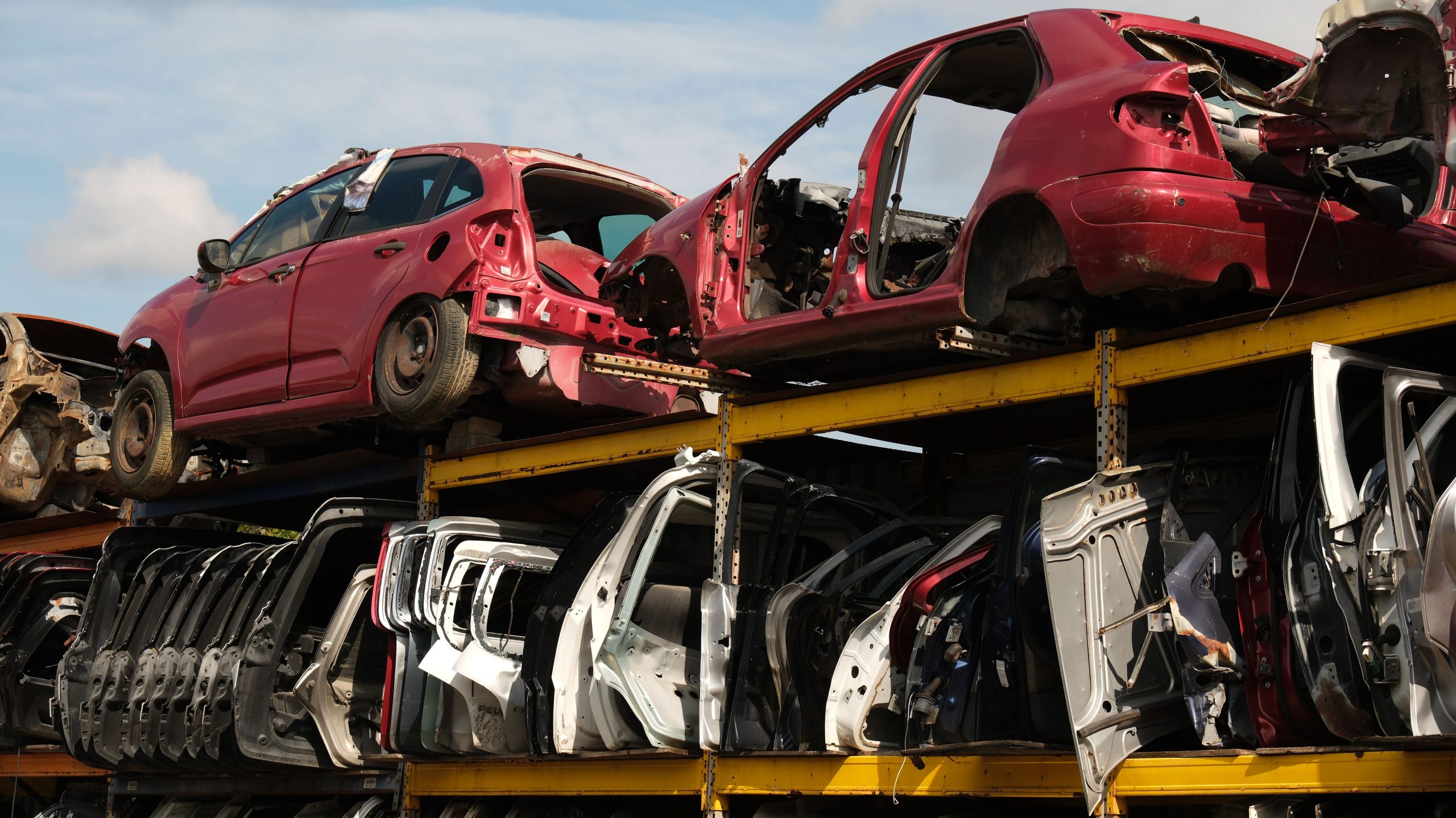
The average age of a vehicle on American roads is nearly 13 years. That number, buried in the AAPEX 2026 media guide amid terabytes of industry data, is the single fact that explains why the Automotive Aftermarket Products Expo exists, why it keeps growing, and why its attendance reflects one of the most resilient economic sectors in American commerce.
When a car is 13 years old, it is not heading to the dealership for scheduled maintenance. It is heading to one of the 290,000-plus independent repair facilities that service 72% of the U.S. vehicle fleet, operated by the 4.87 million people whose livelihoods depend on the aftermarket’s $457 billion domestic revenue stream. That is the industry assembling in Las Vegas every November, and AAPEX 2026 is where it figures out what comes next.
The 2026 edition spans three connected venues: the Venetian Expo on Level 1, the Venetian Ballroom on Level 2, and the AAPEX Forum. The reorganization is not cosmetic. Organizers have spent two consecutive years rethinking where product categories live and how attendees move through the show, and this year’s layout reflects what they learned. Joe’s Garage, diagnostics, and tires anchor the Venetian Ballroom. International sourcing companies fill Level 1 of the Venetian Expo. The AAPEX Forum concentrates undercar, accessories, and lighting. The result is a show organized around how technicians and shop owners actually work rather than around exhibitor preferences that accumulated over decades.
Why This Market Is Growing Even When the Economy Isn’t
The automotive aftermarket is one of the few industries that does not track cleanly to the economic cycle, and understanding why is understanding the logic of AAPEX.
When new car sales slow, the cars already on the road get older. Older cars require more service. More service means more revenue for repair facilities, more demand for parts, more need for the diagnostic equipment, shop software, and technician training that AAPEX exhibitors provide. The industry has historically benefited from exactly the conditions that make other industries nervous.
The 2026 data reinforces this pattern. The U.S. light-duty aftermarket is forecast to grow 5.2% to $457 billion. Combined with the heavy-duty segment’s $142.9 billion, the total U.S. aftermarket reaches roughly $599.7 billion, or approximately 1.9% of American GDP. The global market is expected to reach $2.65 trillion, a $35 billion increase over last year.
Average vehicle age has climbed again, to a combined 12.94 years, up from 12.8 in 2025. Cars specifically now average 15 years on the road. Light trucks average 11.9 years. These are vehicles that need tires, brakes, filters, sensors, wiring repairs, and the increasingly sophisticated diagnostics required to service the 10-plus electronic control modules that the average 2015-model-year vehicle carries.
There is a parallel story developing in the industry’s ownership structure. The 354 mergers and acquisitions in the aftermarket during 2025, up from 337 the year before and 306 in 2023, reflect ongoing consolidation pressure on independent repair facilities. Private equity has been acquiring service chains at a pace that concerns independent shop owners, and that concern shows up in the AAPEX education programming. What do independents do to compete with well-capitalized chains? What tools, training, and business practices give them a durable competitive position? Those questions animate some of the most practically useful conversations at the show.
Coach K, Mark Wahlberg, and the Sports-Entertainment Programming That Does Actual Work
AAPEX 2026 opens November 3 with Coach Mike Krzyzewski at the Venetian in a keynote framed around leadership and what it takes to win. The choice of speaker is worth examining, because Krzyzewski is not an automotive figure and his audience at AAPEX is not attending to learn basketball.
What AAPEX is betting on, and the bet appears to be landing given the level of advance interest, is that the principles of building a championship program translate directly to the challenge facing independent shop owners in 2026. Building a team when the talent pool is limited. Maintaining performance standards when fatigue and turnover are constant. Communicating a vision clearly enough that people who have options choose to stay. These are not basketball problems. They are the defining operational challenges of running an independent service business in a market undergoing significant structural change.
Mark Wahlberg, whose business interests include automotive ventures and who brings a different kind of leadership story, leads a separate session about his career trajectory. The decision to weave entertainment and sports figures into the show fabric reflects something more considered than celebrity booking for its own sake. The aftermarket has historically struggled to attract younger technicians and shop owners who came up in a world where the trade press and conference circuits felt dated. The AAPEX 2026 celebrity programming signals that the industry is thinking about that perception problem.
Four sports Hall of Famers gather Thursday to discuss success: Mia Hamm, Grant Hill, Jimmie Johnson, and Randy Johnson, along with Barry Sanders, available for photo opportunities and autograph signings across the show days. At least one celebrity appearance is scheduled each full show day, with as many as four on Thursday.
The format matters. These are not keynote appearances where industry executives interview athletes on a stage. They are direct interactions, autograph sessions and photographs, that bring energy to the floor and give attendees something to talk about beyond product specs and distributor negotiations.
The Technology Question That Shop Owners Are Actually Asking
The education sessions at AAPEX 2026 are organized to keep afternoons free for business. The morning block runs 9:30 a.m. to 12:30 p.m., with some sessions extending to 1:30 p.m. The philosophy is correct: technicians and shop owners drive to Las Vegas to see products and conduct business, and a conference that swallows the whole day in sessions is failing at the thing it exists to facilitate.
What the morning sessions cover reflects where the industry’s anxiety actually sits.
AI’s effect on repair businesses is getting its own track in the floor-level programming. Free 30-to-45-minute sessions run throughout the show on topics including how AI tools are beginning to change diagnostic workflows, shop management, and customer communication. The industry is in the early stages of this transition, and the sessions are appropriately calibrated to where most shops actually are: curious about the technology, uncertain about what it means for the craft, and trying to understand the difference between AI that genuinely improves outcomes and AI that adds complexity without adding value.
Joe’s Garage, AAPEX’s hands-on technical training space with 10 service bays, working lifts, and running vehicles, moves to the Venetian Ballroom this year. The training includes electrical and Tesla-focused classes, which is the signal the show is sending to a repair industry that has been watching EV service revenue grow on paper while most independent shops have invested minimally in the tooling and training required to capture it. Getting EV service right matters more now: the 294 million light vehicles on U.S. roads include a growing share of electrics and plug-in hybrids whose service needs are beginning to reach independent facilities at scale.
The debate sessions are worth noting for their format as much as their content. Six debates cover questions that the aftermarket has been arguing about for years without resolution: flat-rate versus hourly technician pay, whether shops should offer free diagnostics, and related flashpoints in shop operations. Structured debate, with speakers defending specific positions, produces more useful information for attendees than panel discussions where participants hedge toward consensus. AAPEX is taking that format seriously.
iFLEX: The New Show Within the Show
The most structurally interesting addition to AAPEX 2026 is iFLEX, a dedicated area for the quick-lube and preventive maintenance segment brought in through the Preventive Automotive Maintenance Association.
Quick-lube is not the same market as traditional automotive service, and it has historically been underserved by a trade show built around parts distribution and complex repairs. The segment includes dedicated quick-lube chains and the growing number of independent shops that have added oil change and preventive maintenance services as a customer acquisition and retention strategy.
iFLEX has its own stage and dedicated educational programming, which means it functions as a show within a show rather than as an exhibit area bolted onto the main floor. The segment’s attendance at AAPEX reflects an industry that is recognizing how the preventive maintenance market has changed since the pandemic: vehicle owners who deferred maintenance during the economic disruption of 2020 and 2021 are now catching up, and the shops positioned to capture that deferred work are the ones that built customer relationships through routine service.
Previously associated with The Car Wash Show, iFLEX’s move to AAPEX is a consolidation play that benefits both segments. Quick-lube operators who are already attending AAPEX for parts and equipment access now have content specifically for their business, and AAPEX gains exhibitors and attendees from a segment it was not fully serving.
The Student Competition and the Pipeline Answer
One of the more telling programming decisions at AAPEX 2026 is the student engine-building competition, where eight teams from high schools and colleges compete across semifinals and a final round on Wednesday.
The competition is educational programming, but it is also recruitment marketing. The automotive aftermarket’s technician shortage is not as numerically severe as manufacturing’s 400,000-worker gap, but it is structurally similar: an aging workforce, a training pipeline that has not kept pace with demand, and a persistent perception problem among younger workers who do not see skilled automotive service as a career with upward mobility and professional standing.
Getting eight student teams to compete on the show floor in front of working professionals is the industry demonstrating, rather than asserting, that the work has genuine technical depth and that young people who are good at it can have careers worth choosing. The Secret Service returns to the show this year to recruit technicians, which is a separate but related signal: the technical skills developed in automotive service translate to careers well outside the traditional aftermarket path.
The prizes, including an F-150 and additional vehicles, are calibrated to the world the competitors actually live in rather than the industry’s self-image. The competition draws attention from the floor during the final round, which creates a moment of genuine energy in a trade show environment that can otherwise feel like a commercial transaction at scale.
The Escape Room, Movie Cars, and What Entertainment Gets Right
The automotive escape room, where attendees diagnose and fix a car within a time limit, is AAPEX at its best: taking the core technical skill of the industry and turning it into an interactive experience that is genuinely fun rather than pedagogically awkward. The competitive element works. Technicians who spend their working lives diagnosing real vehicles under time pressure are exactly the audience that finds diagnostic puzzles entertaining rather than stressful. The escape room creates floor buzz, draws traffic to the section of the show hosting it, and gives attendees something to talk about over dinner.
The display of 12 to 15 famous movie cars is the other entertainment element that deserves more credit than it typically gets. Automotive enthusiasts make up a meaningful percentage of the people who become automotive technicians, and the cars that appeared in films and television shows represent the cultural artifacts that got many of them interested in the industry in the first place. Walking past the DeLorean from Back to the Future or the cars from the Fast & Furious franchise while en route to a parts discussion is not incidental to the AAPEX experience. It is the show reminding attendees why they got into this business.
Key Takeaways
The $457 billion U.S. light-duty aftermarket is growing at 5.2% in 2026, and the average vehicle age of nearly 13 years means the structural drivers of that growth are not going away. Shops and suppliers operating in this market are not navigating a declining industry. They are navigating a growing one with increasing complexity and increasing competition for the best positions within it.
The AI conversation in the aftermarket is still early, but it is arriving. Floor sessions on AI’s effect on repair businesses reflect where most shops are: aware of the technology, uncertain about the business case, and trying to separate signal from noise. The shops that develop genuine AI literacy in the next two years will have an operational advantage over those that wait for the technology to become unavoidable.
EV service is no longer a future consideration for the independent aftermarket. The number of electric and plug-in hybrid vehicles reaching the age at which they require independent service is growing, and the shops that have invested in the tooling and training, including the Joe’s Garage Tesla-focused classes, are positioned to capture service revenue that the industry has been discussing for years but that is now actually arriving.
iFLEX’s debut at AAPEX represents a consolidation of the preventive maintenance segment into the industry’s flagship trade event. For operators in the quick-lube space, this is the most significant structural change to the show in several years and the clearest signal that AAPEX is expanding its scope to match the full breadth of the modern aftermarket.
The student engine-building competition, the Secret Service recruitment, and the celebrity programming are all addressing the same underlying challenge: the industry needs to become more attractive to the next generation of workers and entrepreneurs, and trade shows are one of the few places where that recruitment happens at scale.
Notes for Aftermarket Industry Participants
The Mike Krzyzewski keynote is worth attending even for attendees skeptical of sports-crossover programming. The leadership questions he is being asked to address map directly to the operational challenges of running an independent repair facility in 2026, and his experience building programs under competitive pressure has more practical relevance than most keynote content at industry conferences.
For shop owners evaluating AI tools: the floor sessions are calibrated to early-stage adoption and are genuinely useful for understanding what the current generation of AI tools actually does in a shop management context. The 30-to-45-minute format is appropriate for the current state of the technology and the current state of most operators’ familiarity with it.
Joe’s Garage’s electrical and Tesla-focused classes are the highest-density technical training available at the show for shops actively building EV service capability. Registration fills early and walk-in space is limited.
The iFLEX stage programming runs on a separate schedule from the main education track. Quick-lube and preventive maintenance operators should identify the iFLEX sessions that are relevant before arriving, because the two schedules can conflict.
For anyone evaluating the M&A landscape: 354 transactions in 2025 means the consolidation pressure on independent operators is real and accelerating. The business management sessions, including the debates on compensation structure and service pricing, are particularly relevant for operators thinking about how to build a business that is both competitive today and attractive to buyers in the future.
AAPEX 2026 runs November 3 through 5 at the Venetian Expo, Venetian Ballroom, and AAPEX Forum in Las Vegas. For registration, exhibitor information, and session schedules, visit aapexshow.com. AAPEX is co-owned by the Auto Care Association and SEMA.