



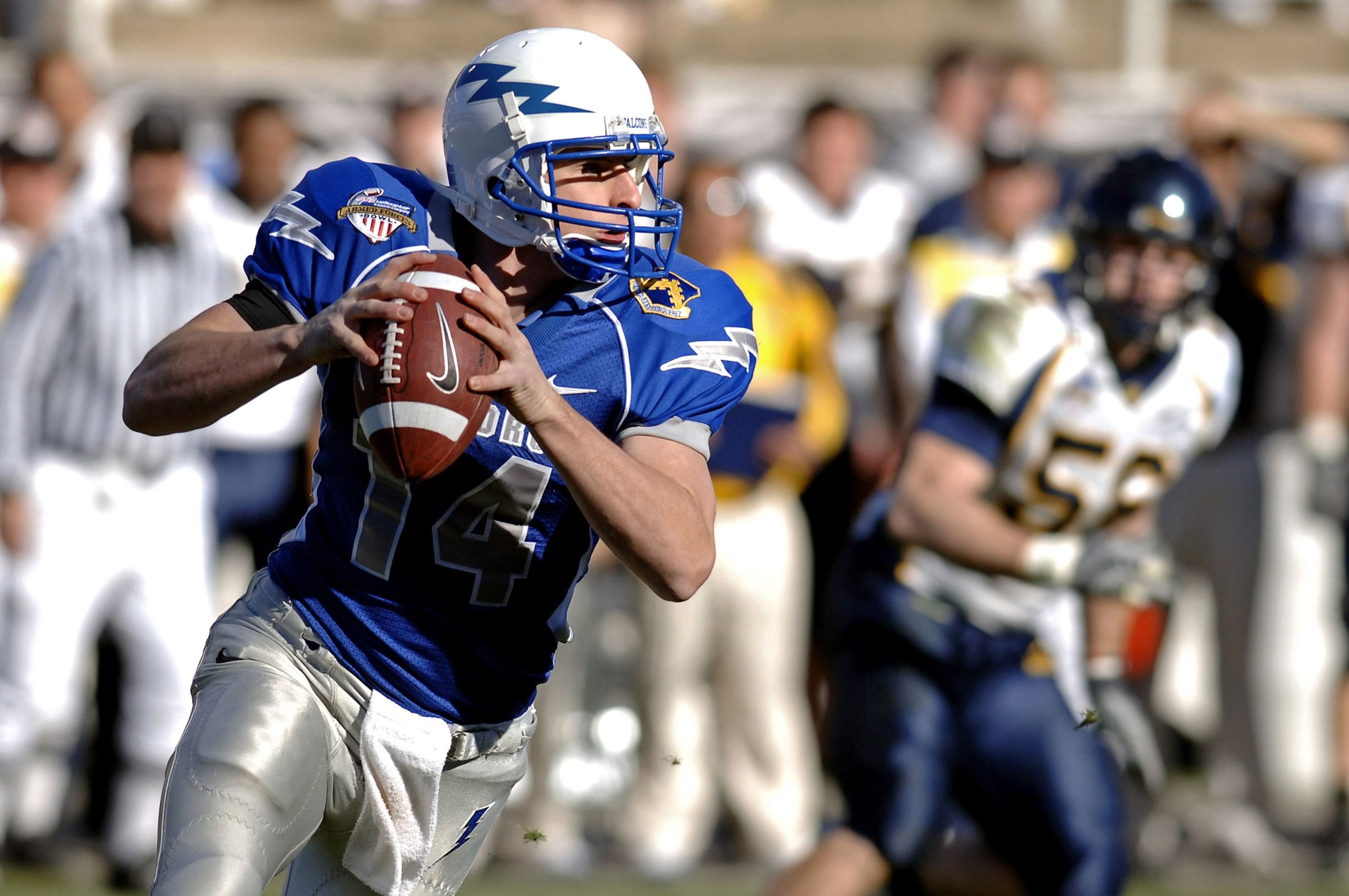
On November 10, the Las Vegas Raiders traded Kirk Cousins back to the Minnesota Vikings for a 2027 third-round draft pick. Fernando Mendoza, the first overall pick of the 2026 NFL Draft and the Heisman Trophy winner from Indiana who had spent the first nine weeks of his professional career watching Cousins from the sideline, was named the starting quarterback. His first start: Sunday, November 16, at Seattle, against the top-ranked total defense in the NFL.
Klint Kubiak’s patience plan is now complete. The question is what comes after patience.
What Kubiak Actually Said
The head coach did not dress the trade in ambiguity. He thanked Cousins for his leadership and his influence in the locker room. He said Mendoza had practiced extremely well. He said Mendoza’s work habits made the trade possible, meaning Kubiak felt comfortable moving Cousins not because the season demanded it but because the quarterback had earned the starting role through preparation.
General manager John Spytek said Mendoza has worked very hard for this role since joining the team and that the team had watched his growth as a person, as a teammate, as a leader, and as a quarterback.
Those are boilerplate organizational quotes. What is not boilerplate is the moment they describe. A team that entered the year with a 5.5 win total, projected by most observers to finish below .500 while installing a new head coach and developing a rookie quarterback behind a veteran, has executed the first phase of its plan on schedule.
Cousins did his part. He passed for 2,340 yards and 20 touchdowns in nine starts, went 4-5 as a starter, finished with a solid passer rating, and kept the offense functional through a stretch where the offensive line was inconsistent and Ashton Jeanty battled what appeared to be an ankle issue. He gave Mendoza a year of observation without throwing him to the wolves in September, which was the design.
The Raiders received a 2027 third-round pick for him. Minnesota, which let Cousins leave as a free agent the first time and has been living with that decision ever since, now has its franchise quarterback back for a playoff push.
Who Mendoza Is at This Moment
Fernando Mendoza turned 21 years old during training camp. His most recent meaningful football, before his six-minute NFL debut in garbage time of a Patriots blowout in Week 5, was the College Football Playoff national championship game in January where he led Indiana to a 27-21 win over Miami and finished with the kind of composure under pressure that made him the consensus first pick in the draft.
He completed 6 of 8 passes for 48 yards in that Patriots appearance, earned an 89.6 passer rating, converted two first downs, and was stopped a yard short on a fourth-down red zone attempt. The Raiders lost 45-17. What Mendoza showed was coherent execution without panic, which is the specific quality that matters most in a first exposure to NFL speed.
Kubiak has been building the environment around him. The Raiders’ offensive line, anchored by center Tyler Linderbaum and left tackle Kolton Miller, has had a full season to develop chemistry. Tight end Brock Bowers became a full-year starter and demonstrated the kind of reliable-target reliability that Mendoza can lean on early. Tre Tucker broke out in the Week 6 loss to the Bills, posting 97 yards and two touchdowns and signaling that the receiver room has a genuine threat defenses now have to account for.
Ashton Jeanty, when healthy, is the most important piece. His play-action threat, which forms the backbone of Kubiak’s offense, is what allows a young quarterback to work in manageable situations rather than needing to generate yards through the air on every possession. The October ankle issue that hampered him against the Bills was the development most worth watching in the final weeks of the Cousins era. If Jeanty is healthy for Mendoza’s debut, the offense has everything the design requires.
The Seattle Problem as a First Start
The Seahawks are ranked first in total defense at this point in the season. That is the matchup Kubiak selected to introduce his franchise quarterback.
It is either bold or the product of an NFL schedule that does not ask for your permission. Either way, Mendoza’s first full game as the Raiders’ starter will be in a dome that is one of the noisiest environments in professional football, against a defense that leads the league in several key categories, as a 21-year-old who has thrown 48 yards of passes in his entire professional career.
Kubiak’s framing of this was characteristically direct. He said Mendoza practiced extremely well. He said the organization feels he is ready to go and they are excited to have him take the ball.
The coaching staff has been here before in a different form. Kubiak spent years working with young quarterbacks in Minnesota, including the apprenticeship period with Sam Darnold and the development track that produced the system Mendoza is now stepping into. The game plan in Seattle will be conservative by design: establish the run with Jeanty, use play-action to attack the secondary, give Mendoza high-percentage opportunities early, and avoid the fourth-quarter deficit situation that forces a rookie to win the game on his arm alone.
If that plan works, Mendoza gets positive reinforcement in his first week, the Raiders win on the road against a good defense, and the development path continues smoothly. If it does not, Kubiak will be asked whether he moved Cousins too early, and the answer will be that the organization made the decision based on Mendoza’s readiness, not the schedule.
What the Raiders Are Building Toward
The 2026 Raiders are 4-5 through nine games, with four losses in the five-game stretch that preceded the trade. That is not a disappointing record for a team rebuilding around a first-year head coach and a first overall pick. It is, in fact, almost exactly what the preseason projection described.
The question for the final seven games of the regular season, with Mendoza as the starter, is not whether the Raiders make the playoffs. They probably do not. The question is whether Mendoza develops in ways that make 2027 clearly belong to him, and whether the organization comes out of 2026 with the right pieces in place.
What they already have: a credentialed offensive line, a generational tight end in Bowers, an emerging wide receiver in Tucker, a first-round running back who is a genuine difference-maker when healthy, and a head coach who has handled this transition more cleanly than any of the five who preceded him in the previous five seasons.
What they still need: more clarity on the wide receiver depth behind Tucker, sustained health from Jeanty, and the specific proof that only game experience provides about whether Mendoza processes NFL speed well enough to thrive as a starter rather than just survive.
The plan worked through Phase One. Phase Two starts in Seattle on Sunday.
Key Insights
The Raiders’ decision to trade Cousins for a 2027 third-round pick, rather than waiting to let him walk as a free agent after the season, reflects a confident organizational read that the development window for Mendoza has arrived early enough to sacrifice the final seven games of Cousins-starter security in exchange for a draft asset and seven games of genuine starting experience before the 2027 season, when Mendoza’s development track becomes the full story.
Cousins’s final line in Las Vegas, 2,340 yards and 20 touchdowns in nine starts at a solid passer rating, demonstrates that the bridge quarterback model works when the bridge is chosen correctly: a veteran who can play well enough to avoid the kind of organizational panic that shortens rookie development timelines, while being willing to mentor rather than compete, is worth more to a rebuild than a cheap stopgap who loses games and creates pressure to rush the prospect.
The Jeanty health variable, which limited the Raiders’ run game in the final weeks of the Cousins era, is the single most important factor in Mendoza’s early success: Kubiak’s offense is built around a play-action foundation that requires a credible running back threat, and without a healthy Jeanty, Mendoza inherits a simplified defense read, with no run fake to sell, that removes the easiest completions from his available options.
A 2027 third-round pick for a 38-year-old quarterback is a reasonable return that reflects both Cousins’s remaining market value and the Vikings’ desperation to compete now, and it gives the Raiders a draft asset in a class they can use to continue the rebuild without having to reach in early rounds to fill secondary needs that a third-rounder covers more efficiently.
Sources
KTNV: Raiders Trade Cousins to Vikings for 2027 Third-Round Pick
Bleacher Report: Mendoza Set to Be Raiders QB1
News3LV: Raiders Trade Cousins, Mendoza in Line to Start
GV Wire: Vikings Bet on Kirk Cousins Again
Raiders Official: Raiders Acquire 2027 Third-Round Pick
Valley News Live: Vikings Trade for Raiders QB Cousins