

Three Autonomous Vehicle Operators, One Open Investigation, and a Governor Who Has Not Said What He Will Do
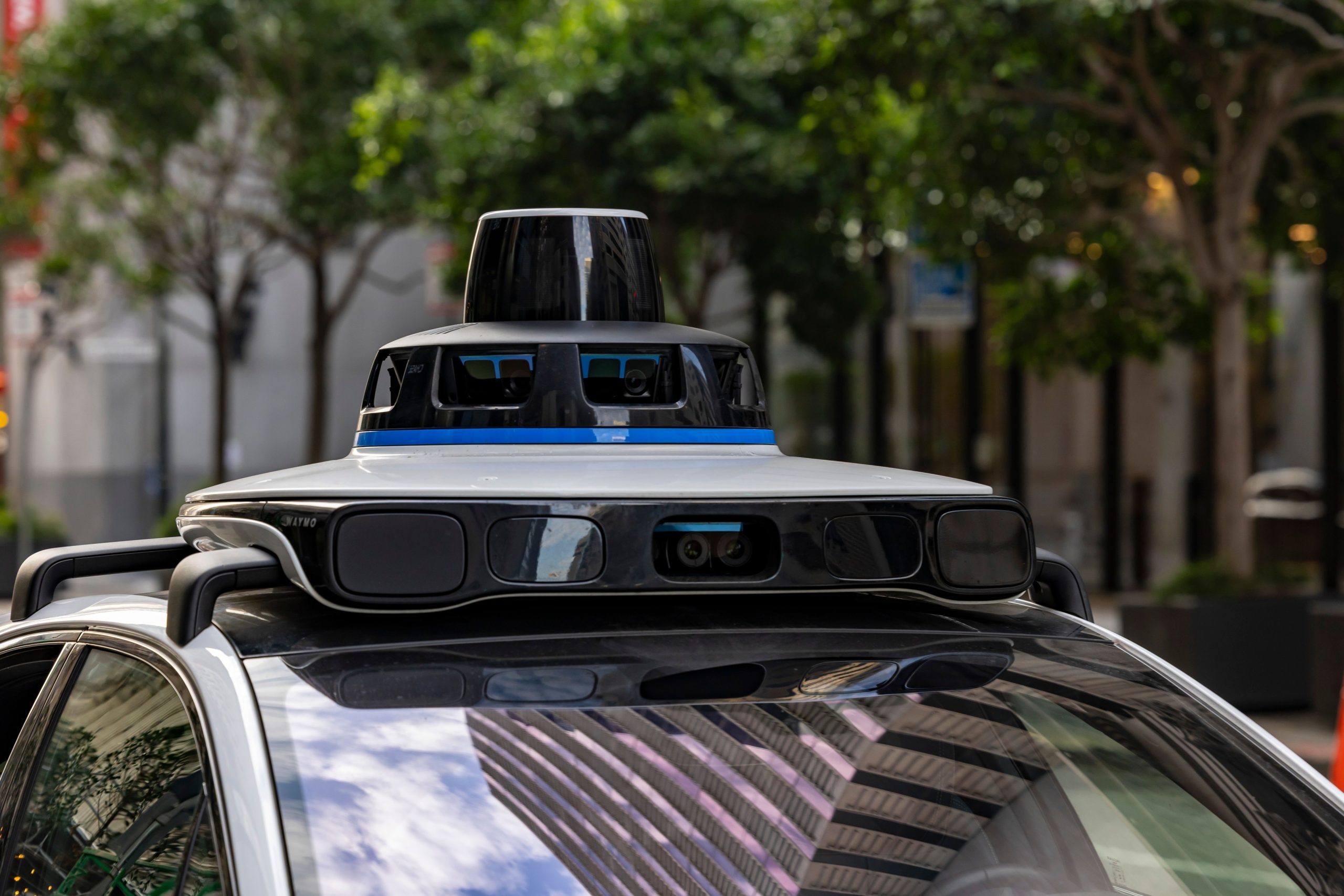
Waymo has a waitlist of more than 100,000 people in Las Vegas and is actively onboarding riders. Tesla holds a Clark County permit for up to 5,000 autonomous vehicles. Zoox is managing a safety investigation that has been open since September 25, when one of its vehicles was involved in a crash on the Strip, and its permit renewal is pending. All three of them are navigating a Nevada regulatory environment that is about to change governors.
Joe Lombardo was permissive. He backed the AV industry’s expansion, supported fast permitting, and viewed autonomous vehicle deployment as a component of Nevada’s technology economy that deserved facilitation rather than friction. Aaron Ford has not said what he will do. He has said a great deal about labor protection, about the gap between economic statistics and household economic experience, and about an obligation to the working Nevadans who put him in office. He has not translated any of that into specific AV policy language.
What he has done is get elected with a coalition whose most organized component, the Culinary Workers Union, has been public and specific about autonomous vehicle concerns for years. The Culinary Workers Union represents tens of thousands of hotel and casino workers in the Las Vegas hospitality economy. Its ground operation delivered for Ford in the urban core Clark County precincts that his margin required. The union’s concern is not theoretical. It is about the specific question of whether autonomous vehicles, deployed at scale in the transportation and delivery economy that surrounds the hospitality sector, will cost union members their jobs before those members can be retrained or repositioned.
What Lombardo Left Behind
Understanding where Nevada’s AV regulatory environment is now requires understanding how it got there under Lombardo.
Nevada was the first state in the country to legalize autonomous vehicle testing on public roads, in 2011, and that early-mover status created an institutional predisposition toward accommodation that has persisted through multiple administrations. The Nevada Transportation Authority, the state agency with primary AV oversight authority, operated under Lombardo with a posture that treated AV deployment as a technology adoption question rather than a labor or public safety question. The licensing framework was designed to process permits efficiently and to avoid creating the kind of bureaucratic friction that might send companies to test in Arizona or California instead.
The Tesla permit for 5,000 vehicles in Clark County is the clearest illustration of the Lombardo framework in practice. It is a large number. It reflects a decision by the permitting authority to allow substantial deployment rather than limited pilot operation. The implied philosophy is that scale deployment data serves the safety case better than limited deployment data, and that restricting permit scope is a form of industrial policy that the state should not be in the business of making.
Waymo’s Las Vegas operation, which expanded significantly in 2026 and now has a six-figure waitlist, was built on the same permissive foundation. Waymo has been operating in Las Vegas longer than Tesla, has more accumulated safety data, and has built a consumer-facing product that people are actively seeking out. Its regulatory relationship with Nevada has been collaborative in the specific sense that the company and the state agency have worked through operational questions together rather than in an adversarial posture.
Zoox is different. The September 25 crash, which resulted in injuries and triggered a formal safety investigation, changed Zoox’s regulatory position from routine permit holder to pending case. The investigation is still open as of this writing. The permit renewal that Zoox requires to continue operations is contingent on how that investigation concludes and what remediation the Nevada Transportation Authority determines is necessary. Zoox has cooperated with the investigation process, but cooperation does not guarantee a particular outcome, and the outcome now lands in a regulatory environment under new executive leadership.
The Labor Question the Industry Wants to Avoid
The AV industry’s preferred framing in regulatory discussions is safety. The question they want regulators asking is: is this vehicle safe? By that standard, the industry has a defensible record. Waymo’s public safety data, the most comprehensive disclosure any autonomous vehicle company has made, shows fewer at-fault crashes per mile than the human-driven baseline. Zoox’s September incident is an exception to a generally clean operational history. Tesla’s permit in Clark County has not produced the incident rate that critics of its deployment predicted.
The question the industry does not want regulators asking is: what does this do to labor markets? That question does not have a clean answer in the safety data. It has an answer in economic research, which generally finds that autonomous vehicle deployment at scale reduces employment in transportation-adjacent occupations. Those occupations overlap considerably with the workforce the Culinary Workers Union represents.
Ford’s coalition means he will face that question in a way Lombardo did not. The union will ask it formally, through the lobbying process and through the governor’s appointments and through the specific regulatory proceedings where these questions get decided. Ford’s answer will shape Nevada’s AV regulatory environment for the duration of his term.
Three responses are available to him. The first is to continue Lombardo’s posture — accept the deployment, accept the economic disruption, and trust that retraining programs and economic growth will absorb the displaced workforce. This option requires Ford to tell a coalition that worked for his election that their concerns about their jobs are acknowledged but not regulatory priorities.
The second is to slow the deployment through permitting requirements. This means adding conditions to new permits and renewals: workforce impact assessments, mandatory retraining contribution requirements, staged deployment tied to documented safety benchmarks. This approach lets Ford acknowledge the labor concern without reversing a technology deployment that has significant public support and genuine safety benefits. The industry will complain. The legal challenges will come. But the approach is defensible under existing state authority.
The third is to design new regulatory frameworks from scratch. Nevada’s legislature meets in 2027. A statutory overhaul of AV oversight, adding labor impact analysis to the permit review process, creating contribution requirements for companies that deploy at scale, establishing minimum workforce retention standards as a condition of expanded permits, would put Nevada at the front of a national conversation about how states govern AV deployment rather than simply following the most permissive framework available. This is the most ambitious option, the most time-consuming, and the one that the technology industry would fight most aggressively.
What the Nevada Transportation Authority Actually Does
The Nevada Transportation Authority functions under executive oversight. Its commissioners are appointed through a process that the governor influences. Its regulatory posture reflects the priorities of the administration in which it operates. This is not a critique of the NTA; it is a description of how independent regulatory agencies in every state work. The executive sets the tone, the appointments carry the tone into the agency’s culture and decision-making, and the agency’s decisions reflect that culture in its permit proceedings.
Under Lombardo, the NTA’s tone was facilitative. Under Ford, the tone will change to whatever Ford’s appointments and stated priorities indicate it should be. The specific decisions that reflect that change — Zoox’s permit renewal, the terms of Tesla’s expanded deployment, the conditions on Waymo’s continued operation — are the procedural moments where the new tone will become visible to the industry.
Ford has the authority to appoint new NTA commissioners and to direct the agency’s strategic priorities through his appointed director. He does not need a legislative session to change the NTA’s posture. What he does need, if he wants the change to survive legal challenges, is a defensible statutory basis for whatever new conditions he imposes. The Nevada legislature in 2027 is where that statutory basis gets built.
The Zoox investigation is the first regulatory test of the transition. The investigation will conclude at some point in the next several months, either before Ford takes office in January or in the early weeks of his administration. The remediation requirements that emerge from that investigation — whatever the NTA determines Zoox must do before its operations can expand or even continue — will be the first explicit data point about how the new administration approaches AV safety regulation.
Waymo, Tesla, Zoox: Three Companies, Three Stories
The three major AV operators in Nevada are not interchangeable, and Ford’s regulatory decisions will almost certainly treat them differently rather than as a single category.
Waymo’s Las Vegas operation is the most mature. The company has been operating in the market longer, has more accumulated data, has a commercial product that is actively generating consumer demand, and has the institutional resources to engage seriously with whatever new requirements the Ford administration imposes. If Ford wants workforce transition funds as a condition of expanded deployment, Waymo can negotiate that conversation. If Ford wants workforce impact assessments, Waymo can commission them. The company’s size and resources make it the most capable partner for a regulatory negotiation that includes labor policy.
Tesla’s situation in Clark County is more complicated. The 5,000-vehicle permit is large by any standard. The permit was granted under a Lombardo framework that prioritized scale deployment, and a Ford administration that takes a different view of large-scale permits will face the question of whether and how to revisit it. The legal question of whether a new governor can impose retrospective conditions on existing permits is not simple, and Tesla has demonstrated in other regulatory contexts that it is willing to litigate aggressively. Ford’s approach to Tesla’s existing permit will be one of the most closely watched AV regulatory decisions of his first term.
Zoox is the most acute near-term question. The September 25 investigation gives the NTA a natural regulatory moment to impose conditions. A permit renewal proceeding is an ordinary administrative process that can include new requirements without raising the same retrospective-imposition legal questions that modifying Tesla’s existing permit would involve. What conditions the NTA imposes on Zoox’s renewal, and whether those conditions reflect a broader change in regulatory approach or are specific to the incident under investigation, will tell the industry something important about Ford’s direction.
The Bigger Picture: What Nevada’s Choice Means
Nevada is not the only state making these decisions, but it is making them in an unusually visible context. Las Vegas’s tourism economy, the Strip’s reliance on transportation workers, and the specific density of AV deployment in a small geographic area mean that Nevada’s choices are more immediately legible than the same choices would be in a dispersed metropolitan area.
California, which regulates Waymo’s most extensive operations, has taken a permissive approach through its Public Utilities Commission and its DMV permit process. Arizona, where Waymo also operates, has been permissive in ways that the industry credits with driving investment to the state. If Nevada under Ford takes a more restrictive approach, the AV industry will characterize it as an outlier and will make the case that companies will route their deployment to more accommodating states.
That argument has historical weight. Nevada’s 2011 first-mover advantage in AV testing was partly built on the perception that the state was a welcoming regulatory environment, and companies do make deployment decisions based on regulatory risk. Ford’s challenge is to design a framework that addresses the legitimate labor concerns of his coalition without creating a perception that Nevada has reversed its decades-long technology accommodation posture.
The answer probably involves what every serious observer of AV policy has been suggesting for years: treat deployment scale as a regulatory variable, not just safety compliance as a threshold question. A company that deploys 50 vehicles and a company that deploys 5,000 vehicles in the same county create fundamentally different labor market impacts. Treating them identically for regulatory purposes, as Nevada has done under the current framework, is a policy choice that Ford is not obligated to maintain.
Notes for Stakeholders
Autonomous vehicle operators, investors in AV companies with Nevada exposure, and businesses that depend on transportation labor markets in Clark County should track four specific developments in the first 90 days of the Ford administration:
The NTA appointment process. Ford’s first NTA commissioner appointments will signal the direction of the regulatory posture more clearly than any policy statement. Appointees with labor policy backgrounds and consumer protection records represent a different regulatory culture than appointees with technology industry backgrounds. Watch the appointments.
The Zoox investigation conclusion. Whatever conditions the NTA imposes on Zoox’s permit renewal represents the new administration’s first explicit statement about what AV operators must do to maintain their Nevada operating authority. The specificity of those conditions — are they incident-specific or are they systemic requirements that apply to all operators? — will be the first regulatory data point.
The 2027 legislative session. If Ford wants a statutory framework that adds labor impact analysis and workforce requirements to AV oversight, the 2027 session is when it gets introduced. Watch for bill language that creates new permit categories, contribution requirements, or staged deployment thresholds.
The Tesla permit. Any Ford administration action to revisit Tesla’s 5,000-vehicle Clark County permit, whether through renewal conditions, operational requirements, or direct regulatory action, will be litigated aggressively. The legal theory the administration uses to justify any modification of that permit will determine how far the approach can go before hitting a court-imposed limit.
A Governor Who Has Not Said What He Thinks
The honest answer to the question of what Ford will do on autonomous vehicle regulation is that nobody outside his transition team knows. His public statements on labor and housing and data centers were specific. His public statements on AV policy were not. The absence of specificity is not an accident; it is the standard behavior of a governor-elect who understands that the AV industry is a significant economic actor and who is managing the signal carefully until he has the full picture of what his options are and what his coalition actually requires.
What is clear is that the frame will be different. Lombardo’s frame was technology facilitation. Ford’s frame is worker protection and economic justice. The same regulatory decisions look different through those two frames, and Las Vegas’s autonomous vehicle economy will operate under the new frame starting in January.
Whether that produces a materially different regulatory outcome or a rhetorically different but substantively similar one is the question the next 18 months will answer.
Key Takeaways:
- Nevada Governor-elect Aaron Ford will inherit an autonomous vehicle regulatory environment built by his predecessor Joe Lombardo around facilitative permitting, with three major operators currently active: Waymo (100,000-plus rider waitlist, active onboarding), Tesla (5,000-vehicle Clark County permit), and Zoox (open safety investigation from a September 25 Strip crash, permit renewal pending)
- Ford has not stated a specific autonomous vehicle regulatory position publicly; his campaign emphasized labor protection and the economic gap between macro indicators and household experience, and his political coalition is anchored by the Culinary Workers Union, which has consistently raised concerns about AV workforce displacement
- The Nevada Transportation Authority, the primary state AV oversight agency, functions under executive oversight; its commissioners are appointed through a process the governor influences, meaning the regulatory posture change begins with Ford’s NTA appointments before any legislation is passed
- The Zoox September 25 crash investigation is the most acute near-term regulatory test; the permit renewal proceeding gives the NTA a natural administrative moment to impose conditions without raising the retrospective-imposition legal questions that modifying Tesla’s existing permit would create
- Three regulatory responses are available to Ford: continue Lombardo’s facilitative posture, add conditions to new and renewal permits through existing NTA authority (workforce impact assessments, staged deployment requirements), or pursue statutory overhaul through the 2027 Nevada legislative session that formally adds labor impact analysis to the permit review framework
- Nevada was the first state to legalize AV testing on public roads in 2011; Lombardo’s framework treated scale deployment as a data-generation tool rather than a labor policy question, and his Clark County permit for 5,000 Tesla vehicles reflects that philosophy
- The industry’s preferred regulatory frame is safety; the question the Culinary Workers Union and Ford’s labor coalition is raising is labor market impact, which does not appear in existing Nevada AV permit review criteria and which Ford’s administration would need a statutory basis to add permanently
- Ford’s first 90-day regulatory signals will include NTA commissioner appointments, the conditions imposed in the Zoox permit renewal proceeding, and any public statements about the 2027 legislative agenda; the Tesla permit modification question is legally complex and will require a carefully developed justification
- California and Arizona have taken permissive AV regulatory approaches that the industry credits with driving deployment investment; if Nevada moves toward more restrictive requirements, the industry will characterize it as a competitive disadvantage and may adjust deployment plans accordingly
- The underlying policy design question that Ford’s administration will need to answer is whether to treat deployment scale as a regulatory variable — distinguishing between 50-vehicle pilots and 5,000-vehicle county-wide deployments — which the current Nevada framework does not do, and which would change the regulatory calculus for every large-scale AV deployment in the state