

Chase Briscoe arrived at Las Vegas Motor Speedway on October 4 as a driver trying to hold off elimination from the NASCAR Cup Series Playoffs. He left as the driver who had just put on one of the more dominant performances the 1.5-mile oval has seen in recent memory.
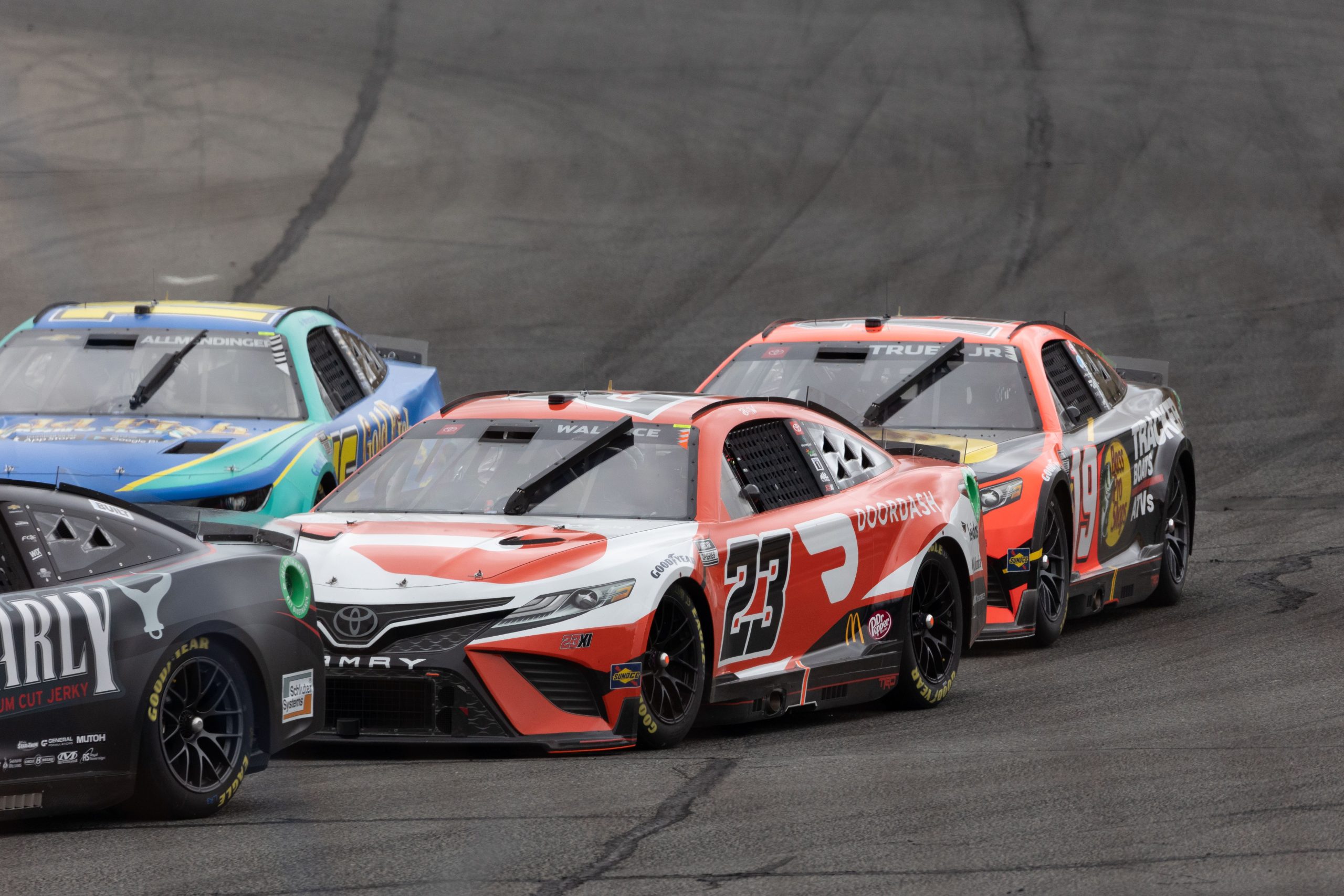
Briscoe, wheeling the No. 19 Joe Gibbs Racing Toyota, led the most laps, won both stage green-flag checkered flags, and pulled away late to take the South Point 400 by 1.376 seconds over Kyle Larson. The average speed on the day was 147.363 miles per hour across a 2 hour, 43 minute race that saw 12 lead changes among 7 drivers and four cautions totaling 21 laps. For a Las Vegas race in early October, under desert sun and with Playoff pressure compressing the field, those numbers paint a picture of a well-run, aggressively contested event with a clear winner.
How the Race Unfolded
The South Point 400 ran in the format NASCAR has used for several seasons: two stages before the final segment, with points available at the conclusion of each. For Briscoe, stage competition was not an afterthought. He took Stage 1 and Stage 2, banking points while simultaneously building track position that would matter when clean air mattered most.
Stage wins in the Playoffs carry weight beyond the point totals. They tell the pit box what the car can do, they build driver confidence in a format where one bad Sunday eliminates a season’s work, and they signal to the rest of the field that a specific combination has found something. Briscoe and crew chief Scott Zipadelli had found something at Las Vegas.
Larson, driving the No. 5 Hendrick Motorsports Chevrolet and one of the most accomplished drivers on mile-and-a-half tracks in the current era, could not match the pace Briscoe was showing in clean air. At the 1.376-second margin, the deficit between first and second was not a photo finish. It was a statement.
Fifteen drivers in the race had Playoff points implications. That group included Larson, Chase Elliott, Ryan Blaney, William Byron, Tyler Reddick, Christopher Bell, and Joey Logano, among others. The field around Briscoe on Sunday afternoon represented as concentrated a collection of NASCAR talent as appears in any regular-season race. Winning through it, particularly in stage-to-stage dominant fashion, is not the result of good fortune.
What the Win Means for Joe Gibbs Racing
Joe Gibbs Racing has been one of NASCAR’s most reliably successful organizations across multiple decades, and the 2026 season has carried that tradition. But a Playoff win at Las Vegas serves a specific purpose in how organizations carry momentum through elimination rounds.
When a driver wins a Playoff race, the team that supported him gets data, validation, and a psychological reference point. Every driver and crew who advanced past the Eliminator round on October 4 did so knowing what a winning car looked like that day. Briscoe and the No. 19 team built that standard from the front.
For Briscoe personally, the narrative arc matters. He spent time earlier in his career establishing himself as a driver capable of winning races. The question entering 2026, and entering these Playoffs particularly, was whether he could win when it counted most, on the biggest stages, against the deepest fields. The South Point 400 answers part of that question directly.
Las Vegas Motor Speedway as a Playoff Venue
The South Point 400’s position in the Playoff structure makes Las Vegas Motor Speedway one of the critical venues in NASCAR’s calendar. The race falls in the round where the field is still large enough that a win can separate a driver from the elimination bubble conversation entirely, but small enough that every finishing position carries real consequence.
Las Vegas Motor Speedway itself, a 1.5-mile trioval that opened in 1996 and sits in the northwest Las Vegas valley off I-15, provides the kind of racing surface that tends to favor drivers with the technical ability to manage tire wear across long green-flag runs while also reading the traffic patterns that develop during late-race restarts. Briscoe’s margin at the finish reflects success on both dimensions: he managed his equipment well enough to have something left when the final green flag dropped, and he was positioned to use it.
The track’s relationship to Las Vegas as a city adds context that the NASCAR schedule has leaned into deliberately. A Cup Series Playoff race in a city that exists at the intersection of major sporting events, entertainment residencies, and destination tourism creates a weekend with layers beyond the race itself. The Las Vegas Motor Speedway corridor, separate from the Strip by roughly 15 miles of desert freeway, functions as its own entertainment ecosystem on race weekend. But the visitors who fill it are the same visitors filling hotel rooms and restaurants and show venues across the valley.
NASCAR’s Las Vegas weekend draws an audience with significant out-of-market representation, which is exactly what the South Point 400’s title sponsor, the South Point Hotel Casino and Spa, understands about its naming rights investment. The brand reaches fans in Las Vegas specifically because Las Vegas is where those fans chose to spend the weekend.
The Playoff Picture After Las Vegas
The South Point 400 settled some Playoff positioning for the next round and raised anxiety for drivers who found themselves on the wrong side of the bubble. With 15 Playoff contenders in the field and a finite number of spots advancing, the Las Vegas results reshuffled the standings in ways that will define racing behavior through the next elimination.
Briscoe’s win does not just advance him on points. It gives him the breathing room that a Playoff win guarantees, separating his season trajectory from the point-grinding mathematics that consumes teams closer to the cut line. The teams behind him in points after Las Vegas were running a different race, calculators running alongside their mechanical packages, mapping out what finishing positions they needed at the next venues to stay alive.
That contrast, between the driver who won and the drivers who needed positions, is what the Playoff format is designed to create. Las Vegas made it vivid.
Key Takeaways
Chase Briscoe’s South Point 400 win on October 4 at Las Vegas Motor Speedway was a dominant performance by any measure: both stage wins, the most laps led, and a 1.376-second margin over Kyle Larson in a field of 15 Playoff contenders. The No. 19 Joe Gibbs Racing Toyota found something at Las Vegas that the rest of the field could not match, and Briscoe converted it across the full length of a 2 hour, 43 minute race.
Las Vegas Motor Speedway’s position in the Playoff structure creates the kind of race where winning matters beyond the trophy. Briscoe’s victory gave him runway heading into the next elimination round while the rest of the field recalibrated. In October in Las Vegas, that’s the race result that changes the conversation.
Sources:
– NASCAR official results, South Point 400: https://www.nascar.com/results/racecenter/2026/nascar-cup-series/south-point-400/
– Las Vegas Review-Journal, South Point 400 race recap: https://www.reviewjournal.com/sports/motor-sports/nascar/south-point-400/
– Las Vegas Motor Speedway official: https://www.lvms.com
– South Point Hotel Casino and Spa: https://www.southpointcasino.com