

On September 22, 2026, at the Eldorado Resort and Casino in Reno, Caesars Entertainment shareholders gathered for a special meeting and voted on a question that will reshape the Las Vegas Strip for years. The result wasn’t close. Over 133 million votes in favor. Just 4 million against. A 97-percent-plus approval rate that left almost no ambiguity about how shareholders viewed the deal on the table.
Tilman Fertitta’s offer of $31 per share in cash, representing a 49 percent premium over Caesars’ unaffected share price from the last trading day before merger rumors emerged in late February 2026, was compelling enough to produce one of the cleanest shareholder votes in recent casino industry history. Caesars Entertainment, Inc. will now pursue completion of the federal antitrust review process before delisting from NASDAQ and becoming a wholly owned private subsidiary of Fertitta Gaming Holdco, LLC.
The merger was first announced in May, with Fertitta agreeing to pay $5.7 billion in equity while assuming close to $12 billion in Caesars’ existing debt, putting the deal’s total enterprise value at approximately $17.6 billion. What shareholders approved Tuesday wasn’t just the largest casino transaction since the MGM-Mandalay Bay era. It was a structural statement about where the Strip is heading.
What Fertitta Is Buying
Caesars Entertainment isn’t one hotel. It’s an empire assembled through decades of consolidation that now operates some of the most recognizable properties on the Las Vegas Strip and across the United States.
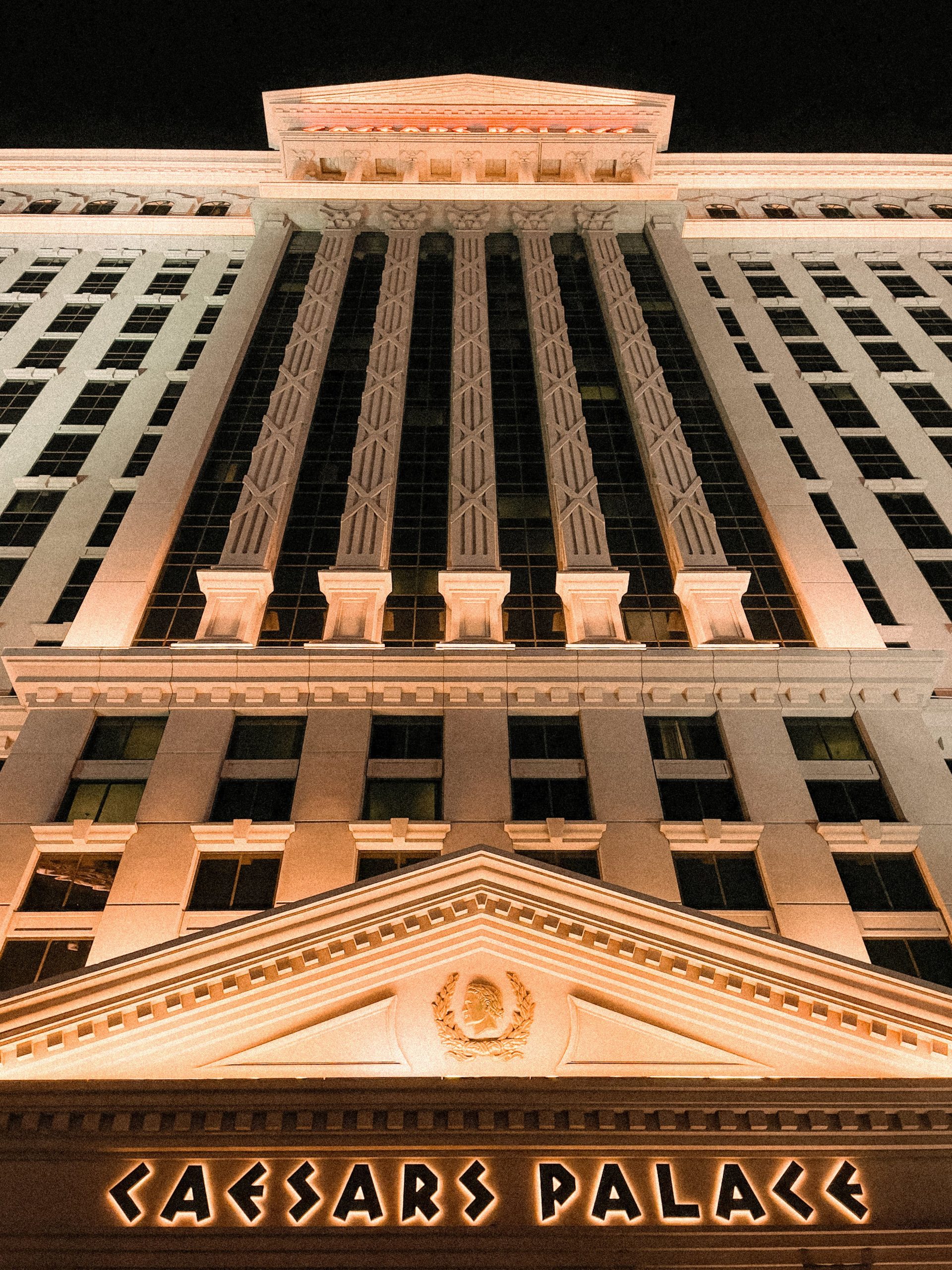
Caesars Palace stands as the crown jewel, one of the most recognizable resort brands on the planet, operating at the premium end of the Strip’s hospitality market. The Flamingo, which opened in 1946 and is the oldest casino on the Strip, carries historical significance alongside its operational contribution. Harrah’s Las Vegas, the Linq, Paris Las Vegas, Bally’s, and Planet Hollywood round out the Strip portfolio. Across the United States, Caesars operates casino resorts in dozens of markets spanning every region of the country.
The combined entity that emerges from Fertitta’s acquisition will sit alongside his existing Las Vegas assets, most notably the Golden Nugget downtown, and his position as the largest individual shareholder in Wynn Resorts. Fertitta also owns a significant stake in DraftKings, the sports betting platform. Assembling Caesars adds a Strip-dominant hospitality and gaming portfolio to a position already built across multiple segments of the broader leisure economy.
There is one complicating personal circumstance worth noting. Fertitta stepped back from his role as president and director of his company after being confirmed as U.S. Ambassador to Italy and San Marino in April 2025. He is currently serving in that diplomatic role while the Caesars acquisition completes its regulatory process. The management implications of that arrangement during the antitrust review and subsequent integration planning will be one of the more unusual governance dynamics in recent American business history.
The 49 Percent Premium and What It Tells You
A 49 percent premium over an unaffected trading price is a large number. It represents the acquiring party’s assessment of what the target is worth as a private enterprise, minus some negotiating discount, expressed as the price they were willing to pay to take it off the public markets.
Fertitta’s argument, implicit in the price he offered, is that Caesars is worth substantially more than public markets were valuing it immediately before the deal rumors emerged. That argument has become increasingly common across the casino sector. The combination of real estate value, gaming license barriers to entry, brand equity, loyalty program databases, and the operational complexity that creates scale advantages all contribute to a private valuation that sophisticated buyers believe public market investors chronically underprice.
The same logic animated Barry Diller’s bid for MGM Resorts, announced in June and still working its way through evaluation. In each case, a sophisticated buyer with deep industry knowledge is looking at a publicly traded casino company and concluding that the market price substantially understates what those assets are worth in private hands where they can be managed for long-term value rather than quarterly earnings expectations.
The 97 percent shareholder approval rate validates the premium’s positioning. Shareholders clearly agreed the offer reflected a compelling premium over what they could realistically expect from continued public market ownership. A contested vote or a meaningful block of opposition would have suggested the market believed Fertitta was getting a bargain at this price. The actual vote suggests shareholders believed they were getting full or near-full value for their shares.
The Antitrust Question
The shareholder vote was the easy part. Antitrust review is the harder one.
Fertitta’s combined casino portfolio, if fully assembled, would represent a significant concentration of gaming and hospitality assets across multiple American markets. The Federal Trade Commission and Department of Justice will examine whether the combination of Caesars’ nationwide casino operations, the Golden Nugget properties, and Fertitta’s Wynn stake creates anticompetitive market power in specific geographic markets where regulators care about competition.
Las Vegas is the most watched geography. Caesars and MGM Resorts together account for the majority of Strip hotel rooms and casino floor space. A world in which Fertitta owns Caesars, owns the Golden Nugget downtown, and is the largest shareholder in Wynn Resorts concentrates a substantial portion of Las Vegas’s gaming and hospitality market in relationships connected to one person. Whether that concentration triggers regulatory remedies, divestitures, or behavioral conditions will determine what the deal ultimately looks like when it closes.
Nevada gaming regulators will conduct their own approval process alongside federal antitrust review. The Nevada Gaming Control Board and the Gaming Commission maintain independent authority over who can hold major gaming licenses in the state. Their process examines character and financial suitability in addition to competitive market concerns. It’s a rigorous approval framework that has historically required significant time and documentation even for transactions that ultimately receive approval.
What This Means Concretely for Las Vegas
The Strip has operated for decades with large publicly traded casino companies accountable to quarterly earnings expectations, institutional shareholders, activist investors, and the full disclosure requirements of public company status. Private ownership changes all of those accountability structures simultaneously.
Public company discipline, with its requirement to disclose material information, report financial results quarterly, and maintain governance structures that institutional investors scrutinize, creates a specific kind of institutional behavior. Private ownership removes that discipline and replaces it with the accountability structures of whatever ownership entity controls the company, in this case Fertitta Gaming Holdco, LLC, organized out of Houston.
That shift doesn’t make private ownership worse than public ownership for Las Vegas. Fertitta has a track record as an operator that includes successfully running complex hospitality and restaurant businesses across multiple brands and geographies. The Golden Nugget under his ownership has maintained its position as the premier downtown casino. His restaurant empire, spanning Rainforest Cafe, Morton’s, and dozens of other brands, demonstrates operational depth across a complicated multi-brand environment.
But private ownership does make the accountability structures different and less transparent. Caesars Palace’s financial performance, which directly affects Strip employment, vendor relationships, and Las Vegas’s broader economic indicators, will no longer be disclosed quarterly in public filings. Understanding how the property is performing, what capital is being invested, and what strategic decisions are being made becomes considerably harder without the disclosure requirements of a public company.
For the 65,000-plus employees whose jobs, benefits, and working conditions sit within the Caesars portfolio, the ownership change matters in ways that go beyond capital market mechanics. Private companies make workforce decisions without the shareholder scrutiny that sometimes constrains public company management. The Culinary Workers Union, which has contracts covering much of Caesars’ Las Vegas workforce, will be watching whether private ownership produces different attitudes toward labor relations than public ownership did.
The Strip Is Going Private
The Caesars vote, combined with the still-pending Barry Diller bid for MGM Resorts, suggests the Las Vegas Strip may be moving toward a concentration of major asset ownership in private hands that would have been unthinkable even a decade ago.
Public casino companies have been the Strip’s institutional structure since Steve Wynn’s public offering in the 1980s demonstrated that casino companies could access public capital markets at scale. The privatization wave now underway represents a reversal of that structure, driven by sophisticated private buyers who believe public market valuations chronically underprice complex gaming and hospitality businesses.
Whether that structural shift serves Las Vegas well over the long term depends on factors that won’t be visible for years. Private ownership with the right long-term orientation can sustain investment in assets that public company quarterly earnings pressure might shortchange. Private ownership with the wrong orientation can extract value through financial engineering rather than operational excellence. Which version Fertitta’s ownership becomes is the question that the next decade will answer.
The shareholders voted by 97 percent. The premium was 49 percent. The antitrust review is pending.
Caesars Entertainment as a public company is finished. What replaces it is still being built.
Key Insights
The 97 percent shareholder approval rate and 49 percent premium together indicate market consensus that Caesars was being chronically undervalued as a public company, consistent with the broader private equity thesis that complex gaming and hospitality businesses with real estate, brand equity, and gaming license barriers to entry systematically trade at discounts to their private market value.
Fertitta’s concurrent role as U.S. Ambassador to Italy while acquiring Caesars creates an unusual governance structure during the antitrust review and integration planning period, with implications for decision-making authority and accountability that the acquisition documentation will need to address explicitly.
The concentration of Strip gaming and hospitality assets connected to Fertitta through direct ownership of Caesars and the Golden Nugget, plus his largest-shareholder position at Wynn Resorts, creates the regulatory review’s central question: whether that combined market position triggers remedies that change the deal’s economics or structure.
The simultaneous privatization trajectories of Caesars and MGM Resorts represent a structural shift in the Strip’s institutional ownership model that reduces the public disclosure and quarterly accountability that have governed the casino industry’s major operators since the 1980s, with long-term implications for transparency that affect employees, vendors, regulators, and the broader Las Vegas economy.
Sources
FOX5 Vegas Stockholder Vote
Associated Press Merger Approval
US News Merger Details
Boston 25 Vote Count Coverage
SEC Merger Agreement Filing