


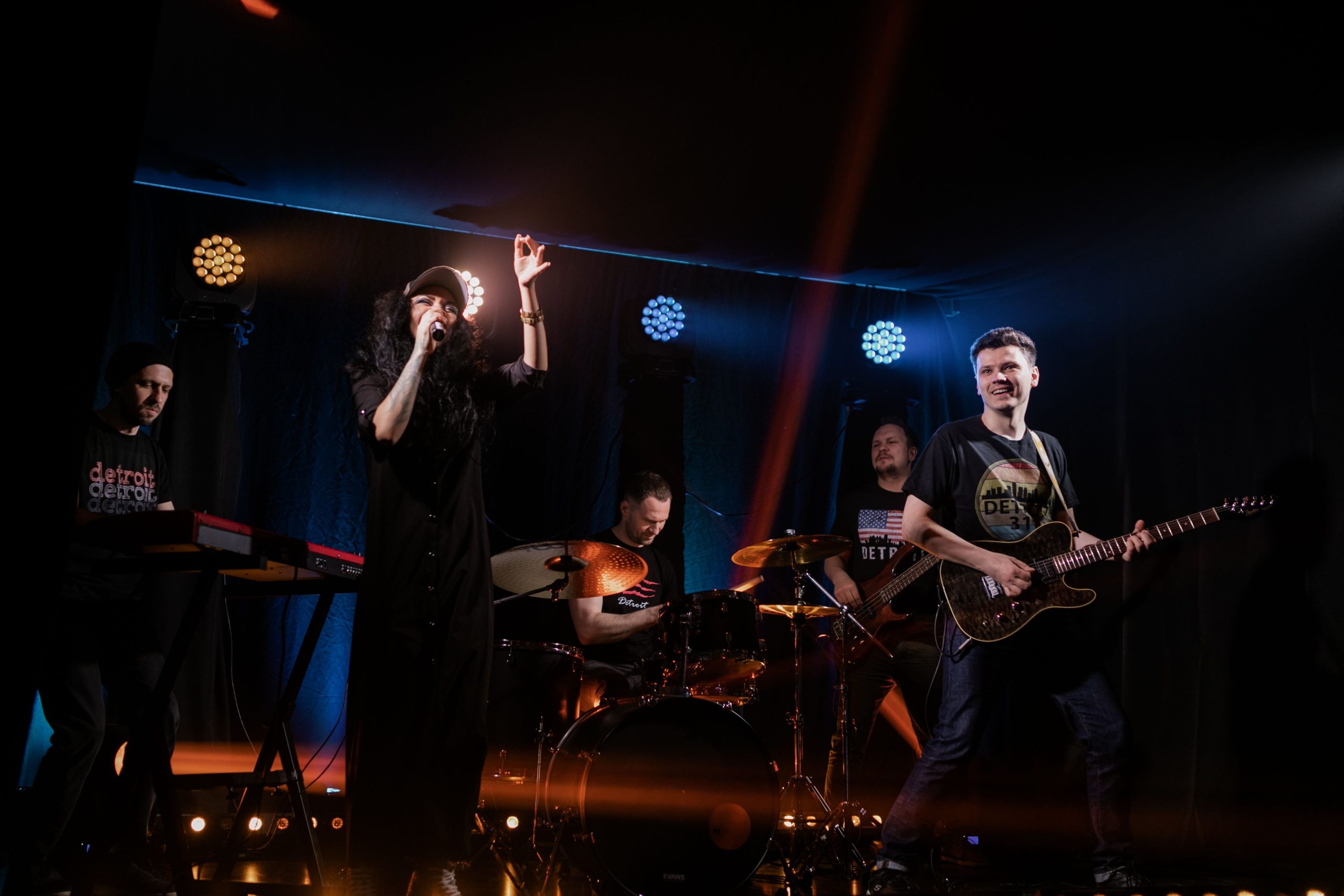
On September 9, 2026, local musicians competed at Virgin Hotels Las Vegas in the Open Mic Night season finale for a residency at The Shag Room. The winner walks away not with a trophy or a gift card but with something genuinely valuable in the Las Vegas music economy: guaranteed paid performance dates at a Strip-adjacent property.
This detail, reported in the Fox5 Las Vegas entertainment roundup from September 8, sits in the category of events that most entertainment industry analysis treats as too small to examine. The story occupies a single sentence in a weekly events listing. Set against the same week’s coverage of Drink Las Vegas with Tom Colicchio and Jean-Georges Vongerichten, Marc Anthony’s residency extension, and Ali Wong selling out Encore Theater, an open mic competition for local musicians barely registers.
That disproportion between attention and significance is exactly what makes it worth examining. The Virgin Hotels open mic finale is the most functionally important event for Las Vegas’s local music ecosystem happening anywhere in the city this September. Not the most spectacular. Not the most commercially significant. The most functionally important.
The Structural Problem It Addresses
Throughout this series we have examined the Las Vegas local music scene through several angles. The Local Frequency band showcase at AREA15 in August. The Breath and Beats yoga-DJ fusion events at Fergusons Downtown. The arts district development at Sixth and Bonneville. The consistent finding is the same: Las Vegas has exceptional entertainment infrastructure for imported music and almost none for developing local talent.
The specific gap is not simply about performance opportunities, though those are limited. It is about the pipeline from performance opportunity to sustainable career. A local musician in Austin can play the Saxon Pub on Monday, the Hole in the Wall on Wednesday, and SXSW in March, with each gig building on the others toward a career trajectory that Las Vegas does not support because the venues, the audience culture, and the critical infrastructure to document and elevate local talent have historically been absent.
The Open Mic Night at Virgin Hotels with a residency prize is an attempt, small in scale but correct in structure, to build one piece of that pipeline. A competition format creates stakes. A residency prize creates ongoing revenue rather than a single performance. And The Shag Room at Virgin Hotels creates a Strip-adjacent context that gives the winning musician exposure to a broader audience than neighborhood venues can provide.
Virgin Hotels and the Alternative Strip Positioning
Virgin Hotels Las Vegas opened in 2021 in the former Hard Rock Hotel space on Paradise Road, a few blocks east of the Strip. The property has carved out positioning as an alternative to the traditional casino resort format: younger aesthetic, music-forward programming, and a willingness to support cultural programming that does not directly drive gaming revenue in the way that major casino operators require.
The Shag Room, the property’s dedicated live music venue, has built a reputation for booking local and regional talent alongside touring acts. A residency at The Shag Room is not nothing: it is real gig income in a proper venue with real production, to real audiences that include both hotel guests and the Las Vegas locals who have made The Shag Room a regular part of their entertainment rotation.
The open mic competition model for awarding that residency is also structurally sound. Rather than having management make purely subjective selections, a competition creates transparency, generates its own small-scale event around the season finale, and builds a community of participating musicians who have engaged with the venue even when they did not win. The musicians who lose the season finale still developed relationships with the property, the audience, and each other.
What Genuine Music Infrastructure Looks Like
The Austin, Nashville, and Portland models that have produced sustainable local music ecosystems all share certain structural elements. Regular venue programming that specifically prioritizes local and regional talent rather than treating local acts as budget alternatives to national touring. Press coverage and critical attention that documents local music rather than exclusively reviewing imported acts. Recording infrastructure that allows local talent to produce at professional quality without moving to Los Angeles or New York. And pathway events that connect local talent to broader audiences, from neighborhood venues to larger rooms to regional touring circuits.
Las Vegas has the third element to some degree, recording studios exist here in reasonable quality. It is severely underbuilt on the first, second, and fourth elements. The Virgin Hotels open mic competition addresses a small piece of the fourth element. Local Frequency at AREA15 addresses the first element on a monthly basis. Neither generates the sustained press attention that the second element requires.
What would change this trajectory is institutional commitment from major Las Vegas media and entertainment organizations to treat local music as worthy of serious coverage rather than as a weekly calendar listing. The Las Vegas Sun runs comprehensive entertainment coverage of touring acts, residencies, and national figures. Its local music coverage is episodic rather than systematic. Las Vegas Weekly is somewhat better but still treats local music as a secondary concern relative to Strip programming.
Without sustained critical attention, local music scenes do not develop the audience culture that supports careers. Audiences need to be told repeatedly that local artists are worth attending, that they are developing something worth following, before they form the habits that sustain a scene. That function is the press’s role, and Las Vegas’s entertainment press has historically been too focused on the Strip’s imported talent to fulfill it for local artists.
The Residency Prize as Model
The specific structure of the Virgin Hotels competition, a season finale competition with a residency prize rather than a one-time prize, is worth adopting more broadly as a model for other properties considering local music support.
A cash prize creates a single transaction. A residency creates an ongoing relationship. The difference matters for both the venue and the musician. The venue gets reliable local programming that costs less than national touring acts and builds genuine community loyalty among the local audience that follows the resident musician. The musician gets the consistency of scheduled performances, the ability to build an audience across multiple appearances, and the professional credential of a Strip-adjacent residency for future booking conversations.
Scaled across multiple properties, this model could meaningfully change the Las Vegas local music infrastructure over five to ten years. If five properties each ran annual competitions with residency prizes, the cumulative effect would be five resident local musicians at visible venues simultaneously, generating cross-pollination of audiences, critical attention, and the kind of scene density that eventually produces artists capable of breaking out beyond the Las Vegas market.
Key Insights
Residency prize rather than cash prize creates ongoing musician-venue relationship that builds local scene infrastructure through consistent programming rather than providing single-transaction support that generates no sustained development. Competition format creates stakes and community among participating musicians even when they do not win, building venue relationships across a broader group than a purely selection-based residency award would reach.
Las Vegas’s local music infrastructure gap exists primarily in regular venue programming prioritizing local talent, sustained critical press attention, and pathway events connecting local acts to broader audiences rather than in recording infrastructure, which exists at reasonable quality. Virgin Hotels’ alternative Strip positioning enables music-forward programming that does not require the direct gaming revenue justification that traditional casino operators apply to entertainment investments. Scaled adoption of competition-plus-residency model across multiple properties could generate meaningful scene density over a five-to-ten-year horizon, though no single competition resolves the systematic infrastructure deficiency.
Notes on What This Week Demonstrates
The September 9 Open Mic Night season finale at Virgin Hotels happened the same week as the Mexican Independence Day concert concentration, the iHeartRadio Music Festival, the Eagles’ Sphere return, and the start of the WNBA playoffs. It received a single sentence of press attention. The musicians who competed for the Shag Room residency did so knowing they were competing in a city where the entertainment news cycle is dominated by events that dwarf anything they can aspire to in the near term.
And they competed anyway. Because the residency prize is real, the stage is real, and the infrastructure, however limited, is better than no infrastructure at all.
Las Vegas’s local music scene is building something small and inconsistent in the shadow of the world’s most elaborate imported entertainment operation. The Virgin Hotels competition is one small piece of that construction. The Local Frequency showcase at AREA15 is another. The Fergusons Downtown programming is another. None of it is sufficient. All of it is necessary.
The season finale was September 9. Somebody won a residency. That musician is now performing at The Shag Room for the rest of the year. In Las Vegas, that is how it starts.