

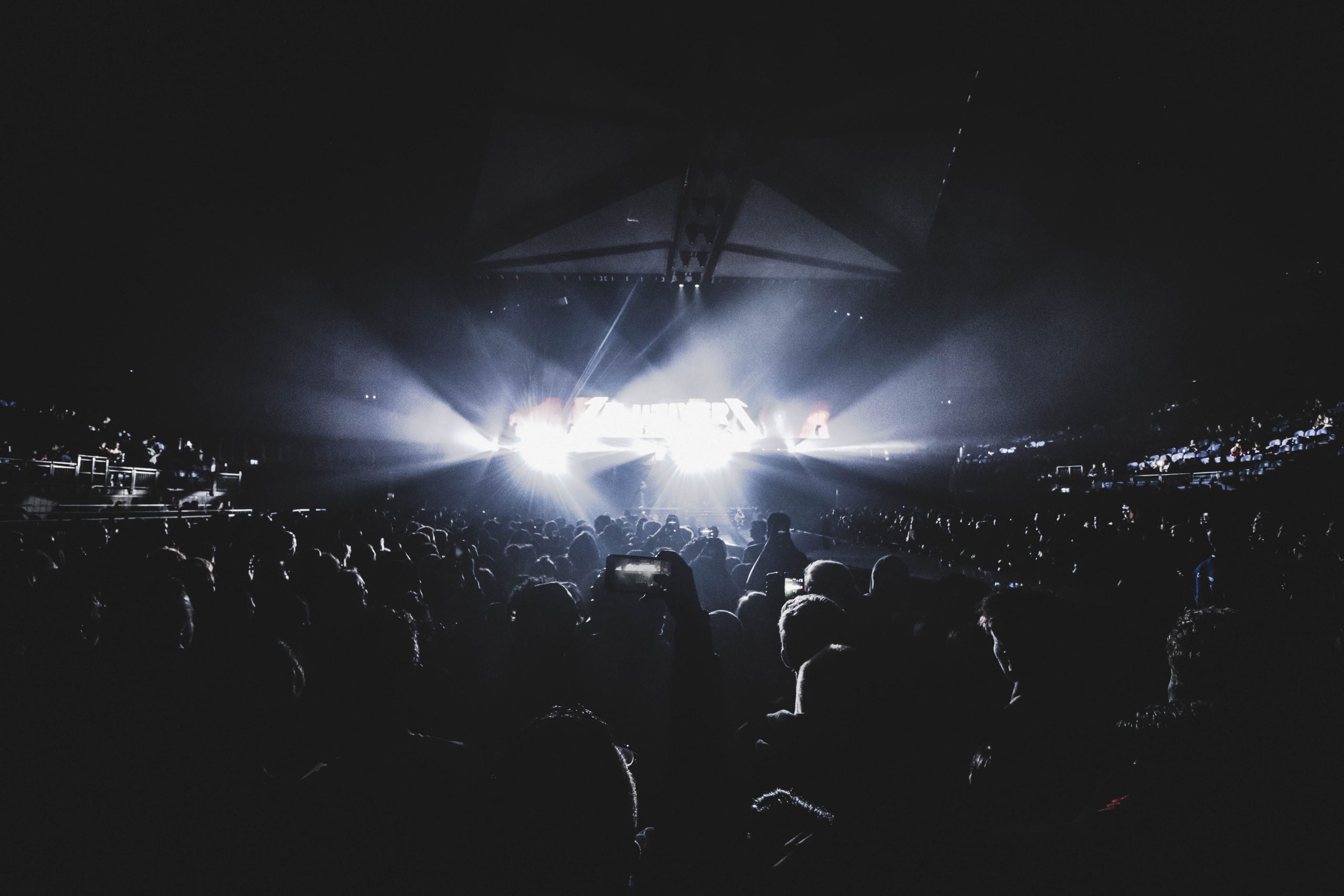
On Friday, August 28, 2026, at The Wall inside AREA15, four bands from the Las Vegas original music scene took the stage for the inaugural Local Frequency concert series. The X-Flowers, No Surprises, Lunar Chain, and Ghosts In The Rafters performed before a crowd of 18-and-older attendees in a format described by organizers as spotlighting original bands and artists from the Las Vegas music scene. It is scheduled to recur.
The show is not, by the standards of the entertainment apparatus this series has spent 42 articles documenting, a commercially significant event. There is no stadium headliner. There is no celebrity brand. There is no immersive experience with a $150 million production budget or a Guinness World Record. Four local indie and alt-rock bands played original music at a venue best known for its relationship with Meow Wolf and the Museum of Ice Cream.
And yet Local Frequency deserves examination precisely because of what it is not. It is the seed of something that Las Vegas’s entertainment economy has historically failed to cultivate: an infrastructure for original local music development that exists alongside, and eventually feeds into, the touring and residency machine that generates the city’s headline revenue.
What Las Vegas’s Local Music Scene Has Always Lacked
Las Vegas is, indisputably, one of the world’s great live music markets. The volume of performances, the quality of venues, and the total ticket revenue generated within the city’s entertainment corridor place it among the top three or four American cities by almost any live music metric.
What Las Vegas has historically not been is a city where original music gets made, developed, and launched into national or international careers. The economic gravitational pull of the entertainment industry in Las Vegas runs toward serving the tourism machine: cover bands in casino bars, tribute acts in showrooms, tribute festival programming at dayclubs, and the residency and touring acts that drive the primary entertainment economy. All of it serves visitors. Almost none of it serves the development of original local artists.
This is not incidental. The economics of Las Vegas entertainment have consistently favored reliable entertainment delivery over creative risk. A casino that books a touring tribute act for a Friday night knows roughly what revenue to expect. A casino that books an unknown local original band knows almost nothing. The risk-averse economic logic of a tourism economy drives programming toward the proven and away from the developmental.
The consequence is that Las Vegas has produced relatively few national-level original acts compared to cities of similar size. Austin generates original music that shapes national culture. Nashville is the definitional American music city. Seattle, Portland, Atlanta, Philadelphia, and dozens of smaller cities have produced waves of original artists who achieved national recognition. Las Vegas, with its massive entertainment infrastructure, has historically been a city where music happens to visitors rather than a city where music is made by residents.
Local Frequency is a small attempt to address this structural gap.
AREA15 as the Right Host for Developmental Programming
The choice of The Wall at AREA15 for Local Frequency’s inaugural showcase reflects the same strategic logic that has made AREA15 a host for community-oriented programming throughout this series. The Mega Block Party that debuted Eye Dropper and featured Cash Cash earlier this summer was free and open to anyone. The Oddyssey nightclub serves the creative-minded late-night crowd that AREA15’s immersive entertainment ecosystem attracts. And now a recurring original music showcase brings the local arts community into Zone 2 in a format that serves neither tourists nor conventional entertainment economics but that builds the kind of community relationship that supports AREA15’s long-term destination positioning.
AREA15 has consistently positioned itself as more than an attraction complex. It is a creative community hub that happens to have commercial entertainment infrastructure. Hosting Local Frequency fits this positioning because it treats the Las Vegas arts community as a constituency worth serving rather than an audience to extract revenue from.
The 18-plus format and the alt-rock/indie programming also signal something specific about AREA15’s understanding of the venue’s audience. The crowd for Local Frequency is not the tourist demographic that attends the Museum of Ice Cream or fills Omega Mart’s queue. It is younger, more culturally specific, and more oriented toward original music than toward experiential entertainment commodities. This audience is exactly the demographic that AREA15’s nightlife programming, including Oddyssey, is trying to develop as a local loyal base.
Hosting Local Frequency does not generate significant direct revenue. But it builds relationships with exactly the creative community whose members become evangelists for AREA15’s programming in ways that paid marketing cannot replicate. A local musician who plays the inaugural Local Frequency showcase and has a good experience becomes an ambassador for AREA15 within the Las Vegas arts and music community. That community’s word-of-mouth reaches the younger, artistically oriented demographics that AREA15’s broader programming increasingly targets.
The Four Bands and What They Represent
The X-Flowers, No Surprises, Lunar Chain, and Ghosts In The Rafters are four bands from the Las Vegas original music scene that most of this article’s readers will not recognize. That obscurity is the entire point.
Local music scenes develop through exactly this kind of infrastructure: a recurring showcase that gives developing acts professional performance experience, exposure to an audience outside their immediate social circle, and the legitimizing signal of being selected for a curated series at a recognized venue. Without this infrastructure, developing acts in Las Vegas face the same structural choice that has historically stunted the local scene: perform original music in the few existing small venues for audiences of other musicians and their friends, or compete in the casino cover band economy for actual sustainable income.
Local Frequency creates a third option, however nascent: perform original music at a venue with genuine production quality, alongside other developing acts at a similar stage, in front of an audience that chose to attend specifically for original local music rather than accidentally encountering a band in a bar they were already at for other reasons.
The recurring format is the essential element. A single showcase is an event. A recurring showcase is an infrastructure. If Local Frequency runs consistently, develops audience loyalty, and gives its participant bands enough cumulative exposure to build followings, it begins to function as the developmental infrastructure that Las Vegas’s original music scene has largely lacked.
What Successful Original Music Infrastructure Produces Over Time
Cities with strong original music development infrastructure do not immediately produce famous bands. They produce the conditions in which bands can develop over years without abandoning music for economic reasons, find audiences gradually rather than requiring immediate commercial success, and build the local music community density that attracts touring acts, record label attention, and the broader music industry infrastructure that follows demonstrated creative output.
Austin’s music scene did not emerge fully formed. It was built over decades of consistent investment in original music infrastructure: venues that prioritized local original acts, a local government commitment to music as an economic development tool, and the development of South by Southwest as a mechanism for connecting local original acts to national media and industry attention.
Las Vegas has the economic capacity to build comparable infrastructure if the entertainment industry decides to invest in it. Local Frequency is not that investment. It is one recurring showcase at one venue. But it represents a recognition that the infrastructure gap exists and that filling it matters.
The Tourism Economy’s Original Music Blind Spot
The Las Vegas tourism economy’s relationship with original music reveals a structural paradox. The city’s hotels, casinos, and entertainment venues spend enormous sums programming music because music drives visitors, fills rooms, and generates the secondary spending that sustains the hospitality economy. All of this music is imported. The artists who generate this revenue live elsewhere and bring their economics with them.
A city that developed its own original music scene would gradually build an export economy alongside the import economy. Las Vegas-based original artists who achieved national recognition would generate economic activity in the city, spend their income locally, and build the kind of cultural identity that attracts a different type of visitor, one who comes for the creative culture rather than the tourist spectacle.
This is not a near-term economic case for Local Frequency. It is a decade-plus economic development argument that requires consistent investment in original music infrastructure over an extended period. Local Frequency is one data point in that argument. Whether it becomes more depends on whether the Las Vegas entertainment industry, which has historically been too comfortable importing its creative content to invest in developing local talent, decides that building an original music economy is worth the patient investment it requires.
Key Insights
Recurring showcase format establishes infrastructure rather than event, creating the developmental conditions that allow original artists to build audiences incrementally over time rather than requiring immediate commercial success. AREA15 hosting Local Frequency builds community relationships with the Las Vegas arts constituency that supports the venue’s broader positioning as a creative hub rather than purely a commercial attraction. 18-plus alt-rock and indie programming targets the younger artistically oriented demographic that AREA15’s nightlife and creative programming increasingly serves, building local loyal audience base that paid tourism marketing cannot replicate.
Las Vegas’s structural failure to develop original music infrastructure reflects the risk-averse economic logic of a tourism economy that has consistently prioritized reliable entertainment delivery over developmental creative investment. Cities that invest consistently in original music development infrastructure build long-term creative economies that generate both cultural identity and economic export activity, a outcome that Las Vegas’s enormous music spending has historically failed to leverage for local artists.
Single inaugural showcase represents an early and small intervention in a structural gap that requires decade-scale consistent investment to address meaningfully.
A Note on Why This Is the Right Article to End On
This series began with Marquee Nightclub’s renovation and has now documented 43 Las Vegas entertainment stories ranging from $260 million in Sphere ticket revenue to four local bands playing original music at AREA15 for 18-plus attendees on a Friday night.
The economic distance between those two endpoints is vast. The cultural distance between them is smaller than it appears. Both are expressions of the same impulse: people wanting to make music and other people wanting to hear it, in a city that has built more infrastructure for that transaction than anywhere else on earth.
The Sphere and Local Frequency coexist in the same entertainment ecosystem. The Backstreet Boys and Ghosts In The Rafters are both performing in Las Vegas this month. The $150 million Awakening production and the inaugural Local Frequency showcase both took the stage, one ending and one beginning, in the same week of the same August.
Las Vegas’s entertainment economy is enormous and diverse and continuously changing in ways that reward sustained attention. The city always has more stories than any single analysis can contain. The best ones, as always, are the ones nobody is covering yet.
Tonight, four local bands are playing original music at AREA15. That is worth knowing.