


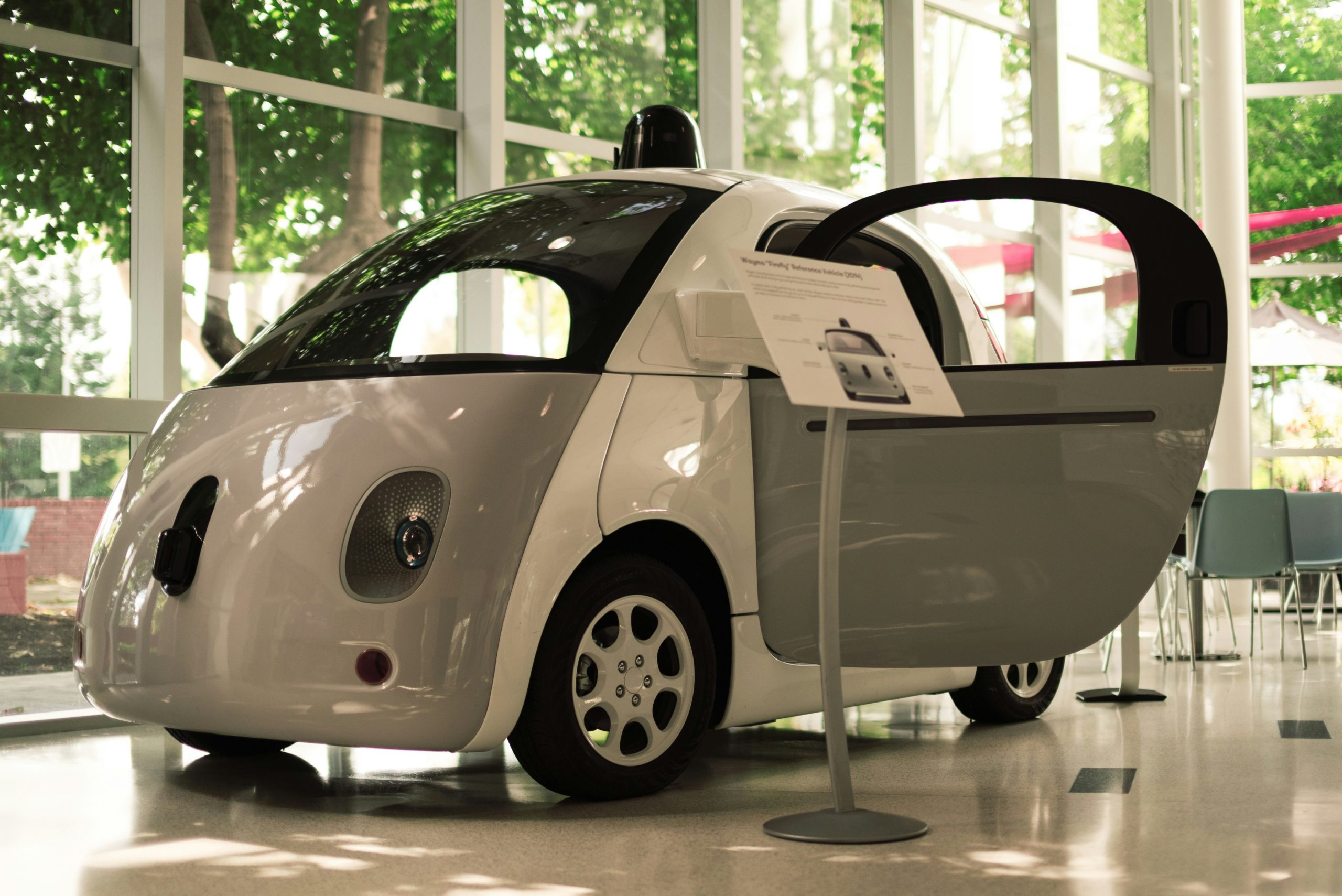
On June 20, 2026, an unoccupied Zoox robotaxi was traveling through the Las Vegas Valley when it encountered something its software hadn’t been adequately prepared for: heavy smoke billowing from an active fire scene that hadn’t yet been cordoned off with traffic cones. The vehicle entered the scene. It braked hard, trying to steer away, and came to a stop. A Zoox teleguidance employee had to remotely guide the vehicle in reverse out of the fire area. First responders placed traffic cones after the fact.
No passengers. No injuries. One very public demonstration of an autonomous vehicle system encountering a real-world edge case it wasn’t equipped to handle.
Zoox notified the National Highway Traffic Safety Administration five days later, on June 25, as required under its Automated Vehicle Exemption Program obligations. The company voluntarily recalled its entire 105-vehicle Las Vegas fleet and spent two weeks investigating the root cause before issuing a software update designed to improve the vehicles’ ability to detect and respond to heavy smoke near active emergency scenes. Between June 22 and July 8, Zoox built and deployed the fix.
Then, on August 11, approximately seven weeks after that fire scene incident, Zoox launched paid autonomous robotaxi service in Las Vegas, becoming the first company in history to receive NHTSA approval to charge passengers for rides in purpose-built autonomous vehicles with no steering wheels and no pedals.
Zoox CEO Aicha Evans, appearing on FOX Business this week, said autonomous vehicles need to be regulated. “These are rare edge cases,” she said of the fire scene incident. “We learn and we continue to improve our processes along the way to make them better and better.”
That sequence, incident, recall, investigation, software fix, paid launch, deserves more careful examination than either the critics who use it as evidence autonomous vehicles aren’t ready for public roads or the boosters who dismiss it as an inconsequential glitch.
What the Incident Actually Shows
The fire scene incident on June 20 reveals something real about the current state of autonomous vehicle technology: these systems handle structured, anticipated scenarios extremely well, and they handle unstructured, unanticipated scenarios significantly less well.
Three million miles of Las Vegas driving accumulated by the Zoox fleet before this incident is a meaningful operational record. The company pointed to that figure explicitly in its public communications, noting that the number of incidents involving autonomous vehicles relative to miles driven is relatively small. That’s true. It’s also true that three million miles driven didn’t prepare the system for heavy smoke obscuring an emergency scene without traffic cone markers.
That gap reflects a fundamental challenge in autonomous vehicle development that industry experts have discussed for years: the long tail of edge cases. Engineers can anticipate and train for the scenarios they know about. They cannot fully anticipate scenarios they haven’t encountered. When an autonomous vehicle encounters an unanticipated scenario, its behavior is determined by how well its general-purpose sensing and decision systems generalize to novel situations.
In this case, the system’s generalization failed in a way that produced a hard brake and stop rather than a collision or injury. That’s meaningfully different from a catastrophic failure. A vehicle that stops when confused, even if it stops in the wrong place, is a vehicle designed with the right failure mode priority: when in doubt, stop.
The Recall and the Fix
The NHTSA recall covers Zoox’s automated driving system software produced between April 23 and July 8. That date range encompasses essentially all software versions running before the investigation completed and the fix was deployed. NHTSA identified the safety risk as an increased potential for a crash or impediment to first responders due to reduced visibility. Both risk categories are real.
The software update Zoox developed addresses the specific failure mode: detecting and responding to heavy smoke, particularly near active emergency vehicle scenes. The NHTSA recall report describes the update as enhancing the existing capability of detecting and responding to heavy smoke, language that implies this wasn’t a capability added from scratch but an existing function that was strengthened.
That distinction matters for evaluating the fix’s adequacy. Smoke detection wasn’t absent from the system. It was present but insufficient for the specific combination of circumstances present on June 20: heavy smoke, no traffic cones yet deployed, an unoccupied vehicle traveling through the affected area. The update tunes the existing capability to handle that combination more reliably.
Whether it handles all future combinations of similar circumstances is unknowable in advance. That’s the nature of software deployed in complex real-world environments. What can be said is that Zoox identified the root cause, developed a targeted fix, and deployed it before returning to commercial operations. That’s the incident response process working as intended.
Evans Says Regulation Is Needed. She’s Right.
The most interesting element of Aicha Evans’s public comments following the fire scene incident isn’t the acknowledgment that edge cases happen. It’s her explicit support for stronger federal regulation of the autonomous vehicle industry.
“We need to be regulated,” Evans told FOX Business during the paid launch announcement. That’s a remarkable statement from the CEO of a company whose commercial viability depends entirely on regulatory permission to operate. Most industry executives pay lip service to regulation while lobbying aggressively against specific requirements they find inconvenient. Evans’s framing was different. She positioned federal oversight as something Zoox actively wants, not something it tolerates.
Her reasoning is partly defensive. A regulatory framework that establishes clear standards creates a level playing field and, critically, provides legal cover when incidents occur. If a company demonstrates compliance with federal safety standards and an incident still happens, the liability calculus is different than if there are no standards at all. Regulation protects Zoox as much as it protects the public.
But it’s also substantively correct. Autonomous vehicles operating on public roads create externalities that extend beyond the company’s customers. First responders, other drivers, and pedestrians all interact with these vehicles without consenting to participate in any particular company’s technology experiment. Federal standards for emergency scene detection and response, specifically, would address exactly the failure mode the June 20 incident exposed.
NHTSA Administrator Jonathan Morrison said something worth noting: “To state it bluntly: an AV that cannot safely interact with first responders is a danger to the general public.” That framing elevates emergency scene interaction from an edge case to a core competency requirement. It signals that federal regulators aren’t treating this incident as a minor footnote.
The Paid Launch and What It Means
Zoox beginning paid service in Las Vegas isn’t just a commercial milestone. It’s a regulatory one.
NHTSA granted Zoox a temporary exemption allowing up to 2,500 purpose-built robotaxis annually for two years, specifically covering vehicles without steering wheels or pedals. That exemption is significant because the Federal Motor Vehicle Safety Standards were written assuming human-operable vehicles. A vehicle with no steering wheel and no pedals doesn’t comply with those standards. The exemption carves out space for autonomous-first vehicle designs to operate legally while the standards themselves are updated.
Reuters reported that Zoox became the first company to secure NHTSA approval for paid service with this type of purpose-built autonomous vehicle. That’s a genuinely historic commercial and regulatory development, even if the fire scene incident a few weeks earlier undercut the triumphant narrative somewhat.
Approximately 65 Zoox vehicles are currently deployed in Las Vegas. Evans told FOX Business that production is ramping up, with the company’s California factory increasing output to five to six vehicles per day. The fleet will grow. The geographic footprint in Las Vegas will expand beyond the current Strip-focused service area as operational confidence builds.
The company is also operating pilots in San Francisco, Austin, and Miami, with Evans indicating further expansion is planned beyond those four markets. Las Vegas remains the flagship commercial deployment, the city where Zoox moved from free rides to paid service first.
The Broader Implications for Las Vegas
Las Vegas is uniquely positioned in the autonomous vehicle story. Zoox is operating paid service here. Waymo has been preparing its own Las Vegas operations. The city’s tourism-driven, pedestrian-heavy Strip environment provides exactly the kind of dense, complex operational scenario that produces the most useful autonomous vehicle performance data.
The June 20 incident adds a specific dimension to that positioning: Las Vegas fire weather, with its seasonal smoke events driven by regional wildfires, creates an environmental variable that most autonomous vehicle deployments in other cities don’t face with the same frequency. A system that can reliably detect and respond to heavy smoke in Las Vegas has been hardened against a challenge that matters increasingly across the fire-prone American West.
The three million miles Zoox’s fleet has accumulated in Las Vegas isn’t just a marketing number. It’s a dataset that includes monsoon conditions, extreme heat stress on vehicle hardware and software, heavy tourist pedestrian traffic, and now smoke events. That operational data makes the Las Vegas deployment substantively valuable to the technology development process, not just commercially.
Whether the public is comfortable with that reality, being part of a real-world testing environment for technology that occasionally drives into fire scenes before getting patched, is a different question. Evans’s call for stronger regulation is partly an attempt to build the institutional framework that makes that discomfort manageable. Clear standards, transparent incident reporting, and demonstrated accountability when things go wrong are the ingredients that turn public skepticism into public tolerance.
The paid rides are available now. The technology is imperfect and getting better. Those two facts exist simultaneously, and Las Vegas is where the tension between them plays out in public.
Key Insights
The fire scene incident’s core lesson is about autonomous vehicle failure modes: a system that stops when confused rather than continuing into danger represents the correct failure priority hierarchy, even when the stop location is wrong, distinguishing a manageable edge case from a catastrophic system failure.
Evans’s explicit call for autonomous vehicle regulation creates a strategic alignment between Zoox’s commercial interests and federal oversight, since clear standards provide liability protection for compliant operators while establishing baseline requirements that less safety-focused competitors must meet.
NHTSA’s exemption covering purpose-built autonomous vehicles without steering wheels or pedals, granted specifically to enable Zoox’s Las Vegas paid service, represents a significant regulatory development that effectively creates a new vehicle category outside existing Federal Motor Vehicle Safety Standards.
Las Vegas’s seasonal wildfire smoke environment, increasingly frequent under current climate trends, creates a real-world testing condition for smoke detection and emergency scene response that most autonomous vehicle deployments in other American cities do not face, making the fleet’s accumulated operational data particularly valuable.
Sources
Las Vegas Review-Journal CEO Backs Regulation
FOX5 Vegas Software Recall Report
News3 Las Vegas Recall Coverage
Benzinga Paid Launch Analysis
Planetizen Recall Summary