


Yesterday Was the Hottest Day of 2026
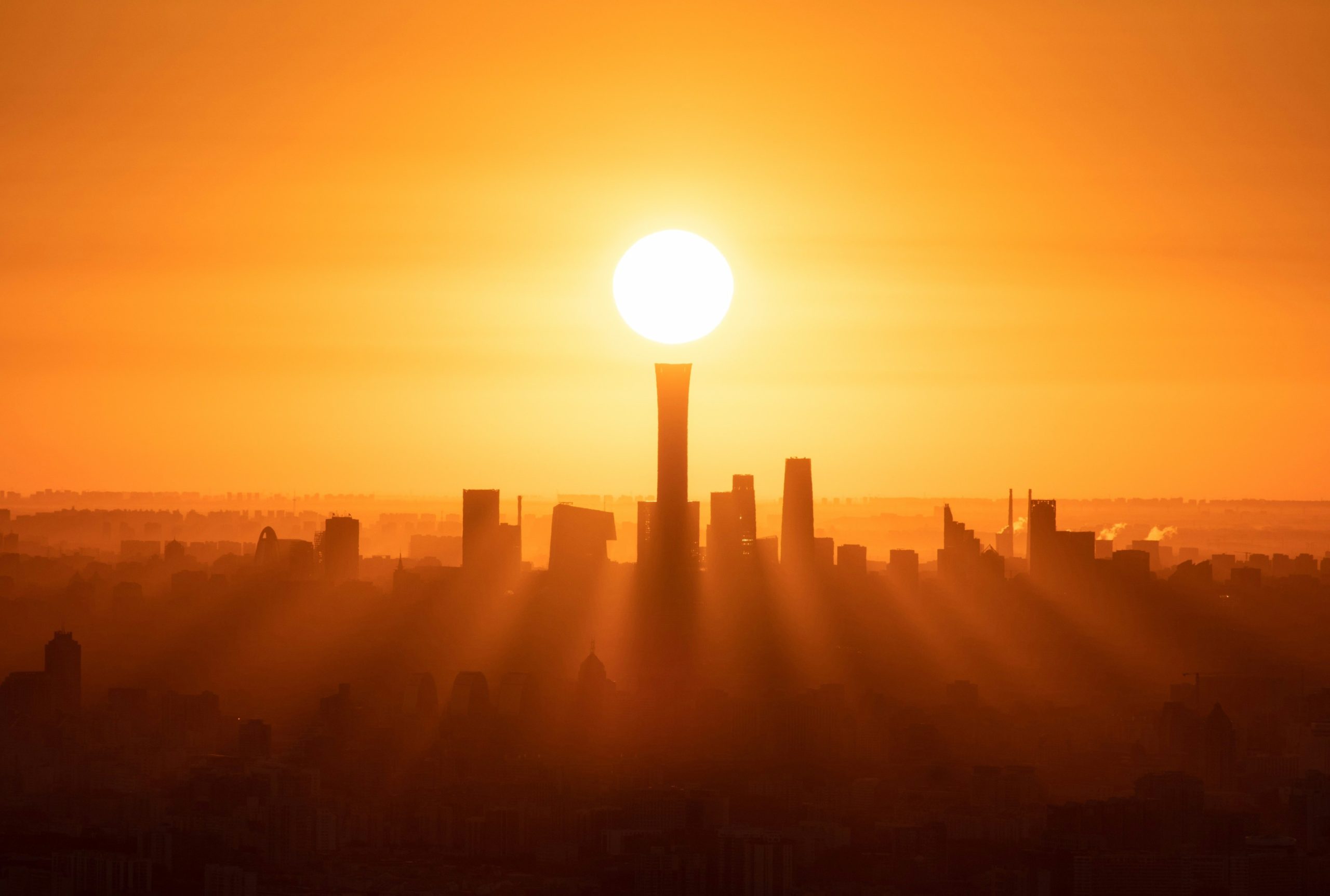
At 2:29 p.m. on Friday, July 24, 2026, a thermometer at Harry Reid International Airport registered 114 degrees Fahrenheit. It was the hottest reading of the year, and it arrived during a heat wave that the National Weather Service had been tracking for days. Overnight lows aren’t dropping below 90 degrees in many parts of the Las Vegas Valley. The average overnight low for this time of year is 83. Records for overnight minimum temperatures may fall before the wave breaks.
The same day that temperature record was set, the Desert Research Institute’s Nevada Heat Lab released findings from a survey of 489 people across 37 cooling stations in Clark County. The central finding: about half of respondents didn’t know they were at a cooling station. Cooling stations dot nearly every neighborhood in Clark County, but many of those inside trying to avoid the deadly heat don’t even know they’re using one.
That combination, a city hitting 114 degrees while operating a cooling station network that half its users can’t identify, describes the core of Las Vegas’s extreme heat infrastructure challenge in 2026. The city has real resources deployed against a genuinely deadly problem. Those resources are structurally invisible to the people who need them most.
The Death Toll Context
Extreme heat is not an abstract policy concern in Las Vegas. It is the leading cause of weather-related death in the region, and the numbers are not small. The year 2024 marked Southern Nevada’s deadliest summer on record, with 527 recorded heat deaths according to the Clark County coroner’s office, which has broadened its umbrella for considering heat as a factor in its investigations but may still be undercounting. Last year, that number dropped to 279, but temperatures were significantly less extreme than 2024.
With 2026 temperatures already reaching 114 degrees in late July, with overnight lows refusing to drop and humidity from monsoon moisture adding physiological stress on top of raw temperature, the trajectory for this summer’s heat death count is a question local public health officials are tracking closely. The people most at risk, unhoused residents, outdoor workers, elderly people living alone, and low-income households with unreliable air conditioning, are precisely the populations least likely to know that cooling stations exist, where they are, and what they offer.
The Nevada Heat Lab’s survey illuminates why awareness gaps are deadly in this context. A cooling station that exists but is unknown to the people dying from heat exposure is not a functional safety resource. It is infrastructure measured in county budget lines that isn’t translating into lives saved.
What Cooling Stations Actually Offer
The gap between public awareness and cooling station quality is notable. The Green Valley Public Library in Henderson offers bottled water, Gatorade, flip flops, toothpaste, toothbrushes and even hygiene products for women. “All of it’s free. We don’t charge,” said Markita Dawson, Adult Programming Coordinator for Henderson Libraries.
That’s a meaningful package of support that extends well beyond air conditioning access alone. A cooling station stocked with hydration, personal care items, and hygiene products is addressing multiple dimensions of heat vulnerability simultaneously, recognizing that the people most exposed to deadly heat often have compounding material needs. But none of those resources function if people either don’t know the station exists, don’t know they’re already inside one, or don’t feel comfortable asking for what’s available.
The Nevada Heat Lab’s recommendation, based on David Almanza’s postdoctoral research across 489 survey respondents, focuses on making cooling stations more visible and effective rather than simply building more of them. Signage, outreach, and activation protocols all factor into closing the gap between infrastructure that exists and infrastructure that serves its intended population.
The Fractured Response Problem
Las Vegas’s heat response infrastructure doesn’t suffer from absence of concern. It suffers from structural fragmentation across multiple government entities without unified coordination or leadership.
Nevada held its first Southern Nevada Heat Summit in April 2026, where attendees described a fractured approach across local governments and a lack of sustainable funding. For officials like Cheryl Nagy at the Clark County Office of Emergency Management, responding to dangerously hot temperatures has not traditionally been part of the job description.
This isn’t negligence. It reflects how heat policy has historically been categorized. Extreme heat wasn’t recognized as a disaster classification requiring emergency management infrastructure the way floods, earthquakes, and wildfires were. The Nevada Heat Lab, established at the Desert Research Institute beginning in 2023, was specifically created to bridge research and policy response in a region that has been warming faster than almost anywhere else in the country.
Las Vegas and Reno were named two of the fastest-warming cities in the United States. Las Vegas’s average annual temperature has increased by approximately 5.5 degrees Fahrenheit since the 1970s. The Mojave Desert region is warming at rates that make projections from even five years ago look optimistic. The infrastructure built for the Las Vegas of 1990 or 2000 is not the infrastructure appropriate for the Las Vegas of 2026.
The RTC (Regional Transportation Commission) has been working toward a regional heat response plan that could eventually coordinate efforts across multiple agencies. Andrew Kjellman, RTC’s deputy chief executive officer, said the two-year planning process “will have a good playbook and run of show that we can all follow,” potentially directing shade over bus stops or backup power generation for buses. But only about half of the RTC’s 3,700 bus stops currently have shade structures, despite approximately $50 million dedicated over five years to address the gap.
The Urban Heat Island Amplifier
Las Vegas doesn’t just experience regional warming from climate change. It experiences compounded warming from urban heat island effects, the phenomenon where dense development of roads, buildings, and paved surfaces absorbs and retains heat more intensely than natural desert landscape.
Research shows heat islands are making Las Vegas summers more extreme. The Southern Nevada Urban Heat Mapping Project documented significant temperature variations across different urban environments within the valley, with some neighborhoods experiencing measurably more intense heat than others based on tree canopy coverage, pavement density, and building materials. Communities with less green space and more pavement, which tend to correlate with lower-income neighborhoods, face compounded heat exposure.
This means the heat challenge isn’t uniform across the valley. A resident in Summerlin with mature tree coverage and access to air-conditioned facilities faces a different heat burden than a resident in a lower-income North Las Vegas neighborhood with sparse canopy, older housing stock, and unreliable air conditioning. The cooling station network’s visibility gaps disproportionately affect the latter population.
The NV Energy grid faces its own stress during sustained extreme heat events. The 2024 summer saw several localized brownouts and transformer failures during peak heat. A prolonged heat wave pushing temperatures to 114 degrees, with overnight lows refusing to fall, places sustained demand on electrical infrastructure in ways that isolated single-day peaks don’t. The people most dependent on public cooling infrastructure are also most vulnerable if power failures interrupt access to it.
The Phoenix Comparison
Las Vegas’s heat response is frequently compared unfavorably to Phoenix, which has developed more comprehensive institutional infrastructure for managing extreme heat. Phoenix created a dedicated city office of heat response and mitigation and pushed for a statewide heat officer role. These institutional investments reflect a political decision that extreme heat warrants the same organizational priority as other recognized disaster categories.
Nevada is now considering a statewide heat office as deaths continue to climb, a move that would begin to address the structural fragmentation that the Southern Nevada Heat Summit identified in April. Nevada Congresswoman Dina Titus pushed an extreme heat bill in June 2026, and state legislators have been examining what a formal institutional response would require. The momentum toward institutional recognition is building, but the timeline between policy recognition and operational infrastructure is measured in years, not months.
The comparison to Phoenix matters because it suggests what effective response looks like at scale. Phoenix didn’t solve its heat challenge with a single intervention. It built organizational capacity over years, combining outreach, infrastructure investment, policy coordination, and public education into a system that, while still imperfect, represents a fundamentally more coherent response than what Las Vegas currently operates.
The Cooling Station Visibility Fix
The Nevada Heat Lab’s specific recommendations for improving cooling station effectiveness are relatively straightforward in concept if complex in execution. Consistent, visible signage identifying locations as cooling stations rather than generic public facilities is primary. Someone walking into a public library to escape heat may not know they’ve entered a designated cooling station, which means they may not know to ask for water, Gatorade, or the hygiene supplies available at no cost.
Clark County spokeswoman Jennifer Cooper noted that the county now considers “local temperature thresholds and heat risks” rather than only National Weather Service extreme heat warnings as triggers for opening cooling stations, a policy change that has increased the number of days they are operational. This threshold adjustment is meaningful progress, but it addresses activation timing rather than the awareness gap the Nevada Heat Lab identified.
Outreach to populations most at risk requires meeting people where they are rather than assuming awareness will spread organically. Social service organizations, healthcare providers serving low-income populations, outreach workers engaged with unhoused residents, and community organizations with existing trust in vulnerable neighborhoods all represent channels through which cooling station awareness could spread more effectively than general public information campaigns.
The Tourism-Resident Tension
Las Vegas’s extreme heat challenge carries a specific tension that most cities dealing with similar conditions don’t face: the city’s global tourism identity depends on projecting heat as an exciting, manageable feature of the desert setting rather than a public health emergency. Summer tourism marketing emphasizes pool parties, air-conditioned casinos, and evening entertainment. It does not emphasize that the city recorded 527 heat deaths in 2024.
This isn’t dishonesty. It’s audience segmentation. Tourists arriving at the Strip have access to world-class air conditioning in every venue they’ll visit. They’re not sleeping outdoors or working construction in direct sun. The heat experience of a Strip tourist is genuinely different from the heat experience of a low-income resident without reliable air conditioning.
But the gap between the city’s projected image and the reality of heat mortality among its most vulnerable residents reflects a broader allocation question. Las Vegas invests substantially in entertainment infrastructure, convention capacity, and tourism marketing. The investment in extreme heat response infrastructure, at both the physical and institutional levels, has lagged behind the growth of the problem it needs to address.
The Nevada Heat Lab’s work, the Southern Nevada Heat Summit, and emerging state-level policy discussions all represent movement toward closing that gap. The question is whether the institutional response can scale fast enough to match a warming trajectory that has already delivered 114-degree days in July 2026.
Notes for Stakeholders
Las Vegas’s extreme heat infrastructure challenge offers insights for anyone working in public health policy, urban planning, or destination management:
Infrastructure visibility is a distinct problem from infrastructure existence. A cooling station network that half its users cannot identify represents a policy gap that signage, outreach, and communication strategy can address more quickly than building new facilities.
Fragmented multi-agency response produces coordination failures that unified institutional leadership prevents. Phoenix’s dedicated heat office model demonstrates what centralized coordination enables compared to Las Vegas’s current distributed approach across multiple agencies without a single accountable entity.
Urban heat island effects create within-city inequality in heat burden. Lower-income neighborhoods with less tree canopy and older housing stock face compounded heat exposure beyond regional warming alone, meaning heat response must be geographically targeted rather than uniformly distributed.
Overnight low temperatures matter as much as daytime highs for heat mortality risk. Sustained overnight temperatures above 90 degrees prevent physiological recovery that daytime cooling provides, making extended heat waves deadlier than brief single-day spikes at equivalent peak temperatures.
Tourism identity and public health reality can coexist honestly when segmented by audience. Acknowledging extreme heat mortality among vulnerable residents doesn’t require projecting the same message to tourists with fundamentally different heat exposure profiles.
The Number That Matters
114 degrees is a number that doesn’t register at the same scale for everyone in Las Vegas. For tourists at pool parties, it’s the dramatic backdrop to an Instagram story. For construction workers, unhoused residents, and elderly people living in apartments with failing air conditioning, it’s the number associated with life-threatening risk.
The Nevada Heat Lab’s finding that half of cooling station users don’t know they’re inside one arrived on the same day as the 2026 temperature record. That timing wasn’t coordinated. It was coincidence. But it captures the essential challenge with unusual clarity: Las Vegas has resources deployed against a deadly problem that the people dying from that problem often can’t find.
Fixing the visibility gap won’t fix the heat. But it would save lives while the institutional and infrastructure work that addresses the deeper problem continues. That’s not a small thing. In a summer hitting 114 degrees, it might be the most important thing.
Key Takeaways:
- Harry Reid International Airport recorded 114 degrees Fahrenheit on July 24, 2026, the hottest day of the year, during a heat wave keeping overnight lows above 90 degrees in many valley areas
- The Desert Research Institute’s Nevada Heat Lab released findings this week showing approximately half of 489 cooling station survey respondents didn’t know they were at a designated cooling station
- Clark County’s cooling station network includes libraries, community centers, and other facilities offering free water, Gatorade, flip flops, and hygiene products, but awareness gaps limit effectiveness
- Extreme heat is the leading weather-related cause of death in Southern Nevada, with 527 recorded heat deaths in 2024’s record summer and 279 in 2025’s less extreme season
- Las Vegas and Reno have been identified as two of the fastest-warming U.S. cities, with Las Vegas’s average annual temperature rising approximately 5.5 degrees Fahrenheit since the 1970s
- Nevada’s first Southern Nevada Heat Summit in April 2026 identified a fractured multi-agency response without unified coordination as the primary structural problem in regional heat management
- Only about half of the RTC’s 3,700 bus stops have shade structures despite $50 million dedicated over five years to address the gap
- Nevada is considering a statewide heat office modeled partly on Phoenix’s more developed institutional response, with Congresswoman Dina Titus pushing federal extreme heat legislation in June 2026
- Urban heat island effects compound regional warming disproportionately in lower-income neighborhoods with less tree canopy and older housing stock
- The Nevada Heat Lab’s primary recommendation focuses on improving cooling station visibility and outreach rather than solely expanding physical infrastructure