


Emeril Lagasse has operated in Las Vegas for decades. His Emeril’s New Orleans Fish House at the MGM Grand arrived in 1995, predating the celebrity chef dining wave that Steve Wynn’s Bellagio eventually made permanent and inescapable. Delmonico Steakhouse at The Venetian followed, deepening his Strip presence and reinforcing a formula that served him well across two casino properties serving millions of tourists annually.
On July 16, 2026, Lagasse opened Meril at the M Resort Spa Casino in Henderson, eight miles south of the Strip on Las Vegas Boulevard. It is his third Las Vegas restaurant and his first located entirely off the tourist corridor. That geography carries more strategic significance than it might initially appear.
Named after his youngest daughter, Meril debuted originally in New Orleans in 2016 as Lagasse’s casual neighborhood concept, designed around contemporary American dishes shaped by his global travels rather than the New Orleans-rooted cuisine most associated with his public identity. The concept’s arrival at M Resort represents both an expansion of Lagasse’s Las Vegas footprint and a meaningful shift in where celebrity chef ambitions are now pointing.
Hussain Mahrous, vice president and general manager of M Resort, was direct about the motivation: Henderson residents had been asking for a sophisticated, celebrity-chef-driven dining experience without the hassle of traveling to the Strip. Meril answers that request explicitly, positioning itself as a neighborhood restaurant serving a real residential community rather than a tourist destination operating within a larger entertainment complex.
The New Geography of Las Vegas Celebrity Dining
For most of the celebrity chef era in Las Vegas, the Strip was the only relevant address. Casinos offered the foot traffic, the hotel guests, the convention attendees, and the high rollers whose dining budgets supported premium price points. The neighborhoods surrounding the valley, however affluent and populated, weren’t considered viable locations for restaurants commanding meaningful kitchen investment.
That assumption has been eroding steadily. Durango Casino & Resort in the southwest valley opened in late 2023 and immediately invested in serious dining, drawing established chefs and generating genuine local enthusiasm. Summerlin and Henderson have developed their own culinary identities through neighborhood restaurants that operate entirely independent of casino traffic. And the off-Strip restaurant community across Chinatown, Downtown, and suburban corridors has grown sophisticated enough to support concepts that would once have required Strip exposure to sustain.
Meril’s arrival at M Resort formalizes this shift at a scale that commands attention. When a chef with Lagasse’s profile, who has operated successfully on the Strip for over three decades, decides to place a new concept in Henderson specifically because the local demand warrants it, the signal is difficult to misread. The residential dining market outside the tourist corridor has become substantial enough to attract serious investment on its own merits rather than as an afterthought to Strip strategy.
M Resort itself represents an interesting context for this evolution. Located about eight minutes south of the Las Vegas Strip, the property has built a loyal local following distinct from the Strip resort identity. Penn Entertainment’s roughly $206 million investment in a new hotel tower, which doubled the property’s room inventory to 765 rooms and suites, reflected confidence in the M Resort’s positioning as a destination for Southern Nevada residents rather than primarily international visitors.
Lagasse’s partnership with this specific property, rather than a Strip casino offering presumably larger audiences, reflects deliberate strategic thinking about audience fit. A New Orleans-rooted casual concept operating in a neighborhood format serves Henderson residents differently and arguably better than it would serve the tourist-facing environment of the Strip, where dining concepts compete for attention against dozens of other celebrity-branded options within walking distance.
Meril’s Concept Architecture
The inspiration for the restaurant, by Lagasse’s own account at the grand opening celebration, is his travels during the show “Eat the World,” a documentary series that took him through culinary traditions across multiple continents. This framing positions Meril as a departure from the chef’s most commercially familiar identity, the Creole-inflected cooking and exuberant “Bam!” persona that made him a household name during Food Network’s early years.
The menu reflects this deliberately broader ambition. Breakfast service brings beignets, bananas foster French toast, and andouille hash, which nod to New Orleans roots, while dinner ranges from boudin balls and barbecued shrimp to ribeye with chimichurri. The all-day format, open daily for breakfast, lunch, and dinner, creates operational range that neither of his Strip restaurants typically maintains, and positions Meril as a genuine neighborhood anchor rather than a special-occasion destination.
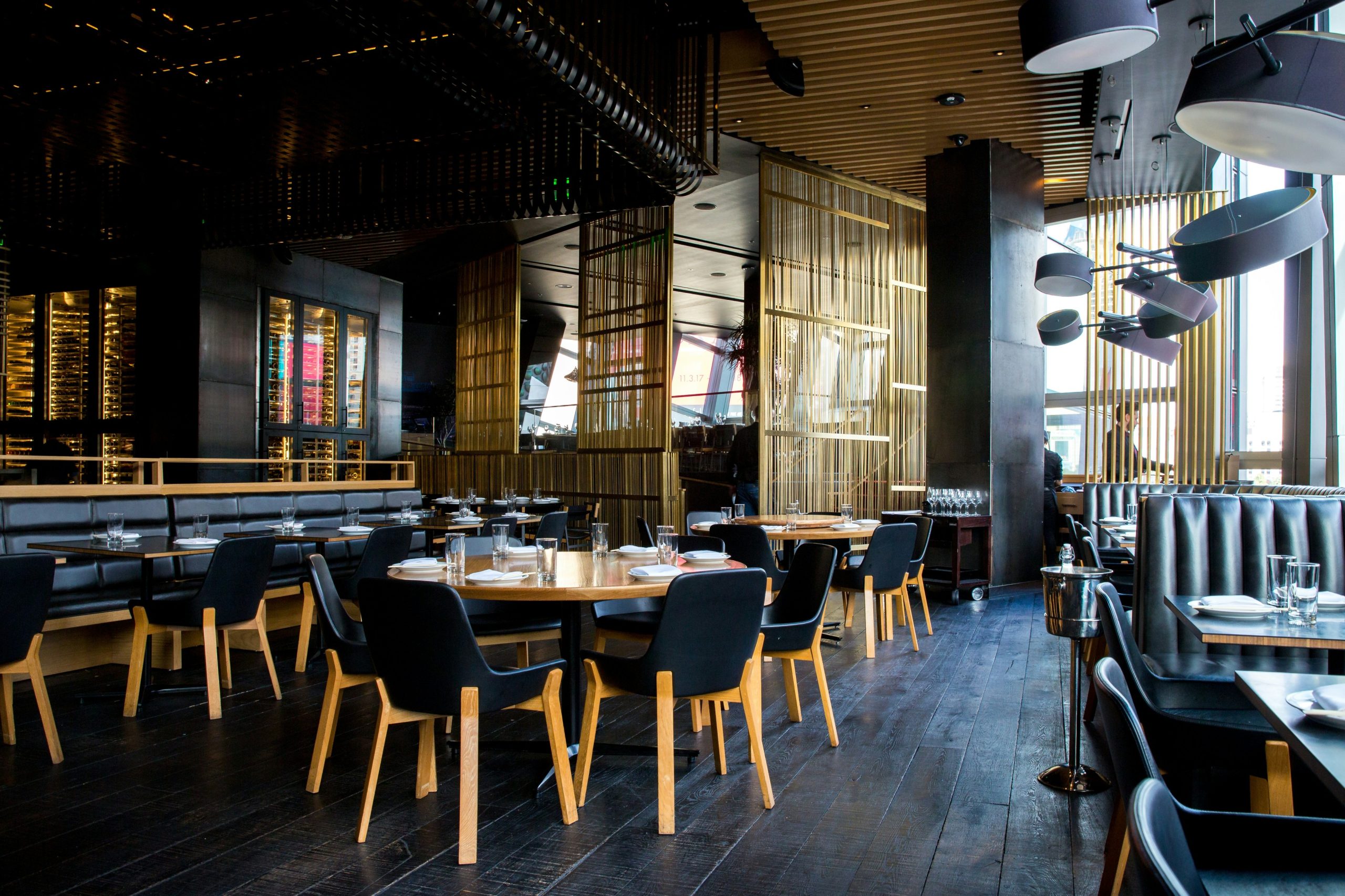
The space is purposefully designed to bridge indoor sophistication with the beauty of the surrounding desert, a design philosophy that acknowledges Henderson’s physical context rather than attempting to recreate a hermetically sealed casino-floor dining environment. This acknowledgment of place matters for neighborhood restaurants in ways that Strip dining rarely requires. Locals who will potentially visit Meril weekly or monthly notice design choices that feel locally rooted differently than tourists passing through once do.
The “whole spirit” of the concept, Lagasse said at the preview event, came from two drawings his daughter made as a young girl, which now hang on a wall past the restaurant’s entrance. This personal framing, unusual for a celebrity chef operating at Lagasse’s commercial scale, signals an intention to make Meril feel genuinely familial rather than branded. The distinction matters for neighborhood restaurants because repeat visitors develop relationships with spaces over time that one-time tourist diners never build.
The Henderson Opportunity
Henderson’s dining scene has matured significantly over the past decade. The city of roughly 330,000 residents, one of Nevada’s largest, has developed its own culinary identity through neighborhood restaurants that serve a population skewing toward affluent professionals and retirees with meaningful disposable income. The Green Valley area, the Water Street District, and the corridors around major suburban retail have all developed restaurant clusters that generate genuine local enthusiasm.
What Henderson has lacked, until Meril’s opening, is a nationally recognized celebrity chef concept operating specifically as a neighborhood restaurant rather than a suburban outpost of a Strip or downtown brand. The M Resort location provides the infrastructure and existing traffic that a standalone building in a Henderson strip mall wouldn’t generate, but the restaurant’s design, menu, and positioning aim at neighborhood residents rather than casino gamblers as the primary audience.
Meril represents the brightest and largest restaurant footprint within M Resort, suggesting that both the chef and the property view this as an anchor investment rather than a secondary concept filling space. This level of commitment distinguishes Meril from celebrity chef licensing arrangements where the brand appears on a restaurant without significant operational engagement from the named chef.
Lagasse’s hands-on involvement in the launch, appearing personally at both the ribbon-cutting preview on July 14 and the grand opening on July 16, reinforces this distinction. Celebrity chefs who license names without operational engagement typically don’t spend opening week personally present at their restaurants. Lagasse’s visible presence signals that Meril matters to him specifically and isn’t simply a revenue-generating brand extension managed from a distance.
What Three Las Vegas Restaurants Means
Operating three restaurants simultaneously in a single market, as Lagasse now does between Fish House, Delmonico, and Meril, creates both operational challenges and strategic advantages worth examining. The challenges involve management attention, staffing resources, and the risk of brand dilution if any of the three concepts underperforms while carrying the Lagasse name.
The strategic advantages are less obvious but potentially more significant. Each restaurant serves a different segment of the Las Vegas dining market. Fish House at MGM Grand targets casino-centric diners seeking familiar, New Orleans-inflected seafood in a resort context. Delmonico at The Venetian serves the premium steakhouse audience within one of the Strip’s most trafficked properties. And Meril at M Resort serves Henderson residents seeking neighborhood dining with culinary credibility.
This geographic and conceptual triangulation allows the Lagasse brand to maintain presence across the valley without the three concepts competing directly for the same diners. A Henderson family choosing Meril for a Sunday dinner isn’t making that choice at the expense of a Strip visit to Fish House or Delmonico. The audiences overlap minimally enough that three successful concepts can coexist without meaningful cannibalization.
The risk runs in the other direction: if Meril underperforms, the failure carries the Lagasse name in a market where he has also operated successfully for over three decades. Celebrity chef brands that stumble in high-visibility markets tend to carry those reputational consequences longer than individual restaurant closures might suggest. Lagasse’s decision to enter Henderson reflects confidence that the concept and the location can deliver at the level his existing Las Vegas reputation would demand.
Notes and Key Takeaways
For Restaurant Operators:
Meril’s Henderson positioning demonstrates that off-Strip celebrity chef investments can serve genuine local demand rather than simply representing overflow from tourist-focused strategy. The residential dining market in the greater Las Vegas valley has matured to the point where serious culinary investment can find sustainable audiences outside the casino corridor.
For Diners:
Meril at M Resort offers Henderson and southern valley residents access to a celebrity chef concept operating in a genuine neighborhood format, serving all-day dining from breakfast through dinner with a menu shaped by global influences rather than the New Orleans identity most associated with Lagasse’s public persona.
For Las Vegas:
Lagasse’s first off-Strip Las Vegas restaurant signals a meaningful geographic expansion of premium dining ambition beyond the tourist corridor. When a chef who has operated on the Strip for over thirty years opens his newest concept in Henderson specifically because local demand warrants it, the valley’s broader dining culture has clearly reached a new stage of maturity.
Important Insights:
The all-day dining format, open for breakfast, lunch, and dinner daily, differentiates Meril operationally from both of Lagasse’s Strip restaurants and positions it as a genuine neighborhood anchor capable of serving multiple meal occasions rather than a special-occasion destination visited infrequently.
M Resort’s $206 million new tower investment created the infrastructure and room inventory that made a serious celebrity chef partnership financially viable at a Henderson property that previously lacked the scale to attract this level of culinary investment. The tower and the restaurant represent complementary bets on the same underlying thesis: Henderson residents want resort-quality experiences without Strip travel.
The concept’s New Orleans roots, visible in beignets, bananas foster French toast, and boudin balls, provide familiar anchoring for diners who know Lagasse’s public identity, while the global-travel framework of the broader menu creates range that distinguishes Meril from simple brand extension of his existing concepts.
Penn Entertainment’s willingness to invest in a Lagasse partnership for M Resort reflects confidence that celebrity chef credibility remains a meaningful driver of restaurant traffic and property positioning even in off-Strip suburban markets, where the competitive dynamics differ fundamentally from the Strip’s constant visitor influx.
Lagasse’s three-restaurant Las Vegas portfolio now spans three distinct property types: a flagship MGM Grand casino, a premium Venetian retail and hospitality complex, and a Henderson resort serving a primarily local residential market. This diversity provides resilience against market fluctuations that affect any single segment while maintaining consistent brand presence across the valley.
The emphasis on personal meaning, the restaurant’s name, the daughter’s childhood drawings on the wall, the chef’s personal presence at opening events, suggests Meril is being positioned as a legacy concept rather than a commercial calculation. This framing tends to generate stronger local community connection than purely commercial positioning, which matters for neighborhood restaurants that depend on repeat local visitation rather than tourist novelty.