

A Homecoming at 6:45 PM
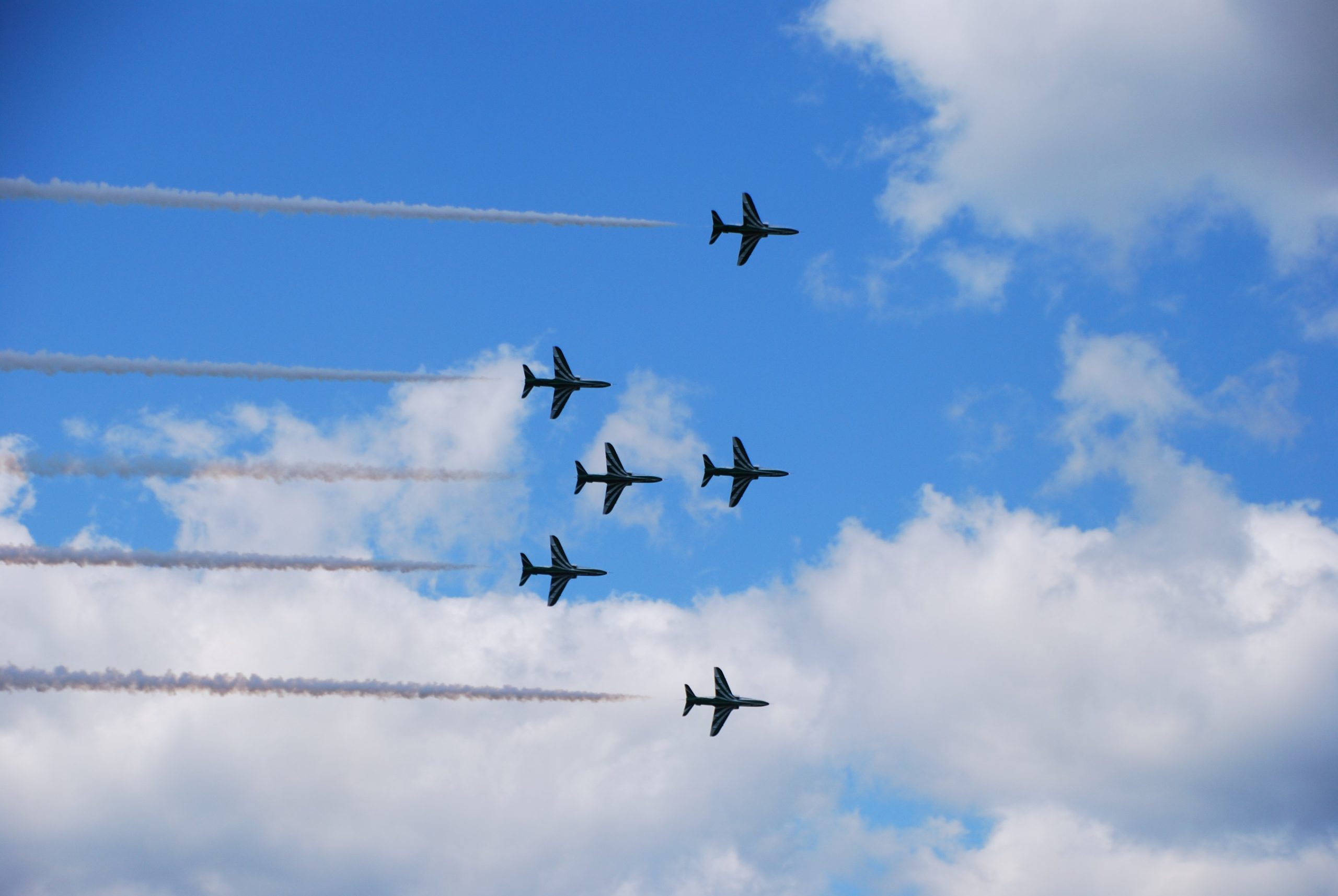
At 6:45 p.m. on Saturday, June 27, six F-16 Fighting Falcons lifted off from Nellis Air Force Base in a tight delta formation, painted red, white, and blue, and began threading through the Las Vegas Valley in a flight path that touched ten landmarks and neighborhoods before culminating above Hoover Dam. It was the first time the Thunderbirds had flown the full six-aircraft delta formation over their own hometown since 2020. For a unit known nationally as “America’s Team” and “America’s Ambassadors in Blue,” this wasn’t just another demonstration. It was a homecoming, deliberately timed to the nation’s 250th birthday and staged in explicit partnership with the Las Vegas Convention and Visitors Authority.
The flight path told its own story about what the LVCVA and the Air Force wanted Las Vegas to represent that evening. The jets flew over Las Vegas Ballpark, where they kicked off the seventh annual Battle for Vegas charity softball game between current and former Golden Knights and Raiders players. They passed over Red Rock Canyon and neighborhoods in Summerlin, visible above the Suncoast and the Strat. They flew past the “Welcome to Fabulous Las Vegas” sign, the city’s most recognized piece of cultural iconography. And they finished at Hoover Dam, where a 45,000-square-foot American flag and nightly patriotic lighting display has remained on view through July 4.
High winds forced organizers to keep the giant flag at Hoover Dam furled during Saturday’s flyover, with a makeup pass over the dam scheduled for the morning of June 30 as the Thunderbirds depart for Washington D.C. and the national Salute to America250 celebrations. Even the contingency plan reinforced the larger point: Las Vegas wasn’t just hosting a flyover. It was positioning itself as a meaningful stop on America’s 250th anniversary tour, with its own hometown squadron leading the way to the capital.
Why a Fighter Jet Squadron Calls Las Vegas Home
The Thunderbirds’ connection to Las Vegas isn’t incidental marketing. Nellis Air Force Base, located just northeast of the city, has served as the squadron’s home station since 1956. Generations of Las Vegas residents have grown up under the roar of Thunderbird training flights, watched air shows at Nellis, and developed a particular regional pride in claiming the demonstration team as their own in ways that few other American cities can claim a comparable military asset.
This relationship matters for how Las Vegas constructs its civic identity. The city’s national image runs overwhelmingly through entertainment, gambling, and tourism. Las Vegas Boulevard, casino marquees, and Strip spectacle dominate how most Americans encounter the city, even those who’ve never visited. The Thunderbirds represent a different register entirely: military precision, national service, and disciplined craft that has nothing to do with neon or nightlife.
Lt. Col. Alexander Prevendar, Thunderbird 1 Commander/Leader, framed the flyover specifically around this dual identity. “It’s an incredible honor for the Thunderbirds to fly over our hometown this weekend,” he said. “As America marks 250 years, we’re proud to celebrate alongside our community and reflect on the freedom, service, and unity that define who we are as a nation.” The statement positions Las Vegas not as a city that happens to host a military base, but as a hometown that the Thunderbirds claim with genuine pride, reflecting back onto Las Vegas a layer of civic identity built on service rather than spectacle.
The Operation Behind Six Jets
What spectators saw Saturday evening, six aircraft in disciplined formation, represented a small visible fraction of a substantially larger operation. Behind the Thunderbirds’ six pilots sits a 135-person ground team spanning 31 distinct career fields, the infrastructure that makes more than 30 flight demonstrations possible each year across the country. Maintenance crews, logistics coordinators, safety officers, and support personnel all travel and operate in service of those few minutes of aerial precision that civilians actually witness.
This operational scale matters for understanding what the Thunderbirds represent as a recruiting and public relations tool for the broader Air Force. Each demonstration serves multiple institutional purposes simultaneously: showcasing technical capability to international audiences, building domestic public support for military spending and presence, and creating recruiting moments for young Americans who might otherwise never consider military service. A hometown flyover tied to a national milestone anniversary maximizes all three objectives in a single, highly photographed event.
The choice to perform the full six-aircraft delta formation, rather than a smaller subset flying simpler patterns, signals how seriously both the Air Force and Las Vegas treated this particular event. Delta formation requires the highest level of coordination among the team, six aircraft in tight, disciplined alignment that demonstrates the squadron’s full technical capability rather than a scaled-down crowd-pleaser. Reserving this formation for a hometown appearance during a milestone national anniversary represents calculated symbolism, not routine programming.
The LVCVA’s Calculated Bet
Steve Hill, president and CEO of the Las Vegas Convention and Visitors Authority, made the strategic rationale explicit in his public statement: “Las Vegas is a city built on bringing people together for extraordinary experiences. The Thunderbirds are part of our community’s story, and their hometown flyover will create an unforgettable moment as we continue celebrating America’s 250th anniversary throughout Southern Nevada.”
This framing matters because it reveals how tourism officials think about events that don’t generate direct ticket revenue or hotel bookings in any conventional sense. A free public flyover doesn’t sell tickets. It doesn’t require visitors to book hotel rooms specifically to attend. What it does generate is something harder to measure but strategically valuable: a moment of genuine civic pride and media coverage that reframes Las Vegas’s national image, however briefly, away from gambling and toward patriotism, precision, and community.
The flyover anchors what the LVCVA describes as a summer-long America250 Nevada patriotic programming slate, including weekly fireworks displays continuing through July 25. This positions the Thunderbirds’ appearance not as an isolated event but as the marquee moment within a sustained civic campaign, one that uses the milestone anniversary as an opportunity to deepen Las Vegas’s association with American identity at a moment when the entire country is engaged in similar reflection.
For a tourism economy that depends heavily on visitors choosing Las Vegas over competing entertainment destinations, this kind of patriotic programming serves a function that’s easy to underestimate. It doesn’t compete directly with the Sphere or championship boxing for discretionary entertainment dollars. Instead, it builds a different kind of brand association, one that resonates with a segment of potential visitors, particularly domestic travelers from politically conservative regions of the country, who might otherwise view Las Vegas’s reputation for excess and gambling as a mismatch for their own values and self-image.
A City That Keeps Finding Reasons to Look Up
Saturday’s flyover joins a pattern that’s become increasingly visible in Las Vegas’s civic calendar: large-scale spectacle deployed for purposes beyond pure entertainment marketing. The city has spent recent years building entertainment infrastructure, the Sphere, expanded sports franchises, World Cup watch party programming, that exists primarily to drive tourism revenue. The Thunderbirds flyover operates on a different axis entirely, oriented toward civic identity and national belonging rather than direct economic capture.
This distinction matters because it suggests Las Vegas’s tourism leadership understands something subtle about how cities build durable reputations. Revenue-generating spectacle creates short-term visitor spikes. Identity-building spectacle, the kind that gets covered not just in travel sections but in national news coverage of America’s 250th anniversary, builds something more durable: a sense that Las Vegas belongs within the broader American story, not just as a tourist destination that exists somewhat apart from conventional American values, but as a genuine American hometown with its own claim on patriotic milestones.
The pairing with the Battle for Vegas charity softball game reinforces this community-oriented framing. Rather than staging the flyover as a standalone spectacle, organizers wove it into an existing charitable sports event featuring beloved local athletes, current and former Golden Knights and Raiders players competing for causes including the Candlelighters Childhood Cancer Foundation of Nevada and Cure 4 The Kids Foundation. The Thunderbirds didn’t just fly over Las Vegas. They flew over a community event already organized around local sports heroes and charitable giving, embedding the military spectacle within a thoroughly local, thoroughly civic context.
What the Photos Will Carry Forward
The images that emerged from Saturday’s flyover, jets crossing above the “Welcome to Fabulous Las Vegas” sign, the delta formation silhouetted against Red Rock Canyon, six Fighting Falcons passing the Suncoast and the Strat in Summerlin, will circulate well beyond the immediate weekend. Local news outlets captured extensive photo galleries. Social media amplified the moment across platforms. National coverage tied to America250 celebrations will likely reference the Las Vegas flyover as one component of a coast-to-coast patriotic programming wave.
These images carry forward a version of Las Vegas that exists in tension with, but not necessarily contradiction to, the city’s dominant entertainment identity. A photo of F-16s flying past the Strip’s most iconic welcome sign captures both halves of the city’s identity simultaneously: military precision and civic pride alongside the neon spectacle that draws 40 million annual visitors. For a city whose brand has always depended on layered meanings, the glamorous resort destination, the adult playground, the place where anything goes, this particular moment added another layer entirely: hometown to America’s most visible demonstration squadron, host to a milestone national celebration, a place that takes its claim on American identity seriously even while building its economy on spectacle and escape.
Notes for Stakeholders
The Thunderbirds’ America250 flyover offers insights for anyone working in destination marketing, civic branding, or major event programming:
Identity-building spectacle serves different strategic purposes than revenue-generating spectacle. Free public events tied to national milestones build durable brand associations that complement, rather than compete with, ticketed entertainment programming designed to capture direct tourism spending.
Existing institutional relationships provide authentic programming opportunities that paid sponsorships cannot replicate. The genuine, decades-long connection between Nellis Air Force Base and Las Vegas gave this event credibility that a purchased celebrity appearance or manufactured patriotic display would lack.
Embedding large-scale spectacle within existing community events strengthens local resonance. Pairing the flyover with the Battle for Vegas charity softball game grounded a major aerial demonstration in genuine local context rather than presenting it as an imported, standalone attraction.
National milestone moments create opportunities for cities to reframe external perception. America’s 250th anniversary gave Las Vegas a culturally legitimate occasion to emphasize patriotism and civic identity, themes that don’t naturally arise from the city’s typical entertainment marketing.
Weather contingency planning matters for outdoor spectacle programming. The decision to keep the Hoover Dam flag furled during high winds, with a makeup flyover scheduled days later, demonstrates the operational flexibility required when staging events dependent on aircraft and large-scale outdoor displays.
The View From the Ground
Spectators who gathered Saturday evening across ten different landmarks and neighborhoods experienced something Las Vegas rarely offers free of charge and free of any expectation that they spend money to participate: a shared civic moment, watched simultaneously by residents in Summerlin, visitors near the Strip, and families gathered at Hoover Dam, all looking up at the same six jets passing overhead in disciplined formation.
For a city whose economic model depends on transactional experiences, the show, the meal, the room, the table game, Saturday’s flyover offered something categorically different: a moment of shared witness that asked nothing of anyone beyond looking up. As America marks 250 years and Las Vegas continues building its own case for national relevance beyond entertainment, that distinction may matter more than any single tourism statistic the weekend generated.
Key Takeaways:
- The U.S. Air Force Thunderbirds performed their first full six-aircraft delta formation flyover over Las Vegas since 2020 on Saturday, June 27, 2026, as part of America’s 250th anniversary celebrations
- The flight path touched ten landmarks and neighborhoods across the Las Vegas Valley, including Las Vegas Ballpark, Red Rock Canyon, Summerlin, and the “Welcome to Fabulous Las Vegas” sign, culminating above Hoover Dam
- The event was organized in partnership between the Thunderbirds and the Las Vegas Convention and Visitors Authority, explicitly framed as a hometown celebration rather than a standard demonstration
- Nellis Air Force Base has served as the Thunderbirds’ home station since 1956, giving Las Vegas a genuine, decades-long institutional claim on the demonstration squadron
- High winds forced the 45,000-square-foot American flag at Hoover Dam to remain furled during the flyover, with a makeup pass scheduled for June 30 as the team departs for Washington D.C.
- The flyover anchored a summer-long America250 Nevada patriotic programming slate including weekly fireworks displays through July 25
- The event was paired with the seventh annual Battle for Vegas charity softball game, embedding the spectacle within an existing local charitable sports tradition
- A 135-person ground operation spanning 31 career fields supports the Thunderbirds’ six visible pilots, representing the broader institutional infrastructure behind each public demonstration
- LVCVA leadership framed the event as identity-building rather than directly revenue-generating, reinforcing Las Vegas’s claim to civic and patriotic relevance beyond its entertainment economy
- The flyover represents a broader pattern of Las Vegas using large-scale spectacle for civic identity purposes distinct from its typical tourism-revenue-driven event programming