

On January 8, 2026, Las Vegas city officials gathered at Wayne Bunker Park in the northwest valley to break ground on a 24-court pickleball complex, funded in part by a $12 million Bureau of Land Management grant. Deputy City Manager Rosa Cortez called it the largest facility of its kind in the city, designed to provide space for recreational use, tournaments, events, and more. It will bring the city’s total public court count past 35, with construction completed in early 2027.
Meanwhile, in Summerlin, a climate-controlled indoor facility called The Courts opened with eight regulation courts, a pro shop, integrated replay technology for analyzing your swing, and a dedicated coffee and snack bar described as the social heart of the club. Across town, a different operator is building a private membership model called The Pickleball Universe, charging $100 a month for daily reserved court access and a guest pass system priced at $15 per person. And a national franchise operation, Dill Dinkers, has announced plans for as many as 20 indoor locations across the valley, owned and franchised by a Las Vegas family betting that the city’s extreme heat and tourism volume make it an ideal market for climate-controlled, year-round pickleball infrastructure.
This is not a niche hobby quietly growing in the background. This is a genuine infrastructure buildout, public and private capital converging on a single sport, happening in a city that has spent the past several years also building speakeasies, dayclubs, and immersive nightlife districts. Pickleball’s explosion in Las Vegas deserves examination as a parallel social and entertainment economy developing alongside, and increasingly overlapping with, the traditional nightlife landscape we have documented throughout this series.
The Demographics Nobody Predicted
Pickleball has historically carried a reputation as a retiree’s sport, something played in active adult communities and recreation centers by an older demographic with time and modest athletic ambitions. That reputation is rapidly becoming outdated, and Las Vegas’s pickleball boom reflects a demographic base far broader than the stereotype suggests.
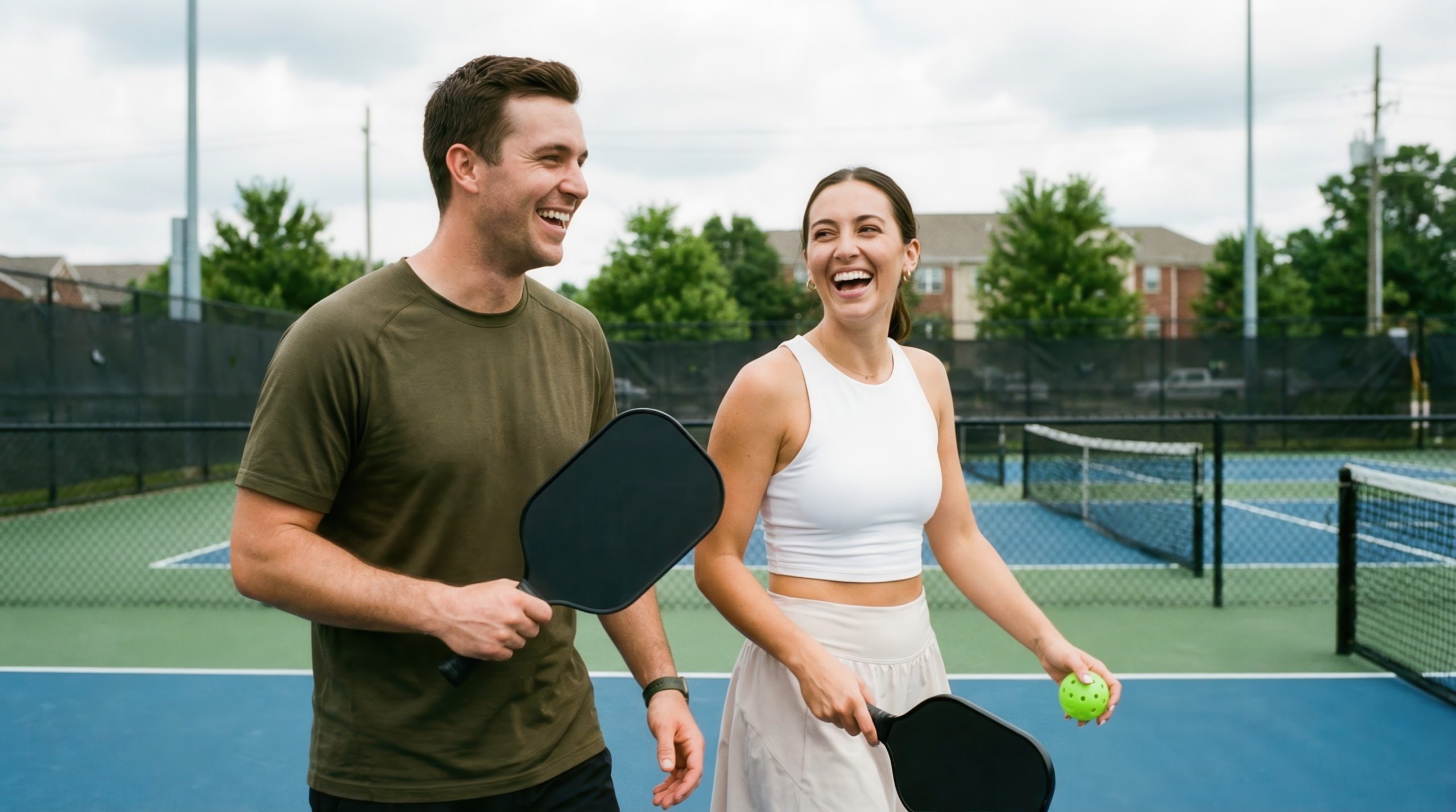
Councilwoman Francis Allen-Palenske, discussing the new Wayne Bunker Park facility, noted that the sport remains popular among seniors while also describing it as a beautiful combination of sports and leisure that appeals broadly. The social and leisure framing is doing real work here. Unlike traditional competitive sports that prioritize physical dominance and intensity, pickleball’s design, smaller court, underhand serve, less physically demanding rally structure, creates a genuinely mixed-ability, mixed-age social environment.
This matters enormously for how the sport functions as a social and entertainment category rather than purely as athletic recreation. A 25-year-old and a 65-year-old can play a genuinely competitive, enjoyable match together in ways that would be far less feasible in tennis, basketball, or most other recreational sports. This cross-generational accessibility expands pickleball’s addressable market dramatically beyond what a purely age-segmented activity could achieve.
The Silly Pickles league model, which operates across the country including in Las Vegas, leans explicitly into this social dimension. The company’s own marketing describes their format as active, social, and the kind of midweek plan that turns into post-game hangs without you even trying, explicitly positioning pickleball leagues as a vehicle for social connection and recurring social plans rather than just exercise. Their rotating partner format, where players are grouped with different people each week rather than locked into static teams, is specifically designed to maximize new social connections rather than just competitive consistency.
The Indoor Climate-Controlled Imperative
Las Vegas’s extreme summer heat creates a structural business opportunity that does not exist in most other pickleball markets, and the major capital investments flowing into indoor facilities reflect operators recognizing this specific local advantage.
Dill Dinkers co-founder Greg Louie explicitly identified climate-controlled, year-round courts as the company’s core value proposition for the Las Vegas market, noting that indoor locations are especially important given the area’s extreme summer heat. Outdoor public courts, including the ones being added at Wayne Bunker Park, remain valuable and heavily used, but they face months of the year when daytime play becomes genuinely dangerous due to heat, and even evening play requires careful timing.
This creates a market gap that indoor facility operators are racing to fill. The Courts in Summerlin and the various Dill Dinkers locations represent meaningful capital investment specifically because year-round, climate-controlled access solves a problem that purely outdoor public infrastructure cannot. A facility that can guarantee comfortable play in July as reliably as in January has a structural advantage that translates directly into membership and usage revenue that weather-dependent outdoor courts cannot capture during peak summer months.
This dynamic mirrors something we have observed throughout Las Vegas’s nightlife evolution: the premium placed on climate control and comfortable environments in a desert climate where outdoor experiences face genuine seasonal limitations. Just as rooftop nightclubs have faced structural challenges from extreme heat that we examined in Drai’s strategic retreat from its rooftop venue, outdoor recreational facilities face the same fundamental climate constraint that indoor, climate-controlled alternatives can solve.
The Membership Club Economics
The Pickleball Universe’s membership model, $100 monthly for daily reserved court access, unlimited challenge court play, and access to clinics and tournaments, represents a recognizable business structure borrowed from traditional country clubs and boutique fitness studios, applied to a sport that did not previously have this kind of premium membership infrastructure in most markets.
This membership approach creates predictable, recurring revenue that operators can use to justify facility investment and ongoing programming costs. It also creates the kind of customer lock-in and community-building that drives long-term loyalty. A member who has built friendships, established a regular playing schedule, and invested in skill development through clinics is far less likely to churn than a casual, pay-per-visit customer.
The guest pass structure, $15 per person for full-day access without membership benefits, allows the club to monetize non-member usage while maintaining a clear value distinction that incentivizes conversion to full membership. This pricing architecture mirrors strategies we have seen across other Las Vegas entertainment categories, including the tiered pricing models at major nightlife venues where base admission and premium membership-equivalent experiences, like bottle service tables, create multiple revenue tiers serving different customer commitment levels.
The Courts’ integration of a pro shop, coffee bar, and explicitly designated social space alongside the courts themselves reflects an understanding that successful pickleball facilities are not purely athletic infrastructure. They are social infrastructure that happens to include athletic facilities. This is conceptually similar to how successful nightlife venues throughout this series have succeeded not purely through music programming or alcohol service but through creating genuine social environments that guests want to spend time within beyond the specific activity ostensibly on offer.
Where Pickleball and Traditional Nightlife Intersect
The most interesting development in Las Vegas’s pickleball boom is not the sport itself but the ways it is beginning to converge with traditional nightlife and hospitality programming, echoing the wellness-nightlife crossover dynamics we examined extensively with LIV Beach’s Sunday Circuit and the Breath & Beats outdoor yoga format.
Silly Pickles explicitly builds social drinking and hangout culture into its league structure, describing post-game hangs and planned happy hours as core features of the experience rather than incidental afterthoughts. The company’s marketing language, with its casual, playful tone referencing Vegas culture directly, signals deliberate positioning of pickleball leagues as a genuine alternative or complement to traditional nightlife social activities rather than a purely separate athletic pursuit.
This convergence makes structural sense given what we have observed about generational shifts toward moderate alcohol consumption and fitness-oriented social activities throughout this series. A pickleball league that includes built-in happy hours offers younger demographics, particularly those embracing sober curious or moderate drinking lifestyles, a social outlet that centers physical activity and genuine skill-building rather than centering alcohol consumption, while still preserving the social bonding and casual drinking opportunities that traditional nightlife provides.
The franchise and club operators entering this space appear to understand this positioning clearly. Marketing language throughout the Las Vegas pickleball ecosystem consistently emphasizes community, connection, and social experience alongside athletic content, suggesting operators recognize they are competing for the same discretionary social time and spending that nightlife venues, wellness programming, and other social activities all compete for.
The Casino and Resort Opportunity
Notably absent, so far, from the major capital investment flowing into Las Vegas pickleball infrastructure is direct participation from the major Strip casino resorts that have driven so much of the innovation we have documented throughout this series. The investment to date has come from public city funding, independent boutique operators, and a national franchise chain, rather than from Caesars, MGM, Wynn, or the other major resort operators.
This represents either an overlooked opportunity or a deliberate strategic choice by resort operators who may view pickleball as insufficiently aligned with their premium nightlife and gaming-focused brand positioning. Given the sport’s broad demographic appeal and its proven ability to drive recurring, community-oriented engagement, the absence of major resort investment seems likely to be a temporary gap rather than a permanent strategic position.
Properties with significant underutilized outdoor or indoor space, parking structures, convention space during off-peak periods, or dormant retail footprints, could potentially incorporate pickleball facilities as a relatively low-capital-intensity amenity addition that serves both locals seeking accessible recreation and convention groups looking for team-building or social activities during their stay. The locals casino segment we examined through South Point’s spa renovation seems particularly well-positioned to consider this kind of investment, given the demographic and value alignment between locals casino customers and pickleball’s broad-based appeal.
If a major resort operator does enter this space with a branded, premium pickleball offering, expect it to validate the category at a different investment scale than what independent operators and city government have demonstrated so far, similar to how Tao Group’s Omnia Dayclub investment signaled institutional confidence in the broader dayclub category beyond what smaller-scale operators had previously proven.
What the Public Investment Signals
The Wayne Bunker Park project’s $12 million Bureau of Land Management grant funding represents a meaningfully different capital source than anything else we have examined throughout this nightlife and entertainment series. This is public infrastructure investment justified by genuine recreational demand and community benefit framing rather than private commercial venture seeking returns.
This public investment matters because it signals durability that pure private market enthusiasm cannot guarantee on its own. Government capital allocation processes typically require demonstrating sustained community demand and broad accessibility benefit before approving significant grants. The fact that Las Vegas secured federal funding specifically for pickleball infrastructure, while also expanding existing court inventory through other municipal projects like the recent Lorenzi Park additions, suggests the sport’s growth trajectory has convinced public officials this is durable infrastructure investment rather than a passing trend.
The neighborhood concerns raised during the approval process, residents worried about the constant noise of pickleballs pinging against paddles, also reveal something about how rapidly this infrastructure development is outpacing existing zoning and community planning frameworks built around more traditional recreational facility types. This friction, while resolved in this particular case, suggests municipal governments across the rapidly growing Las Vegas Valley will need to develop more systematic approaches to pickleball facility siting and noise mitigation as the sport’s footprint continues expanding.
Key Insights
Cross-generational accessibility distinguishes pickleball from most recreational sports, expanding its addressable social market by enabling genuinely competitive, enjoyable play between dramatically different age groups within the same activity. Climate-controlled indoor facility investment addresses a structural Las Vegas-specific market gap created by extreme summer heat, creating year-round revenue capture that purely outdoor public infrastructure cannot achieve during peak season months.
Membership-based club economics applied to pickleball borrow proven recurring revenue and customer retention models from traditional country clubs and boutique fitness studios, creating predictable revenue streams that justify ongoing facility investment and community programming. Deliberate integration of social drinking culture and happy hour programming into pickleball league structures positions the sport as a genuine alternative social outlet for demographics embracing moderate alcohol consumption while preserving core social bonding functions traditional nightlife provides.
Major Strip casino resort absence from current pickleball infrastructure investment likely represents a temporary gap rather than permanent strategic position, given the demonstrated demographic appeal and community engagement potential the sport offers. Public infrastructure investment, including federal grant funding, signals government confidence in sustained long-term demand that validates the category’s durability beyond purely private market enthusiasm.
A Closing Thought on Category Convergence
What makes Las Vegas’s pickleball boom worth tracking within a series otherwise focused on nightclubs, dayclubs, and Strip resort programming is precisely how thoroughly it resists categorization within traditional entertainment industry frameworks. It is simultaneously athletic recreation, social club infrastructure, wellness programming, and increasingly, through leagues that build in happy hours and post-game hangs, a genuine competitor for the same discretionary evening social time that traditional nightlife venues have always assumed they owned outright.
The operators succeeding in this space, whether running a $12 million public complex, a boutique membership club, or a casual happy-hour-infused league, understand something that the most successful nightlife operators throughout this series have also understood: people are not just purchasing an activity. They are purchasing a community, a recurring reason to leave the house, and a setting where genuine social connection happens as a byproduct of doing something together. Pickleball, against most expectations, has become one of Las Vegas’s most effective vehicles for delivering exactly that.