


On September 14, The Boring Company posted two sentences on X that managed to be both understated and significant: “Vegas Loop is getting bigger – the station count will double by end of year! Urgently hiring exceptional and enthusiastic Drivers and Ops Managers.”
That announcement, paired with confirmed construction details from LVCVA CEO Steve Hill and on-the-ground reporting from multiple Las Vegas outlets this week, means the underground transportation system that most Strip visitors haven’t thought about is about to become impossible to ignore.
The Vegas Loop currently operates 14 stations, shuttling passengers in Tesla vehicles through tunnels that run beneath the convention center campus and extend to a handful of Strip resorts including Resorts World, Encore, Fontainebleau, and the Sahara. The Boring Company’s own project page lists 28 stations as the target for end of 2026. That’s not aspirational. Multiple tunnels are already built and waiting on final permitting and operational preparation to open.
The most immediate expansion, confirmed by Hill as weeks away, runs just over two miles of dual tunnels under Paradise Road between Westgate Las Vegas and a new station at 4744 Paradise Road. Opening that corridor in stages also opens new stations at Virgin Hotels Las Vegas and at the former Gordon Biersch brewery site near Paradise and Tropicana. Beyond airport access, those stops serve a specific and urgent purpose: the Las Vegas Grand Prix is ten weeks away, and the Loop’s expanded reach directly serves two of the race’s most heavily trafficked zones.
What the New Stations Actually Do
Understanding why the new station locations matter requires a quick geography lesson.
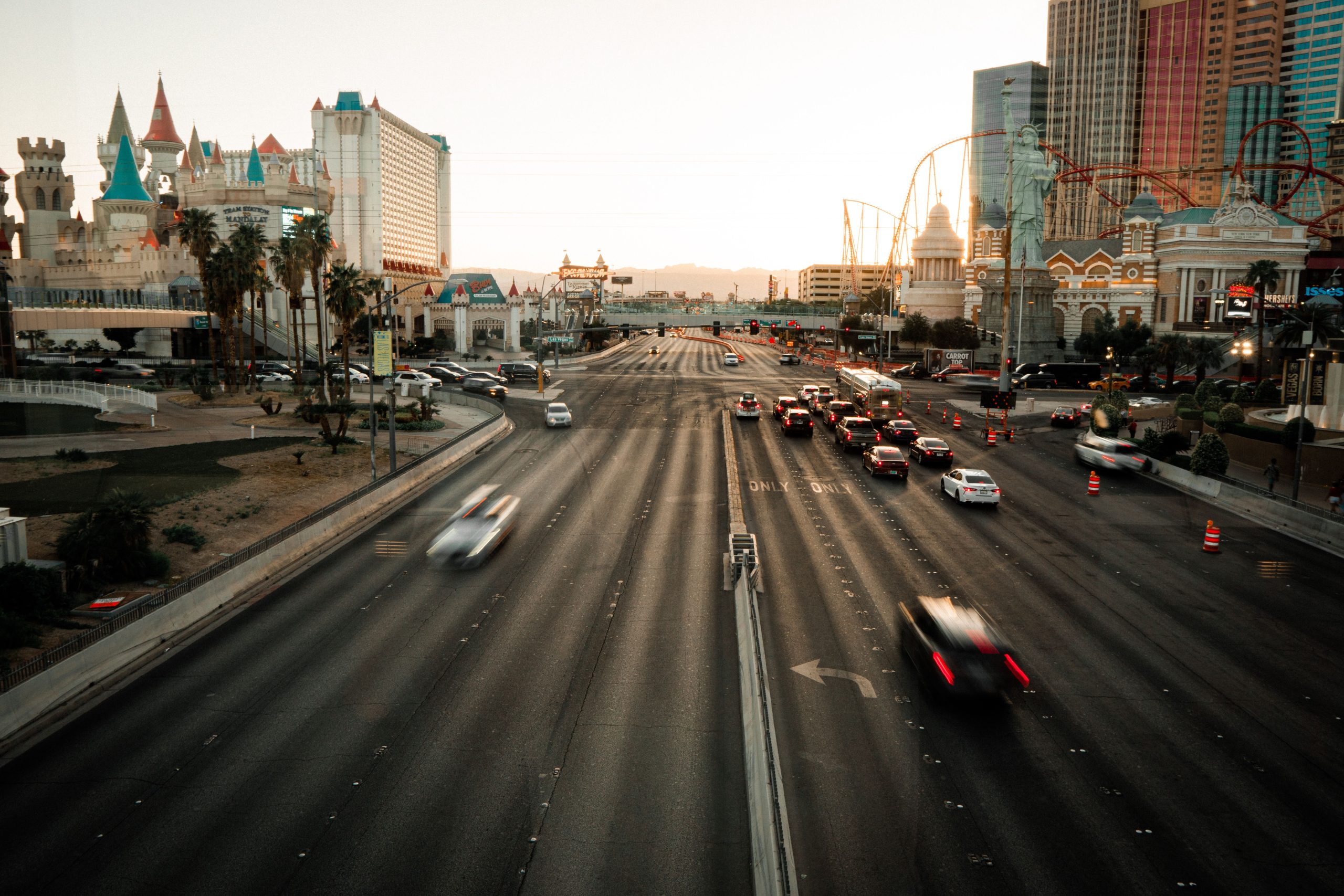
The Virgin Hotels station sits in a position that can absorb fans heading to Grand Prix Plaza and the pit building spectator zones. The Gordon Biersch site, located just behind the Sphere, serves the T-Mobile fan zone and the race’s main concert stage. Both locations become functionally important during Grand Prix weekend when the circuit’s footprint across public roads turns the Strip’s normal pedestrian and vehicle infrastructure into a logistical challenge for hundreds of thousands of attendees trying to move between their hotels and the race venues.
Any transportation option that moves people underground, beneath the closed streets, during Grand Prix weekend solves a problem that has vexed event organizers since the first race in 2023. The Loop doesn’t compete with street traffic during a race weekend because it runs where there is no street traffic to compete with. It runs underneath it.
The 4744 Paradise Road station serves a different function initially: as an enhanced connection to Harry Reid International Airport. The Loop’s promised airport connector, which has been in various stages of development since late 2025, remains the system’s most consequential planned addition. When it eventually opens fully, the system could handle between 17,000 and 20,000 passengers per hour to and from the airport, according to projections from Boring Company leadership. That would represent a fundamental shift in how visitors arrive and distribute across the Strip corridor.
The Current Scale Is Already Impressive
Here’s a number that doesn’t get nearly enough attention in discussions of the Loop’s significance: on busy convention days, the system already moves approximately 40,000 passengers. That total surpasses the ridership of most American light rail systems, according to Boring Company executive Mike Baier, despite running on a fraction of the planned tunnel mileage.
40,000 passengers is not a novelty statistic. It’s a transit system performing at meaningful scale, in a format that most transportation planners would have considered implausible for the investment level involved. The tunnel boring costs that made the Vegas Loop financially feasible, significantly lower than conventional subway construction due to the Boring Company’s smaller tunnel diameter and drilling methodology, are why the math worked when traditional fixed-rail transit couldn’t pencil out.
The hiring push The Boring Company announced alongside the station doubling announcement, urgently seeking Loop drivers and a senior operations manager in Las Vegas, signals that the expansion isn’t just physical. More stations require more operational capacity, more drivers running the Tesla fleet through expanded tunnel networks, and more management infrastructure to coordinate a system that is growing faster than most transit operators scale.
Why the Airport Connection Keeps Slipping
The airport connector has been the Loop’s perpetually almost-ready extension since the Boring Company’s president first described it as targeting early 2026 in late 2025. As of mid-September 2026, it remains in the process of completing regulatory requirements with the Clark County Department of Aviation.
The AVI permitting process, which involves documentation review, insurance verification, and coordination across multiple regulatory bodies, isn’t moving unusually slowly by infrastructure standards. But the airport connector’s importance to the overall Loop system means every month of delay extends the period during which Las Vegas’s primary transportation gateway remains disconnected from the tunnel network beneath the city.
When the airport connector does open, the system dynamics change substantially. Visitors arriving at Harry Reid International currently face the same transportation options as any other American city’s airport: taxis, rideshares, rental cars, or the regional bus system. The Loop would add a fourth option that combines speed, convenience, and fixed pricing in a package that would be genuinely attractive for visitors already oriented toward the Strip corridor where most Loop stations are concentrated.
The ridership multiplier from airport access isn’t speculative. Convention visitors and leisure travelers who arrive at the airport knowing the Loop connects them directly to their hotel are the core user base the system needs to scale toward the ambitious 123-station, 68-mile network the Boring Company has sketched for Las Vegas’s long-term future.
The Royal Resort Demolition Context
Tuesday’s demolition of the Royal Resort on Convention Center Drive, which turned a two-story property near the Loop’s existing infrastructure into a pile of rubble, provides a useful context for the Loop’s expansion geography.
The Convention Center Drive corridor, which connects the Strip’s main casino resort zone to the convention campus that anchors so much of Las Vegas’s business travel economy, is the Loop’s operational core. The demolition of older, lower-density properties along that corridor and nearby Paradise Road suggests ongoing development pressure that tends to accompany infrastructure investment. When transit connectivity improves, adjacent land values respond.
Whether that connection is causal or coincidental in Las Vegas’s specific case is a question for urban economists. What’s clear is that the Loop’s expansion into Paradise Road coincides with active development and redevelopment activity along the corridor it’s expanding into.
What Doubling Means for Las Vegas Transportation
From 14 to 28 stations by December 31, 2026. That’s the commitment, backed by tunnels that are physically built and a hiring push that reflects operational rather than construction urgency.
In practical terms, doubling the station count means the Loop evolves from a useful curiosity that convention attendees use between the convention center and nearby resorts into a legitimately functional transportation network that covers enough of the core Las Vegas visitor geography to become a default option rather than a niche one.
The Grand Prix serves as the most immediate test. Two of the new stations serve Grand Prix spectator zones directly, and the race’s Friday and Saturday night timing, when 60,000-plus attendees are attempting to move through a street circuit that has closed the normal road network, creates exactly the transportation demand the Loop is positioned to absorb.
If the Loop performs well during Grand Prix weekend, moving meaningful volumes of race fans through the expanded network without operational failures, the event becomes the system’s highest-profile proof of concept since the convention business first demonstrated its capacity during packed trade show periods.
Elon Musk posted “Boring away” in July alongside an underground photo. The hiring notice came September 14. The new stations are weeks from opening. All of it points toward a year-end that looks materially different for Las Vegas transportation than the start of 2026 did.
Key Insights
The Vegas Loop’s existing 40,000-passenger busy-day ridership, exceeding most American light rail systems despite running on a fraction of planned mileage, demonstrates that the tunnel transportation model is producing real utility at scale rather than remaining an expensive novelty waiting for critical mass.
The strategic placement of new stations at the Gordon Biersch and Virgin Hotels sites, directly serving the Formula One Grand Prix’s main fan zones, positions the Loop’s expansion timeline to coincide with the year’s highest-demand transportation test case, providing the most visible proof-of-concept opportunity since the system opened.
The airport connector’s ongoing regulatory completion represents the most consequential pending milestone for the system’s long-term ridership trajectory, with Boring Company projections of 17,000 to 20,000 passengers per hour providing the scale that would convert the Loop from a Strip-adjacent convenience into a genuinely citywide transportation asset.
Doubling from 14 to 28 stations requires proportional operational scaling, and the urgency in The Boring Company’s hiring push signals that the constraint on expansion has shifted from tunnel construction to workforce and operational capacity, a characteristic of systems transitioning from infrastructure buildout to service delivery maturity.
Sources
Las Vegas Review-Journal Vegas Loop Expansion
FOX5 Vegas Boring Company Expansion
TeslaNorth Station Doubling Announcement
Teslarati Boring Company Year-End Plans
Las Vegas Review-Journal Airport Plans