



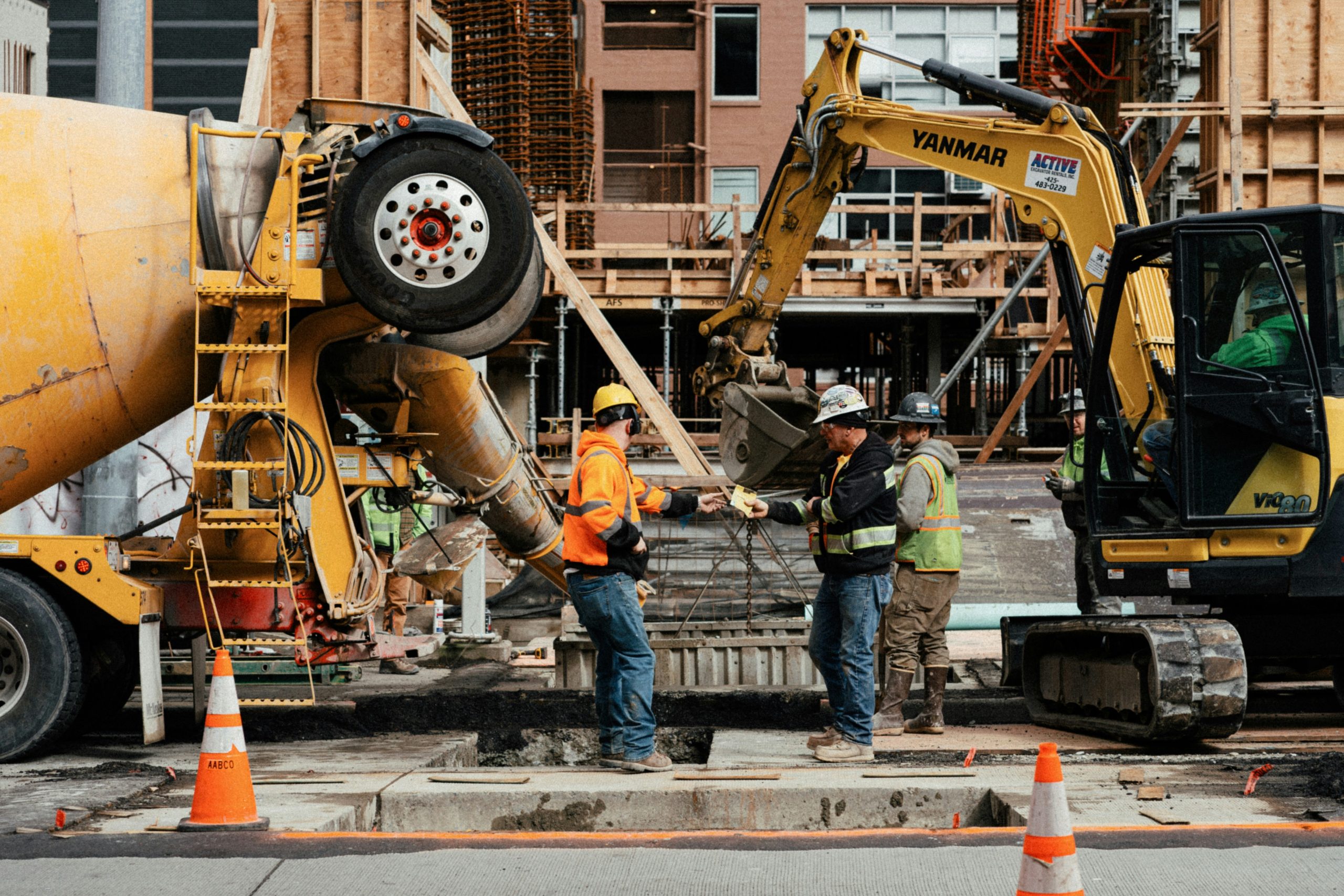
Two narratives exist simultaneously inside the Las Vegas housing market in the summer of 2026, and they are almost perfectly contradictory. Existing home prices sit at an all-time record of $490,000 for the second consecutive month. Sales volume of existing homes rose 18.3 percent year over year in June. The market, measured by the resale segment that gets the most media coverage, looks strong by almost any metric.
Then there is the new construction market, which tells a story so different it almost requires a separate mental model to process. Las Vegas homebuilders reached the halfway point of 2026 with what Home Builders Research, the Las Vegas-based housing analysis firm that tracks the new construction market most closely, called a sharp drop in sales and construction plans from a year earlier.
Builders landed 4,284 net home sales, newly signed contracts minus cancellations, through June in Southern Nevada, down 15 percent from the same six-month period in 2025. They pulled 4,156 new-home permits during the first half of the year, down 25 percent from the same stretch in 2025. And they closed 4,044 home sales through June, down 22 percent from the same period last year.
These are not rounding-error differences. A 25 percent collapse in permit activity at the halfway point of the year represents a real and sustained reduction in the construction pipeline that will shape housing supply, employment in the building trades, and price dynamics across the Las Vegas Valley for years beyond 2026 itself.
A Year-Long Decline Becoming a Structural Story
The first-half 2026 numbers reported this week are the culmination of a deteriorating trend that has been visible in Home Builders Research’s monthly reports throughout the year. February’s data marked the lowest February sales tally in a decade. March produced the lowest March sales total since 2015. May’s 642 net home sales was the lowest monthly total of the year and down 28 percent from May 2025, the same month the Strip was posting its eighth-best gaming revenue in history.
The April data provided a brief interruption to the pattern, with builders landing 830 net sales, up 8.4 percent from April 2025 and described by Home Builders Research President Andrew Smith as “a bright spot, given overall market conditions and sentiment.” But May’s reversal erased the optimism that April had generated, and the full first-half picture confirms that a single encouraging month was not the beginning of a recovery.
Permit activity has declined even more sharply than sales, which carries forward-looking implications. Permits precede construction, which precedes closings by several months. When builders pull 25 percent fewer permits in the first half of 2026 than in the first half of 2025, they are communicating their expectation that demand conditions over the next six to twelve months will not support the construction pipeline they were running a year ago. Permits are a bet on the future, and Las Vegas builders are currently placing significantly more conservative bets than they were placing twelve months ago.
May’s 627 permit pulls, down 42 percent from May 2025, was particularly stark. A 42 percent year-over-year decline in a single month is not normal market volatility. It reflects builders making a deliberate decision to slow their construction starts sharply rather than build homes that might sit unsold in a market where buyer demand has weakened.
Why Buyers Are Pulling Back
The pressures dampening new home demand in Las Vegas converge from several directions simultaneously, and untangling which factor is most significant is genuinely difficult because they are mutually reinforcing.
Mortgage rates remain the most universally cited obstacle. Rates have remained stubbornly above 6.5 percent for most of 2026, far above the 2.5 to 3.5 percent range where many existing homeowners refinanced during 2020 and 2021. For a first-time buyer or a move-up buyer who needs financing to make a purchase work, the monthly payment on a new home at current prices and current rates is dramatically higher than it would have been three or four years ago. National Association of Home Builders data showed builder confidence below a specific threshold for 14 consecutive months entering 2026, a streak not seen since the 2011 to 2012 foreclosure crisis period, underscoring that Las Vegas’s struggles are not idiosyncratic but part of a nationwide new construction softness.
At the same time, the Las Vegas new home median closing price actually fell year over year in several 2026 months. May’s median closing price of $518,990 was down 2.4 percent from May 2025. March’s median of $502,990 was down 5.1 percent from March 2025. These price concessions, modest in percentage terms but meaningful in dollar terms on homes in the $500,000 range, reflect builders making the calculation that reducing prices is preferable to accumulating unsold standing inventory.
Builders have also deployed extensive incentive programs beyond price cuts. Nearly two-thirds of Las Vegas builders are actively offering sales incentives to move finished and near-finished inventory, according to industry analysis from earlier in the year. Rate buydowns, where builders pay upfront points to reduce the buyer’s effective mortgage rate for the first years of the loan, have become standard practice. Closing cost contributions, appliance packages, and lot premium waivers represent additional tools in the builder incentive toolkit.
These incentives work, somewhat. They help convert fence-sitters who find the standard purchase economics too challenging but who can be pushed over the line by a meaningful buydown that makes the monthly payment more manageable. But they compress builder margins significantly, and they are only effective as long as builders can afford to absorb the cost of incentives while managing their own construction financing obligations.
Construction debt creates its own urgency. A standing finished home that a builder cannot sell is accruing carrying costs daily, including interest on construction loans, property taxes, insurance, and maintenance. The financial incentive to move that inventory at a thinner margin, rather than hold out for a buyer willing to pay full price, grows stronger the longer the home sits. This dynamic partially explains the declining median closing prices alongside declining permit activity: builders are simultaneously cutting prices on existing inventory while restraining new starts, a rational response to the combination of weak demand and rising carrying cost pressure.
The Tariff Effect No One is Fully Quantifying
National homebuilder executives and industry analysts have specifically identified tariff uncertainty as a factor complicating new construction economics in 2026. While the full impact of tariff changes on construction materials remains somewhat diffuse and difficult to isolate from other cost pressures, the direction of the effect is clear: uncertainty about materials costs makes it harder to price homes confidently, which makes it harder to write contracts that protect builder margins adequately.
Lumber, steel, aluminum, and a range of appliances and fixtures involve cross-border supply chains affected by tariff changes. When a builder signs a sales contract with a buyer, they are essentially writing a fixed-price option on a house that will take months to construct using materials whose costs are uncertain. Managing that cost uncertainty has historically required either building in large contingency buffers, which makes prices less competitive, or accepting more cost risk, which compresses margins further if input costs rise.
Bill Owens, chairman of the National Association of Home Builders, noted in a recent statement that elevated mortgage rates, affordability challenges, and cautious buyers “continue to weigh on demand for new homes,” while builders are offering incentives and cutting prices but still finding that “difficult market conditions are still limiting sustained momentum for new construction.” His framing puts buyer affordability at the center of the problem, with builder cost pressures as a compounding factor rather than the primary driver.
The Divergence From the Resale Market
The contrast between new construction’s distress and the resale market’s record prices is not as paradoxical as it initially appears, though it requires understanding how the two market segments serve different buyer populations and compete with each other under different economic conditions.
Resale homes in the $490,000 median range compete primarily with other resale homes. The buyers in that market are disproportionately move-up buyers trading one existing home for another, cash buyers relocating from higher-cost markets, and investors. Many of these buyers are less sensitive to mortgage rates because they are either cash buyers, equity-rich move-up buyers with substantial down payments from appreciated prior homes, or high-income professionals for whom the monthly payment, even at elevated rates, represents a manageable fraction of household income.
New construction homes, priced at a median closing price of roughly $519,000 in May, compete in a similar price range but attract a different buyer mix. New homes traditionally appeal strongly to first-time buyers who value warranties, modern features, and the absence of deferred maintenance, and to move-up buyers who want customization options unavailable in the resale market. These buyers tend to be more mortgage-dependent and therefore more rate-sensitive than the cash-heavy migration buyers driving resale market strength.
The 204 luxury sales above $1 million in the resale market during June, a figure that increased from May, tells you something about where the sustained demand is concentrated. Those buyers are not particularly active in the production builder new home market. The resale luxury market and the new production home market serve largely non-overlapping populations, which is why both can show dramatically different trend lines simultaneously without contradiction.
What This Means for Future Supply and Prices
The 25 percent decline in permit activity during the first half of 2026 will shape Las Vegas housing supply with a 12 to 18 month lag. Homes permitted in the second half of 2025 are reaching completion and listing now. Homes that were not permitted in the first half of 2026 will not be available for purchase in late 2026 or early 2027. This supply reduction, already locked in by builder decisions made months ago, provides a mechanical floor under both new and existing home prices looking ahead.
If demand conditions improve in late 2026 or early 2027, whether through mortgage rate declines, wage growth that restores affordability at current prices, or continued high-net-worth in-migration, the reduced construction pipeline means supply will not expand quickly to meet that recovering demand. The normal market mechanism, where rising prices attract more construction which eventually moderates price growth, is operating with a longer lag than usual because builders have already throttled back their pipelines in response to current conditions.
Conversely, if demand conditions deteriorate further, the reduced construction activity limits the inventory overhang that would otherwise put more severe downward pressure on prices. Builders who have already cut their pipeline have reduced their own exposure to a scenario where they are forced to close homes into a declining price environment.
For the Las Vegas building trades workforce, the declining permit and sales activity is more immediately consequential than the abstract supply-demand dynamics. Construction employment in Southern Nevada tracks permit activity with a lag. Carpenters, electricians, plumbers, roofers, and the dozens of other skilled trades that build homes have seen reduced workloads through 2026 relative to 2025. The 25 percent decline in first-half permits does not translate to a proportional decline in employment because backlog from prior permit activity sustains work for some time, but the employment implications are real and will become more visible in the second half of 2026 as the reduced permit pipeline flows through to construction activity.
Where Builders Are Finding Relative Strength
Not all Las Vegas submarket segments are experiencing equal softness. Home Builders Research and broader market data point to several pockets of relative resilience.
Summerlin continues attracting buyers willing to pay premium prices for established community quality, proximity to Red Rock Canyon, and the amenity density that Howard Hughes Holdings has built over decades. New product in Summerlin, including Richmond American’s Primme Park offering homes from $1.1 million to $1.2 million, has found enough demand to move forward despite the broader market softness, reflecting the same premium-market resilience visible in the resale segment.
The northwest Las Vegas Valley, where communities like Sunstone are actively under construction, continues drawing buyers who prioritize newer product and more space for their price point relative to established neighborhoods closer to the Strip and downtown. This growth area benefits from relatively more affordable land costs that allow builders to offer more competitive price points on larger homes than urban-adjacent locations permit.
The Lake Las Vegas community, a master-planned lakefront resort community east of Henderson, has seen continued luxury new home activity including a recently launched 54-home luxury development. The niche appeal of lake-adjacent living in a desert environment, along with proximity to Henderson employment and the Strip, sustains buyer interest in a format that does not compete directly with production builder communities.
Key Takeaways
- Las Vegas homebuilders landed 4,284 net home sales through June 2026, down 15 percent from the same six-month period in 2025
- Builders pulled 4,156 new-home permits in the first half of 2026, down 25 percent from the same period in 2025, a forward-looking indicator of future supply constraints
- Builders closed 4,044 home sales through June 2026, down 22 percent from the same period in 2025
- May 2026 produced 642 net home sales, the lowest monthly total of the year, down 28 percent from May 2025
- May permits fell 42 percent year over year to 627, a particularly sharp single-month decline reflecting deliberate builder restraint
- The new home median closing price fell year over year in multiple 2026 months, with May at $518,990, down 2.4 percent from May 2025
- Nearly two-thirds of Las Vegas builders are actively offering sales incentives including rate buydowns, closing cost contributions, and price reductions
- Builder confidence nationally has remained below a specific threshold for 14 consecutive months, the longest such streak since the 2011 to 2012 foreclosure crisis period
Important Insights
The divergence between new construction distress and resale market record prices is the defining structural feature of the Las Vegas housing market in mid-2026 and deserves more analytical attention than it typically receives in coverage that aggregates both segments under a single “Las Vegas housing market” headline. The two segments serve different buyer populations with different financing profiles, respond to different economic stimuli, and are tracking in genuinely opposite directions simultaneously.
Permit activity is a more reliable leading indicator of future housing supply and price dynamics than either current prices or current sales volumes. The 25 percent decline in first-half permits has already determined that new home completions will be meaningfully lower in late 2026 and early 2027 than they were a year earlier. Whatever happens to demand in that period, supply will be tighter than it would have been if builders had maintained their 2025 construction pace. This mechanical supply constraint provides a partial floor under prices across both new and resale segments looking ahead.
Builder incentive programs represent a form of hidden price reduction that official median closing price statistics understate. A home that closes at $519,000 but includes a two-point rate buydown worth $10,000 to $15,000, a $5,000 closing cost contribution, and $8,000 in appliance packages is effectively closing at roughly $500,000 in economic terms even if the contract price appears higher. This means the effective price correction in the new home market is larger than the nominal median closing price declines suggest.
The intersection of reduced permit activity and the pending privatization of Caesars and MGM deserves consideration. Large Strip operators are significant indirect drivers of Las Vegas housing demand through their employment base. If private ownership of the Strip’s two largest operators produces investment in property improvements and workforce expansion, it would support housing demand. If it produces cost-cutting and workforce reduction to manage debt service on the $30-plus billion in combined transaction debt, it could suppress local housing demand from the middle-income households who work in casino operations.
The building trades workforce impact of declining permit activity is a community economic story that gets substantially less attention than price and volume data but affects more Las Vegas households directly. Construction employment is among the highest-paying work available to workers without college degrees in Southern Nevada. Sustained declines in permit activity that reduce construction employment ripple through spending, retail sales, school enrollment, and local tax collections in ways that aggregate housing statistics do not capture.
For Las Vegas new home construction data, visit Home Builders Research. For broader Las Vegas housing market statistics, visit Las Vegas Realtors and Southern Nevada Home Builders Association.