

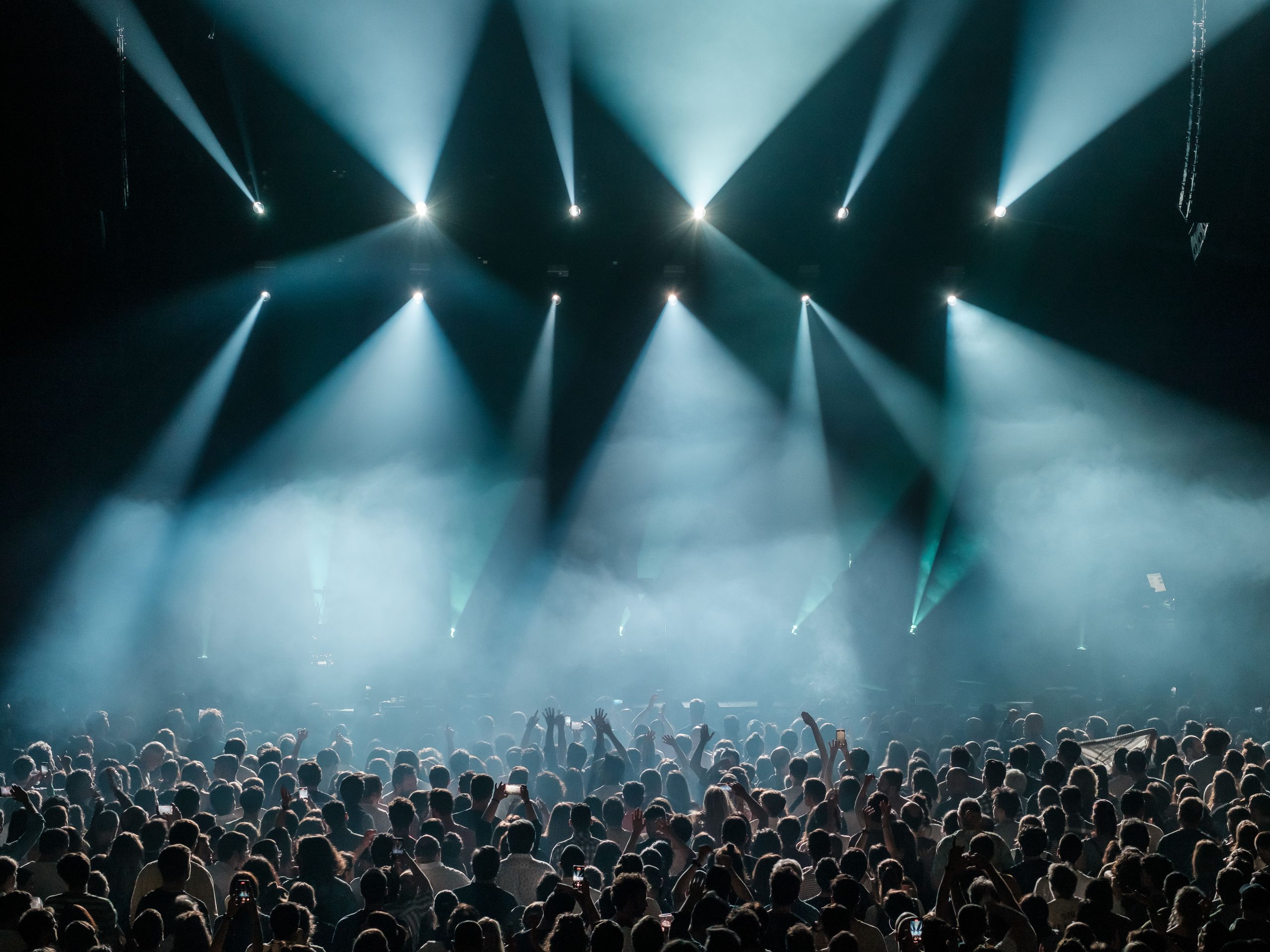
On September 18 and 19, 2026, T-Mobile Arena hosts the iHeartRadio Music Festival Presented by Capital One. The lineup reads like a programming executive’s attempt to represent every genre simultaneously: BTS, Cardi B, Goo Goo Dolls, Kenny Chesney, Weezer, and Zara Larsson on Friday; Benson Boone, Lainey Wilson, LE SSERAFIM, Major Lazer, Muse, and Snoop Dogg on Saturday. Hosted by Ryan Seacrest. Streaming on Disney+ and Hulu. Presented by Capital One. Opening acts include a private Weezer performance for Capital One cardholders.
This lineup is not an accident of availability or a failure of curation. It is the exact product that iHeartRadio has been deliberately building for fifteen years: a genre-agnostic festival that mirrors the programming breadth of terrestrial radio rather than the taste specificity of any particular musical community. Understanding what this format is designed to accomplish, and why it keeps working, requires looking at iHeartRadio’s position in the entertainment economy rather than at the individual artists on the bill.
What iHeartRadio Actually Is
iHeartMedia operates more than 860 radio stations in 160 markets across the United States, making it the largest radio station group in the country by a significant margin. These stations program across every mainstream format: pop, hip-hop, country, adult contemporary, rock, and the various genre blends that serve specific regional demographic profiles.
The iHeartRadio Music Festival is the physical expression of this radio portfolio. Each night’s lineup corresponds roughly to the range of formats that iHeartMedia’s stations program nationally. BTS and LE SSERAFIM serve the K-pop and global pop audience. Cardi B and Snoop Dogg serve hip-hop. Kenny Chesney and Lainey Wilson serve country. Weezer, Muse, and the Goo Goo Dolls serve rock and alternative. Benson Boone and Zara Larsson serve pop crossover. Major Lazer serves electronic and dance.
A listener who follows iHeartMedia’s radio stations across formats would recognize most of these names as artists they hear regularly depending on which stations they tune to. The festival is not programming for a specific musical community. It is programming for the iHeartMedia listener base as an aggregate, which means programming for anyone who consumes mainstream radio in America.
This demographic is enormous and economically diverse. It includes teenagers who follow K-pop, adults in their forties who primarily listen to country, college students who mix hip-hop and alternative, and every segment in between. No genre-specific festival can access this aggregate because genre-specific festivals, by definition, self-select to a community rather than programming across all of them simultaneously.
The Awards Show Format and Why It Works in Las Vegas
Unlike outdoor festivals where audiences move between stages and manage their own experiences across large festival grounds, the iHeartRadio Music Festival operates as what attendees experience as an awards show with live performance. Sets are approximately 30 minutes each, all performed on the same stage in sequence. The audience experiences a curated progression of artists rather than choosing their own path through simultaneous programming.
This format has specific advantages for Las Vegas. The T-Mobile Arena venue requires no temporary infrastructure. The contained indoor format eliminates the logistical complexity of outdoor festival operations including weather risk, ground management, and the crowd flow challenges that multi-stage outdoor festivals generate. Production companies can deploy single-stage resources at a quality level that multi-stage festivals distribute across lower individual investments.
The 30-minute set structure also serves the genre-agnostic premise. An artist playing a 90-minute headlining set at a genre-specific festival delivers a performance optimized for an audience that knows the full catalog and wants an extended experience. An artist playing 30 minutes at iHeartRadio plays their four or five most recognizable songs to an audience that may not know them deeply but is primed to enjoy the hits they have heard on radio. This format rewards catalog breadth and recognizability rather than fan community depth.
For artists, the iHeartRadio set represents efficient exposure to a broad audience without the travel overhead of a tour stop. Multiple major acts concentrating in Las Vegas for a single weekend creates the kind of social media documentation density that press coverage generates at a fraction of the cost that individual tour marketing requires.
The Capital One Partnership Architecture
The Capital One presenting partnership is more strategically sophisticated than a standard naming rights arrangement and deserves examination as a model for how financial services companies are integrating into live entertainment.
Capital One cardholders receive priority presale access, beginning two days before general public sales. This creates direct economic benefit for card members that is measurable: they can purchase tickets before non-members, accessing better seats and avoiding sellout disappointment. The presale benefit converts card membership into a tangible live entertainment advantage rather than simply offering points or cashback that are difficult to attribute emotionally.
The Capital One Access Pass extends this further. Cardholders who add the Access Pass to their ticket purchase receive an exclusive pre-show party with Weezer, including food, drinks, and a private performance. This is a genuinely premium experience that non-cardholders cannot purchase at any price. The exclusivity is complete: no amount of money buys the private Weezer performance without Capital One membership.
This architecture produces several outcomes simultaneously. Capital One gains association with a major cultural event and demonstrable benefit for cardholders. iHeartRadio gains a presenting partner whose own marketing infrastructure reaches millions of cardholders who become aware of the festival through Capital One communications. And the tiered access structure creates demand at multiple price points, from general admission through VIP through Capital One Access Pass, that extracts maximum revenue across the full demand curve.
The Disney+ and Hulu Streaming Layer
Broadcasting the iHeartRadio Music Festival on Disney+ and Hulu creates a media property that extends the event’s commercial value beyond the 20,000 people physically present at T-Mobile Arena.
A streaming broadcast of a live multi-artist concert event occupies a specific content category that major streaming platforms have historically underinvested in relative to scripted content. Live event streaming attracts subscribers who either cannot attend physically or who want to revisit performances after the event. For Disney+ and Hulu, the festival provides premium entertainment content with genuine scarcity, it only happens once per year, that drives subscriber retention and potential acquisition.
For iHeartRadio, the streaming broadcast converts the festival from a single-city live event into a national media property with the reach of its radio network. An artist who performs at T-Mobile Arena for 20,000 people simultaneously performs for the millions of streaming subscribers who tune in, multiplying the exposure value of the appearance substantially.
The streaming relationship also creates promotional infrastructure. Disney+ and Hulu can market the festival to their subscriber bases in the weeks preceding the event, driving awareness among subscribers who might then purchase tickets for future years or engage with the featured artists on iHeartMedia’s radio platforms. The promotional loop reinforces all parties simultaneously.
What the Genre-Agnostic Model Means for Las Vegas
The iHeartRadio Music Festival’s consistent choice of Las Vegas as its host city reflects a recognition that Las Vegas provides specific advantages for a genre-agnostic event that more culturally specific cities cannot match.
Austin’s music identity is rooted in alternative, Americana, and indie communities. Nashville’s cultural identity centers on country. New York skews toward hip-hop and pop. Los Angeles encompasses more of the spectrum but its cultural gravity pulls toward specific aesthetic communities that can undermine genre-agnostic programming.
Las Vegas has no genre identity. It is a city that hosts everything and is associated with everything, which means it imposes no cultural constraints on a festival trying to represent all formats simultaneously. A country listener, a K-pop fan, a rock enthusiast, and a hip-hop follower can all arrive in Las Vegas for the iHeartRadio Music Festival without any of them feeling they are attending an event designed for someone else’s taste community.
The city’s hospitality infrastructure also supports the specific tourism pattern the festival generates. The iHeartRadio audience is geographically dispersed because iHeartMedia’s radio network reaches national markets. Attendees arrive from across the country rather than primarily from the local drive market. Las Vegas’s air connectivity and hotel room inventory accommodate this national dispersion in ways that smaller festival cities cannot.
Key Insights
Genre-agnostic programming mirrors the format diversity of iHeartMedia’s 860-plus radio stations, targeting the full iHeartMedia listener base as an aggregate rather than any specific musical community, creating access to the broadest possible demand pool simultaneously. Awards show sequential single-stage format eliminates the infrastructure complexity and audience management challenges of multi-stage outdoor festivals while concentrating production quality at a single location. Capital One presenting partnership creates measurable cardholder benefit through presale access and exclusive private performance, converting financial services membership into live entertainment advantage that rewards loyalty with genuine scarcity.
Disney+ and Hulu streaming broadcast converts single-city live event into national media property with the reach of iHeartMedia’s radio network, multiplying artist exposure value while providing streaming platforms with premium live content that drives subscriber retention. Las Vegas’s cultural neutrality and genre-agnostic identity make it the ideal host for cross-format programming that would face community resistance in cities with stronger specific musical identities. National audience dispersion from iHeartMedia’s radio network footprint aligns with Las Vegas’s air connectivity and hotel capacity for accommodating geographically dispersed festival audiences.
Notes on September’s Festival Position
The iHeartRadio Music Festival’s consistent September placement positions it as the cultural marker between summer and fall entertainment seasons. After Labor Day, the major touring summer season has wound down, school calendars have resumed, and the convention season begins returning to Las Vegas in force. The iHeartRadio festival captures the transitional moment, serving as both the emotional close of summer and the opening statement of fall.
This positioning also allows the lineup to include artists who have just completed summer tours and are looking for high-profile exposure before their fall release cycles. Album campaigns frequently build toward October and November release dates. An iHeartRadio September performance can function as a preview for music that the artist wants to launch in the weeks following the festival.
The Eagles return to Sphere on the same weekend, September 18-19. The overlap between these two major events concentrating premium entertainment in Las Vegas across the same weekend creates a combined demand surge that fills hotels, restaurants, and entertainment venues across the Strip. A visitor attending Eagles on Friday and iHeartRadio on Saturday, or iHeartRadio on Friday and Eagles on Saturday, is purchasing a two-night Las Vegas entertainment package anchored by two complementary but non-competing events serving distinct audiences at distinct venues.
That concentration, rather than competition, is the model that makes Las Vegas the entertainment market that continues to outperform every prediction of saturation.