



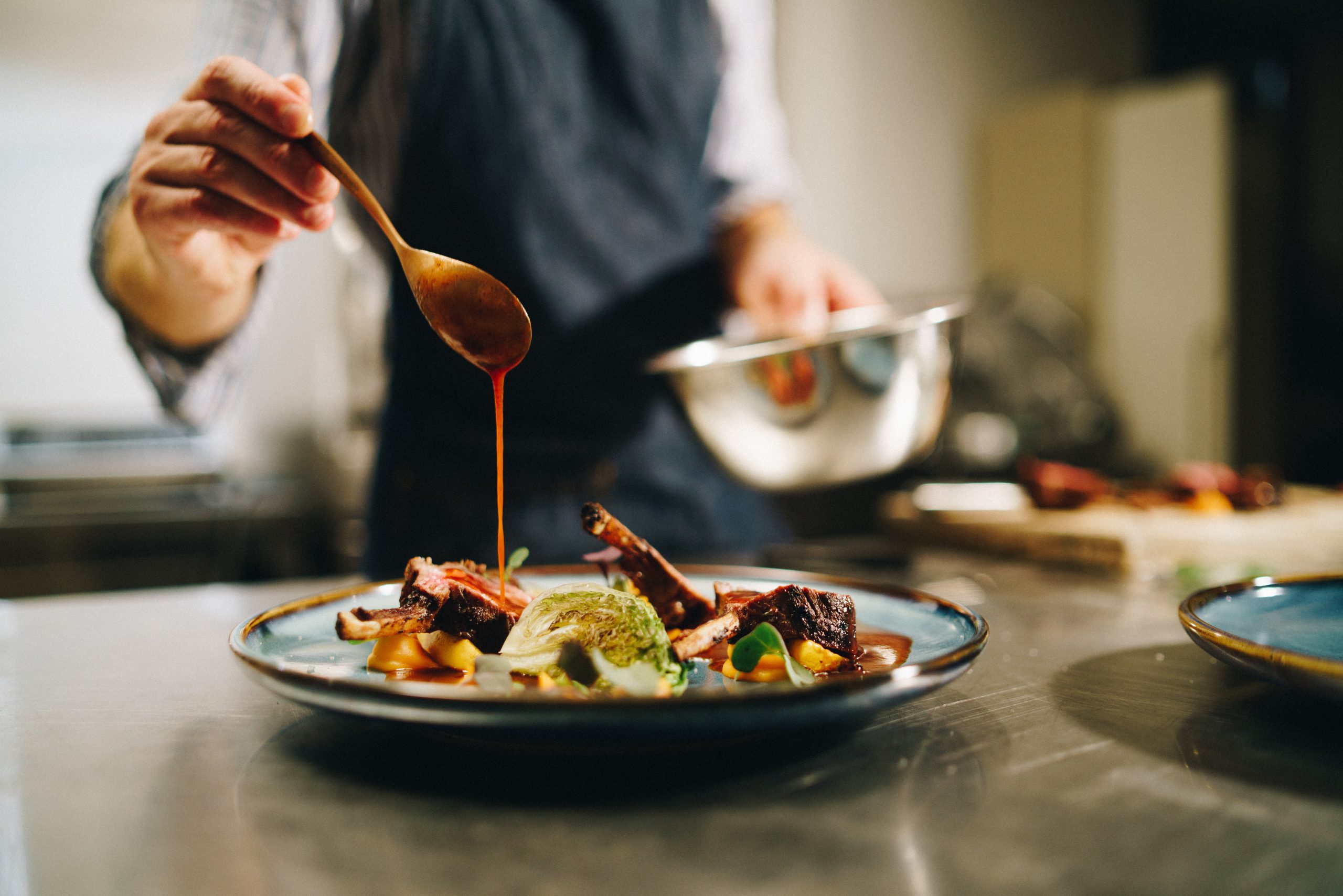
Jeremy Ford earned his Michelin star in Miami in 2022. Stubborn Seed, his restaurant in South Beach, represented years of work refining technique, developing relationships with suppliers, and building a team capable of executing his vision consistently. The star validated everything Ford had been working toward, confirming that his approach to modern American cuisine could compete at the highest levels.
When Ford decided to expand to Las Vegas, opening at Resorts World in 2025, he faced a question that every chef with a successful restaurant confronts. Do you replicate what works, essentially opening a second location that recreates the original? Or do you use the expansion as an opportunity to push further, taking the foundation you’ve built and elevating it for a new market?
Ford chose elevation. The Las Vegas iteration of Stubborn Seed isn’t simply Miami transplanted to the Strip. It’s Ford’s cooking evolved, sharpened by Michelin scrutiny and adapted for a dining market that demands constant innovation. The seasonal tasting menus feature dishes like winter truffle ricotta gnudi with butter-poached bay leek. The bar serves an exclusive Las Vegas-only Guilty Pleasure Burger with double onion smash patties and smoked beef bacon. And the overall experience combines Miami’s original ambition with Vegas-specific polish.
This expansion strategy, and the choices Ford made in executing it, provides insights into how Michelin-starred chefs approach new markets, what it takes to maintain quality across locations, and why some chef-driven concepts succeed on the Strip while others struggle despite excellent credentials.
The Michelin Advantage and Burden
Carrying a Michelin star into Las Vegas creates both advantages and pressures. On the advantage side, the star provides instant credibility in a market crowded with celebrity chefs and established concepts. Diners researching Strip restaurants see the Michelin credential and understand immediately that Stubborn Seed operates at a different level than typical casino restaurants.
The star also attracts food-focused visitors who might not have heard of Ford but who use Michelin guides to plan dining experiences. These diners arrive with high expectations, but they’re also predisposed to appreciate what makes the restaurant special. They understand tasting menus, seasonal ingredients, and the kind of technique-driven cooking that Michelin recognition implies.
But the star also creates burden. Every dish must justify the credential. Service must meet Michelin standards. The wine program, the tableware, the pacing, the consistency from night to night, all must reflect the level of excellence the star represents. One mediocre meal can generate disproportionate negative feedback because guests paying premium prices at a Michelin-starred restaurant expect perfection.
This burden intensifies in Las Vegas, where maintaining quality across sustained volume challenges even experienced operators. Miami’s Stubborn Seed operates in a specific neighborhood with relatively predictable traffic patterns. The Vegas location sits inside a major casino resort, with all the complexity that entails. Guest expectations differ. Volume fluctuates more dramatically. The operational requirements multiply.
Ford’s decision to make the Vegas menu distinct from Miami’s reflects understanding of this burden. Simply replicating Miami’s dishes wouldn’t work. Vegas diners, including those who’ve eaten at the original, want something new. The Vegas Michelin guide, while separate from Miami’s, will eventually evaluate the restaurant on its own merits. Creating Vegas-specific offerings positions Stubborn Seed as its own entity rather than merely an expansion.
The Resorts World Context
Resorts World Las Vegas, which opened in 2021, represents one of the Strip’s newest major properties. Unlike older casinos with established dining reputations built over decades, Resorts World needed to construct its culinary identity from scratch. This created both challenges and opportunities for restaurants within the property.
The challenge stems from lack of established traffic patterns and guest loyalty. Properties like Bellagio or Wynn have spent years building reputations and regular clientele. Resorts World guests are still discovering what the property offers. Restaurants can’t rely on inherited reputation or guests who automatically consider dining there.
But the newness also creates opportunity. Resorts World can curate its dining portfolio intentionally rather than managing legacy concepts and established relationships. The property can position itself as the place for innovative, forward-thinking restaurants rather than competing directly with older properties’ established strengths.
Stubborn Seed fits perfectly into this strategy. The restaurant brings genuine culinary credentials without the baggage of being a celebrity chef’s tenth concept or a nostalgic brand trading on past glory. It’s modern, ambitious, and distinctly of this moment, which aligns with Resorts World’s broader positioning as Vegas’ newest major property.
The location within Resorts World also provides advantages in controlling the dining experience. The restaurant isn’t competing for attention with dozens of other concepts in a sprawling property. Guests can find it easily. The property can promote it effectively as one of its signature dining destinations. And the relative lack of direct internal competition allows Stubborn Seed to define premium dining for Resorts World guests rather than fighting for differentiation.
The Tasting Menu Strategy
Stubborn Seed operates primarily through seasonal tasting menus, a format that creates specific advantages and challenges. Tasting menus allow chefs maximum creative control. Rather than cooking whatever guests order from a full menu, Ford can design entire experiences showcasing his vision and technique. This consistency in what leaves the kitchen makes quality control easier and allows for complex preparations that would be difficult to execute a la carte.
Tasting menus also signal serious culinary ambition. In the modern dining hierarchy, tasting menus occupy the premium tier. They’re how ambitious chefs demonstrate mastery, taking diners on journeys rather than simply filling orders. This positioning justifies the premium pricing and creates appropriate expectations.
But tasting menus also limit the potential customer base. Many diners, even affluent ones, don’t want multi-course experiences every time they eat out. The format requires time commitment and willingness to surrender control over what you eat. Some people have dietary restrictions that make tasting menus challenging. Others simply prefer knowing what they’re ordering rather than trusting the chef’s selections.
Ford addresses this limitation partially through the Vegas-exclusive Guilty Pleasure Burger available at the bar. This provides an entry point for guests who want to experience his cooking without committing to a full tasting menu. The burger serves as both a value option and a gateway drug, potentially converting casual burger customers into future tasting menu diners.
This dual approach, offering both elaborate tasting menus and accessible bar snacks, reflects sophisticated understanding of how to build sustainable restaurant businesses. The tasting menus provide the culinary showcase and premium revenue. The bar offerings drive volume and introduce the brand to guests who might not otherwise engage with it.
The Top Chef Factor
Ford’s Top Chef Season 13 victory provides name recognition beyond what most chefs achieve through restaurant success alone. The show introduced him to millions of viewers, many of whom became fans and follow his career. This built-in awareness creates marketing advantages that would cost enormous sums to generate through traditional channels.
But Top Chef success doesn’t guarantee restaurant success. Plenty of Top Chef winners have struggled to translate television popularity into sustainable restaurant businesses. The show tests specific skills under artificial conditions. Running a successful restaurant requires different abilities: consistent execution, operational management, team building, business acumen.
What separates successful Top Chef winners like Ford from those who struggle is understanding that the show provides a platform, not a guarantee. You still need to execute at the highest level. You still need to deliver consistent quality. The Top Chef credential might get people through the door once. It won’t bring them back if the food disappoints.
Ford has leveraged his Top Chef profile wisely. He used the platform to build Stubborn Seed in Miami, earning the Michelin star that validates his skills beyond television. The Vegas expansion comes from a position of proven restaurant success rather than trying to capitalize purely on TV fame. This sequencing matters enormously in establishing credibility with serious diners.
The Modern American Challenge
Ford cooks modern American cuisine, a category that’s both powerful and problematic. The power comes from flexibility. Modern American allows chefs to draw from any tradition, incorporating techniques and ingredients from French, Italian, Asian, and other cuisines without being constrained by authenticity requirements. This creative freedom can produce remarkable dishes that wouldn’t fit within more traditional categories.
The problem is that modern American has become somewhat of a default category for chefs who don’t want to commit to specific traditions. This has diluted the term’s meaning. When every chef cooking vaguely contemporary food with varied influences claims modern American as their category, the label stops communicating useful information to diners.
Ford’s cooking demonstrates modern American at its best. The winter truffle ricotta gnudi shows Italian influence but with technique and presentation that transcends traditional pasta preparations. The seasonal focus and ingredient-driven approach reflect modern sensibilities while the execution demonstrates classical training. These dishes couldn’t be called Italian or French, but they’re not fusion either. They’re modern American in the sense that they synthesize influences into something distinctly contemporary and personal.
This approach works in Las Vegas because Strip diners generally respond well to cooking that feels innovative without being weird. They want technique and quality they can recognize and appreciate. They appreciate familiar ingredients treated in unfamiliar ways. Modern American, when executed at Ford’s level, delivers exactly this combination.
The Sustainability Question
The real test for Stubborn Seed Las Vegas isn’t whether it succeeds initially. New restaurants from acclaimed chefs in major properties typically do fine out of the gate. The question is whether Ford can maintain Michelin-level quality consistently while managing two locations in different cities and dealing with all the operational complexity that entails.
This challenge has defeated many talented chefs. The skills required to create exceptional food differ from the skills required to maintain that excellence across multiple locations. Some chefs try to clone themselves, spending time at each location in rotation. Others delegate to trusted lieutenants, but this introduces variation in execution. Still others discover that their personal touch, the element that made the original restaurant special, simply doesn’t scale.
Ford’s approach appears to involve regular presence in Vegas while maintaining strong leadership teams at both locations. He makes the menu distinct enough that Vegas isn’t simply executing Miami’s playbook, which allows the Vegas team to develop their own identity and ownership. And the seasonal menu changes force constant evolution rather than static replication of established dishes.
Time will reveal whether this approach sustains Michelin-level execution. The early signs look promising, with food writers praising the Vegas location’s cooking. But consistent excellence requires years of proof, not months.
Notes and Key Takeaways
For Restaurant Operators:
Ford’s strategy of creating Vegas-specific offerings rather than replicating the Miami menu demonstrates sophisticated thinking about expansion. Each location needs its own identity while maintaining the core values and quality standards that define the brand.
For Diners:
Stubborn Seed offers Michelin-caliber modern American cooking in a Strip setting. The seasonal tasting menus showcase technique-driven preparations using premium ingredients, while bar offerings provide more casual access points for guests wanting to experience Ford’s cooking without full tasting menu commitment.
For Las Vegas:
Resorts World’s ability to attract Michelin-starred concepts like Stubborn Seed signals the property’s emergence as a serious dining destination despite its relative newness. This demonstrates that quality restaurants can succeed based on execution rather than purely on inherited property reputation.
Important Insights:
The exclusive Vegas-only Guilty Pleasure Burger serves multiple strategic purposes beyond just providing a casual option. It creates social media content, gives food writers something specific to highlight, and positions the bar as a destination independent of the main dining room. This multi-layering of concept value maximizes the restaurant’s appeal across different guest segments.
Stubborn Seed’s emphasis on seasonal menus, with dishes like the winter truffle ricotta gnudi, forces constant evolution that keeps the restaurant fresh for repeat visitors. This matters particularly in Las Vegas, where locals provide important business stability alongside tourist volume. Regular menu changes give locals reasons to return rather than viewing it as a one-time destination.
Ford’s regular but not constant presence in Vegas reflects realistic understanding of chef-driven restaurant management. The myth of the chef who personally cooks every meal has been replaced by recognition that excellent restaurants require strong teams and systems rather than depending entirely on a single individual’s presence.
The decision to locate at Resorts World rather than older, more established Strip properties involves tradeoff between inherited traffic and opportunity to help define a property’s identity. Ford chose the opportunity, betting that Resorts World’s growth trajectory will benefit restaurants that establish themselves there early.
Tasting menus, while limiting in terms of addressable market, create operational advantages that help maintain quality standards. The kitchen can prepare for specific dishes rather than needing to keep ingredients and mise en place ready for dozens of potential orders. This focus improves consistency and allows for more complex preparations.
The Top Chef credential, combined with the Michelin star, creates powerful combined signaling. Top Chef provides mass market awareness while the Michelin star confirms serious culinary credentials. Together, they appeal to both casual diners who recognize Ford from television and food-focused diners who prioritize Michelin recognition.
Modern American cuisine’s flexibility allows Ford to evolve menus seasonally without being constrained by tradition. A French restaurant faces expectations about what dishes should appear. Modern American permits constant innovation and ingredient-driven menu development without violating genre expectations.
Stubborn Seed’s success could influence how other Michelin-starred chefs approach Vegas expansion. Rather than simply opening second locations of existing concepts, expect more chefs to create Vegas-specific iterations that share DNA with their originals while developing distinct identities suited to Strip dining culture.