


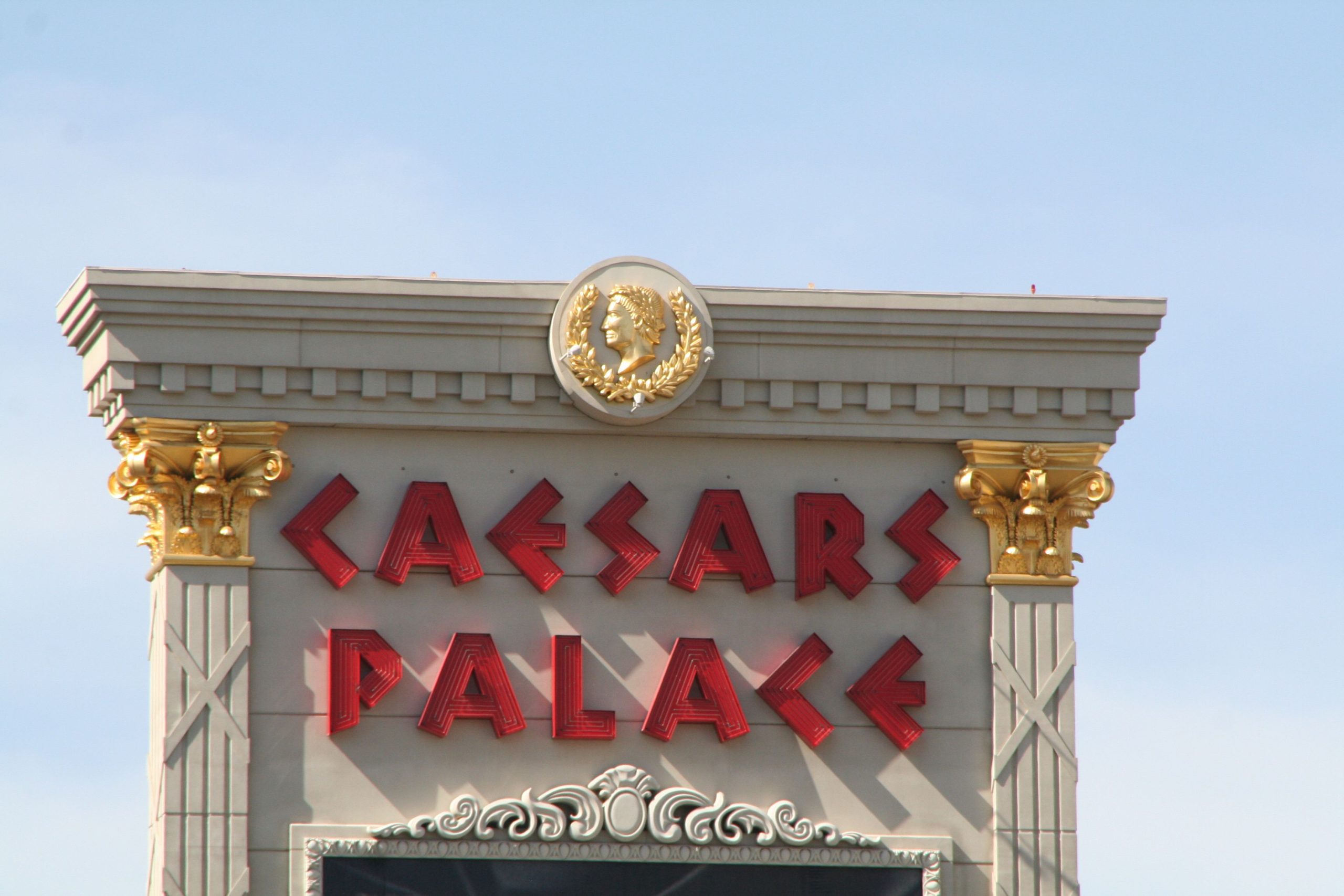
On August 5, 1966, developer Jay Sarno opened Caesars Palace on the Las Vegas Strip. The resort was unlike anything the city had seen: 680 rooms, a 135-foot elliptical pool, Italian marble imported from Carrara, and fountains designed to evoke ancient Rome. The restaurants served Caesar salad prepared tableside, prime rib carved from the trolley, and Oysters Rockefeller presented under a silver cloche. Las Vegas dining in 1966 wasn’t subtle. It was meant to signal abundance and luxury to the postwar American middle class discovering for the first time that glamour could be purchased.
Sixty years later, Caesars Palace is marking that anniversary in the most direct way a resort property knows how: through food. Available through December 31, anniversary offerings at acclaimed restaurants include concepts from Gordon Ramsay, Bobby Flay, Nobu Matsuhisa, and Guy Savoy, all paying tribute to the dishes and traditions that helped shape the property’s early years. The property-wide dining celebration, spanning everything from Bacchanal Buffet to Peter Luger Steak House to Dominique Ansel’s bakery, frames sixty years of culinary history as a story worth revisiting and, perhaps more importantly, worth paying for.
Understanding what Caesars Palace’s anniversary dining program is actually doing, how the individual restaurant executions reflect broader thinking about luxury hospitality’s relationship with its own history, and what this property-wide effort reveals about how major casino resorts use culinary programming to reinforce identity requires examining both the strategy and the specific choices it produced.
The 1966 Menu as Cultural Artifact
The dishes that defined Caesars Palace dining in 1966 read today as a specific chapter in American culinary history, one simultaneously familiar and dated. Oysters Rockefeller, created at Antoine’s in New Orleans in 1899, had become by the mid-1960s a reliable signal of luxury dining across American hotel restaurants. Duck à l’Orange, a French classic that translated imperfectly but persistently into American hotel kitchens, appeared on menus from Manhattan to Miami. Prime rib carved tableside was the apotheosis of what serious American steakhouse dining meant before the advent of Japanese wagyu, dry-aging programs, and the chef-driven approach to beef that now defines premium steak culture.
These weren’t random choices in 1966. They were deliberate signals to Caesars Palace’s target audience: successful Americans who had read about these dishes in magazines, seen them at special occasion restaurants in their home cities, and associated them with a level of sophistication they aspired to access. The resort was selling an aspirational vision of luxury through food as much as through the fountains and marble.
The anniversary station at Bacchanal Buffet features nostalgic dishes inspired by the resort’s 1966 opening era, including Oysters Rockefeller, Duck à l’Orange, and Roman-style porchetta. Presenting these dishes at the buffet, rather than exclusively at fine dining restaurants, democratizes the anniversary experience in ways that mirror the original intent. Caesars Palace in 1966 was trying to make luxury accessible to middle-class Americans. Bacchanal Buffet in 2026 is doing the same thing with 1966’s version of that luxury.
The Peter Luger Pricing Decision
Peter Luger Steak House is pricing select items at $66.26, a nod to 1966 and 2026, including Oysters Rockefeller, Maine Lobster Tail, USDA Prime Dry-Aged New York Strip, and a house-selected bottle of wine.
This pricing strategy deserves examination as more than a cute marketing concept. Peter Luger opened in Brooklyn in 1887, making it one of the oldest continuously operating steakhouses in America. Its Las Vegas outpost, which arrived at Caesars in 2021, brought the brand’s uncompromising approach to USDA prime dry-aged beef to a market already saturated with excellent steakhouses. The anniversary pricing creates a specific incentive to try dishes that might otherwise be priced beyond casual consideration.
A Maine lobster tail at $66.26 is less expensive than the same dish at normal Peter Luger pricing, which creates genuine value rather than just promotional theater. Diners who have been curious about the Brooklyn institution but hesitant about the price commitment have a specific window to engage. And the date-embedded price communicates anniversary context efficiently without requiring explanation, which is itself a form of storytelling that resonates with guests inclined to notice these details.
The same logic applies to the specialty cocktails, the Strawberry Wallbanger and the 60th Anniversary Old Fashioned, each priced at $19.66. The Strawberry Wallbanger is a deliberate throwback: the Harvey Wallbanger, a vodka, Galliano, and orange juice cocktail that peaked in American bar culture during the 1970s, was emblematic of the cocktail sensibility that followed the mid-1960s Las Vegas opening era. Updating it with strawberry nods to contemporary cocktail vocabulary while the name and spirit anchor it historically.
Guy Savoy and the High End of Nostalgia
Restaurant Guy Savoy begins its à la carte anniversary menu with Duck à l’Orange Classique and Île Flottante à Deux, each priced at $66. The choice of dishes at the Michelin-starred French restaurant carries specific meaning that differs from the anniversary offerings at more accessible venues.
Duck à l’Orange is not a dish that Restaurant Guy Savoy would typically feature. The preparation, which dates to medieval Europe and reached its peak American popularity in hotel restaurants of the 1960s, represents a very different culinary register from the contemporary French technique that defines Guy Savoy’s work. Offering it specifically as an anniversary tribute creates temporal contrast, positioning the dish as deliberate historical reference rather than sincere culinary statement.
This contrast is the point. When a Michelin-starred restaurant offers a dish that it would never include on its regular menu, the gesture communicates self-awareness and playfulness that pure luxury signaling cannot achieve. Diners who understand the reference appreciate the joke. Diners who don’t understand the reference get an excellent duck preparation at a favorable price. The offering succeeds on both levels simultaneously.
Île Flottante à Deux, a floating island dessert for two, similarly connects to the French classic preparations that defined upscale hotel dining in the early Caesars era. Serving it as a shared dessert adds romantic and social dimension to what would otherwise be a straightforward nostalgic gesture.
Dominique Ansel and the Cronut as Connective Tissue
Dominique Ansel Las Vegas has created a limited-edition August Cronut featuring chocolate Champagne ganache and strawberry jam decorated for the milestone celebration. The inclusion of the Cronut, Ansel’s trademarked croissant-doughnut hybrid that debuted in New York in 2013, in a celebration of 1966 dining requires a moment of examination.
The Cronut has nothing to do with 1966. It didn’t exist in 1966 and represents a distinctly contemporary approach to pastry that would have been incomprehensible to Caesars Palace’s opening-era bakers. But its inclusion in the anniversary program reflects something important about how food culture works across time: the most successful celebratory culinary programs don’t simply replicate the past but use the anniversary as a frame within which each participating chef can bring their own perspective.
Ansel bringing his most iconic creation to the celebration, decorated with anniversary imagery, says more about where Caesars Palace stands in 2026 than any amount of Duck à l’Orange could. The property has evolved from prime rib and Caesar salad to housing one of the most celebrated French pastry chefs working in America today. The Cronut’s inclusion celebrates that evolution as much as the original opening year.
The Bacchanal Buffet’s Democratic Gesture
Bacchanal Buffet at Caesars Palace is already one of the most celebrated buffets in Las Vegas, known for its quality and range across global cuisines. The addition of an anniversary station featuring 1966-era dishes doesn’t disrupt the buffet’s existing excellence. It adds a specific historical layer that guests can engage with or ignore depending on their interest.
This flexibility is precisely what makes the buffet format ideal for historical celebration. A tasting menu built entirely around 1966 dishes would be a curiosity for food historians and a burden for guests who simply want excellent contemporary cooking. A buffet station that offers Oysters Rockefeller and Duck à l’Orange alongside the regular spread allows guests to compose their own relationship to the anniversary. The historically curious can construct a 1966 meal. The indifferent can ignore the station entirely. Everyone benefits from the choice.
Notes and Key Takeaways
For Restaurant Operators:
Caesars Palace’s anniversary program demonstrates how property-wide culinary celebrations can simultaneously serve marketing objectives, create genuine value for guests, and reinforce institutional identity when each participating venue is given creative latitude to engage with the theme on its own terms rather than executing identical programming.
For Diners:
The anniversary offerings, running through December 31, provide specific incentives to experience both the 1966-era dishes that defined luxury dining in the resort’s opening era and the contemporary interpretations that leading chefs bring to historical reference. The $66.26 Peter Luger pricing specifically creates value that extends beyond the anniversary theme.
For Las Vegas:
Caesars Palace’s sixty-year milestone provides a framework for understanding how the Strip’s dining evolution maps onto broader American culinary history. The distance between Oysters Rockefeller under a silver cloche and Dominique Ansel’s Cronut measures sixty years of transformation in what Americans understand luxury dining to mean.
Important Insights:
The decision to engage every level of the property’s dining portfolio, from Bacchanal Buffet to Michelin-starred Guy Savoy, in the anniversary program reflects understanding that institutional celebrations generate the most authentic resonance when they reach the full range of guest experiences rather than concentrating exclusively on premium tiers.
The date-embedded pricing, $66.26 and $19.66, transforms transaction moments into communication opportunities. Every time a guest orders a Peter Luger anniversary item or anniversary cocktail, they receive a specific piece of historical information about the property embedded in the price itself.
Guy Savoy’s willingness to offer Duck à l’Orange as an anniversary tribute demonstrates confidence that the restaurant’s core identity is secure enough to play with historical pastiche without confusion. A chef less certain of his positioning might resist offering a dish so associated with a different culinary era.
The anniversary program’s duration through December 31 creates sustained relevance rather than a brief opening-weekend moment. Guests visiting Caesars Palace across all of fall and winter 2026 can participate in the celebration, which extends both the marketing benefit and the guest experience opportunity far beyond what a short-run event could achieve.
Peter Luger’s Brooklyn heritage, dating to 1887, and its Las Vegas presence since 2021 create interesting layering within the Caesars anniversary celebration. A restaurant older than Caesars Palace by nearly 80 years, participating in a celebration of 60 years, brings its own historical depth to an event it predates by decades.
The Champagne cart and Chartreuse on draft at Braseria, noted in coverage of Caesars’ dining evolution, suggest the property is simultaneously celebrating its past and actively expanding its contemporary dining portfolio in ways that don’t require anniversary framing to justify.