



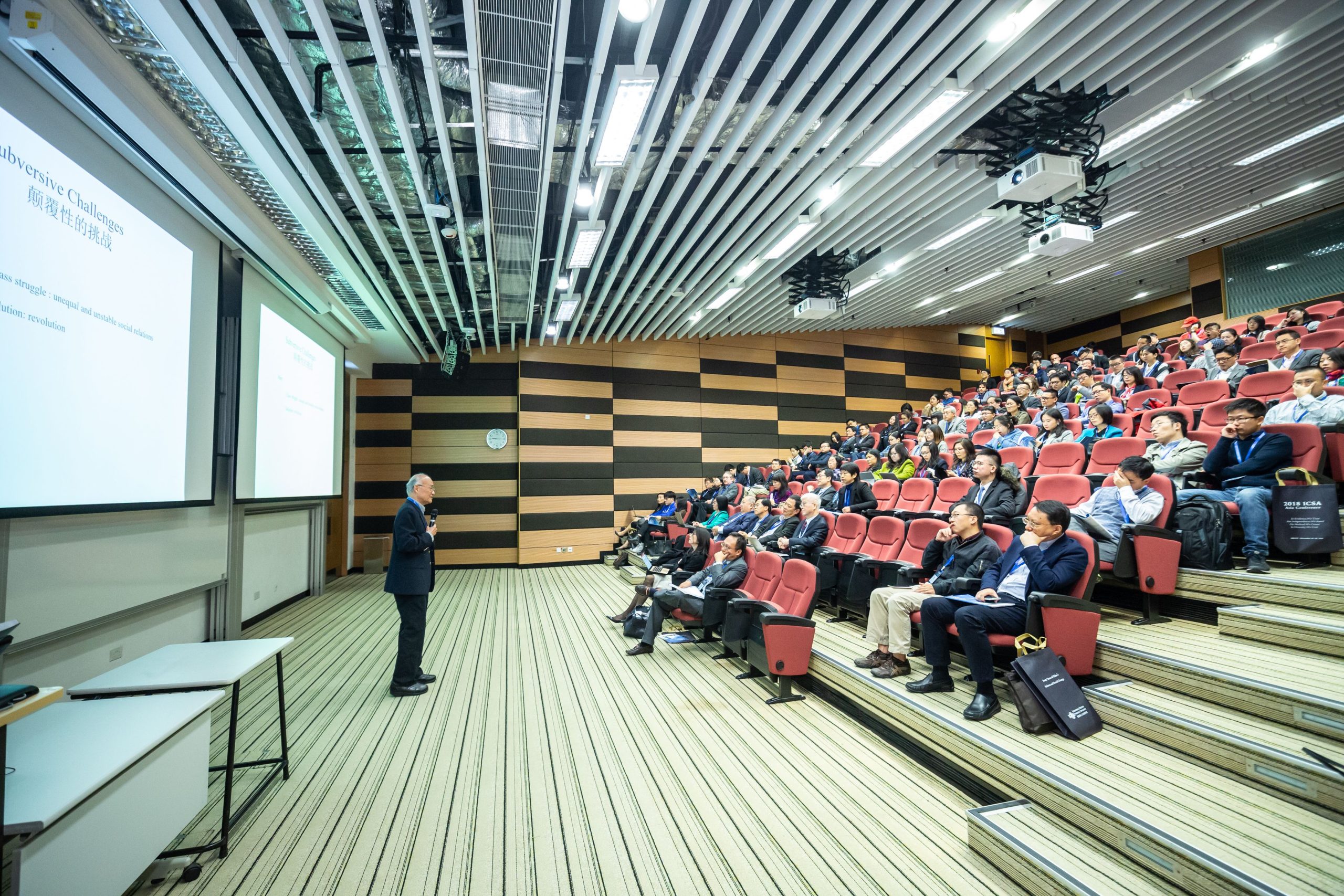
Las Vegas, October 25-28, 2026. The Venetian Conference and Expo Center.
There is a line Larry Ellison has been saying in various forms for the better part of two years now, and it lands differently when you hear it in person: “Most of the world’s valuable data already exists in Oracle databases.”
That is not a boast about market share. It is a strategic argument. And Oracle AI World 2026, the company’s renamed flagship conference, is the physical manifestation of what Oracle intends to do with that argument. Tens of thousands of customers, partners, and analysts have converged on the Venetian this week for four days of keynotes, product deep-dives, and the kind of hallway conversations that do not get captured in press releases. What emerges from the floor is a company that has decided, with unusual clarity, where it is placing its chips.
The bet is this: the next decade of enterprise technology will be defined by AI agents operating directly on business data, and Oracle intends to be the company that owns the infrastructure those agents run on. Not one layer of it. All of it.
Why Renaming the Conference Was Not Just a Branding Exercise
Oracle CloudWorld ran for years as one of the anchor events on the enterprise technology calendar. The rebrand to Oracle AI World carries a signal that is worth taking seriously, because Oracle does not rename its flagship conference casually.
The name change tells you something about how Oracle has concluded the competitive landscape has shifted. “Cloud” was the defining technology narrative of the 2010s. It is now a utility, something every serious enterprise has and uses, something that differentiates almost nothing. The companies that won the cloud wars won them five years ago. Competing on cloud infrastructure today means competing on price, on regional coverage, on the density of services layered on top of commodity compute. Oracle has been fighting that battle effectively, with OCI growing faster than any of the hyperscalers in recent quarters. But Oracle is not trying to win the old war. It is trying to redefine the battlefield.
“AI World” is the company’s argument that the relevant competition is no longer about who hosts your workloads. It is about who sits closest to your data when AI agents need to reason about it, act on it, and produce outputs that drive actual business decisions. Oracle’s contention is that the company positioned closest to the data wins that competition, and Oracle databases hold more enterprise business data than any competitor on the planet.
The question this week is whether the products can back up the argument.
The Database at the Center of Everything
The most consequential product announcement at Oracle AI World 2026 is AI Database 26ai, and understanding why requires a short detour into the problem it is designed to solve.
Most enterprise AI deployments today suffer from what Futurum Group analysts have called the “agentic reasoning gap.” The data that AI agents need to be useful lives in relational databases, document stores, graph databases, and data warehouses, all of which were built at different times, by different teams, using different abstractions. Getting an AI agent to reason coherently across all of that requires either a massive integration project that most organizations cannot staff, or accepting a degraded agent that works off a simplified view of the data it is supposed to understand.
Oracle’s answer with 26ai is to eliminate the fragmentation at the infrastructure level rather than trying to patch it at the application level.
The core of the announcement is what Oracle calls a converged data engine: a single database architecture that handles relational data, JSON documents, graph relationships, and vector embeddings under one query model. An AI agent built on 26ai does not need to know which data lives where. It queries one system. That system handles the rest. Futurum projects the broader data and AI market growing from roughly $541 billion in 2026 to over $1.2 trillion by 2031, and Oracle is positioning 26ai as the infrastructure bet that captures a disproportionate share of that growth by making fragmented multi-database architectures obsolete.
The other critical piece of 26ai is what Oracle is calling Oracle Unified Memory Core, which gives AI agents stateful, persistent memory within the database engine itself. This matters because one of the persistent limitations of current AI agents is that they are, by default, amnesiac. Every session starts fresh. Every conversation requires re-establishing context. Unified Memory Core is Oracle’s attempt to solve the statefulness problem at the infrastructure level, so agents can accumulate context over time without requiring application developers to build bespoke memory management systems on top of the model.
On security, Oracle has added Oracle Deep Data Security to 26ai, which enforces access controls at the row and column level. An AI agent built on this architecture cannot retrieve records the querying user is not authorized to see. This sounds like table stakes, and in theory it is. In practice, most current enterprise AI deployments handle this through application-layer guardrails that are easier to circumvent than a database-native enforcement model.
Oracle is also shipping a no-code platform inside 26ai called the AI Database Private Agent Factory, which lets organizations deploy data-centric agents as containerized units without writing the orchestration infrastructure themselves. The naming is clunky. The capability is real.
The Supercomputer in the Room
Alongside 26ai, the announcement that generated the most pre-conference conversation is Zettascale10, Oracle’s co-development with NVIDIA.
The claim is large: Oracle and NVIDIA describe Zettascale10 as the world’s largest AI supercomputer. It is designed specifically for training frontier AI models at scales that individual cloud deployments cannot reach, and it forms part of the computational backbone for OpenAI’s Stargate supercluster, the consortium-backed infrastructure project that has been in development as a response to the sustained demand for frontier model training capacity.
For Oracle, Zettascale10 serves a dual purpose. It is a genuine infrastructure capability that addresses a real market need for large-scale AI training. It is also a proof point. The argument Oracle is making to enterprise customers is that it can operate AI infrastructure at any scale, from a single-tenant database deployment to the largest AI training cluster on the planet. The credibility of the scale argument at the top end lends credibility to the reliability argument in the middle, where most enterprise customers actually live.
The partnership with NVIDIA is also worth reading carefully. Oracle and NVIDIA have been building a tighter technical relationship for several years, and that relationship now extends from chip-level optimization of OCI instances to co-designed supercomputing infrastructure. For Oracle, the NVIDIA alignment is a hedge against the scenario where custom AI silicon from hyperscalers begins to erode the standard GPU market. For NVIDIA, Oracle is a massive customer and a distribution partner for its hardware into enterprise workloads that would otherwise never touch a data center running H100s.
OCI’s Trajectory and What the Growth Numbers Mean
There is a number Oracle has been quietly proud of for the past several quarters, and it comes up at AI World repeatedly in conversations with Oracle executives and partners: OCI is the fastest-growing major cloud platform by revenue growth rate.
That fact requires context. OCI is still significantly smaller by absolute revenue than AWS, Azure, or Google Cloud. The growth rate reflects a smaller base. But the trajectory matters because it tells you something about where enterprise purchasing decisions are heading, and the decisions being made by Oracle’s largest customers at AI World reflect a genuine shift rather than loyalty purchases.
The announcement of Multicloud Universal Credits is a direct response to the purchasing reality that most large enterprises have already made: they are using multiple clouds, they are not going to consolidate, and they resent paying premium prices for database licenses that only work in one environment. The Universal Credits model lets Oracle customers use a single pool of credits for Oracle database services running on OCI, AWS, Azure, or Google Cloud. This is not Oracle conceding the cloud wars. It is Oracle deciding that database-level lock-in is worth more than cloud-level lock-in, and building commercial flexibility around that conclusion.
The partnership announcements with OpenAI and ByteDance on OCI infrastructure reinforce the same thesis. Oracle is not trying to compete with OpenAI on model development. It is trying to be the infrastructure that frontier model developers run on when they need the scale and reliability that a purpose-built cloud for AI workloads can provide.
APEX and the Application Layer
Of the announcements at AI World, the one that gets the least attention from the AI press but the most attention from enterprise development teams is Oracle’s continued investment in APEX, its low-code application development platform.
Ellison made the strategic case for APEX clearly: Oracle is rebuilding Cerner, the health records system it acquired, entirely in APEX. For a company that acquired Cerner for roughly $28 billion and has staked its health industry vertical strategy on making that acquisition productive, rewriting the core application in APEX is not a casual experiment. It is a statement about what Oracle believes the platform can do at enterprise scale, in a regulatory environment where reliability and auditability are not negotiable.
The upcoming APEX version, expected to be previewed at AI World before general release, is generating significant interest from the Oracle development community. The platform has expanded its AI-assisted development capabilities, which means developers building on APEX can increasingly generate application logic through conversational prompts rather than writing procedural code. In a world where every enterprise is trying to accelerate software delivery while managing developer headcount carefully, a low-code platform that produces production-quality enterprise applications and is backed by the same vendor running your database is a serious option that deserves serious evaluation.
What the Partner Ecosystem Is Saying
The conversations that happen at Oracle AI World that do not make it into the press release cycle are often more informative than the keynotes, and this year the dominant theme in partner discussions is implementation capacity.
Oracle can ship AI Database 26ai. It can announce Zettascale10. It can repackage its licensing model with Universal Credits. None of that translates into business outcomes for customers unless there are enough trained Oracle practitioners who understand how to design and deploy agentic AI architectures on Oracle infrastructure. The partner ecosystem, which includes both the major global systems integrators and a large community of Oracle-specialized boutique firms, is in the middle of a rapid skill build-out that has accelerating demand on one side and limited certified expertise on the other.
The firms that show up at Oracle AI World with ready practices in 26ai architecture, agentic workflow design on OCI, and APEX-based enterprise application development are going to be extremely busy for the next several years. The certification programs Oracle is launching alongside 26ai are not just vendor marketing. They are the credentialing infrastructure for a professional services market that does not yet have enough supply to meet its own demand.
This dynamic appears in every major enterprise technology cycle, and Oracle is navigating it the same way it always has: by making the partner ecosystem central to the go-to-market strategy and investing in the certification and enablement infrastructure that gives partners something to sell. The conversations happening in the hallways of the Venetian this week between Oracle product teams and partner firm practice leaders are the early stages of the organizational capacity that will actually deliver on the AI World announcements over the next two years.
The Honest Assessment of Where Oracle Stands
Any fair account of Oracle’s AI World positioning has to acknowledge what the company is not, alongside what it is.
Oracle is not a frontier AI research lab. It is not building foundation models. It is not competing with OpenAI or Anthropic or Google DeepMind for the intellectual territory of generative AI research. That is fine, and in some ways it is a competitive advantage. Oracle does not need to win the model race to win the infrastructure race. The companies that win the model race will need somewhere to run their models at scale, and Oracle is building the argument that OCI is the most serious option.
The AI Database 26ai is a genuine technical advance over Oracle Database 23ai, and the converged data engine architecture addresses a real problem that real enterprise AI deployments are running into. But the market is moving fast, and Oracle is competing against cloud-native data platforms, specialized vector databases, and the infrastructure arms of hyperscalers that are also building AI-native data products. The “all of the world’s valuable enterprise data is already in Oracle databases” argument is strong. It is not permanent. Data architectures change over years and decades, not months, but they do change, and Oracle’s ability to maintain its position at the center of enterprise data management is not guaranteed by the installed base alone.
What is clear from Oracle AI World 2026 is that Oracle understands this. The investment across AI Database 26ai, OCI, Zettascale10, and APEX represents a coherent strategic bet rather than a scattershot response to competitive pressure. The company has decided where it needs to win and is allocating accordingly. Whether that bet pays off at the scale Oracle needs will depend on how quickly enterprise customers move from evaluating agentic AI architectures to actually deploying them, and how central Oracle infrastructure proves to be when they do.
Key Takeaways
The rebrand from CloudWorld to Oracle AI World is a strategic signal, not just a naming change. Oracle is publicly committing to the argument that the relevant competitive dimension in enterprise technology has shifted from cloud hosting to AI infrastructure, and it is building its commercial narrative around database proximity to business data as the defining advantage.
AI Database 26ai addresses a real architectural problem that most enterprise AI deployments face: data fragmentation across multiple systems that forces expensive integration work before any agent can reason coherently across an organization’s actual data. The converged engine approach is technically sound and commercially well-timed.
Zettascale10 serves dual purposes. As a product, it is genuine infrastructure for frontier AI training at scales individual clouds cannot match. As a signal, it tells Oracle’s enterprise customers that the company can operate credibly at the absolute frontier of AI infrastructure scale, which matters when those customers are evaluating vendors for their own large-scale AI deployments.
The Multicloud Universal Credits announcement is Oracle acknowledging commercial reality. Most large enterprises are multi-cloud and will stay that way. Letting Oracle database credits work across AWS, Azure, and GCP removes a purchasing friction that was causing some customers to evaluate non-Oracle database options on the other clouds.
The partner ecosystem capacity constraint is real and worth watching. Oracle’s ability to deliver on AI World announcements at enterprise scale depends on whether the systems integrator and boutique partner community can build the AI-native Oracle practices fast enough to service demand. The certification investment at this conference is the early infrastructure for a professional services market that does not yet have enough trained practitioners.
Notes for Enterprise Technology Leaders
If your organization runs significant workloads on Oracle Database and you are evaluating an agentic AI roadmap, AI Database 26ai deserves a close technical review. The unified memory and no-code agent deployment capabilities are directly relevant to the deployment challenges that most enterprise AI projects are running into, and upgrading from 23ai to 26ai is a more defensible path than rebuilding on a new data platform.
The OCI Universal Credits model changes the calculus for organizations that were treating OCI as a secondary cloud primarily for Oracle workloads. Running Oracle databases on OCI with credits that also apply to your AWS or Azure footprint simplifies procurement and may meaningfully reduce total licensing cost.
APEX, for organizations that have dismissed it as a niche Oracle tool, merits a fresh look. The Oracle commitment evidenced by the Cerner rebuild, combined with AI-assisted development capabilities in the upcoming release, positions APEX as a credible enterprise application platform for organizations that are already deep in the Oracle ecosystem.
Oracle AI World 2026 runs October 25 through 28 at the Venetian Conference and Expo Center in Las Vegas. For session access, on-demand content, and partner resources, visit oracle.com/ai-world. Coverage of major product announcements is available through Oracle’s newsroom and partner analyst briefings throughout the conference week.