



Las Vegas, November 4-6, 2026. MGM Grand.
The corporate training industry has been wrestling with its own identity for the better part of a decade. It arrived at the job in a world where learning meant scheduled classroom sessions, scorm-packaged e-learning modules, and learning management systems whose primary function was compliance tracking rather than actual skill development. It is operating now in a world where AI can generate a learning experience on demand, where the half-life of relevant skills in fast-moving domains has dropped below the cycle time of traditional course development, and where the workforce expects learning to happen continuously and contextually rather than in scheduled blocks.
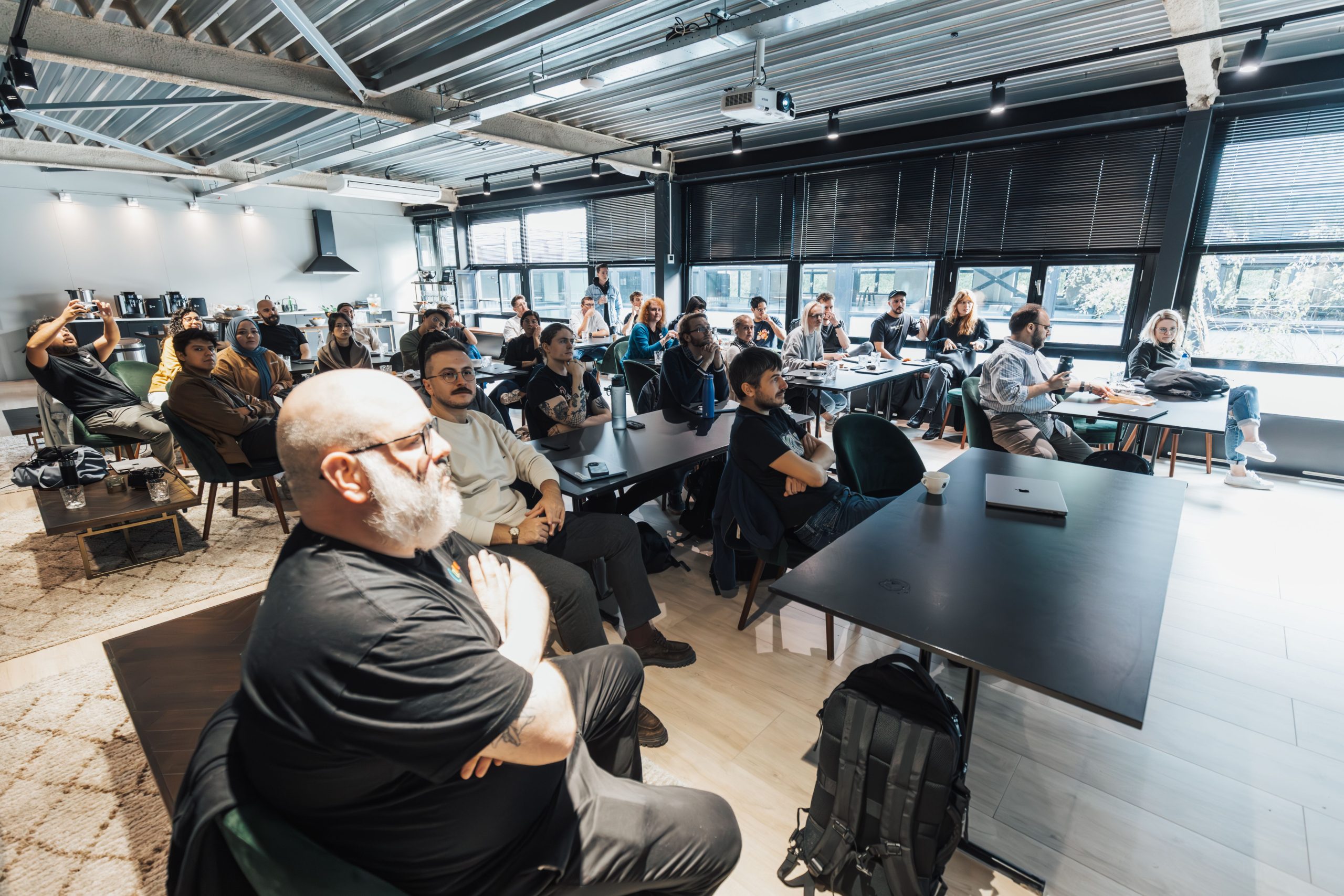
DevLearn Conference and Expo 2026, running November 4 through 6 at MGM Grand in Las Vegas, is where the learning technology profession thinks through this transition in public. It is the largest learning technology event in the country, and the 2026 program represents the most significant structural expansion of the conference’s curriculum in its history, with new tracks, new session formats, and new programming designed to address markets the conference had not previously served at the depth they required.
The profession gathering in Las Vegas includes instructional designers, learning experience developers, CLOs and L&D directors, corporate training managers, and the technology vendors building the platforms they use. What connects them is a shared recognition that the tools and methods that defined learning technology ten years ago are insufficient for what the workforce needs now, and that figuring out what comes next is not primarily a technology problem. It is a design problem, a strategy problem, and increasingly an organizational change management problem.
Two New Tracks and What They Signal
The most structurally significant programming change at DevLearn 2026 is the addition of two entirely new conference tracks: one for Customer Education professionals and one for practitioners working in Higher Education.
Both additions represent markets that have been attending DevLearn in growing numbers while the conference curriculum was designed primarily for corporate L&D. Adding dedicated tracks acknowledges that the learning technology challenges faced by a SaaS company building customer onboarding programs are not identical to the challenges faced by a corporate training department, even when they use the same tools. And the challenges faced by a university faculty member trying to integrate AI-assisted learning into a degree program are different still.
The Customer Education track responds to a structural shift in how software companies think about customer success. The original model for customer onboarding was documentation and support: write the manual, staff the help desk, wait for tickets. The current model, at companies that are doing it well, is a continuous learning experience that begins at purchase, adapts to customer behavior, and accelerates time-to-value by building genuine product competency rather than just creating familiarity with the interface. Companies like Salesforce, HubSpot, and Gainsight have built customer education functions that rival their internal training operations in scale and sophistication. The DevLearn Customer Education track serves the growing community of professionals building those functions at other companies.
The Higher Education track reflects a different kind of pressure. Universities are under scrutiny about the relationship between tuition cost and learning outcomes, and AI has added a new dimension to every conversation about pedagogy: what do students actually learn when AI can complete most assignments? The learning technology professionals working in higher education are thinking through curriculum design, assessment, and the fundamental question of what a university education is for in an era when AI can substitute for large portions of the content delivery that lectures and assigned readings have historically provided.
Adding both tracks at the same conference creates an interesting cross-pollination opportunity that a single-audience conference cannot generate. The instructional design principles that work in customer education, including clear outcome orientation, rapid iteration on content based on usage data, and contextualization of learning within actual product workflows, have direct applications in corporate L&D and in higher education. DevLearn’s multi-track format makes those conversations possible in ways that a more segmented conference structure would prevent.
The Mastery Session Format and What It Says About Conference Design
DevLearn 2026 runs three session lengths: 45 minutes, 60 minutes, and 90-minute Mastery Sessions.
The 90-minute Mastery Session format is worth unpacking, because it reflects a specific argument about how professional learning actually happens at a conference.
The standard conference session, 45 to 60 minutes, is calibrated to introduce a concept, illustrate it with examples, and leave attendees with a framework they can apply when they return to work. It is the right format for broad topics where the goal is orientation rather than expertise. Most conference content is built for this format, and most conference attendees calibrate their expectations accordingly.
The Mastery Session is designed for a different goal: genuine depth on a focused topic, with enough time to move past introduction into application. The 90-minute window creates space for the kind of worked examples, audience practice, and iterative feedback that 45-minute sessions cannot accommodate. For topics where the gap between understanding a concept and being able to execute on it is significant, including most areas of learning technology practice where the tools themselves require hands-on development of fluency, the Mastery Session format produces something more durable than the standard session’s orientation.
The decision to offer three session lengths rather than standardizing on one reflects a sophisticated understanding of the different kinds of learning value that conference programming can deliver. A CLO who needs orientation on five emerging topics is well-served by five 45-minute sessions. An instructional designer who needs to develop genuine competency in AI-assisted content development is better served by one 90-minute Mastery Session and two supporting 60-minute sessions. The three-tier structure allows DevLearn to serve both attendees without forcing one to sit through content calibrated for the other.
Bring Your Own Device: When Learning About Learning Gets Meta
BYOD sessions, where attendees bring their own devices and build, test, and apply ideas in real time during the session, are the most honest answer the learning technology profession has yet given to the question of how you teach someone to build effective learning experiences.
Reading about instructional design produces one kind of understanding. Watching a demonstration produces another. Actually building something, getting immediate feedback on whether it works, and iterating during the session produces the only kind of understanding that transfers to independent practice.
BYOD sessions have been part of DevLearn for several years, but the 2026 program has expanded their availability across topics that have historically been taught in more passive formats. AI-assisted content development, adaptive learning design, and learning experience platform configuration are all topics where the BYOD format produces measurably better practitioner outcomes than lecture-and-demonstration alternatives.
For learning technology professionals attending DevLearn, BYOD sessions are the most reliable predictor of whether conference attendance translates into changed practice. The sessions require more cognitive engagement and more tolerance for productive failure than passive sessions. They also leave attendees with artifacts they built themselves rather than slides summarizing what they watched someone else demonstrate.
DemoFest and the Peer Validation That No Vendor Pitch Provides
DemoFest is one of DevLearn’s most distinctive programming elements and one of its most valuable, precisely because it operates entirely outside the commercial dynamics that govern most of the conference’s expo floor.
DemoFest is practitioner-created. Participants are learning professionals who built something, anything from a full courseware program to a single innovative interaction, and want to show it to peers. There is no sales pitch. There is no vendor ROI claim. There is a learning designer standing next to their work, explaining what problem it solved, what they learned building it, and what they would do differently next time.
The projects range in scope and sophistication, but what they have in common is authenticity. The problems they solve are real. The solutions they represent are the ones that actual practitioners, operating under real constraints of time, budget, and organizational support, were able to build. That grounded reality is different in kind from the polished demonstrations that vendor booths present, and it produces a different kind of inspiration: not “we could do that if we had their budget and their team” but “a practitioner who had the same constraints we have figured out how to do this, and I understand how.”
The networking dynamic around DemoFest is also distinctive. Practitioners talking about their own work invite genuine questions and honest feedback in ways that commercial demonstrations do not. The conversations that develop around DemoFest projects are some of the highest-value networking that DevLearn generates.
Buzz Discussions and the Problem With Conference Energy
Every conference has a version of the same problem: the most important learning happens in hallway conversations between sessions, but those conversations are not schedulable, not scalable, and not available to attendees who do not have the social confidence or the existing network to create them spontaneously.
Buzz Discussions are DevLearn’s 2026 answer to this problem. Structured around the day’s content, they create defined time slots and a facilitated format for the reflective conversation that conference learning requires to stick. Rather than leaving individual attendees to mentally process what they heard in isolation during the evening, Buzz Discussions create the conditions for the kind of peer synthesis that transforms passive session content into usable insight.
The format also creates an entry point for attendees who are newer to the profession or attending alone. The social dynamics of spontaneous hallway networking systematically disadvantage people who do not already have a network or who find unstructured social situations cognitively demanding. A structured discussion format creates parity: everyone has the same access to the same conversation, regardless of prior network depth.
The addition of Buzz Discussions to the 2026 program reflects an understanding of conference design that goes beyond session content. The question is not just what people learn during sessions. It is what conditions the conference creates for learning to transfer from session content to professional practice. Reflection, discussion, and application are the transfer conditions that most conference formats address inadequately, and Buzz Discussions are a deliberate attempt to address at least one of them systematically.
The AI Conversation in Learning Technology Is Different From Every Other Industry
Almost every conference in every industry is having an AI conversation in 2026. What makes the learning technology community’s version of that conversation distinctive is the degree to which the profession has a specific stake in the answer.
Learning technology professionals build the experiences that help other people develop skills and change behavior. When AI changes the tools available for building those experiences, and it has, the change is both a technical opportunity and a professional identity question. If AI can generate an adequate instructional module in minutes, what is the unique value that a human instructional designer provides? If adaptive AI systems can personalize learning in real time based on individual performance data, what is the role of the curriculum designer who would previously have made those personalization decisions at the course level?
The DevLearn 2026 program is not trying to answer these questions definitively. The profession is not at a place where definitive answers exist. What the program is doing is creating the conditions for honest engagement with the questions, including sessions where practitioners who have adopted AI tools extensively in their work talk candidly about what changed, what got better, what got worse, and what they wished they had understood before they started.
Team-focused content, new to the 2026 program, addresses the organizational dimension of AI adoption in L&D. Individual practitioners developing AI fluency is necessary but not sufficient for a learning function to operate effectively in an AI-augmented environment. Teams need shared frameworks for when to use AI tools, shared quality standards for AI-assisted content, and shared language for talking about what AI is contributing and what human judgment is contributing in any given learning design. The team content track is the recognition that these organizational capabilities are the actual bottleneck for most learning functions, more constraining than individual skill gaps.
Key Takeaways
The two new tracks for Customer Education and Higher Education reflect a mature conference that has recognized its audience is broader and more diverse than its historical corporate L&D focus. The customer education profession is growing rapidly and deserves curriculum depth that matches its ambitions. The higher education community is navigating genuinely different challenges than corporate L&D, including questions about academic integrity and the purpose of university education that have no clean analog in the enterprise training context.
The 90-minute Mastery Session format is the most important structural innovation in the 2026 program. For topics where the gap between conceptual understanding and practical competency is significant, including most areas of learning technology practice, 45-minute sessions produce orientation rather than expertise. The Mastery Session format produces the right kind of learning for the right kind of topic.
DemoFest is the highest-value networking event at DevLearn and one of the most underappreciated events in the learning technology calendar. The combination of practitioner authenticity, work quality, and discussion dynamics produces peer learning that the expo floor and formal session track cannot replicate.
AI is not a single topic in the DevLearn 2026 program. It is a dimension of almost every topic, present in content development, in platform design, in assessment, and in the organizational strategy conversations that determine how learning functions evolve over the next several years. The profession’s relationship to AI is more nuanced than the relationship most industries have to it, because learning professionals are thinking about how AI changes both what they build and how people learn.
Buzz Discussions are worth planning your day around, not scheduling around. The structured reflection format makes conference content more durable and more actionable than the alternative of processing sessions in isolation.
Notes for Learning Technology Professionals
BYOD session registration fills before the conference opens. Identify the BYOD sessions most relevant to your current development priorities and pre-register through the DevLearn platform before arriving in Las Vegas. Walking in on the day and hoping for available spots is a poor strategy.
For CLOs and L&D directors evaluating the conference: the Mastery Sessions on AI strategy for learning functions and on the organizational design of AI-augmented L&D teams are the sessions most likely to produce decisions rather than awareness. The 90-minute format creates the depth that C-suite and VP-level practitioners need to feel confident making investment and organizational recommendations.
Customer Education professionals attending the new Customer Education track should arrive with specific questions about measuring learning impact in customer success contexts. The hardest problem in customer education is demonstrating that learning investment produces customer outcomes rather than just learning metrics, and the practitioners sharing work in this track have more direct experience with that measurement challenge than most corporate L&D professionals.
DemoFest attendance should be scheduled as a primary agenda item rather than an if-there’s-time event. The two-hour DemoFest window is the most compressed high-value exposure to current practitioner practice available in the learning technology calendar.
DevLearn Conference and Expo 2026 runs November 4 through 6 at the MGM Grand in Las Vegas. For session information, registration, and the DevLearn community, visit devlearn.com. DevLearn is produced by The Learning Guild.