


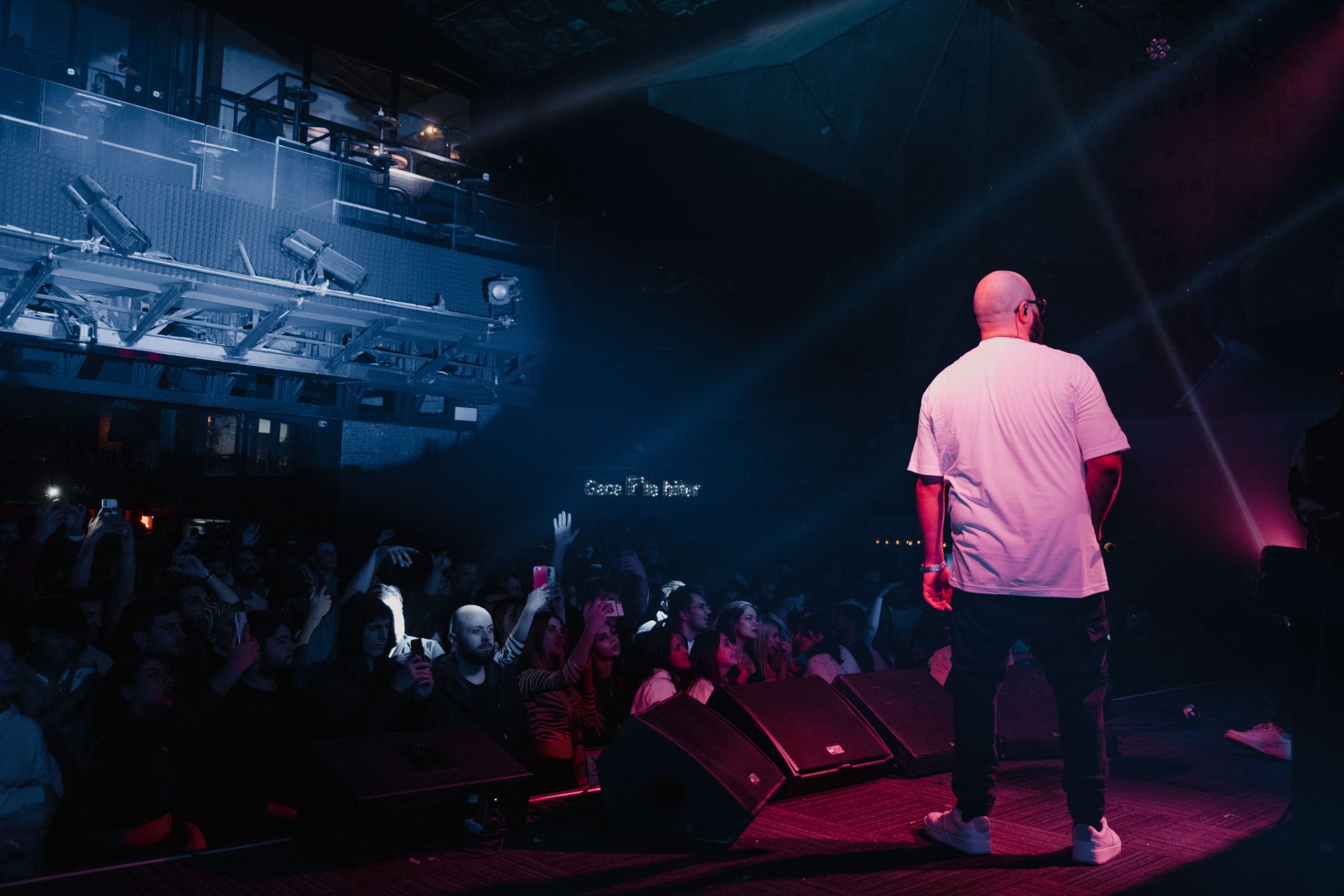
On November 1, 2025, at PH Live at Planet Hollywood Resort and Casino, Andy Glass, the official Guinness World Records adjudicator, walked onto the stage mid-show and handed Jay Jenkins a certificate. The Color of Noize Orchestra, 101 musicians drawn from across the country, was performing behind him. The record being certified: the largest orchestra ever assembled for a hip-hop concert.
Jeezy accepted the certificate and told the crowd, “This isn’t just a win for me, it’s a moment for the culture, for music, and for Vegas.”
Six months later, he announced The Legend of the Snowman, his 2026 Las Vegas residency. It sold out its initial ten-date run so quickly that the schedule expanded through August, eventually reaching more than 25 dates spanning May through August 22. By July, when Fox5 Las Vegas covered the residency mid-run, the city had designated Jeezy’s Friday and Saturday night shows at PH Live as the official after-dark destination for the NBA Summer League. Summer League-certified merchandise from a collaboration between The Legend of the Snowman and NBA Summer League had already been seeded to active players.
These are not the typical metrics of a hip-hop concert. They are the metrics of something that has been deliberately constructed to operate differently, and understanding the business architecture of what Jeezy built at PH Live reveals a model for genre elevation that other artists are watching carefully.
The Symphonic Hip-Hop Premise
The concept that The Legend of the Snowman built its identity around, hip-hop catalog performed with a full live orchestra rather than a DJ and backing tracks, is not without precedent in other genres. Classical crossover concerts, rock orchestral performances, and jazz-classical hybrids have long histories. What Jeezy pursued is more specific and more audacious: taking music that was created in conditions of, as he put it, scarcity and survival, and performing it with the sonic abundance of 50 to 60 professional musicians backing every song.
Jeezy’s explanation of the effect in his Fox 29 interview is worth taking seriously as both artistic statement and business insight: when this music was first made, it was made out of scarcity and survival. And hearing it re-imagined, you hear it in abundance. You got 40, 50, 60 people on stage with instruments backing your vision and your music, they’re expanding it, they’re adding elements and color to it that you wouldn’t normally get just having a microphone.
This is not a description of a novelty gimmick. It is a description of genuine artistic transformation that changes what the audience receives from a familiar catalog. Songs that listeners have heard thousands of times through streaming arrive with textural dimensions that speakers and headphones cannot deliver, played by musicians who have been arranged specifically for the Las Vegas production by Derrick Hodge, a Grammy-winning artist in his own right who serves as conductor and composer.
Adam Blackstone as Musical Director brings additional credentials. Blackstone has served as music director for Super Bowl halftime shows, the BET Awards, and numerous high-profile productions that require the kind of orchestral-meets-contemporary music management that an undertaking like this demands. The production team assembled for The Legend of the Snowman is at the level of Las Vegas’s most prestigious residencies, regardless of genre.
The Sellout Expansion Pattern
The original Legend of the Snowman announcement covered 10 dates in May and June 2026. By the time the full residency concluded in August, it had expanded to more than 25 performance nights spanning four months.
This expansion followed the same pattern we observed with the Backstreet Boys at Sphere earlier in this series: incremental date additions that reflect ongoing ticket velocity rather than advance booking of an ambitious calendar. When the May and June dates sold quickly, the residency expanded into July. When July dates sustained demand, August was added. The final date, August 22, sits in the same weekend as Guns N’ Roses at Allegiant Stadium, and the coexistence of both shows in the same city on the same weekend reflects the audience segmentation analysis we have established throughout this series.
The Jeezy audience and the Guns N’ Roses audience overlap minimally. Both can fill their respective venues on the same night without competing for the same ticket buyers.
What the expansion pattern demonstrates beyond demand is something about PH Live’s willingness to commit calendar space to a single artist across an extended run. PH Live, which has hosted residencies by Jennifer Lopez, has a clear understanding of what a long-term residency commitment means for property economics: reliable sellout nights, consistent food and beverage revenue, hotel bookings that cluster around performance dates, and the kind of repeated marketing cycle that builds cumulative awareness rather than requiring full-budget campaigns for each individual show.
The Venue and the Artist Match
PH Live at Planet Hollywood has a capacity of approximately 4,600 for concert residency configurations, placing it firmly in the mid-size category between The Chelsea’s 3,200 and T-Mobile Arena’s 20,000. This scale is specifically appropriate for what The Legend of the Snowman is trying to accomplish.
An orchestral hip-hop experience requires acoustic conditions that larger arenas cannot provide without significant compromises. At 65,000-seat Allegiant Stadium, the physical distance between audience and orchestra becomes a technical challenge that even sophisticated PA systems struggle to solve for the kind of nuanced instrumental detail that separates an orchestral performance from a recorded playback. At 4,600 seats, the orchestra’s acoustic presence is genuinely felt in the room alongside the amplified elements, creating the blended experience that makes the production distinctive.
The black-tie framing, requiring formal dress for every performance night, deliberately sets expectations that differentiate The Legend of the Snowman from the casual-dress, high-energy nightclub model that most hip-hop concert experiences follow. Guests who arrive in formal attire are primed for a different kind of engagement, more attentive, more seated, more focused on the musical content and less focused on the social performance that dominates nightclub environments.
This attentiveness serves the orchestral elements. The instrumental arrangements that Derrick Hodge creates for Jeezy’s catalog reward attention in ways that standard concert production cannot. When a tuba line from a corrido-influenced arrangement arrives beneath a familiar melody, or strings from the Color of Noize swell behind a verse that originally had no melodic accompaniment, those moments land differently in a room where the audience is listening with theater-like focus than in a crowd primarily occupied with bottle service and social navigation.
The NBA Summer League Convergence
The designation of Jeezy’s Friday and Saturday shows as the official after-dark destination for the NBA Summer League is more strategically significant than a simple marketing alignment.
NBA Summer League runs in July and draws a specific professional and entertainment industry demographic to Las Vegas: NBA players in the early stages of their careers, agents, general managers, scouts, team executives, celebrities with NBA connections, and the broader sports-adjacent entertainment industry that follows professional basketball. This demographic is exactly the audience that The Legend of the Snowman targets and that targets it back.
The Summer League x Legend of the Snowman merchandise collaboration, seeded directly to active players, generated social media exposure from athletes to their own substantial followings. An NBA Summer League player posting a Legend of the Snowman photo or wearing the collaborative merchandise reaches an audience that is predisposed to find Jeezy’s cultural positioning resonant. The merch collaboration is both a revenue stream and a targeted influence marketing campaign.
The after-dark designation creates narrative continuity that benefits both events. Summer League attendees who spent the day watching basketball have a clear, endorsed next step for the evening that fits the cultural context they are already immersed in. The Legend of the Snowman gains association with professional basketball that elevates the residency’s cultural positioning beyond what a standard hip-hop concert brand can claim.
What the Guinness Record Represents Strategically
The Guinness World Record for the largest orchestra at a hip-hop concert is, on its surface, a marketing achievement. But it represents something more significant: the first external, institutional validation of orchestral hip-hop as a defined category worthy of record-keeping.
Guinness World Records adjudicates achievements in categories that have sufficient public interest to warrant tracking. The creation of a record for the largest orchestra at a hip-hop concert implies that orchestral hip-hop is now a sufficiently established category to have records, and that those records have meaning to the audience that follows Guinness recognition.
This institutional validation compounds with each subsequent performance. Every Jeezy show in 2026 builds on the record set in 2025. The brand identity of The Legend of the Snowman now includes a documented historical first that future productions must acknowledge even as they eventually surpass it. When another artist inevitably attempts to replicate the orchestral hip-hop residency model, the Jeezy precedent is the baseline from which that attempt is measured.
Key Insights
Orchestral reimagining of existing catalog transforms familiar songs by adding textural and harmonic dimensions unavailable through standard concert formats, creating a genuinely different product from the same artistic material that existing fans have long-established relationships with. Sellout-driven incremental expansion from 10 dates to 25-plus across four months demonstrates demand sustainability that advance-booking of an ambitious calendar would not have validated, providing each expansion with revenue data supporting the decision.
Black-tie dress code creates attentive audience posture appropriate for orchestral appreciation that casual-dress hip-hop concert environments structurally cannot produce, serving the production’s musical complexity. NBA Summer League convergence delivers professional sports industry audience through official designation and merchandise collaboration, generating cultural positioning and influencer reach beyond what traditional concert marketing achieves. PH Live’s 4,600-seat capacity creates acoustic conditions for orchestral-contemporary hybrid that larger venues compromise through distance and PA dependence. Guinness World Record provides institutional validation of orchestral hip-hop as defined category, establishing historical precedent that all subsequent attempts reference.
Notes on Genre Elevation and What Comes Next
Jeezy’s Las Vegas residency is part of a broader conversation about what hip-hop can be as a live performance format, a conversation that has been ongoing since the genre’s commercial ascent but has rarely produced as concrete and commercially validated an answer as The Legend of the Snowman.
The traditional hip-hop concert format, which prioritizes energy, crowd participation, and the familiar experience of hearing recorded tracks recreated live, has genuine strengths that the orchestral model does not replicate. A large portion of the hip-hop audience prefers that format and will continue attending those shows.
But there is also an audience for something more structured, more formal, and more musically ambitious. That audience exists in Las Vegas in sufficient numbers to sustain 25-plus nights at PH Live across a four-month residency. It exists among NBA professionals who are wearing the merchandise. And it exists among the critics and cultural commentators who described the Guinness Record ceremony as a moment for the culture rather than a publicity stunt.
What Jeezy built at PH Live is a proof of concept with full financial validation. The question for the artists, managers, and producers watching is which catalog is next, which orchestra is assembled to reimagine it, and whether any Las Vegas venue that has watched PH Live generate four months of sellout revenue will be slow to offer the right terms to whoever answers that question first.