


Steve Kestler opened Aroma Latin American Cocina in 2021 at 2877 North Green Valley Parkway in Henderson. The location was modest, a small space in a strip mall near a Terrible Herbst convenience store, with eight tables and virtually no foot traffic from the kind of dining-focused visitors who seek out ambitious restaurants. What happened next confounded expectations in both directions. The food was extraordinary, earning Yelp’s recognition as the number one taco spot in the entire United States in 2023 and landing Kestler a James Beard Award finalist nod in Best Chef Southwest in 2024. And yet the crowds never fully materialized in the way the accolades suggested they should.
The restaurant appeared on the Las Vegas Review-Journal’s Top 100 list. Food writers praised the pepian negro, the Peruvian ceviche, the braised short ribs in mole. Serious eaters made pilgrimages. But the neighborhood, oriented toward family chains and casual dining, never sent Aroma the regular foot traffic its cooking deserved.
After four years, Kestler reflected on what the data was telling him: “Most of our customers were coming from outside Henderson. For the last four years, the feedback was that we needed to move to a more central location.”
In early 2026, Aroma Latin American Cocina relocated to 3355 Spring Mountain Road, Suite 35, at the eastern edge of Chinatown, next door to the Sand Dollar Lounge. The reopening placed a James Beard Award finalist and multiple-year Las Vegas Top 100 restaurant directly on the corridor that serious local diners already treat as the city’s most important dining destination.
This relocation story, a celebrated chef choosing visibility over inertia, contains lessons that extend well beyond the specific details of one restaurant’s move.
What Four Years in Henderson Revealed
The Henderson experience, frustrating as it must have been commercially, produced specific market intelligence that most restaurants never develop because they close before accumulating enough data. Kestler discovered that Aroma had a genuine audience, one willing to seek it out even in an inconvenient location, that didn’t reflect the immediate neighborhood’s demographics at all.
Customers traveling from across the valley to eat in a Henderson strip mall are making an active, intentional choice rather than a convenient one. These are diners who read food media, follow restaurant news, and prioritize culinary quality over proximity. They are exactly the audience that sustains ambitious neighborhood restaurants over the long term. The problem in Henderson was that these diners couldn’t be supplemented by neighborhood walk-in traffic that most restaurant business models require to reach viable operating volume.
Kestler described the Henderson location’s market mismatch directly: “The other location was in an area that is more for family-oriented restaurants and big chains. We are more for the adventurous foodie. It’s not your typical, everyday Mexican or Latin American restaurant.”
This self-awareness about audience fit is valuable and rare. Many restaurateurs resist relocating because of sunk costs in buildout, established supplier relationships, and fear of losing the customers they’ve managed to build. Kestler’s willingness to acknowledge that his concept and his neighborhood were mismatched, despite genuine success by national critical standards, reflects the kind of strategic clarity that makes the difference between restaurants that survive and ones that don’t.
Why Chinatown Was the Answer
Kestler’s reasoning for choosing Chinatown was specific and personal: “I felt that Chinatown could be a perfect fit for us. So often, we find ourselves inspired by Asian cuisines to add tones to our dishes, not to mention that Spring Mountain Road hosts some of my favorite restaurants in the city.”
This reasoning deserves expansion. Aroma’s culinary identity draws explicitly from cross-cultural fusion, applying Asian ingredients and techniques to Latin American traditions in ways that connect the two culinary heritages rather than keeping them separate. The chicken tinga enchiladas with gochujang chiles, Korean pickles, and kimchi rice aren’t a cynical menu decision designed to attract social media attention. They reflect genuine cooking philosophy about how cultures influence each other through immigration and exchange.
Placing this cooking in Chinatown creates contextual resonance that the Henderson strip mall location never could. The neighborhood where Asian culinary traditions have established deep roots is exactly where a Latin American restaurant that draws on those traditions makes intuitive sense. Diners who already understand and appreciate Japanese, Korean, Chinese, and Thai cooking are better positioned to appreciate and seek out what Kestler is doing than the family-dining Henderson market that surrounded him for four years.
The Sand Dollar Lounge next door, one of Las Vegas’s most beloved music venues, provides something the Henderson location never had: late-night adjacent foot traffic from an audience predisposed to adventurous experiences. People who choose to spend their evenings at a live music venue are, broadly speaking, the same people who seek out restaurants with genuine personality and culinary ambition rather than chain familiarity.
The Menu Evolution
The Chinatown move wasn’t a simple geographic transfer of the existing concept. Kestler planned to maintain the core menu while introducing a lunch program and adding ten new dinner dishes reflecting his philosophy of cooking more upscale food. The lunch program specifically represents the kind of daytime revenue that the Henderson location’s neighborhood dynamics never supported.
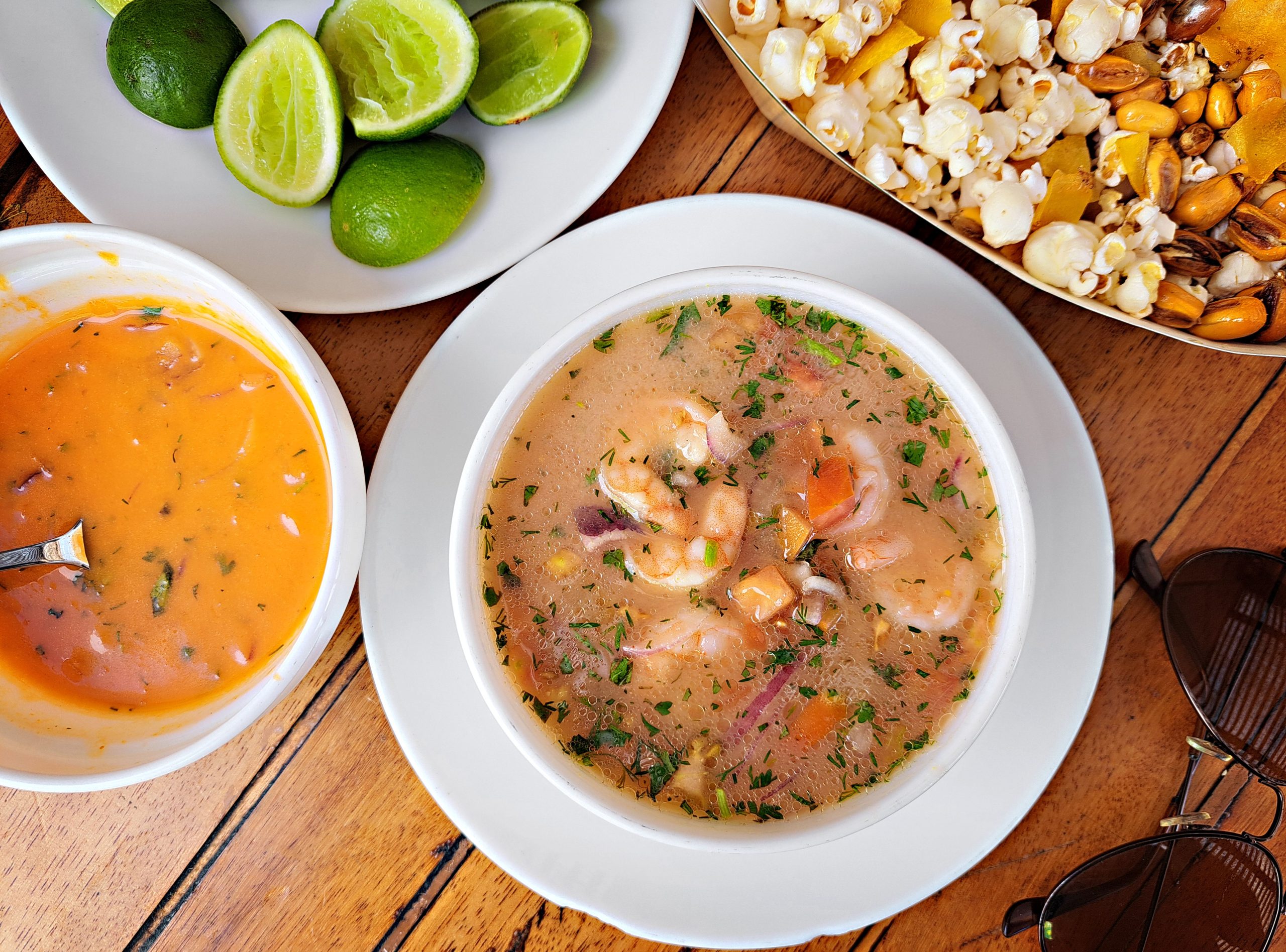
The menu at the Chinatown location is divided into four regions of Latin America, offering dishes from throughout the continent: Mexican tacos, Guatemalan pepian negro, Peruvian ceviche, Colombian patacones and miniature Cuban sandwiches. This regional organization creates an educational framework that serves the food-curious Chinatown audience well. Diners who understand the difference between regional Chinese cuisines are well-positioned to appreciate and seek out the distinctions between regional Latin American cooking traditions.
The pepian negro, a complex Guatemalan sauce made from toasted seeds, chiles, and spices with deep Mayan roots, appears as a signature preparation connecting Kestler’s personal heritage directly to the menu. Kestler’s Guatemalan father was a seafood master known for his exquisite ceviches and rich caldos, and his mother’s homemade pepian negro laid the groundwork for his passion for cooking. This personal history makes the dish more than a menu item. It’s autobiography, which is precisely the kind of culinary storytelling that serious diners respond to and food media covers.
The pork belly taco that earned Yelp’s number one ranking, braised for 30 hours before service, is an example of technique commitment that fast-casual competitors cannot replicate regardless of location. The pork belly taco filled with luscious meat braised for 30 hours was specifically cited in Yelp’s recognition, confirming that the 2023 national accolade was earned by specific technique rather than by marketing or location advantage. This quality standard transfers to Chinatown with the kitchen intact.
The James Beard Finalist Credential in Context
Kestler’s 2024 James Beard Award finalist nod in Best Chef Southwest was genuinely significant within the awards framework, but it arrives with context worth examining. The awards committee recognizes hundreds of semifinalists and dozens of finalists annually across all categories and regions. Being a finalist is meaningful, but it doesn’t guarantee commercial success or public recognition outside the food-media world.
What the Beard recognition did accomplish for Aroma was validate the restaurant’s seriousness to the Las Vegas food community in ways that Yelp’s consumer-driven recognition couldn’t quite replicate. When food writers and industry professionals know that the Beard Foundation has evaluated a restaurant at the finalist level, they pay attention differently than they might to a restaurant with strong popular reviews but no institutional critical recognition.
The combination of Yelp’s number one national taco ranking and the Beard finalist credential creates two-tier validation that serves different audiences: the consumer food community that trusts crowd-sourced rankings, and the culinary professional community that trusts institutional critical frameworks. Having both simultaneously is genuinely rare.
In the Chinatown context, both credentials serve as pre-arrival awareness builders for the specific diners most likely to seek out Aroma. The food-forward Spring Mountain Road audience includes exactly the demographic that tracks both Yelp rankings and James Beard recognition, meaning Kestler arrives with a level of established credibility that most restaurant relocations can’t bring to a new neighborhood.
The Outdoor Patio Vision
Kestler described an unconventional patio vision: “There’s a lot of restaurants with patios. Everybody puts tables, chairs, and serves the same food, just an extension of the inside of the restaurant. We’re trying to do something different.” The details of what “different” looks like haven’t been fully revealed publicly, but the explicit intention to avoid the standard patio formula suggests programming or design that creates a distinct experience rather than simply moving tables outside.
On Spring Mountain Road, where Chinatown’s outdoor energy reaches its peak on weekend evenings, a well-conceived patio could extend Aroma’s presence and personality beyond its interior walls in ways that matter for discovery. Diners walking the corridor who pass an interesting outdoor space are drawn to investigate in ways that a closed storefront never creates. The patio becomes marketing that money can’t directly buy.
Notes and Key Takeaways
For Restaurant Operators:
Kestler’s Chinatown relocation demonstrates that even nationally acclaimed restaurants can be commercially constrained by location mismatch regardless of food quality. The willingness to recognize this mismatch, absorb the costs of relocation, and position the concept in a neighborhood aligned with its actual audience is a form of strategic courage that the restaurant industry rarely rewards adequately in its own discourse.
For Diners:
Aroma Latin American Cocina’s Chinatown location at 3355 Spring Mountain Road brings Yelp’s 2023 number one taco spot and a 2024 James Beard Award finalist to the most food-forward corridor in Las Vegas, serving a menu spanning Guatemalan pepian negro, Peruvian ceviche, Colombian patacones, and the 30-hour braised pork belly taco that earned national recognition from a restaurant that was, until recently, hidden in a Henderson strip mall.
For Las Vegas:
Aroma’s relocation from Henderson to Chinatown continues a pattern of quality restaurants recognizing Spring Mountain Road as the most supportive environment for chef-driven concepts with adventurous culinary identities. The corridor functions increasingly as a quality filter, attracting restaurants that have outgrown neighborhood limitations and need audiences sophisticated enough to appreciate what they’re doing.
Important Insights:
The four years of data from Henderson produced something more valuable than a successful suburban location: it produced clarity about who Aroma’s genuine audience is and where they live. That audience turned out to be distributed across the entire valley rather than concentrated in the immediate neighborhood, which made the relocation not just reasonable but necessary for the concept to reach its potential.
James Trees, chef-owner of Esther’s Kitchen and Bar Boheme, is a noted fan of Aroma, placing Kestler within the network of Las Vegas’s most respected independent chef community. This peer recognition carries weight in a city where the culinary community is small enough that recommendations between established chefs actually move the needle on where serious diners pay attention.
The Korean and Asian influences woven throughout the menu, from the gochujang enchiladas to the kimchi rice to the Asian-influenced preparations that appear throughout, aren’t fusion for its own sake. They reflect Kestler’s genuine engagement with the cuisines surrounding him in Las Vegas, where the Asian dining community has shaped how ambitious cooks of all backgrounds think about flavor building and technique.
The transition from Henderson hidden gem to Chinatown destination represents a maturation of the Aroma brand from discovered secret to deliberate presence. This evolution changes the restaurant’s relationship with food media, which can now recommend it as a straightforward destination rather than requiring lengthy directions through suburban Henderson.
The lunch program introduced at the Chinatown location creates daytime revenue and introduces a new customer category to Aroma’s audience: the lunch crowd from surrounding businesses, offices, and the growing Spring Mountain Road professional community that the Henderson location’s more residential surroundings never generated.