


Robby Cunningham started making pizzas in his home kitchen because he missed Detroit. Not the city itself, necessarily, but the food. The rectangular pies with their crispy, oiled bottoms. The cheese spread all the way to the edges, caramelizing against the pan. The two wide stripes of sauce laid on top after baking. These weren’t just pizzas. They were a specific style, a regional tradition, something you couldn’t find in Las Vegas no matter how many pizza places dotted the Strip and surrounding neighborhoods.
So Cunningham did what many people do when they miss food from home. He learned to make it himself. But then he did something most people don’t do. He started giving it away for free, making pies and sharing them with anyone who wanted to try. The response told him everything he needed to know. By December 2025, Guerrilla Pizza opened its first permanent location in the Soho Lofts downtown, becoming the first restaurant to bring authentic Detroit-style pizza to Las Vegas at scale.
This story matters not because one guy opened a pizza place. Las Vegas gets new pizza restaurants all the time. It matters because Guerrilla Pizza represents something larger happening in the city’s food scene. A shift away from celebrity chefs and imported concepts toward homegrown talent building businesses around specific, authentic food traditions. A recognition that Vegas diners, both locals and tourists, want more than just good food. They want food with a point of view, food that comes from somewhere and means something.
The Detroit-Style Difference
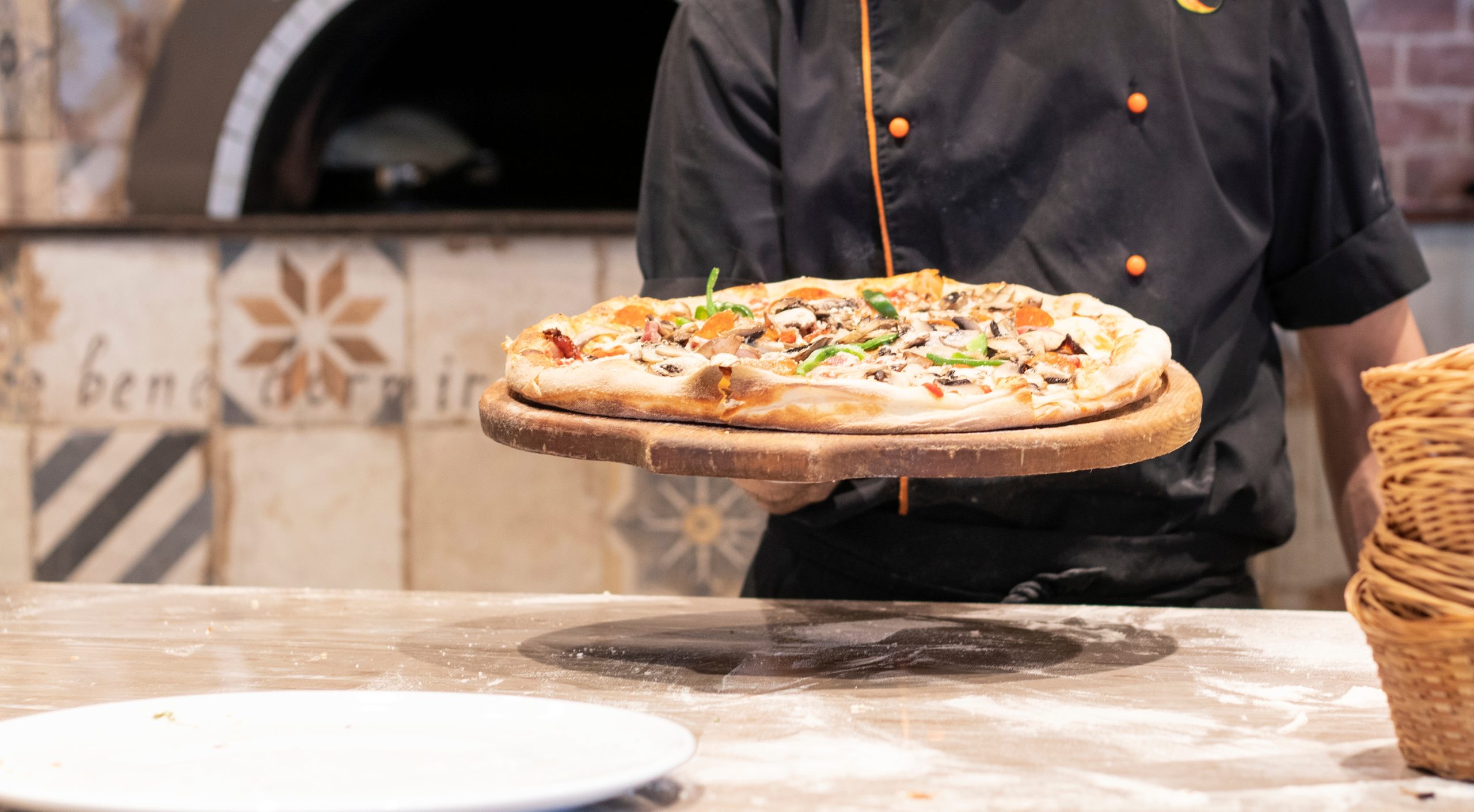
Most people, if they think about regional pizza styles at all, know about New York’s thin slices and Chicago’s deep dish. Detroit-style occupies a different category entirely. The rectangular shape comes from baking in blue steel pans originally used in automotive factories. The dough is thick and airy, almost focaccia-like. The Wisconsin brick cheese goes on first, spread all the way to the edges where it caramelizes into crispy, lacy frico against the pan sides. The toppings come next, then the whole thing bakes. Only after it comes out of the oven does the sauce go on, applied in two distinctive stripes.
The result looks nothing like what most people picture when they think “pizza.” It’s rectangular, not round. The crust is thick but not heavy. The cheese-to-sauce ratio flips the script on traditional pizza proportions. And those crispy, caramelized edges provide textural contrast that thin-crust pizza simply cannot deliver.
For Detroit natives, this style represents home. For everyone else, it represents discovery. When done properly, Detroit-style pizza offers something genuinely different from the New York slices and Neapolitan pies that dominate most pizza conversations. It’s not better or worse. It’s its own thing, with its own logic and appeal.
The Guerrilla Approach
Cunningham’s path from home baker to restaurant owner reveals something important about how food businesses can develop in modern Las Vegas. He didn’t secure funding first and then open a restaurant. He didn’t partner with an established hospitality group or celebrity chef. He built demand organically, one free pizza at a time, proving the concept before committing to permanent infrastructure.
This guerrilla approach, which gave the business its name, created several advantages. First, it allowed Cunningham to refine his product without the pressure of generating revenue. Each batch of free pizzas was essentially market research, revealing what worked and what needed adjustment. Second, it built a community of supporters who had invested emotional capital in seeing Guerrilla Pizza succeed. By the time the permanent location opened, Cunningham already had a built-in customer base that felt ownership in the project.
Third, and perhaps most importantly, the extended testing period meant the restaurant could open with confidence in its product. No trial-and-error phase where early customers get inconsistent results. No menu changes after three months because the original concept didn’t work. Guerrilla Pizza knew exactly what it was before it ever signed a lease.
This patient, prove-it-first approach contrasts sharply with how many Las Vegas restaurants launch. Too often, concepts debut before they’re truly ready, banking on opening buzz and location advantages to carry them through the inevitable growing pains. Sometimes this works. Often it doesn’t. Guerrilla Pizza took the opposite route, and the decision to wait until the concept was fully developed paid off.
Location as Statement
The choice to open in Soho Lofts, rather than on the Strip or in a high-traffic suburban location, says something about Guerrilla Pizza’s priorities. Downtown Las Vegas, particularly the Arts District and surrounding areas, has become home to a particular kind of restaurant. These are chef-driven, concept-focused establishments that prioritize quality and authenticity over tourist appeal. Places like Esther’s Kitchen, Sparrow + Wolf, and now Bar Boheme have built reputations by doing specific things exceptionally well rather than trying to be everything to everyone.
Guerrilla Pizza fits naturally into this ecosystem. The Soho Lofts location provides reasonable rent, nearby parking, and proximity to the kind of diners who actively seek out interesting, specialized restaurants. It’s not trying to capture Strip foot traffic or rely on tourists who might order pizza once and never return. Instead, it’s building for locals and food-focused visitors who will seek it out specifically.
This geographic positioning also affects how the restaurant operates. Downtown locations can focus on quality and consistency because they’re not dealing with the extreme volume demands and tourist expectations that come with Strip locations. The customer base skews toward people who understand and appreciate what makes Detroit-style pizza distinctive rather than visitors comparing it unfavorably to whatever pizza style they prefer back home.
The Broader Pizza Evolution
Guerrilla Pizza’s opening occurs against the backdrop of significant evolution in Las Vegas pizza. For years, the city had good pizza options but few great ones, and fewer still that represented specific regional traditions with real authenticity. That’s changing rapidly. Eataly at Park MGM recently introduced Pizza al Padellino, a Margherita that showcases Turin’s rarely-seen pan pizza style with imported ingredients and proper technique. The result, according to food writers, ranks among the best pizzas on the Strip.
This elevation of pizza as a serious culinary category, worthy of the same attention to detail and ingredient quality as fine dining, reflects broader changes in how diners think about casual food. The old hierarchy that placed French and Japanese at the top and Italian-American comfort food somewhere in the middle has broken down. Diners increasingly judge restaurants not by cuisine category but by execution and authenticity within whatever tradition the restaurant represents.
Guerrilla Pizza benefits from this shift. If it had opened ten years ago, the concept might have struggled to find an audience beyond Detroit expats. Today, food-focused diners actively seek out restaurants that do one thing exceptionally well, even if that one thing is rectangular pizza baked in automotive pans. The specificity isn’t a limitation. It’s a selling point.
The Economics of Specialization
Operating a restaurant that focuses exclusively on Detroit-style pizza creates both challenges and advantages. On the challenge side, the menu is inherently limited. You’re not serving salads and pasta and sandwiches and everything else that might capture additional revenue. You’re selling pizza, and if diners don’t want pizza that day, you’ve lost them entirely.
But specialization also creates powerful advantages. Inventory management becomes simpler when you’re not stocking ingredients for dozens of different dishes. Staff training focuses on mastering one specific skill set rather than spreading competency across multiple preparations. Quality control becomes more consistent because you’re replicating the same core process repeatedly rather than juggling different techniques for different menu items.
Most importantly, specialization creates clarity. Diners know exactly what they’re getting. The restaurant doesn’t have to convince anyone that it can cook Italian and Mexican and American food equally well. It makes one thing, and the implicit promise is that this focused approach results in superior execution.
For Guerrilla Pizza specifically, this specialization allows Cunningham and his team to obsess over details that wouldn’t be possible in a broader concept. The exact hydration of the dough. The proper cheese blend. The temperature and timing that creates those crispy edges without burning. The sauce consistency that allows for clean stripes without running. Each of these elements requires attention and refinement, and focusing exclusively on Detroit-style pizza makes that level of refinement achievable.
Community Building Through Food
Perhaps Guerrilla Pizza’s most interesting achievement has nothing to do with pizza technique or business strategy. It’s the community the restaurant built before it even existed as a physical space. By giving away pizza for months, Cunningham created a network of people who felt personally invested in the project’s success. These weren’t just potential customers. They were advocates who had been part of the journey from the beginning.
This community-first approach reflects a broader trend in independent restaurants. The most successful new concepts often prioritize relationship building over pure transaction optimization. They engage with their neighborhoods, support local suppliers, participate in community events, and create spaces where regulars feel genuine ownership. This takes more time and effort than simply opening doors and hoping for the best. It also creates loyalty and word-of-mouth marketing that money can’t buy.
For Las Vegas, a city often criticized for prioritizing tourists over locals and spectacle over substance, restaurants like Guerrilla Pizza represent a counternarrative. They prove that authentic, community-focused concepts can succeed without compromising on quality or catering to the lowest common denominator of tourist expectations.
Notes and Key Takeaways
For Restaurant Operators:
Guerrilla Pizza demonstrates the viability of extended testing periods before committing to permanent infrastructure. The months Cunningham spent giving away free pizza weren’t lost time. They were essential product development and market validation that positioned the restaurant for success from day one.
For Diners:
Detroit-style pizza represents a legitimate regional tradition with its own techniques, ingredients, and appeal. Approaching it with the same openness given to Neapolitan or New York styles reveals a pizza category that delivers unique textures and flavors impossible to achieve with other methods.
For Las Vegas:
The success of specialized, chef-driven concepts in downtown areas proves that Las Vegas dining culture extends well beyond the Strip. The city has developed sophisticated local dining communities willing to support restaurants that do specific things exceptionally well.
Important Insights:
The rectangular format of Detroit-style pizza, while visually distinctive, serves functional purposes beyond aesthetics. The shape maximizes edge-to-center ratio, creating more of those prized crispy corners. The automotive pans conduct heat differently than pizza stones or conventional pans, affecting crust development. Understanding these functional elements helps diners appreciate why Detroit-style looks and tastes the way it does.
Guerrilla Pizza’s downtown location reflects a calculated decision about target audience and operational model. Strip locations offer higher volume but come with significantly higher costs, tourist-focused expectations, and pressure to dilute concepts for mass appeal. Downtown allows for focused execution and community building that supports long-term sustainability over quick returns.
The timing of Guerrilla Pizza’s opening, during a period when Las Vegas is reassessing value propositions and diversifying dining options, positions the restaurant to benefit from two trends. First, diners seeking alternatives to expensive Strip dining. Second, the broader movement toward specialized, authentic concepts over generic crowd-pleasers.
The free pizza phase that preceded the restaurant’s opening created marketing advantages that would be difficult and expensive to replicate through traditional channels. Each person who tried Cunningham’s pizza and enjoyed it became a potential evangelist, spreading awareness through genuine enthusiasm rather than paid promotion.
Detroit-style pizza’s relative novelty in Las Vegas, compared to its established presence in other major cities, gives Guerrilla Pizza first-mover advantage in the local market. As Detroit-style gains broader recognition nationally, having an authentic, well-executed local option positions the restaurant as the default choice for diners seeking that specific style.