



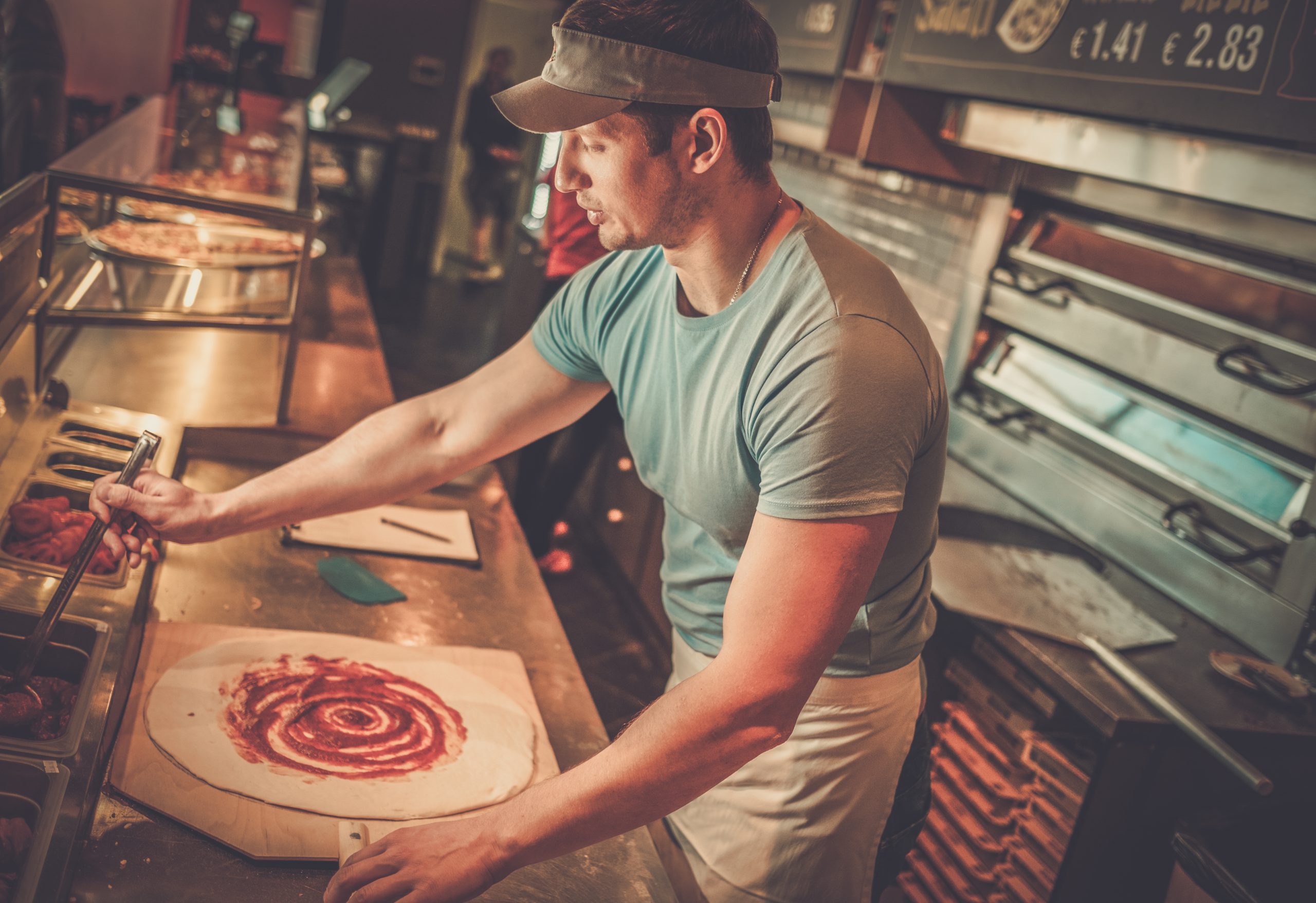
Pizza arrived in Las Vegas decades ago, but it largely followed predictable patterns. New York-style slices for quick service. Neapolitan pies for upscale dining. Chain restaurants serving whatever style corporate headquarters decided would maximize profit. The city had good pizza, occasionally even great pizza, but it rarely had pizza that made food writers stop and pay attention.
That’s changing now, and the catalyst is Detroit-style pizza. Guerrilla Pizza opened in December 2025, bringing authentic rectangular pies with crispy edges and two-stripe sauce to downtown. But the movement extends beyond one restaurant. Eataly at Park MGM refreshed its offerings with Pizza al Padellino, a Turin-style pan pizza that shares DNA with Detroit-style through its pan-based preparation. Together, these developments signal that Las Vegas is finally taking pizza seriously as a category worthy of the same attention given to steakhouses, sushi bars, and fine French dining.
The rise of Detroit-style pizza in Las Vegas, and pan pizza more broadly, reveals how regional American food traditions gain national recognition, what it takes for specialized concepts to succeed in competitive markets, and why pizza, despite being ubiquitous, remains capable of generating genuine innovation and excitement.
The Pan Pizza Advantage
Detroit-style and Turin-style pan pizzas share fundamental characteristics that set them apart from other categories. Both bake in metal pans rather than on stones. Both develop crispy bottoms from the oil in the pan. Both feature thick, substantial crusts that provide structure and chew. And both flip traditional pizza assumptions by changing the cheese-to-sauce ratio or application method.
These similarities matter because they point to underlying principles that make pan pizza distinctive. The metal pan conducts heat differently than a stone, creating crispy bottoms that stone-baked pizzas struggle to achieve. The pan walls contain the dough, allowing for thicker crusts without structural collapse. And the controlled environment of the pan enables techniques like spreading cheese to the edges for caramelization.
For Las Vegas specifically, pan pizza provides experiential advantages that thin-crust styles don’t offer. The substantial crust and hearty preparations satisfy visitors looking for filling meals. The visual distinctiveness, particularly Detroit-style’s rectangular shape and caramelized edges, creates social media moments that drive awareness. And the format travels well for takeout and delivery, important considerations for casino guests eating in rooms.
But pan pizza also demands more from operators. The pans themselves require investment and proper seasoning. The longer baking times reduce throughput compared to quick-cooking Neapolitan styles. And the technique requires specific knowledge that many pizza makers, trained on other styles, don’t automatically possess.
Eataly’s Strategic Refresh
When Eataly Las Vegas refreshed its offerings in 2024, adding Pizza al Padellino to showcase Turin’s pan pizza tradition, the decision reflected broader strategy about how to remain relevant in competitive markets. Eataly had been operating at Park MGM since 2018, offering a massive Italian marketplace with multiple dining stations. But marketplaces, like restaurants, need periodic refreshment to maintain guest interest and stay current with evolving food trends.
Pizza al Padellino addressed several needs simultaneously. It filled a gap in Eataly’s pizza offerings, which had focused on more traditional styles. It introduced a relatively unknown regional tradition to Las Vegas diners, creating educational opportunities and generating food writer interest. And it demonstrated Eataly’s commitment to authenticity and regional Italian traditions rather than simply serving generic Italian-American food.
The execution matters as much as the concept. Eataly sources ingredients properly, using imported Mutti tomato sauce, house-made mozzarella, fresh basil, and Olitalia EVOO. The pillowy dough requires specific technique to achieve proper texture. And the presentation, served in the characteristic pan, communicates authenticity and care.
Food writers have responded positively, with some calling the Margherita version the best pizza on the Strip. This kind of recognition creates value that extends beyond the pizza station itself. It enhances Eataly’s overall reputation, draws visitors who might not otherwise make the trip to Park MGM, and positions the marketplace as a serious culinary destination rather than just a tourist attraction.
The success of Pizza al Padellino also validates Eataly’s broader approach to the Vegas market. Rather than dumbing down offerings for tourists or chasing trends, Eataly commits to authentic regional Italian traditions and trusts that quality and distinctiveness will find audiences. This strategy takes longer to build momentum than more commercial approaches, but it creates sustainable competitive advantage.
The Guerrilla Pizza Story Revisited
Guerrilla Pizza’s journey from free pies in a home kitchen to permanent restaurant downtown has been covered elsewhere, but it deserves consideration in the context of the broader Detroit-style movement. Robby Cunningham didn’t invent Detroit-style pizza. The tradition existed for decades in Detroit. But he brought it to Las Vegas with evangelical fervor, understanding that introducing a regional tradition to a new market requires more than just cooking it properly.
The free pizza phase wasn’t just smart marketing. It was essential education. Most Las Vegas diners had never encountered Detroit-style pizza before Guerrilla. They didn’t know to look for it, didn’t understand what made it special, had no context for evaluating quality. By giving it away and letting people experience it without risk, Cunningham built understanding and demand simultaneously.
This educational approach matters particularly for regional food traditions entering new markets. You can’t assume diners will immediately appreciate unfamiliar styles just because they’re well-executed. You need to create context, explain what makes the style distinctive, and give people permission to enjoy something different from what they’re used to.
Guerrilla Pizza’s permanent location in Soho Lofts benefits from the groundwork laid during the guerrilla phase. Opening day wasn’t introducing an unknown concept to skeptical diners. It was serving pizza to people who already knew they wanted it, creating instant momentum that carries through slow periods and supports word-of-mouth growth.
The Quality Threshold
Both Eataly’s Pizza al Padellino and Guerrilla Pizza succeed because they exceed minimum quality thresholds for their respective styles. This matters more than it might initially appear. Regional food traditions, when they expand beyond their home markets, often get diluted. Someone sees Detroit-style pizza trending, decides to add it to their menu without understanding the technique, and produces mediocre results that discourage rather than excite diners.
For Detroit-style specifically, the quality threshold is high. The dough must achieve proper texture, light and airy despite thickness. The cheese must spread to edges and caramelize properly without burning. The sauce application, two stripes on top after baking, requires restraint and precision. The pan seasoning affects crust development. Each element needs attention for the whole to work.
Guerrilla Pizza clears these bars. The crispy bottoms and chewy cornices demonstrate proper technique. The Wisconsin brick cheese caramelizes into lacy frico at the edges. The sauce stripes maintain integrity rather than running together. These aren’t minor details. They’re what separates authentic Detroit-style from rectangular pizza that happens to bake in a pan.
Similarly, Eataly’s Pizza al Padellino succeeds because it respects Turin’s traditions while executing them properly for the Vegas context. The pillowy dough, the imported ingredients, the proper baking technique, all combine to create pizza that Italians familiar with the style would recognize and approve.
This commitment to quality matters because it creates foundation for the style’s long-term success in Las Vegas. If early examples of Detroit-style or Turin-style pizza were mediocre, it would poison the well for future concepts. But when the introduction is high-quality, it creates positive associations that benefit everyone subsequently working in the category.
The Strip vs. Off-Strip Divide
Eataly operates on the Strip at Park MGM. Guerrilla Pizza operates downtown in Soho Lofts. This geographic split reflects different approaches to building pizza businesses and reaches different customer bases.
Eataly benefits from Strip foot traffic and tourist volume. Visitors exploring Park MGM discover the marketplace and often stop for pizza. The location provides visibility and convenience that drive volume independent of critical acclaim or word-of-mouth. This volume justifies the operational complexity of running a station within a larger marketplace.
But Strip locations also come with constraints. Higher occupancy costs require higher prices and greater volume. Tourist-focused traffic means serving many one-time visitors rather than building local loyalty. And competition from numerous other dining options means pizza must compete for attention with dozens of alternatives within walking distance.
Guerrilla Pizza’s downtown location operates under different economics. Lower occupancy costs allow for more modest pricing. The customer base skews toward locals and food-focused visitors who seek out specific destinations. And competition, while present, comes from fewer alternatives in more concentrated areas.
Neither location strategy is inherently better. They serve different purposes and require different operational approaches. But together, they demonstrate that Detroit-style pizza can work in multiple contexts within Las Vegas. This geographic diversity suggests the style has genuine staying power rather than being a temporary trend limited to one neighborhood or customer segment.
The Future of Vegas Pizza
The success of Detroit-style and Turin-style pan pizzas in Las Vegas opens questions about what comes next for the city’s pizza scene. Will other regional styles gain footholds? Will existing pizzerias add pan pizza to their offerings? Or will the category remain dominated by a few specialized operators who own the style?
The answer probably involves all of these outcomes in varying degrees. Some regional styles, particularly those with strong traditions and distinctive characteristics, will likely follow Detroit-style’s path into Vegas. But not every regional pizza variation will succeed. The market can only support so much specialization before diners tune out.
Existing pizzerias face decisions about whether to add Detroit-style or stick with their current offerings. For some, particularly those already operating in casual segments, adding Detroit-style makes sense as a way to capture trending interest. For others, especially fine-dining pizza concepts, diluting focus by chasing trends would undermine what makes them special.
The most likely outcome involves continued elevation of pizza as a serious culinary category in Las Vegas. The days when pizza meant either cheap slices or generic red-sauce joints are ending. Increasingly, pizza restaurants must either execute specific styles at high levels or differentiate through quality, ingredients, and technique.
This elevation benefits everyone. It gives diners more options and better quality. It creates opportunities for talented pizza makers who might not have the resources or desire to open full-service restaurants. And it positions pizza as worthy of the same consideration given to other food categories when planning Las Vegas dining experiences.
Notes and Key Takeaways
For Restaurant Operators:
The success of specialized pizza concepts like Guerrilla Pizza and Eataly’s Pizza al Padellino demonstrates that Las Vegas markets reward authentic execution of specific styles over generic crowd-pleasing. Commitment to proper technique and quality ingredients creates differentiation that justifies premium positioning.
For Diners:
Detroit-style and Turin-style pan pizzas offer genuine alternatives to familiar New York and Neapolitan styles. These aren’t gimmicks or trends but legitimate regional traditions with their own techniques and appeal. Approaching them with openness rather than comparison to preferred styles allows for appreciation on their own terms.
For Las Vegas:
The city’s embrace of regional pizza traditions signals maturation beyond celebrity chef imports and casino-backed spectacles. Local operators bringing authentic regional foods to Vegas, and succeeding through quality execution, demonstrates the depth and sophistication of the dining market.
Important Insights:
The rectangular format of Detroit-style pizza, while visually distinctive, serves functional purposes that enhance the eating experience. The shape maximizes edge-to-center ratio, creating more of those prized crispy corners while providing structural advantages for thick dough styles.
Eataly’s decision to refresh offerings with Pizza al Padellino rather than simply maintaining existing stations demonstrates sophisticated thinking about marketplace management. Periodic introduction of new concepts keeps the venue fresh for repeat visitors while generating renewed media interest and word-of-mouth.
The educational component of introducing regional food traditions to new markets cannot be overlooked. Guerrilla Pizza’s free pizza phase and Eataly’s focus on authenticity both serve educational purposes that create context for diners unfamiliar with the styles.
Pan pizza’s advantages for takeout and delivery create additional revenue streams that thin-crust styles struggle to match. The substantial crust and contained format travel well, maintaining quality during transport in ways that delicate Neapolitan pies cannot.
The success of Detroit-style pizza in Las Vegas, a city with no historical connection to Detroit, proves that quality regional foods can transcend geography when introduced properly. This suggests opportunities for other regional traditions currently unknown in Vegas markets.
Food writer recognition of Eataly’s Pizza al Padellino as potentially the best pizza on the Strip creates halo effect that benefits the entire marketplace. Visitors coming for the pizza often explore other stations, generating revenue beyond the pizza sales themselves.
The timing of Detroit-style pizza’s arrival in Las Vegas, coinciding with broader trends toward regional American foods and authentic preparations, positioned the style for success. Cultural moment and execution quality combined to create momentum.
Guerrilla Pizza’s downtown location, while lacking Strip foot traffic, provides operational advantages in lower costs and more focused customer base. This allows for sustainable business model built on local loyalty rather than tourist volume.
The metal pan’s role in Detroit-style preparation isn’t merely traditional but functional, creating heat conduction and crust characteristics impossible to achieve with stone baking. Understanding these functional elements helps appreciate why the style requires specific equipment and technique.
Las Vegas’ growing pizza diversity, with multiple regional styles properly represented, positions the city as legitimate pizza destination rather than afterthought. This elevation attracts food-focused visitors who might previously have dismissed Vegas pizza scene as generic or inferior.