



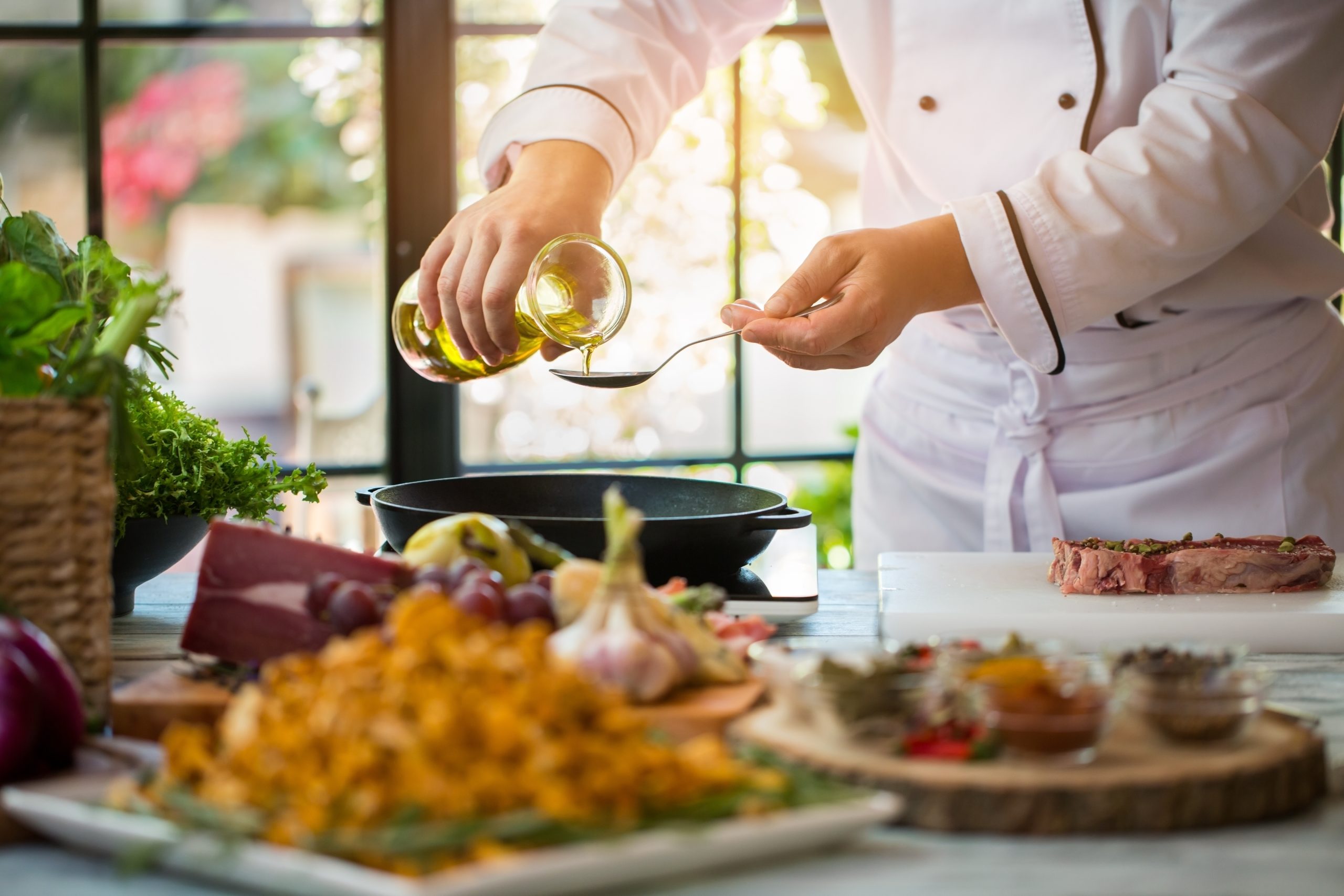
Chef James Trees has spent years building his reputation in Las Vegas. Esther’s Kitchen, his Italian restaurant in the Arts District, became one of the city’s most beloved dining destinations. The food was excellent, the atmosphere welcoming, the execution consistently strong. Trees established himself as one of Vegas’ most talented homegrown chefs, someone who could compete with the celebrity imports and casino-backed concepts through sheer skill and authenticity.
But Italian food wasn’t where Trees started. His foundation, the training that shaped how he thinks about cooking, came from French technique. Years spent learning classical preparations, understanding mother sauces, mastering the precision and discipline that French cuisine demands. That training informed everything he cooked, even when the menu featured Italian dishes rather than French ones.
In April 2025, Trees opened Bar Boheme on South Main Street, directly in front of his Petite Boheme cocktail bar. The new restaurant represents a homecoming of sorts. Trees is cooking French food again, the cuisine that formed his culinary identity. But he’s not recreating the traditional French restaurants where he trained. Bar Boheme takes a modern approach to French classics, resulting in a bistro-meets-brasserie that feels distinctly of this moment while respecting tradition.
The decision to open Bar Boheme, and the way Trees approached the concept, reveals important insights about how established chefs evolve their portfolios, how French cuisine is adapting to contemporary dining preferences, and what it takes to succeed in downtown Las Vegas’ increasingly competitive restaurant scene.
The French Cuisine Challenge
French restaurants face a peculiar problem in contemporary American dining. The cuisine commands enormous respect. Training in French technique remains the gold standard for culinary education. Many of the world’s most celebrated chefs built their reputations cooking French food. Yet French restaurants, particularly traditional ones, struggle to generate the same excitement and buzz as Italian trattorias, Japanese izakayas, or modern American concepts.
Part of this challenge stems from perception. French fine dining can feel formal, expensive, and intimidating. The service style, the wine programs, the menu language, all create barriers for diners who want excellent food without feeling like they’re taking a test. Meanwhile, casual French bistros often get dismissed as less serious, even when the cooking demonstrates real skill and understanding.
Bar Boheme addresses this challenge by positioning itself between these two extremes. It’s not haute cuisine with all the formality and price that implies. But it’s not a casual neighborhood bistro either. The menu takes French classics and applies modern sensibility, keeping the technical foundation while adjusting preparations and presentations for contemporary tastes.
Consider the trout rillettes with smoked trout roe and crème fraîche. This dish respects tradition. Rillettes are a classic French preparation, and the technique here is proper. But the addition of smoked roe adds a modern touch, providing textural interest and visual appeal that traditional rillettes might lack. The dish satisfies both diners who understand and appreciate classic French technique and those who simply want something delicious and interesting.
This balancing act continues throughout the menu. Steak frites appears, because what French bistro would be complete without it? But diners can choose between filet, flat iron, or ribeye, and the fries are cooked in beef tallow rather than traditional duck fat. The dish is recognizable, faithful to tradition, yet executed in a way that reflects modern ingredient sourcing and preparation methods.
The Downtown Advantage
Trees could have opened Bar Boheme on the Strip. His reputation would have supported a casino partnership. The tourist traffic would have provided a built-in customer base. The higher prices that Strip locations can command would have increased potential profitability. So why downtown?
The answer reveals Trees’ understanding of his strengths and the kind of restaurant he wanted to create. Bar Boheme succeeds because it can focus on locals and food-focused visitors without worrying about casual tourists who might not appreciate what makes the restaurant special. Downtown allows for the kind of nuanced, chef-driven concept that might get lost in Strip crowds.
The location also benefits from proximity to Esther’s Kitchen and Petite Boheme. Trees has spent years building relationships and reputation in the Arts District. Diners who trust his Italian cooking at Esther’s Kitchen are likely to give his French cooking a chance. The existing customer base provides stability while the restaurant establishes itself.
Furthermore, downtown real estate costs allow for experimentation and patience. Strip restaurants often need to generate massive revenue from day one to justify their occupancy costs. Downtown concepts can grow more organically, building reputation and refining operations without the same immediate pressure for huge returns.
This geographic strategy reflects a broader shift in how successful independent chefs approach expansion. Rather than jumping immediately to the Strip or partnering with casino operators, many are building clustered portfolios in specific neighborhoods. This creates operational efficiencies, brand reinforcement, and the kind of destination dining districts that draw both locals and knowledgeable tourists.
The Design as Statement
Bar Boheme’s interior design choices matter more than they might initially appear. Trees has said the color scheme is pink and green, describing it as “Wicked meets blanquette de veau.” This isn’t random. The design telegraphs the restaurant’s entire approach.
Pink and green suggest whimsy, approachability, a refusal to take itself too seriously. These aren’t the colors of stuffy French fine dining. They’re playful, contemporary, Instagram-friendly. But the reference to blanquette de veau, a classic French veal stew, signals that underneath the modern aesthetic lives serious culinary knowledge and respect for tradition.
This tension between accessibility and expertise defines successful modern French restaurants. Diners want to feel comfortable. They want spaces that welcome them rather than intimidate them. But they also want to know that the chef understands French technique deeply enough to execute it properly. The design communicates both messages simultaneously.
The bistro-meets-brasserie format reinforces this positioning. Bistros suggest casual neighborhood dining, places where you might eat several times a week. Brasseries imply slightly more ambition, fuller menus, more substantial wine programs. By straddling both categories, Bar Boheme can be whatever diners need it to be on a given night. Casual dinner with friends? Yes. Special occasion celebration? Also yes. The flexibility expands the potential customer base without diluting the concept.
The Chef’s Journey
Trees’ path from French training to Italian success to French return provides a case study in how chefs develop over time. Early in a career, you cook what you’re trained to cook, following the patterns established by mentors and classical education. As you mature, you might explore other cuisines, testing your ability to master different traditions and techniques.
But many chefs eventually return to their foundations, viewing those original lessons through the lens of everything they’ve learned since. Trees brings insights from years of running Esther’s Kitchen to Bar Boheme. He understands how to manage a busy restaurant, how to train staff, how to maintain consistency, how to build community. These operational skills, developed in an Italian context, now support his French cooking.
He also brings perspective that only comes from stepping away and then coming back. When you cook French food after spending years cooking Italian, you see both cuisines more clearly. You understand what makes each distinctive, what techniques cross over, where different traditions solve similar problems in different ways. This cross-pollination creates better cooking, more thoughtful menus, deeper understanding of why certain preparations work.
Bar Boheme benefits from this journey. It’s not a young chef’s first attempt at French cooking. It’s an established chef returning to his roots with hard-won experience and mature perspective. The difference shows in every aspect of the restaurant.
The Modern French Movement
Bar Boheme exists within a larger movement of chefs reimagining French cuisine for contemporary diners. This isn’t fusion. It’s not French technique applied to non-French ingredients in ways that abandon tradition. It’s French cooking that maintains technical rigor while adjusting presentations, portions, and formality levels to match how people want to eat now.
Across major dining cities, you see similar concepts emerging. French restaurants that feel more casual than traditional fine dining but more ambitious than typical bistros. Places where you can eat steak frites without wearing a tie, where the wine list includes interesting bottles without requiring a sommelier to decode it, where classic technique produces food that tastes both familiar and contemporary.
This evolution matters because it keeps French cuisine relevant. If the only options are extremely expensive haute cuisine or casual neighborhood bistros, French food becomes marginalized. Too formal for regular dining, too familiar for special occasions. But when chefs like Trees create concepts that occupy the middle ground, French cuisine remains central to dining conversations.
Las Vegas benefits particularly from this movement. The city has excellent high-end French restaurants. Daniel Boulud has DB Brasserie at The Venetian. Guy Savoy operated at Caesars for years before closing. But these are destination restaurants, special occasion places. Bar Boheme offers French cooking at a different level, accessible enough for regular visits while maintaining serious culinary ambition.
Notes and Key Takeaways
For Restaurant Operators:
Trees’ decision to return to French cooking after establishing success with Italian food demonstrates the viability of leveraging existing reputation to explore different concepts. The operational skills and customer relationships developed with Esther’s Kitchen provided foundation for Bar Boheme’s launch, reducing risk while allowing creative exploration.
For Diners:
Bar Boheme represents modern French bistro cooking at its best. The menu respects classical technique while avoiding the formality and intimidation sometimes associated with French dining. Diners can experience serious French cooking in an approachable, contemporary setting.
For Las Vegas:
The success of chef-driven downtown concepts like Bar Boheme proves that Las Vegas dining culture has matured beyond celebrity chef imports and casino-backed spectacles. The city now supports serious culinary talent building diverse portfolios in neighborhood settings.
Important Insights:
The clustering strategy Trees employs, with Esther’s Kitchen, Petite Boheme, and Bar Boheme all in close proximity, creates operational advantages that single-location restaurants cannot achieve. Shared back-office functions, cross-training opportunities for staff, and the ability to shift resources between locations during busy or slow periods all contribute to sustainability.
Bar Boheme’s April opening, during a period when Las Vegas was experiencing tourism challenges, required confidence in both concept and execution. The restaurant couldn’t rely on tourist traffic or opening buzz to carry it through early months. It needed to deliver immediately for local diners and food-focused visitors, which shaped menu development and service approach.
The pink and green color scheme, while seemingly whimsical, serves strategic purposes. It differentiates Bar Boheme from both traditional French restaurants and from Esther’s Kitchen, creating distinct visual identity while signaling the restaurant’s modern approach. This matters particularly for social media visibility and word-of-mouth marketing.
Trees’ training in French technique and subsequent work in Italian cooking provides unique perspective on both cuisines. This cross-cultural understanding allows for subtle innovations that chefs trained exclusively in one tradition might miss. The ability to see French classics through an Italian lens, or vice versa, creates opportunities for thoughtful evolution of traditional dishes.
The bistro-meets-brasserie positioning allows Bar Boheme to serve different functions at different times. Lunch can skew casual and quick. Dinner can be more leisurely and ambitious. This flexibility maximizes space utilization and appeals to broader customer base than a strictly defined concept might capture.
Bar Boheme’s opening adds French cuisine to downtown Las Vegas’ growing roster of serious dining options, filling a gap that previously required Strip visits or travel to suburban fine dining. This diversification of downtown’s culinary landscape strengthens the area’s appeal as a dining destination in its own right.
The restaurant’s focus on modern interpretations of French classics rather than fusion or radical reinterpretation reflects Trees’ respect for tradition balanced with understanding of contemporary preferences. This approach satisfies both diners who want authentic French cooking and those who might find strictly traditional preparations off-putting.