

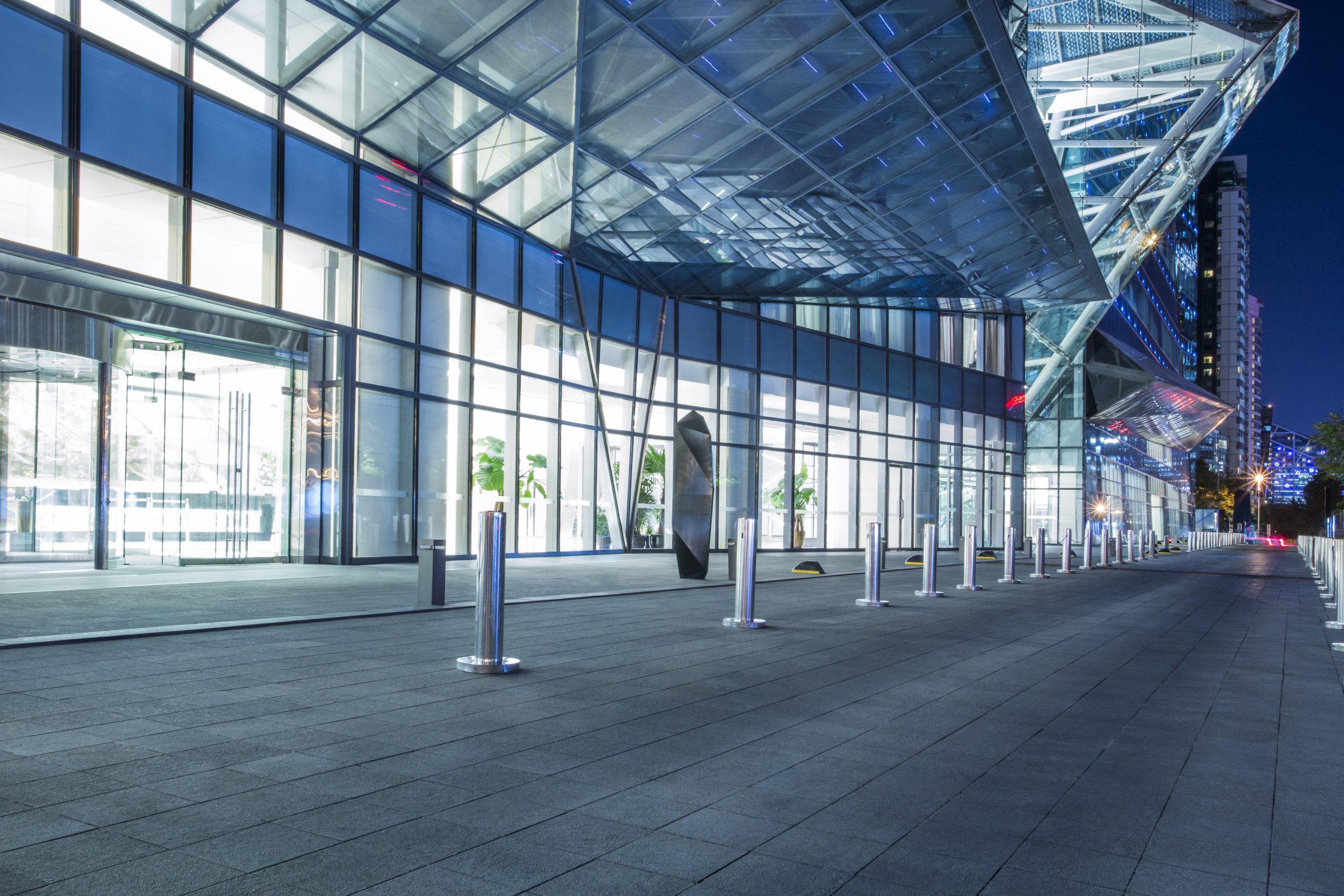
On a Monday morning in early January 2026, Steve Hill stood in the gleaming new Central Hall atrium of the Las Vegas Convention Center and made a bold declaration. “Welcome to what is now the greatest convention center in the United States,” the Las Vegas Convention and Visitors Authority president and CEO announced as natural light streamed through the ceiling and massive video boards advertised the Consumer Electronics Show exhibitors flooding into the building.
Hill’s confidence wasn’t just promotional bluster. It represented the culmination of a $600 million renovation project conceived two decades earlier, delayed through the Great Recession, and finally completed just in time to address one of Las Vegas’s most pressing economic challenges: declining leisure tourism.
As leisure visitors pulled back in 2025, convention business emerged as the city’s economic anchor. Now, with the renovation complete and 2026 shaping up to be a record year for convention attendance, Las Vegas is betting that business travelers can offset the volatility of leisure demand and provide a more stable foundation for long-term growth.
The Infrastructure That Almost Wasn’t
The Las Vegas Convention Center renovation has a history as complex as any major infrastructure project. Originally conceived in the early 2000s, the project stalled repeatedly as funding challenges, economic downturns, and competing priorities delayed progress. The building had grown tired and outdated, earning pointed criticism from major convention organizers.
“One of our biggest customers at one point said, ‘You know, it’s nice not to have a D-plus building in an A-plus destination,'” Hill recalled. “It’s like, ‘Yeah, I know.’ But he was right. The building had gotten tired. It needed an upgrade.”
The breakthrough came in 2016 when the Nevada Legislature approved the Southern Nevada Tourism Improvement Act. This legislation created a funding mechanism that would finance both the NFL Raiders’ new Allegiant Stadium and the expansion and improvement of the convention center. After the LVCVA gave final approval, the $1 billion West Hall project was completed by June 2021. The most recent phase, completed in December 2025, brought the rest of the complex up to West Hall standards.
The transformation is comprehensive. The renovation connects the North and South halls, allowing attendees to move throughout the entire facility without stepping outside (a meaningful improvement in a desert climate with scorching summers). The ribbon roof design from the West Hall now extends across the entire complex. Natural light floods spaces that previously felt cave-like. The grand lobby creates an impressive first impression that matches the destination’s reputation.
Most importantly, the expanded facility can now accommodate larger shows and more concurrent events. With 2.6 million net square feet of exhibit space, the Las Vegas Convention Center now ranks as the second-largest convention center in the country by indoor exhibit space, trailing only Chicago’s McCormick Center.
CES 2026: The Perfect Showcase
CES 2026, running January 6-9, became the inaugural event to fully utilize the renovated facility. With over 4,100 exhibitors and attendees from around the globe, the show provided an immediate test of the new infrastructure’s capabilities.
Gary Shapiro, CEO and vice chair of the Consumer Technology Association (which oversees CES), expressed relief at the completed renovation. “I was looking forward to this moment, but I’m also looking forward to 24 hours from now, when our first attendees will stream through these doors and just be awed in the beauty of what is here,” Shapiro said at the ribbon-cutting ceremony.
The timing proved fortuitous. CES has long been one of Las Vegas’s anchor conventions, drawing more than 130,000 attendees annually. Hotel room rates during CES week soared above $1,000 per night at some properties, demonstrating the economic impact of major conventions. The show’s return to a fully renovated facility reinforced Las Vegas’s position as the premier destination for technology conferences.
Beyond the convention center itself, CES 2026 utilized multiple venues throughout the city. The Venetian hosted digital health, smart home, and startup-focused Eureka Park exhibitors. C Space at ARIA served as a gathering point for advertisers, marketers, and media executives. Fontainebleau Las Vegas introduced CES Foundry, a new program focused on AI and quantum technologies.
This multi-venue approach, facilitated by the convention center’s enhanced capacity, allows Las Vegas to accommodate shows that have outgrown single-facility constraints. It also spreads economic impact across multiple properties and neighborhoods, benefiting a broader swath of the local economy.
The Economics of Convention Business
The numbers behind Las Vegas’s convention bet are compelling. According to Clark County Commissioner Jim Gibson, who serves as LVCVA board chair, the convention sector supports 70,000 jobs, generates $3.9 billion in wages, and creates $15 billion in economic activity when including indirect impacts.
More importantly, convention business proved remarkably stable during 2025’s leisure tourism slump. Through November, convention attendance remained relatively flat, falling just 0.6% compared to 2024 with approximately 5.7 million attendees. This stood in stark contrast to overall visitation, which plummeted 7.4% during the same period.
“The convention business has been the one thing that has really provided stability,” noted Brian Gordon, a partner at Las Vegas-based Applied Analysis.
The stability stems from fundamental differences between business and leisure travelers. Convention attendees typically don’t pay their own expenses. Their companies cover hotels, meals, and incidentals, insulating attendance from the affordability concerns that drove away leisure visitors. Major trade shows book years in advance, creating predictable revenue streams that help hotels and casinos manage capacity and staffing.
Furthermore, conventions bring attendees who might not otherwise visit Las Vegas. A 2026 booking calendar packed with industry trade shows means thousands of professionals from specialized sectors will experience the destination, potentially converting some into future leisure visitors.
2026: The Year Conventions Save Vegas
Industry projections suggest 2026 will be a banner year for Las Vegas conventions. The LVCVA projects 1.23 million attendees at the Las Vegas Convention Center alone, a moderate increase that represents welcome growth after the tourism challenges of 2025.
But the real story lies in the facility’s booking density. “If you look at our building, we are packed,” Hill said. “If you look at Mandalay [Bay], if you look at Venetian, they have very little room to offer in this coming calendar year. It’s a signal of how important Las Vegas is to the meeting industry.”
Major conventions scheduled for 2026 include:
- CONEXPO-CON/AGG (construction industry): 139,000 expected attendees
- AHR Expo (heating, refrigeration, air conditioning): 50,000 expected attendees
- Cosmoprof North America (beauty industry): 35,000 expected attendees
- Google Cloud Next: 35,000 expected attendees
- Healthcare Information & Management Systems Society Annual Conference: 25,000 expected attendees
Gaming industry analyst Barry Jonas of Truist Securities connected the convention center expansion directly to casino operators’ optimism about group sales in 2026. “With the $600 million Phase 3 LVCVA expansion almost complete, the head of the Las Vegas tourism agency recently highlighted that visitation looks ‘exceptionally strong’ over the next 15 months, further supporting the 2026 growth narrative,” Jonas wrote in a research note.
MGM Resorts and Caesars Entertainment both expressed confidence that convention business would help offset leisure travel weakness. Convention bookings provide advance visibility into hotel occupancy, allowing more strategic pricing and promotional decisions for remaining inventory.
Infrastructure as Economic Strategy
The Las Vegas Convention Center renovation exemplifies how infrastructure investment can reshape economic trajectories. Brendan Bussmann, an industry analyst with Las Vegas-based B Global, cited the project as another example of how strategic infrastructure generates growth.
“We continue to see the benefits from the Southern Nevada Tourism Infrastructure Committee that invested in the future of the destination with the stadium and Convention Center expansion,” Bussmann said. “These projects benefit the entire destination and have long-term economic impact for Las Vegas.”
The parallel to other Las Vegas infrastructure projects is instructive. Terminal 3 at Harry Reid International Airport, developed during the Great Recession over significant opposition, proved transformational by accommodating international growth. Allegiant Stadium, completed in 2020, brought the Raiders to Las Vegas and established the city as a major sports destination. The Boring Company’s Vegas Loop provides underground transportation between convention venues and Strip properties.
Each project faced skepticism about timing, cost, and necessity. Each ultimately contributed to Las Vegas’s competitive advantages as a destination. The convention center renovation follows this pattern, addressing a known competitive weakness at a time when the city needs every advantage it can muster.
Competitive Implications
The renovation positions Las Vegas to compete more aggressively for conventions that might otherwise choose Chicago, Orlando, or other major convention cities. Size matters in this competition, as does quality of facilities and amenities. Las Vegas now offers both, combined with unmatched entertainment options that appeal to convention planners looking to attract attendees.
“In fact, it will be kind of fun to watch everyone else scramble and try and figure out how on earth they’re going to compete with us,” Gibson said with evident satisfaction.
The competitive advantage extends beyond physical infrastructure. Las Vegas offers 150,000 hotel rooms within proximity to convention venues, far exceeding what competing cities can provide. The concentration of restaurants, entertainment, and nightlife creates a compelling value proposition for convention attendees looking to combine business with pleasure.
Convention organizers increasingly view Las Vegas not just as a venue but as an attraction itself. A convention in Las Vegas becomes an incentive for attendance rather than an obstacle, particularly for shows targeting younger, tech-savvy demographics who value experience as much as content.
The Transportation Multiplier
The convention center renovation’s impact multiplies when combined with Las Vegas’s transportation improvements. The Vegas Loop, operated by The Boring Company, now connects the convention center to multiple Strip properties through underground tunnels. Tesla vehicles transport passengers in minutes, solving one of convention attendees’ persistent complaints about distances between venues.
During CES 2026, the Vegas Loop demonstrated its capacity by moving thousands of attendees between the convention center, hotels, and satellite venues. While the system faced its share of operational challenges (including water management issues in an ostensibly dry climate), it provided a glimpse of how improved transportation infrastructure enhances the convention experience.
Additional transportation projects in development, including potential expansion of the Vegas Loop to Harry Reid International Airport and other destinations, promise to further improve accessibility. For convention planners evaluating cities, transportation between airport, hotels, and venues represents a critical consideration. Las Vegas is systematically addressing each element.
Risks and Challenges
The convention-focused strategy carries risks. National economic uncertainty could impact corporate travel budgets, potentially dampening convention attendance growth. If the broader economy enters recession, companies typically cut travel expenses before making more painful workforce reductions.
Competition for major conventions remains fierce. Other cities are upgrading their own facilities and making aggressive pitches for marquee shows. Las Vegas’s entertainment advantages help differentiate the destination, but they may not offset superior convention facilities in competing cities if Las Vegas rests on its laurels.
The concentration of convention business also creates scheduling challenges. When major shows overlap or cluster in certain periods, hotel capacity becomes constrained and prices spike. This can price out smaller conventions or create quality issues as properties stretch to accommodate peak demand.
Finally, the renovation’s success depends on sustained investment in facility maintenance and ongoing improvements. Convention centers require constant upgrades to maintain competitive standards. The risk is that after completing this major renovation, funding and attention shift elsewhere while competing cities continue investing in their facilities.
Key Takeaways
- The $600 million Las Vegas Convention Center renovation was completed in December 2025, just in time for CES 2026
- The facility is now the second-largest convention center in the United States by indoor exhibit space
- Convention business remained stable during 2025’s leisure tourism slump, demonstrating its value as an economic stabilizer
- The convention sector supports 70,000 jobs, $3.9 billion in wages, and $15 billion in economic activity
- 2026 is projected to be a record year for Las Vegas convention attendance
- The renovation positions Las Vegas to compete more aggressively with Chicago, Orlando, and other major convention cities
Important Insights
The Las Vegas Convention Center renovation represents more than infrastructure improvement. It exemplifies strategic thinking about economic diversification and risk management. By investing heavily in convention infrastructure during a period of leisure tourism volatility, Las Vegas leadership demonstrated understanding of how different market segments can balance overall demand.
The timing of the renovation completion proved fortunate but not accidental. Project managers expedited work to ensure readiness for CES 2026, recognizing the importance of showcasing the improved facility to one of the destination’s most important conventions. This attention to strategic timing often separates successful infrastructure projects from those that miss their moment.
Convention business characteristics make it particularly valuable during economic uncertainty. The advance booking window provides visibility into future demand. Corporate payment of expenses reduces price sensitivity. Professional attendees typically generate strong ancillary spending on restaurants, entertainment, and gambling. These attributes create a more stable and predictable revenue stream than leisure tourism.
The multi-venue approach pioneered by CES 2026 could become a model for other large conventions. By spreading exhibitors and programming across multiple properties, Las Vegas can accommodate shows that have outgrown single-facility constraints. This approach also distributes economic benefits more broadly across the destination, building wider support for convention business.
Infrastructure projects face a tension between serving existing demand and creating capacity for future growth. The Las Vegas Convention Center renovation balanced both objectives. It addressed immediate needs (fixing a “D-plus building”) while creating capacity for growth (enabling larger and more concurrent shows). This dual purpose strengthens the investment case and broadens political support.
The project also demonstrates how public infrastructure investment can enable private sector growth. The $600 million public investment in the convention center supports billions in private sector hotel, restaurant, entertainment, and casino revenue. This multiplier effect justifies public funding when direct user fees alone wouldn’t support necessary improvements.
For more information on Las Vegas convention facilities and upcoming shows, visit Vegas Means Business and the Las Vegas Convention and Visitors Authority.