


Las Vegas, October 13-15, 2026. Mandalay Bay Convention Center.
The meeting and events industry has spent the last several years asking whether artificial intelligence is going to change how conferences get planned, sold, and experienced. IMEX America 2026 showed up in Las Vegas with a more useful question, and it is the one that will define the industry’s next decade: given that AI is already changing everything, how do you design events that stay irreducibly human?
That reframing is not a defensive response to a threat. It is an honest acknowledgment that the industry’s value proposition has always rested on something that software cannot replicate, and now it has to articulate what that something actually is, build products around it, and charge for it with confidence. IMEX America 2026, organized around the theme “Design Matters,” is the industry’s annual attempt to do that articulation at scale, with 15,000 to 17,000 attendees, 300-plus speakers, and 200-plus education sessions filling the Mandalay Bay Convention Center over three days.
The show is not just a trade floor for venue sourcing and hotel contracts, although it is that too. It is, increasingly, where the meetings and events profession thinks in public about what it is and what it is worth. That thinking is sharper this year than it has been in recent memory.
What “Design Matters” Actually Means in 2026
Every IMEX has a theme, and themes at trade shows can mean anything or nothing depending on how deeply they penetrate the actual program. “Design Matters” at IMEX America 2026 is doing real work in the agenda rather than serving as a branding wrapper around content that would have existed anyway.
The through-line in the program is a specific argument: the thing that differentiates a genuinely valuable event from one that attendees forget by the time they reach the airport is intentional design, and intentional design requires human judgment operating at a level that AI tools, however capable, are not yet approximating. This is not a rejection of AI. The sessions on AI at IMEX 2026 are not defensive or skeptical. They are about using AI as a tool that extends human capability rather than as a substitute for the creative and empathetic work that event professionals actually do.
Keynote speaker Caitlin Krause’s Monday session was framed around how AI, immersive media, and evolving digital habits are reshaping human connection. The question she was exploring is the right one for this industry: when people can access almost any information they need without traveling to a conference, and when AI can synthesize that information faster than any human expert, the reason to get on a plane and spend three days in Las Vegas has to be something that cannot be replicated remotely. Krause’s framework for thinking about that reason is design-level, not content-level, and it resonated with an audience that is trying to articulate value propositions to clients who are also asking the same question.
The tracks built around the theme are specific enough to be useful. “Designing for Human Needs” addressed accessibility, inclusion, and attendee well-being in a structured way, with sessions on neurodiversity and inclusive event design that went beyond the checklist compliance approach that most industry conversations default to. “Design for Spectacle” used Las Vegas’s event heritage, specifically the lessons from managing experiences like the FIFA World Cup, F1 Las Vegas Grand Prix, and the Olympics, as a framework for thinking about how to create events that people talk about afterward. “Design Matters” as a standalone track focused on differentiation: how does design function as a brand signal, and how do event professionals communicate design value to clients who are optimizing on price?
The AI Conversation That Has Finally Grown Up
The AI session track at IMEX 2026 is meaningfully different from prior years, and the difference is important for understanding where the industry actually is.
In 2023 and 2024, AI discussions at events industry conferences tended to have an evangelical quality, with advocates pushing technology adoption and skeptics pushing back on whether AI belonged in a human-centered profession. Both camps were largely talking past each other. The technology advocates were overstating what AI could do immediately. The skeptics were understating how quickly the technology was moving.
IMEX 2026 has moved past that debate. The AI sessions this year are practical, with discussions focused on what the tools actually do well, what they do poorly, and how to integrate them into workflows without degrading the quality of the work that defines a firm’s value. Sales content at the show specifically addressed building trust in AI-augmented client relationships, because the industry has discovered that clients are paying attention to whether their event partners are using AI tools and how those tools are being used.
The IMEX Build Lab, a new hands-on space at this year’s show developed with Gamma.app as its first collaborator, gave attendees a place to actually build things during the conference rather than just hear about technology in a session. That hands-on approach to technology education reflects a more mature relationship with AI tools: the goal is not to understand what they are but to develop facility with what they do, which requires practice rather than passive instruction.
The overall framing of AI in the IMEX 2026 education program, AI as a practical aid that supports human critical thinking and decision-making rather than as a replacement for it, is the industry’s current best answer to the question of how to position the profession in a world where AI can draft a run-of-show, optimize a seating chart, and analyze attendee feedback faster than any human event professional.
Wellness as a Product Feature, Not an Amenity
The Circadian Cove Rx upgrade at IMEX 2026 is a useful indicator of where the wellness conversation in the events industry has traveled.
Circadian Cove debuted at a previous IMEX as an amenity: a space designed around circadian rhythm research, offering lighting and environment calibrated to help conference attendees manage the disruption that travel and intensive event schedules impose on their bodies. It was well-received as a thoughtful attendee care gesture and drew attention as a differentiated conference feature.
Circadian Cove Rx is something different. By adding a human performance psychologist and a board-certified emergency physician, developed in partnership with Carbon World Health and guided by Dr. Nestor Rodriguez, IMEX has turned the wellness space into a clinical offering. The distinction matters: an amenity signals that the organizer is thinking about attendee experience. A clinical offering signals that the organizer is treating attendee well-being as a serious operational priority with measurable standards.
For event planners who attend IMEX as buyers and operators rather than as end attendees, this is competitive intelligence. The organizations that are winning high-value event contracts are increasingly doing so on the basis of attendee experience quality, and wellness infrastructure is becoming a differentiating signal rather than a nice-to-have. The sophistication of IMEX’s wellness offering is a preview of what forward-looking conferences will be building over the next several years.
The Resilience Room, returning from prior years with expanded programming through Hello! DMC, serves a different but related purpose: a quiet, low-stimulation space for attendees managing sensory processing differences, fatigue, or simply the cognitive load of a three-day conference. The industry conversation around neurodiversity in event design has matured significantly, and the Resilience Room is an operational expression of that maturity.
Smart Monday and the Pre-Conference That Outperforms the Conference
The Monday preceding IMEX America proper has become its own event, run through MPI’s Smart Monday program, and its inclusion as part of the IMEX week says something about where the most substantive professional development in the industry is happening.
Smart Monday is free, which means it attracts participants who are focused on learning rather than on the supplier relationships and deal flow that draw most people to the main show. MPI Academy certificate courses, including the Contract and Negotiation Specialist and Event Leadership Strategist credentials, run on Smart Monday, which makes it a professional development opportunity with measurable credential output rather than just a pre-conference warmup.
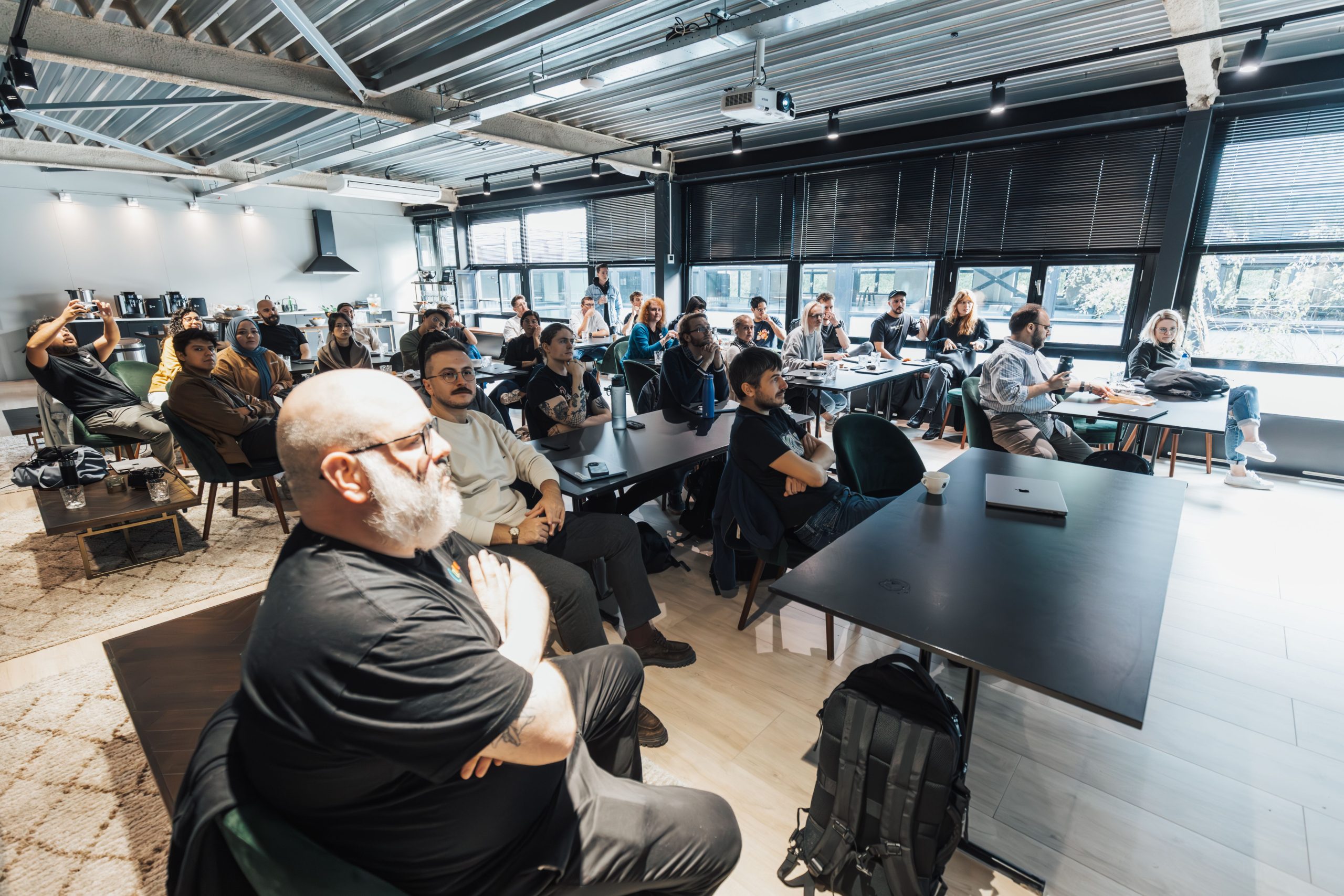
The Catalyst Lab ran during Smart Monday as a structured facilitation experience. Attendees brought specific industry challenges, including AI adoption questions, generational issues in the workforce, and talent acquisition in a competitive market, and worked through them in small groups with a facilitated process. The result was the kind of concrete, peer-to-peer problem-solving that conferences are supposed to produce but rarely do at scale. The Catalyst Lab format, by creating defined time slots and structured facilitation, made it happen systematically rather than leaving it to hallway serendipity.
For anyone evaluating whether Smart Monday is worth building into a IMEX attendance plan: the answer is yes, particularly if the organization sending attendees has specific operational or strategic challenges that would benefit from expert facilitation and peer input. The certificate courses alone justify the day for early-career professionals building credentials. The Catalyst Lab is the more valuable experience for senior practitioners.
The F1 and Spectacle Design Session Worth Understanding
The session featuring LVCVA’s Rebecca DeLuca and F1’s Lori Nelson-Kraft on community-first event planning, built around lessons from the Las Vegas Grand Prix, deserves more attention from the events industry than a single conference session typically generates.
The Las Vegas Grand Prix is one of the most logistically complex recurring events in the world, involving a city that is simultaneously the event venue, the host community, and the commercial infrastructure for the experience. Managing that complexity requires a design approach that treats community impact as a core design constraint rather than a side effect to be managed. The Grand Prix team’s experience navigating that constraint, working with residents, businesses, city infrastructure, and the event’s commercial partners simultaneously, contains lessons that apply well beyond motorsport.
For event planners working on large-scale urban events, the session was essentially a masterclass in stakeholder-centered design delivered by two practitioners who have done it at the largest possible scale. The principles that make the Grand Prix work for the Las Vegas community as well as for the international audience are the same principles that make any large event work for its host community: early engagement, transparent communication, genuine responsiveness to community input, and a willingness to constrain commercial objectives when they conflict with community needs.
Nelson-Kraft’s framework for thinking about community-first design is applicable to any event that operates in a host community it needs to maintain a relationship with across multiple years. Which is most serious conferences.
What the Culinary Panel Told You About Attendee Behavior
The culinary panel on shifting dietary preferences, alcohol-free options, and GLP-1 medications landed as one of the more practically useful sessions for operators managing food and beverage as part of event design.
The GLP-1 medication discussion is the newest element and the one with the most immediate operational implications. GLP-1 receptor agonists, the class of medications that includes semaglutide, have become significantly more widespread in the population over the past several years, and their effects on appetite and portion preference are measurable at the population level. For event food and beverage operations, this means a meaningful and growing percentage of attendees are consuming significantly smaller portions than prior cohorts, with different macronutrient preferences and different responses to the standard conference catering offering.
The alcohol-free options conversation reflects a broader behavioral shift that has been developing for several years, particularly among younger professional demographics. The rise of non-alcoholic spirits, functional beverages, and zero-proof cocktails has created attendee expectations that conference food and beverage has not always kept up with. Events that offer thoughtful non-alcoholic options communicate something about their understanding of their attendee population. Events that do not are increasingly noticeable.
Both conversations are ultimately about personalization at scale, which is the food and beverage design challenge that events have always faced. The specific parameters of that challenge are shifting, and the IMEX panel was useful for giving operators current data on which direction they are shifting.
Key Takeaways
The “Design Matters” theme is doing real work in the IMEX 2026 program, not just branding. The through-line, intentional human design as the differentiator that AI cannot replicate, is the right argument for the industry to be making, and the sessions built around it are substantive enough to be useful for practitioners building their own value propositions.
The AI conversation in the events industry has matured from evangelical advocacy versus defensive skepticism to practical integration. The Build Lab and AI sales sessions reflect an industry that has decided to use these tools and is now working out how to use them well.
The Circadian Cove Rx upgrade positions wellness as a clinical offering rather than an amenity, which is competitive intelligence for event organizers trying to differentiate on attendee experience quality. The medical-grade standard signals where the high end of conference wellness is heading.
Smart Monday’s combination of certificate courses and Catalyst Lab facilitation represents the highest-density professional development available in the events industry’s trade show calendar. Building it into the attendance plan is worth the extra day.
The GLP-1 and alcohol-free culinary conversations are operational data points that food and beverage operators should be tracking. Attendee dietary patterns have shifted enough to require redesigning standard catering assumptions, and the events that get ahead of this will provide visibly better experiences than those that do not.
Notes for Meeting and Event Professionals
If your firm is building or updating its AI integration strategy, the IMEX Build Lab and Catalyst Lab formats are worth studying as programmatic models independent of their content. The hands-on learning design addresses a real gap in most AI education offerings, which tend toward passive instruction rather than active practice.
The MPI Academy certificates available through Smart Monday, including Contract and Negotiation Specialist and Event Leadership Strategist, are worth pursuing for practitioners who need formal credentials to support client conversations or career advancement. The IMEX context adds networking value to the credential process.
For senior practitioners: the Catalyst Lab format, small groups with facilitated problem-solving on specific challenges you bring in, is replicable inside your own organization as a team learning format. The design is not proprietary and works at the department or team scale.
IMEX America 2026 ran October 13 through 15 at the Mandalay Bay Convention Center, with Smart Monday programming on October 12. For on-demand education content and exhibitor information, visit imexamerica.com. The next IMEX America is scheduled for fall 2027.