

Before the Cars Run, the City Pays Its Entry Fee
The Las Vegas Formula 1 Grand Prix does not arrive quietly. It announces itself months in advance, with lane closures on Koval Lane and Harmon Avenue, overnight construction crews installing temporary bridges over intersections that carry more than 50,000 vehicles a day, and local business owners making the same calculation they have made four times in a row now: whether the race week revenue surge will cover what they lose in the months the Strip spends becoming a race circuit.
By mid-October 2026, the construction was already well underway. A temporary vehicular bridge at Flamingo Road and Koval Lane, installed during a full overnight closure that ran for the better part of a week. Two southbound lanes on Las Vegas Boulevard near Bellagio closed through November 9. Overnight lane reductions along Harmon and Sands spreading through the corridor. RTC bus routes detoured, stops closed, commuter advisories going out. Mohit Singh, who manages Las Vegas Souvenirs and Gifts near the intersection of Flamingo Road and Koval Lane, put the experience in terms he has had years to refine: “They absolutely killed our sales and killed our business,” he told Fox 5 in September. He acknowledges the disruption windows have shortened as organizers have refined the construction timeline. He still thinks the economics for Strip-adjacent small businesses have never fully balanced out.
The Las Vegas Grand Prix is not a secret, and the disruption it causes is not accidental. It is the operating cost of hosting an event that has generated $3.2 billion in cumulative economic impact for Southern Nevada since its 2023 debut. The question that the race enters its fourth year asking is whether the calculus still works for everyone it affects, or whether the people who feel the construction and never quite see the upside are being asked to subsidize an event whose benefits flow primarily to the properties large enough to capture them.
A Race That Almost Did Not Happen Here at All
The Formula 1 Las Vegas Grand Prix’s origin story involves more corporate confidence than civic inevitability. Las Vegas had hosted F1 races twice before, both at the now-demolished Caesars Palace parking structure, in 1981 and 1982. Those events were curiosities of a different era. The modern race is something else entirely.
When F1 announced it was returning to Las Vegas with a street circuit on the Strip itself, the skepticism was genuine. The city had never hosted a modern F1 event. Building a 6.12-kilometer street circuit through an active entertainment corridor would require the kind of construction and operational coordination that Las Vegas had pulled off for individual large events but had never attempted at Formula 1’s specific scale. The cost projections for establishing the race ran into hundreds of millions of dollars. The business model relied on F1’s own commercial entity, Formula 1 Group, taking an active ownership role in the race rather than simply licensing it to a local promoter.
The 2023 debut was uneven. The race happened, the cars ran, and the world watched. It was also, depending on whose experience you were tracking, either a premium entertainment spectacle or a logistics challenge that illustrated every difficulty of grafting a closed-circuit racing event onto an active city corridor. The subsequent years have smoothed the roughest edges. The 2025 race sold out. By June 2026, F1 had signed a 10-year extension with Clark County and the Las Vegas Convention and Visitors Authority that keeps the Grand Prix on the Strip calendar through at least 2037.
That extension is the fact that changes the economic calculus for everyone downstream of the event. A single-year or even short-term race contract produces uncertain planning horizons for hotels, restaurants, parking operators, and the hundreds of vendors who build their autumn revenue models around F1 weekend. A 10-year extension through 2037 converts those uncertain models into something that can be underwritten, contracted, and built around. The LVCVA’s involvement in the deal, at a reported $20 million commitment supporting a two-year extension agreed in 2025 before the longer deal followed, reflects the institutional conviction that the race’s long-term value to Southern Nevada tourism exceeds its operating costs.
What the Race Has Become
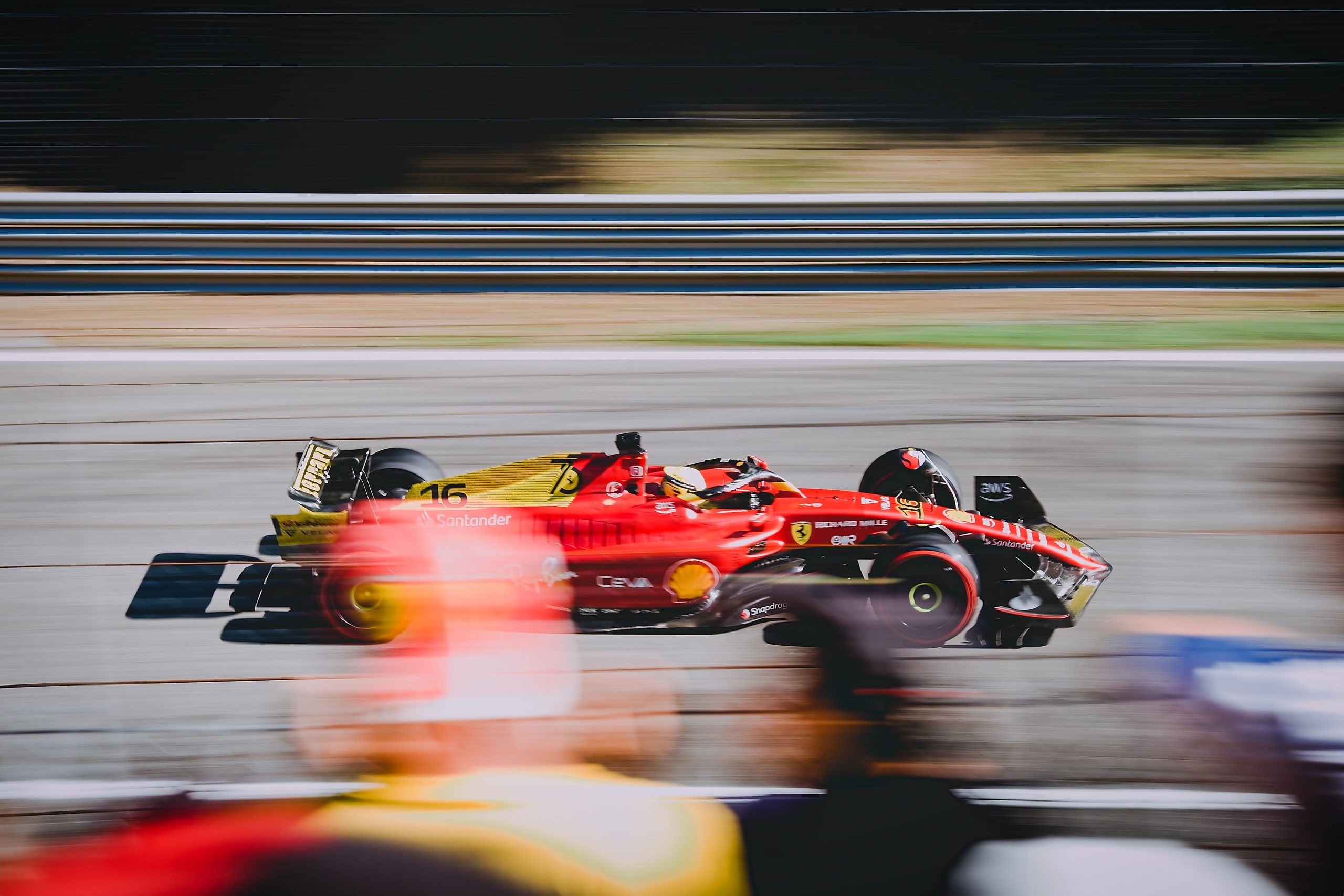
The 2026 Las Vegas Grand Prix runs November 20 to 22 — free practice Thursday night, qualifying Friday night, the race Saturday night. The timing places it in the premium calendar position between the Brazilian and Qatar Grands Prix, near the end of the Formula 1 season when championship implications give races additional weight. The circuit is 6.12 kilometers, run for 50 laps, with a top speed approaching 342 kilometers per hour on the long straight down the Strip.
That straight is the race’s defining characteristic. The combination of a genuinely high-speed section through one of the most photographed urban corridors on the planet, run under lights at temperatures cool enough to add grip challenges, gives Las Vegas a visual identity that no other Grand Prix can replicate. The production team behind the Las Vegas broadcast has leaned into that visual identity aggressively since 2023, and the result has been a race that functions as one of the most effective tourism commercials for the city that has ever been aired globally.
The 2025 Las Vegas Grand Prix results, with Max Verstappen winning, George Russell second, and Kimi Antonelli third, gave the race the kind of competitive finish that builds viewing audiences. Verstappen’s dominance across the 2024 and 2025 seasons has been the defining storyline of modern F1 regardless of venue, but Las Vegas’s specific circuit characteristics, long straights that favor power, technical chicanes that require setup compromises, low nighttime temperatures that affect tire behavior, create performance conditions where the usual hierarchy can shift.
Tickets, Packages, and the Premium Economy
The commercial structure around the Las Vegas Grand Prix has evolved considerably since 2023. The general admission chaos that characterized the debut year gave way to a tiered access model that now includes Skybox suites, the Lewis Hamilton Grandstand Package, and Heineken Silver Main Grandstand access at multiple price levels.
Lewis Hamilton, who is now racing for Ferrari after his celebrated 2024 move from Mercedes, carries particular commercial significance for the Las Vegas race. The Hamilton Grandstand Package reflects the understanding that Hamilton’s fanbase in the United States is unlike any other driver’s, broadly distributed across demographics that do not necessarily overlap with traditional F1 audiences, and that Las Vegas is the American race whose timing and setting is most aligned with what Hamilton’s global fanbase responds to. His Ferrari debut in 2025 did not produce the immediately dominant results some of his supporters anticipated, but it gave the 2026 season an extra layer of storyline going into what may be the most significant mid-career chapter of his career.
The travel package infrastructure that has grown up around the race reflects the degree to which the Las Vegas Grand Prix has shifted from a local sports event to a destination travel product. Fans flying in from Europe, Japan, Australia, and Latin America to attend the race represent visitor spending that is distributed across hotel nights, dining, gaming, entertainment, and premium tickets in ways that differ meaningfully from the average Las Vegas visitor profile. International F1 travelers arriving for race weekend specifically are among the highest per-visit spenders the city sees.
The Business of Disruption
The business model tension is real and has been from the beginning. Strip-adjacent small businesses, the ones close enough to suffer the construction but not connected enough to capture race weekend spending, have been the consistent friction point in Las Vegas’s relationship with its F1 race.
Singh’s experience at Las Vegas Souvenirs and Gifts is not isolated. The pattern of months-long road preparation closing or restricting access to pedestrian traffic, raising rideshare costs, and reducing visibility for storefronts that depend on foot traffic from the Boulevard is structurally predictable because it follows from the logistics of circuit preparation. A race that runs cars at 200 miles per hour through an active street corridor requires months of construction, not weeks. The businesses in the immediate construction zone bear a cost that is not captured in aggregate economic impact figures because those figures measure what the race generates, not what the preparation costs.
The organizers have addressed this in limited ways. Construction timelines have shortened as the operation matured. Information about closures is published earlier and distributed more broadly. But Singh’s specific suggestion, that Clark County or F1 should offer reimbursement to businesses whose revenue is demonstrably reduced by construction access restrictions, has not been formalized into policy. The race has the economic leverage to impose the construction timeline. Whether it has the civic obligation to compensate for it is a question that will not be resolved by the 10-year extension agreement.
The MGM Resorts strip barricading around Bellagio, closing southbound lanes and the sidewalk from Flamingo to Bellagio Drive through November 9, is an example of the race preparation absorbing the pedestrian corridor itself in ways that affect not just commercial traffic but the basic navigability of the city’s primary tourist corridor for six weeks before race day.
The 10-Year Extension and What It Means
The 10-year extension through 2037 is the most consequential single fact about the Las Vegas Grand Prix’s current status. It converts what had been a premium event with uncertain permanence into an anchoring institution on the city’s sports and entertainment calendar.
For hotel development, the extension creates a reliable annual demand spike in the third week of November for the next decade. Hotel operators who have been cautious about building around a race that might not return can now underwrite that demand in their financing models. For the convention and meeting industry, F1 weekend becomes a date to avoid for booking competing events rather than a scheduling uncertainty to navigate year by year.
For smaller operators, the 10-year horizon means the construction disruption pattern is not a temporary inconvenience but a recurring annual operating reality. Business owners in the construction radius can now plan for it rather than being surprised by it, which is progress of a kind. Whether they can plan their way around a meaningful seasonal revenue loss is a different question.
For Nevada’s tourism economy, the extension positions Las Vegas as one of a handful of global cities where an F1 race is a permanent fixture. Monaco. Monza. Suzuka. Silverstone. Las Vegas. That is the company the extension is buying into, and it is company that generates long-term brand value for the city that exceeds any individual race’s direct economic output.
Notes for Stakeholders
The 2026 Las Vegas Grand Prix and its 10-year extension carry specific implications for anyone operating in Nevada’s tourism, real estate, hospitality, or retail economy:
The annual construction cycle will continue through at least 2037. Any business or property in the circuit preparation zone should model a six-to-eight-week period of reduced access and foot traffic as a standing annual operating cost rather than an exceptional disruption. Planning for it in advance, including pre-building inventory, adjusting staffing, and communicating access alternatives to regular customers, is the minimum response to a predictable pattern.
The international visitor profile during race weekend is the highest per-visitor spending cohort that the Las Vegas tourism economy generates in November. Hotel properties, fine dining operations, premium entertainment venues, and experiential retail in the Strip corridor should be allocating their best inventory and staffing to race weekend specifically, because the margin per visitor during those three days exceeds most other calendar events.
The 10-year extension creates a development planning horizon that should influence real estate and hospitality investment decisions in the immediate Strip corridor. Properties being planned or financed today can underwrite F1 weekend demand through approximately 2037 as a reliable revenue input.
Lewis Hamilton’s Ferrari presence in the 2026 race gives American media coverage additional profile during a season when F1’s U.S. television ratings have continued to grow. The marketing value of that coverage to Las Vegas as a destination is not captured in economic impact figures but is a real dimension of the race’s return to the city.
The Loudest Night on the Loudest Street
Las Vegas has always been in the business of doing things that other cities do not attempt. The Formula 1 Grand Prix, in its fourth year and now secured for ten more, is perhaps the clearest current example of that operating principle at work.
It closes the Boulevard for weeks. It generates billions in economic impact. It exports images of racing cars at full speed past the neon and glass of the Strip to audiences in 180 countries. It inconveniences thousands of residents and workers in ways that compound annually. It has become one of the most watched single events in the city’s calendar.
The race on November 22 will be over in two hours. The preparation started in August. The next preparation will start in the summer of 2027. That is what it looks like when a city decides to host a Formula 1 Grand Prix for the long term.
Key Takeaways:
- The 2026 Las Vegas Formula 1 Grand Prix runs November 20-22, with free practice Thursday, qualifying Friday, and the race Saturday night on a 6.12-kilometer street circuit covering the Strip at top speeds approaching 342 km/h
- F1 and the Las Vegas Convention and Visitors Authority signed a 10-year extension in 2026 keeping the race on the Strip through at least 2037, following a two-year LVCVA commitment of approximately $20 million in 2025
- Since its 2023 debut, the Las Vegas Grand Prix has generated $3.2 billion in cumulative economic impact for Southern Nevada; the 2025 race sold out and set attendance records
- Road preparation and construction began in earnest in August 2026, with major disruptions including a full closure of Koval Lane and Flamingo Road for bridge installation in October and southbound Las Vegas Boulevard lane closures near Bellagio running through November 9
- Strip-adjacent small businesses in the construction zone have documented sustained revenue losses during preparation months; Mohit Singh of Las Vegas Souvenirs and Gifts described the early race years as devastating to his business, with conditions improving but the structural cost-benefit imbalance remaining unresolved
- The circuit’s primary commercial advantage is the long straight along Las Vegas Boulevard, which produces a globally distinctive visual of F1 cars at maximum speed through one of the world’s most photographed urban corridors, generating tourism marketing value that extends well beyond race weekend
- Lewis Hamilton, now driving for Ferrari after his 2024 move from Mercedes, adds particular American commercial significance to the 2026 race; his global fanbase’s reach into demographics that do not overlap with traditional F1 audiences has made the Lewis Hamilton Grandstand Package a commercially distinct ticket tier
- The 10-year extension converts F1 weekend from a scheduling uncertainty into a permanent demand anchor for Las Vegas’s November hospitality calendar, allowing hotel operators, convention planners, and real estate developers to underwrite the event in long-range financial models
- International F1 travelers attending the race represent among the highest per-visitor spending profiles in Las Vegas’s annual tourism calendar; the race’s appeal to visitors from Europe, Japan, Australia, and Latin America generates spending patterns that differ meaningfully from the typical Las Vegas visitor
- The annual construction cycle will repeat through at least 2037, making the six-to-eight-week preparation period a standing annual operating reality for businesses in the circuit zone rather than a temporary disruption