


El Cortez opened on November 7, 1941, at a location that its developers considered too far from downtown, a mistake they assumed would doom the project. Within four years, Bugsy Siegel, Meyer Lansky, Gus Greenbaum, and Moe Sedway had bought it. Rat Pack regulars made it a fixture of classic Vegas. Jackie Gaughan owned it for 45 years before Kenny Epstein purchased it in 2008 and began a slow, deliberate modernization that has never abandoned the property’s foundational identity.
Now, as El Cortez counts down to its 85th anniversary on November 7, 2026, Epstein is making the most significant dining investment in the property’s modern era. (cite index=”99-1″>Two new restaurants will open in mid-October: Alex Prime, a luxury New York-style steakhouse, and Siegel’s 1941, a reimagined breakfast and lunch destination. Both share a newly designed dining room steps from the casino’s main entrance, featuring emerald green banquettes, cognac leather seating, wood paneling and gold details, seating more than 150 guests.
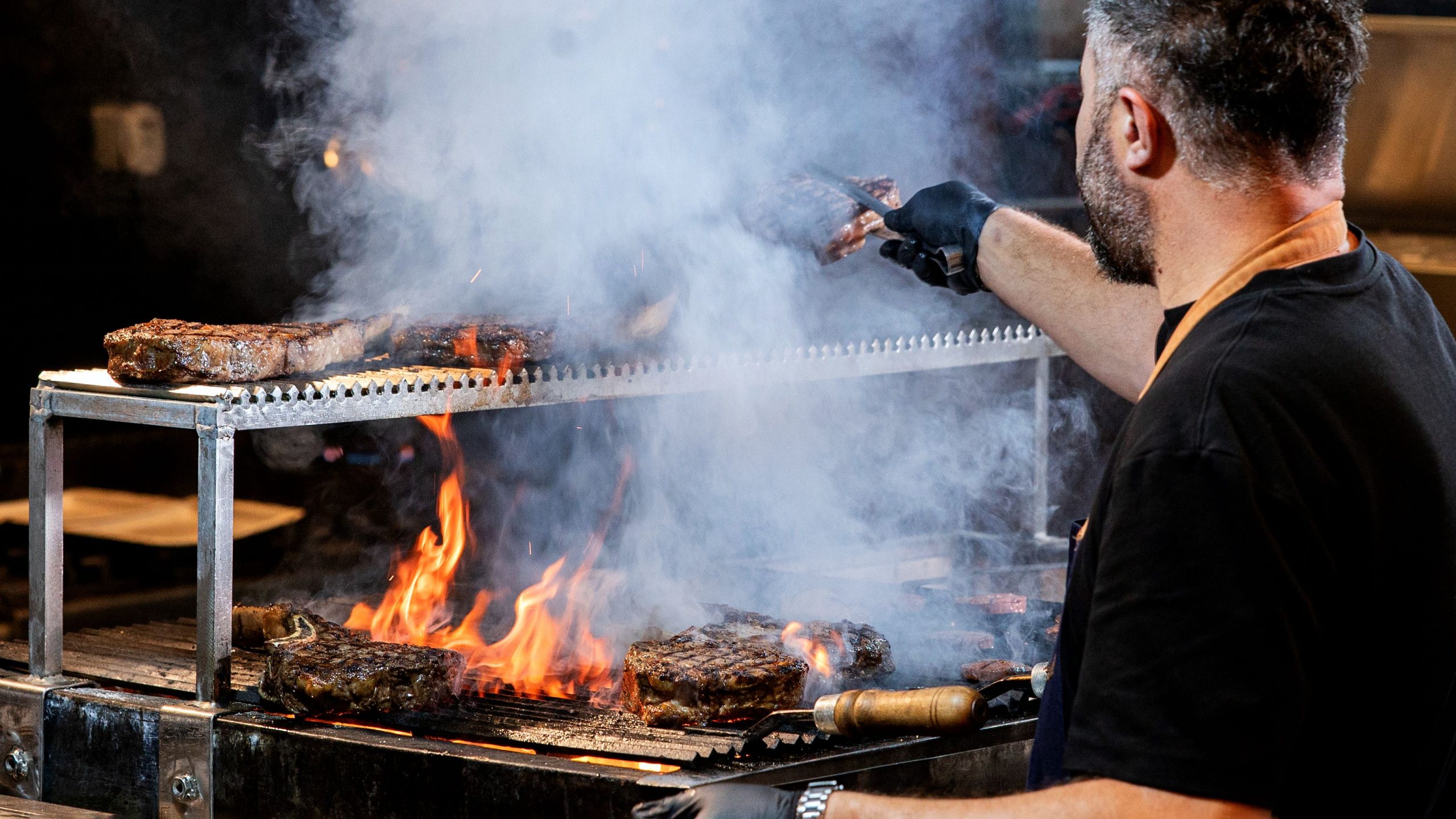
This is not a cosmetic upgrade. (cite index=”100-1″>Alex Prime is anchored by USDA Prime cuts, slow-roasted prime rib, chef-driven seafood and premium shellfish, Italian-rooted pasta and showstopping desserts, with a curated wine collection built around New World varietals and a cocktail program that balances steakhouse standards with signature creations rooted in the lore of El Cortez itself. The front-of-house team was recruited specifically from top Strip restaurants. The dining room was designed by Kenneth Ussenko Design with architecture by Jive Architecture. This is a Strip-caliber dining investment delivered on Fremont Street.
The Downtown Steakhouse Gap
Las Vegas’s steakhouse ecosystem has always been Strip-centric for reasons that are primarily about hotel infrastructure rather than culinary geography. The great Las Vegas steakhouses, CUT at The Palazzo, SW at Wynn, Peter Luger at Caesars, Old Homestead at Caesars, Bazaar Meat, all operate within casino resort footprints that provide hotel guests, high rollers, and convention attendees as built-in customer bases.
Downtown Las Vegas has historically struggled to support steakhouses at this caliber because the infrastructure differs fundamentally. The Fremont Street properties have smaller rooms, lower average room rates, and a tourist demographic that skews toward value-seeking rather than luxury spending. The assumption, generally correct for most of the past three decades, was that Downtown Las Vegas couldn’t sustain the per-cover spending that premium steakhouse economics require.
That assumption is being directly challenged by Epstein’s investment in Alex Prime. He is betting that Downtown Las Vegas in 2026 is a different market than it was a decade ago, that the Arts District’s development, the growth of the Fremont Street corridor’s entertainment infrastructure, and the increasing sophistication of the downtown dining audience can support a genuine premium steakhouse at the 85-year-old property that has been part of Las Vegas history since before the Strip existed.
The Daypart Architecture
The decision to use the same dining room for Siegel’s 1941 at breakfast and lunch, then flip it to Alex Prime for dinner, is operationally elegant and strategically smart. (cite index=”101-1″>Siegel’s 1941 opens daily from 7 a.m. to 2:30 p.m., serving elevated breakfast and lunch. Alex Prime opens daily at 5 p.m., with the kitchen running until midnight on weekdays and staying open until midnight on Saturdays and Sundays.
This daypart-sharing model maximizes revenue from a single physical space without requiring the capital investment of two separate build-outs. More importantly, it creates two distinct dining identities from one dining room, each serving different customer segments and occasions.
(cite index=”101-1″>Siegel’s 1941’s breakfast menu includes a breakfast sandwich with fried egg, bacon, cheddar and tomato on a toasted brioche bun, a bagel with lox, a two-egg breakfast with matzoh brei, and ham steak with eggs and hash browns. Lunch offerings include a seafood louie topped with Maine lobster and jumbo shrimp, a loaded wedge salad, an Angus cheeseburger, and a prime rib special. The matzoh brei, traditional Jewish egg-and-matzo preparation, is a specific nod to El Cortez’s historical connection to Jewish gangsters including Siegel and Lansky, the kind of historically grounded menu detail that earns coverage and creates conversation.
The prime rib lunch special is perhaps the most pointed choice on the entire Siegel’s 1941 menu. Prime rib at lunch, particularly slow-roasted prime rib served at affordable midday prices, was a signature feature of classic Las Vegas dining from the property’s opening era. Reviving it as a lunch feature at the property that has operated since 1941 creates continuity with history while making the case that Siegel’s 1941 is something more than a clever marketing exercise.
The Strip Recruitment and What It Signals
(cite index=”99-1″>The Alex Prime front-of-house team was recruited from top Strip restaurants. This specific detail, buried in the announcement, reveals the ambition level of the project more clearly than any menu description. Strip restaurants recruit from each other and from fine dining properties in other cities. They are not typically competing for staff with Downtown Las Vegas casinos.
The fact that El Cortez successfully recruited a front-of-house team from Strip-level properties suggests either that the compensation and opportunity being offered is genuinely competitive with Strip alternatives, or that the project’s scope and profile attracted candidates who see potential in what Epstein is building. Either way, it signals that Alex Prime intends to deliver service that meets Strip standards rather than operating at the reduced expectations that Downtown Las Vegas properties have sometimes accepted.
Service quality is where steakhouses most visibly differentiate themselves at premium price points. The cooking of an excellent steak, while genuinely skilled, is more technically replicable than the tableside presence, wine knowledge, and hospitality sophistication that distinguishes great steakhouse service. If Alex Prime delivers Strip-caliber service in a Downtown Las Vegas setting, it changes the experience category that Fremont Street can offer.
The 85th Anniversary Framework
Timing the opening for mid-October, with the 85th anniversary on November 7, creates a marketing narrative that newspapers and food writers will naturally amplify. The two new restaurants become part of the anniversary story rather than standalone openings, which generates more coverage and provides historical context that makes the dining investment feel meaningful rather than simply commercial.
(cite index=”101-1″>VP of Hospitality Bart Mahoney framed the Siegel’s 1941 relaunch directly: “This evolution of the restaurant combines the quality of cuisine you’d find on the Strip with the vintage appeal of Downtown Las Vegas.” This framing is the entire strategy in one sentence. El Cortez isn’t trying to become a Strip property. It’s trying to bring Strip dining quality to the Downtown Las Vegas setting that carries historical significance no Strip property can match.
The property’s position on the National Register of Historic Places, achieved in 2013, gives El Cortez institutional standing that its Strip competitors, despite their size and revenue, cannot access. You cannot eat dinner at the National Register of Historic Places at Wynn or Caesars. You can at El Cortez.
Notes and Key Takeaways
For Restaurant Operators:
El Cortez’s daypart-sharing model, running Siegel’s 1941 through mid-afternoon and flipping to Alex Prime at dinner, demonstrates how historic properties with single dining rooms can maximize revenue and create distinct dining identities without the capital requirements of separate build-outs. The Strip-staff recruitment signals that premium service at Downtown pricing is the intended competitive position.
For Diners:
Alex Prime opens in mid-October 2026 at 600 East Fremont Street, offering USDA Prime steaks, slow-roasted prime rib, chef-driven seafood, and Italian-rooted pasta in a dining room that sits steps from the main entrance of a National Register of Historic Places property where Bugsy Siegel once walked. Siegel’s 1941 serves the same room from 7 a.m. to 2:30 p.m., with a prime rib lunch special that revives one of Las Vegas’s most historically resonant dining traditions.
For Las Vegas:
Alex Prime’s ambition to bring Strip-caliber steakhouse dining to Downtown Las Vegas, backed by Strip-recruited service staff and USDA Prime beef, represents one of the most significant bets on Downtown’s continued culinary maturation. If it succeeds, it validates the argument that Fremont Street can sustain the same premium dining occasions that have been reserved for the Strip corridor.
Important Insights:
The matzoh brei on the Siegel’s 1941 breakfast menu is a historically specific and culturally deliberate choice that connects to El Cortez’s actual past in ways that generic comfort food menus don’t. Menu choices that reflect genuine history rather than generic nostalgia create media moments and word-of-mouth that marketing cannot generate equivalently.
Epstein’s 18-year ownership of El Cortez since 2008 provides the long-term investment horizon that makes projects like Alex Prime possible. An ownership group seeking rapid returns would prioritize revenue-generating slot floor expansion over dining investment with slower payback periods. Patient ownership aligned with genuine interest in the property’s legacy creates space for the kind of investment that changes what a property can be.
The space adjacent to Zaytinya at the Forum Shops, which R&G Lounge is also filling later this year, suggests that Caesars Palace’s broader property is actively curating culinary additions that reflect the serious dining ambition visible in both properties’ 2026 announcements. El Cortez and Caesars Palace are both making premium dining investments during the same period, which reflects the broader Las Vegas culinary maturation story rather than isolated individual decisions.
The complimentary valet parking for both restaurants is a practical amenity that removes friction for Downtown dining that Strip properties don’t need to offer because hotel guests don’t drive separately. This operational detail reflects understanding of how Downtown Las Vegas’s customer base differs from Strip guests and what removes barriers to visitation.