


A Mountain of Rubble, a Neighborhood in Transition
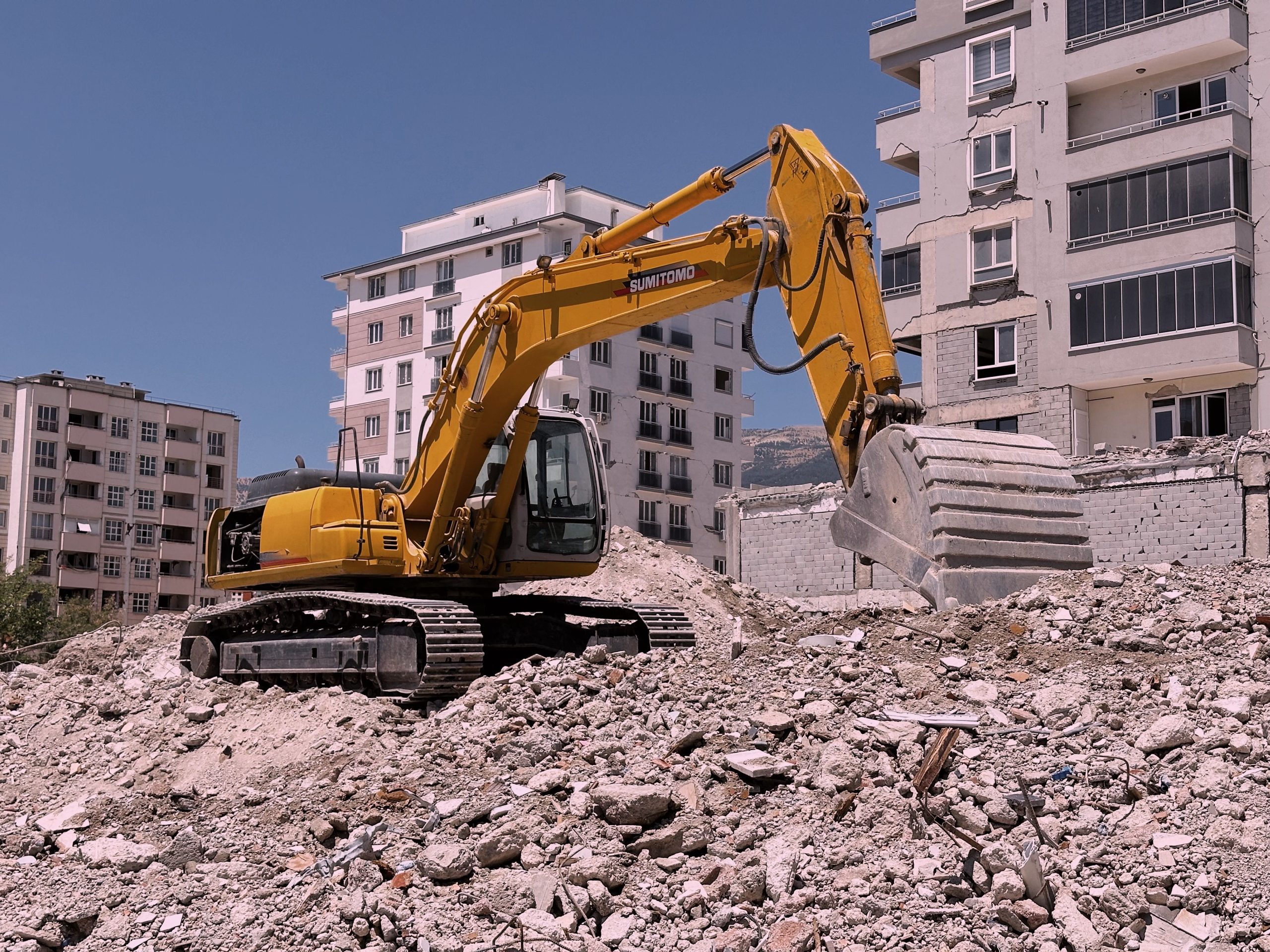
On September 16, 2026, the Royal Resort on Convention Center Drive was reduced to a mountain of rubble. The Royal Resort, on Convention Center Drive, was turned into a mountain of rubble in a demolition that cleared one of the last aging independent hotel properties in the corridor connecting the Las Vegas Strip to the Convention Center campus.
Nobody is writing elegies for the Royal Resort. It wasn’t iconic. It wasn’t beloved. It was a mid-century independent hotel that served its purpose across decades and then became what aging independent hotels near rapidly developing Strip corridors inevitably become: a site awaiting its next iteration. The demolition is less interesting as an event than as a signal about what Convention Center Drive is becoming.
The corridor connecting Las Vegas Boulevard to the Convention Center campus has been transforming for years. The $600 million Convention Center renovation that debuted with CES 2026 made the campus itself dramatically more competitive as a meeting destination. The dual-brand AC Hotel and Residence Inn by Marriott that broke ground in June on Paradise Road adjacent to the Convention Center added premium room inventory specifically for convention-focused travelers. And now a dated independent property on Convention Center Drive has been cleared to make room for whatever comes next.
That sequence, renovation, new construction, demolition of dated supply, is the pattern of a real estate market that believes the underlying demand justifies the investment. Las Vegas’s convention real estate market is making exactly that bet.
The Convention Corridor Economics
The Las Vegas Convention Center’s renovated campus can now accommodate larger shows with better technology and more inviting physical space than it could three years ago. The Lusso Lounge executive space is opening in Q4 2026. The West Hall addition opened in 2021. The $600 million renovation completed earlier this year. This is a campus that has invested $1.6 billion in infrastructure since 2021, a scale of commitment that changes how meeting planners evaluate Las Vegas against competing destinations.
Convention travelers behave differently from leisure tourists. They book rooms further in advance. They stay longer because shows run for multiple days. They spend more per day on food and business entertainment. And critically, they fill hotels during midweek periods that leisure travel rarely reaches. A strong convention calendar means Monday through Thursday hotel occupancy that makes the economics of Convention Center-adjacent hotels significantly more attractive than the same rooms would be in a purely leisure corridor.
The Royal Resort’s demolition creates a land parcel on Convention Center Drive that will almost certainly be developed into something that serves the convention market more effectively than an aging independent hotel could. That might mean a branded hotel with meeting space. It might mean mixed-use development combining hotel rooms with retail and restaurant space that serves both convention delegates and the growing residential population nearby. It might mean a purpose-built extended-stay property targeting longer-duration convention visitors.
Whatever comes next, it won’t be a mid-century independent hotel trying to compete for convention business against a Marriott dual-brand property built in 2027 and a fully renovated Convention Center campus.
The Broader Strip-Adjacent Demolition Pattern
The Royal Resort’s demolition fits a larger pattern that has accelerated across Las Vegas’s Strip-adjacent real estate market over the past decade. Properties that made economic sense when Las Vegas’s hospitality supply was less concentrated and less sophisticated are becoming financially nonviable as newer, branded competition captures their demand and their physical assets age beyond cost-effective renovation.
This pattern has a Las Vegas-specific quality that differs from hotel demolition in other markets. Las Vegas’s land values in the Strip corridor and adjacent areas have risen dramatically as the city’s sports and entertainment investment has concentrated visitor demand in specific geographic zones. A property that was worth holding onto in 2015 may be worth more as cleared land for new development in 2026, simply because what can be built on the parcel has become more valuable than what was already there.
The Texas Station, Fiesta Rancho, and Fiesta Henderson properties, which Station Casinos demolished and sold after closing during COVID, followed this same pattern at the locals casino scale. Properties that closed temporarily and never reopened were worth more as land for residential development than as operational casino-hotels in their original form.
For Strip-adjacent independents, the competitive pressure is specifically from branded properties with loyalty program integration, modern amenities, and the marketing reach that a Marriott, Hilton, or Hyatt flag provides. An independent hotel on Convention Center Drive in 2026 is competing against Marriott’s entire reward member database, Hilton Honors, and every other loyalty program that directs convention travelers toward branded properties as their default choice.
What Gets Built Here Now
The Royal Resort site’s future use will tell observers something about where Las Vegas’s real estate development capital is currently directing itself. Convention Center Drive’s proximity to both the Strip and the convention campus makes it attractive for multiple development types, and the specific use that emerges will reflect which demand category developers believe is strongest in the current Las Vegas market.
Convention-focused hotels remain the most obvious play. The adjacent Marriott dual-brand property that broke ground in June demonstrates that branded hotel developers see demand for convention-adjacent rooms at prices that justify new construction. A second similar project on the Royal Resort site would deepen the convention corridor’s hotel supply in ways that could attract larger shows that currently avoid Las Vegas because room inventory near the campus is insufficient.
Mixed-use residential and hospitality development is another possibility. Las Vegas’s residential population has been growing consistently, and the areas adjacent to the Strip have seen increasing interest from young professionals who want urban amenity access without Strip noise levels. Convention Center Drive sits in a zone that could support urban-scale residential development above retail and restaurant space if the developer’s thesis is that Las Vegas needs urban housing rather than more hotel rooms.
The third possibility is institutional or commercial development tied to the convention campus itself. The LVCVA or a private partner might develop exhibition space, conference facilities, or entertainment amenities that directly serve the convention market on a site that’s physically contiguous to the campus.
None of these outcomes are certain. But the site’s clearance establishes that whatever comes next will be purpose-built for the market Las Vegas is becoming rather than inherited from the market Las Vegas was in the 1960s or 1970s.
The Invisible Real Estate Revolution
The Royal Resort demolition is one of dozens of similar transitions happening across Las Vegas’s strip-adjacent real estate market that don’t make headlines the way the Guitar Tower or the Athletics ballpark do. While the city’s attention is properly focused on billion-dollar construction projects and franchise announcements, a quieter but equally consequential transformation is occurring in the older properties and underutilized parcels that fill the gaps between major developments.
This secondary wave of demolition and replacement represents the real estate market responding to the investment that anchor institutions have made. When the Convention Center invested $1.6 billion in renovation and expansion, it changed the value of every parcel within walking distance of the campus. When the Raiders established Allegiant Stadium as a premier NFL venue, the land around it became more valuable. When the Sphere redefined what entertainment could look like on the Strip’s north end, properties within the visual and walking range of the Sphere adjusted in value accordingly.
The Royal Resort’s demolition is a downstream consequence of the city’s upstream investment decisions. The site was cleared because something better can be built there now, and something better can be built there because Las Vegas has invested so substantially in the surrounding infrastructure that new development can achieve the occupancy and rates that justify construction costs.
Notes for Stakeholders
The Royal Resort demolition and Convention Center corridor transformation offer insights for anyone working in real estate development, hospitality investment, or urban planning:
Anchor infrastructure investment changes the development economics of adjacent parcels in ways that manifest years after the investment. The Convention Center renovation’s effect on Convention Center Drive property values is measurable and directional, even if the specific form of that value capture takes time to emerge.
Aging independent hotels face competitive displacement in corridors where branded supply expands. The combination of loyalty program marketing reach, modern amenities, and brand-based booking volume gives new branded properties structural advantages over independent competitors regardless of physical proximity.
Demolition without announced replacement indicates developer confidence that the site’s value is clearly established but the optimal use requires planning time. A cleared site on Convention Center Drive will not remain cleared; the question is what form redevelopment takes.
The convention hotel corridor is specifically attractive because convention travelers generate midweek occupancy that leisure markets cannot. Properties that capture this demand profile benefit from revenue patterns that reduce the weekend-versus-weekday occupancy variance that pure leisure hotels face.
Secondary market real estate transformation accompanies anchor development in ways that are economically consequential but less visible than the anchor projects themselves. The full economic impact of the Convention Center renovation includes the Royal Resort’s demolition and whatever gets built in its place.
The Block That’s Empty Now
Convention Center Drive has a gap in it where the Royal Resort used to be. In six months or a year, it will have a construction fence around it with renderings of whatever comes next. In two or three years, something new will stand there that serves a convention market whose infrastructure investment has been running for years.
The Royal Resort is rubble. Las Vegas is building what comes after.
Key Takeaways:
- The Royal Resort on Convention Center Drive was demolished on September 16, 2026, clearing one of the last aging independent hotels in the corridor connecting the Las Vegas Strip to the Convention Center campus
- The demolition follows a $1.6 billion investment in the Las Vegas Convention Center including the 2021 West Hall addition and the $600 million renovation that debuted with CES 2026 in January
- A dual-brand AC Hotel and Residence Inn by Marriott broke ground in June 2026 adjacent to the Convention Center, establishing the branded hotel development pattern that independent properties cannot compete with
- Convention Center Drive’s demolition reflects broader Strip-adjacent real estate dynamics where anchor infrastructure investment raises land values above the worth of aging existing properties
- The site’s cleared status does not indicate development uncertainty but rather the time required to plan what the upgraded market now supports
- Convention travelers generate midweek hotel occupancy that makes Convention Center-adjacent rooms economically superior to equivalent leisure corridor rooms
- Las Vegas’s secondary real estate transformation, older properties being cleared for new development adjacent to major anchor investments, is as economically consequential as the headline construction projects
- The Royal Resort’s competitive position became untenable as Marriott, Hilton, and other loyalty program-integrated brands captured convention traveler booking behavior
- Similar patterns have occurred across Las Vegas including Station Casinos’ demolition and land sale of Texas Station and Fiesta properties after COVID closures
- Whatever replaces the Royal Resort will be purpose-built for the convention market Las Vegas has become through $1.6 billion in campus investment, not the market that existed when the Royal Resort was built