


Governor Joe Lombardo stood at Jean Airport on Tuesday, September 8, and shoveled dirt into a ceremonial pile alongside federal, state, and local officials while the Chemehuevi Indian Tribe’s chairman led a blessing for the project beginning construction beneath their feet.
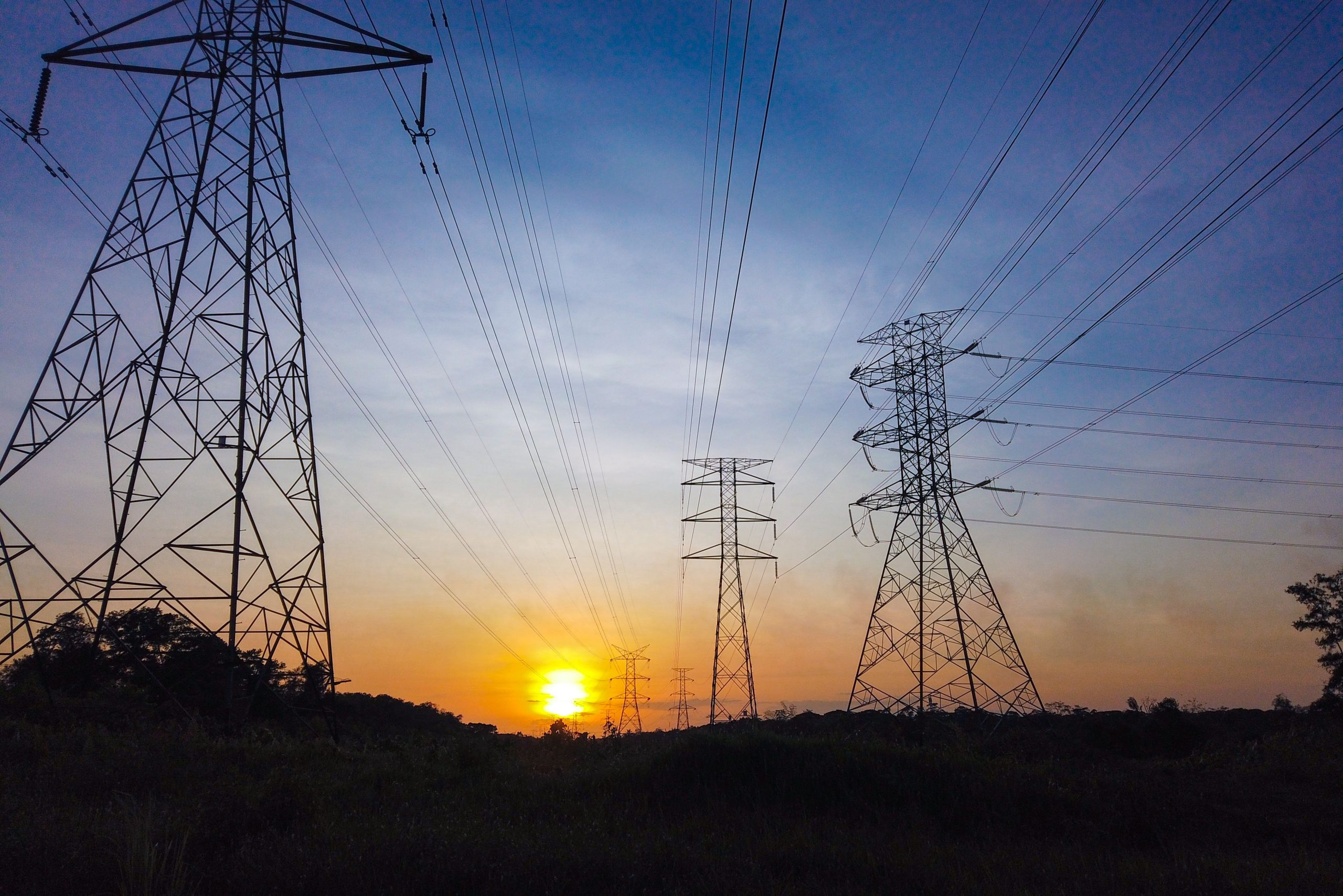
The GridLiance West Core Upgrades Project isn’t the kind of infrastructure that generates the headlines reserved for sports stadiums, casino openings, or celebrity residencies. It’s 155 miles of high-voltage transmission lines across Clark and Nye counties, a collection of upgraded and newly built substations, and a roughly $1 billion investment in the unsexy backbone that makes everything else in Southern Nevada actually function.
But the reason this project is happening now, at this scale, after spending four years in the works since 2022, tells the story of what Las Vegas is becoming and where the city’s growth pressures are actually concentrated.
“Nevada’s continued economic success depends on reliable, affordable energy,” Lombardo said at the groundbreaking. “As our state expands and attracts new businesses, we need the infrastructure to support that growth.”
The new businesses he’s describing are data centers. Forty-three of them, planned or already under construction in the Las Vegas Valley, by recent count. And their appetite for electricity is unlike anything Southern Nevada’s grid was built to handle.
The Data Center Problem
A large-scale hyperscale data center can consume 50 to 100 megawatts of power continuously. Not peak, not surge capacity. Continuously, twenty-four hours a day, seven days a week, regardless of weather or time or anything happening in the broader economy. That’s roughly the equivalent of powering 40,000 to 80,000 average American homes from a single facility that occupies a few acres of industrial land.
The Las Vegas Valley has 43 planned or constructed data centers, according to Las Vegas Weekly’s recent count. Many of those are operational or nearly so. The aggregated power demand they represent has been building toward a confrontation with the existing transmission infrastructure’s capacity limits that grid planners saw coming years ago.
The Core Upgrades Project is the response. GridLiance West, a subsidiary of NextEra Energy Transmission, will replace or rebuild 155 miles of 230-kilovolt and 500-kilovolt transmission lines and modernize substations across Clark and Nye counties. The project will add up to 1 gigawatt of new transmission capacity to the region’s power grid. One gigawatt is enough to power approximately 750,000 homes, which in data center terms translates to roughly 10 to 20 large hyperscale facilities depending on their individual load profiles.
The project doesn’t generate electricity. It moves electricity more efficiently from where it’s generated to where it’s consumed. Transmission capacity is the often-overlooked constraint in discussions about renewable energy and grid reliability: you can build all the solar panels and wind turbines you want, but if the wires connecting them to consumers can’t carry the resulting power, the generation capacity is stranded. Nevada has been building both generation and transmission in parallel, and the GridLiance project represents the transmission side of that equation for Southern Nevada’s near-term growth.
What Gets Built
The construction specifics reveal the scope of the engineering work involved.
The project will rebuild the Trout Canyon to Sloan Canyon transmission line as a 500-kilovolt double-circuit system, roughly doubling the capacity of a key corridor in the regional grid while improving reliability through circuit redundancy. A double-circuit line carries power on two independent sets of conductors on the same tower structure, meaning a failure on one circuit doesn’t interrupt the other. That redundancy matters for data centers, which run contracts requiring extremely high uptime guarantees that a single-point-of-failure grid can’t support reliably.
The existing Trout Canyon to Northwest line, currently operating at 230 kilovolts, will also be converted to a double-circuit configuration. The conversion increases both capacity and reliability on a corridor that serves communities in the Spring Mountains area west of Las Vegas, which includes Mount Charleston recreation areas and the growing communities of Pahrump and Indian Springs.
The transmission upgrades run on the west side of the Spring Mountains from Las Vegas to Pahrump and Indian Springs, according to Bureau of Land Management documentation. That routing matters for understanding which communities benefit directly from the capacity additions and which receive improved reliability as secondary benefits of the grid modernization.
The substations that connect transmission lines to distribution networks will also be upgraded and expanded, since transmission capacity improvements only deliver their full value when the substations converting high-voltage power to distribution-level voltages can handle increased throughput.
The Renewable Energy Connection
The Core Upgrades Project arrives alongside several other major Nevada transmission investments that collectively represent a fundamental transformation of the state’s electricity infrastructure.
NV Energy’s Greenlink West project, a 350-mile, 525-kilovolt transmission line connecting Las Vegas to a new substation north of Yerington, is well into construction and expected online in mid-2027. That project primarily serves renewable energy integration, allowing large-scale solar and wind generation from Nevada’s rural areas to reach Las Vegas’s demand centers without the transmission congestion that has limited renewable development. It will transmit up to 4,000 megawatts of clean energy, enough to power roughly 4.8 million homes.
LS Power’s Southwest Intertie Project-North, also breaking ground this month, runs 285 miles from Idaho to eastern Nevada at 500 kilovolts, creating a new regional transmission pathway between the Pacific Northwest and the Desert Southwest that strengthens grid reliability and resource sharing across Western states.
The simultaneous development of these three major transmission projects in Nevada reflects both the urgency of upgrading aging infrastructure and the scale of investment flowing into the state’s energy economy. Combined capital investment across all three projects exceeds $2 billion. The jobs created during construction and the economic activity generated by energy-intensive industries the improved grid enables make transmission infrastructure investment a core component of Nevada’s broader economic development strategy.
Governor Lombardo’s presence at Tuesday’s groundbreaking wasn’t incidental. Transmission permitting and development has been a stated priority of his administration, including his participation in the Western Transmission Expansion Coalition with ten other Western governors in June, a bipartisan agreement specifically designed to accelerate cross-border transmission project permitting. The Jean Airport ceremony was as much a political statement about Nevada’s energy ambitions as a construction milestone.
What It Means for Las Vegas
For residents and most businesses, the Core Upgrades Project will be invisible in operation. Improved grid capacity and reliability don’t announce themselves during normal operations. They show up in the absence of events that don’t happen: the brownout during a summer heat wave that doesn’t materialize, the data center outage that doesn’t cascade into service disruptions, the renewable energy curtailment that doesn’t occur because transmission capacity exists to carry the power to where it’s needed.
For the data center industry specifically, the project is a competitive factor in location decisions. Data center operators evaluate sites based on power availability, reliability, and cost. A grid with constrained transmission capacity creates uncertainty that pushes operators toward markets with more headroom. A grid investing $1 billion to expand capacity and improve reliability signals that Southern Nevada is prioritizing the infrastructure conditions that make data center development viable at scale.
That matters because the Las Vegas area’s data center concentration reflects genuine competitive advantages beyond just transmission capacity. Nevada’s tax structure has historically been favorable for data center investment. Available land in Clark County’s industrial zones provides development sites with reasonable access to both transmission infrastructure and transportation networks. The climate, while extreme in summer heat terms, is actually advantageous for data centers that use air cooling during the significant portion of the year when outside temperatures are moderate.
The 43 planned or constructed facilities represent investment decisions already made based on those existing advantages. The GridLiance project ensures the grid keeps pace with that investment rather than becoming a constraint that limits how many of those 43 facilities can fully operate simultaneously.
The 2028 Timeline
The Core Upgrades Project is expected to be in service by 2028, a two-year construction window that reflects both the engineering complexity of rebuilding major transmission corridors and the regulatory and permitting processes that precede physical construction. The project has been in development since 2022, meaning the four years from conception to groundbreaking required navigating BLM land use permits, engineering design, equipment procurement, contractor selection, and the financing structure that makes a $1 billion infrastructure investment viable.
For Las Vegas’s data center industry, 2028 is a planning horizon that aligns with the build-out timelines of facilities currently under development. Data centers planned today and beginning construction in 2026 or 2027 will reach full operational capacity around the same time the upgraded transmission infrastructure reaches its service date.
That timing alignment isn’t coincidental. Grid planners and data center developers operate in the same regional energy planning process, sharing demand forecasts and capacity schedules that allow infrastructure investment to be sequenced with the load growth it’s designed to serve. The groundbreaking at Jean Airport on Tuesday represents the construction phase of a planning process that began years ago specifically in response to the data center demand growth that was already visible in 2022.
The Chemehuevi Indian Tribe’s blessing at Tuesday’s ceremony acknowledged what infrastructure ceremonies often overlook: the transmission lines cross land whose meaning and history extend well beyond their function as electricity highways. That acknowledgment is worth noting in a region where infrastructure development has repeatedly encountered the intersection of economic ambition and the rights and relationships that predate it.
The dirt has been shoveled. The transmission lines are coming. Las Vegas’s grid is being built for what the city is becoming.
Key Insights
The 43 planned or constructed data centers in the Las Vegas Valley represent an aggregated power demand that has been building toward a confrontation with existing transmission infrastructure capacity limits, making the GridLiance project a response to demonstrated demand growth rather than speculative infrastructure investment ahead of potential future need.
The double-circuit rebuilding of key transmission corridors provides reliability improvements through redundancy that matter specifically for data center operators, whose contracts require uptime guarantees that single-point-of-failure grid infrastructure can’t reliably support regardless of overall capacity levels.
The simultaneous development of three major Nevada transmission projects totaling more than $2 billion in capital investment, GridLiance’s Core Upgrades, NV Energy’s Greenlink West, and LS Power’s SWIP-North, reflects a regional recognition that transmission infrastructure is the binding constraint on both renewable energy integration and large-scale industrial power demand growth.
The 2028 target service date aligns with the operational timelines of data center facilities currently in development, reflecting the coordinated planning between grid operators and industrial energy consumers that characterizes effective infrastructure investment sequencing.
Sources
Las Vegas Review-Journal Groundbreaking Coverage
Las Vegas Sun GridLiance Project Details
X1075 Las Vegas Data Center Context
Nevada Independent Greenlink West Update
Daily Energy Insider SWIP-North